TL;DR:
- Central Florida homeowners must schedule at least two gutter cleanings annually, especially after storms and leaf fall, to prevent water damage. Proper tools, ladder safety, and inspection routines are essential to maintain effective drainage systems and avoid costly repairs. Professionals like Larrysgutters offer expert cleaning, repairs, and gutter guard installations tailored to the region’s unique climate and debris challenges.
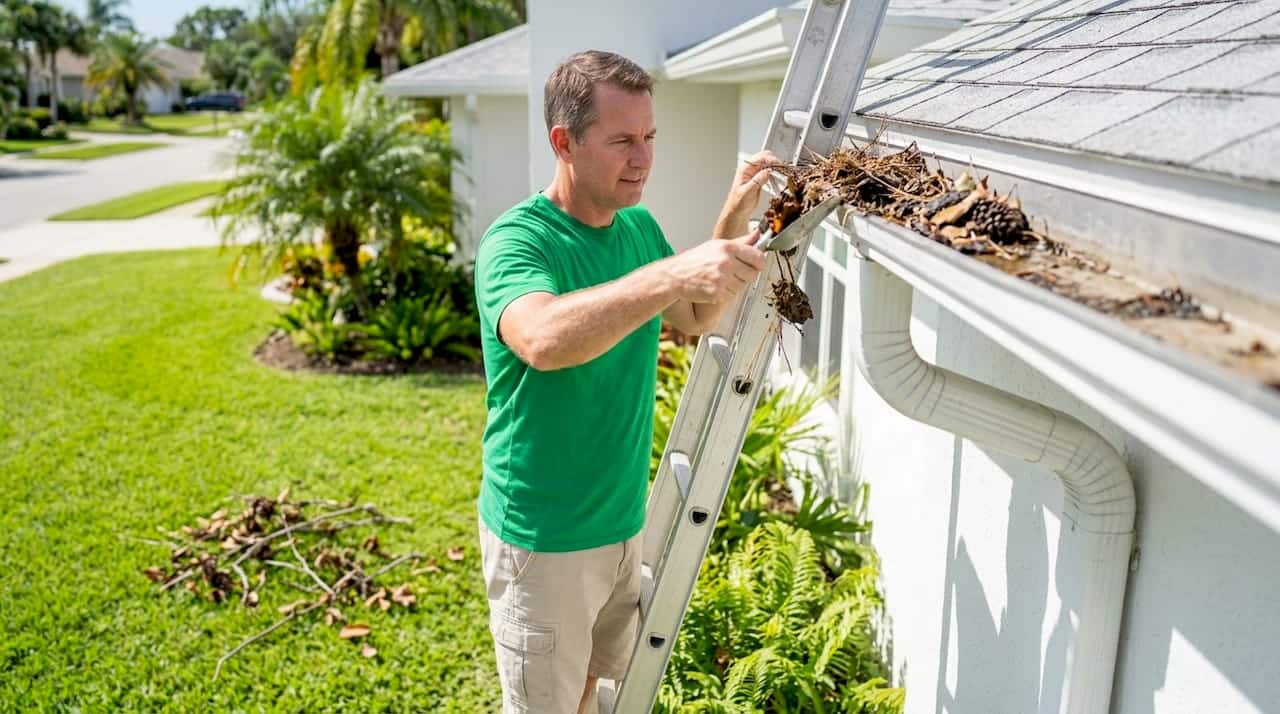
Seasonal gutter maintenance is the practice of cleaning, inspecting, and repairing your gutters on a scheduled basis to keep roof drainage working year-round. For Central Florida homeowners, this is not optional. The region’s intense summer thunderstorms, tropical storm activity, and year-round humidity create conditions where a neglected gutter can cause mold growth, foundation flooding, and roof damage within a single wet season. The core seasonal gutter maintenance steps are clearing debris, flushing downspouts, inspecting for slope and damage, and scheduling at least two full cleanings per year with additional checks after major storms. You will need a sturdy ladder, a gutter scoop, heavy gloves, a garden hose, and a plumber’s snake to do the job right.
What are the essential tools and safety precautions for seasonal gutter maintenance?
Getting the tools right before you climb a ladder is not a formality. It is the difference between a productive afternoon and a trip to the emergency room. Gutter cleaning injuries are overwhelmingly caused by unsafe ladder use, not by the cleaning itself.
The tools you need:
- Extension ladder with a stabilizer: The stabilizer keeps the ladder off the gutter face so you do not crush or dent the channel while you work.
- Gutter scoop or plastic trowel: Metal tools scratch aluminum gutters and accelerate corrosion. Use plastic.
- Heavy rubber or leather gloves: Gutters collect decomposing leaves, bird droppings, and standing water. Protect your hands.
- Safety glasses: Debris dislodges fast when you flush with a hose. Eye protection is non-negotiable.
- Garden hose with a spray nozzle: You need adjustable pressure to flush debris toward downspouts.
- Plumber’s snake or drain auger: For stubborn downspout clogs that a hose cannot clear.
- Non-slip boots: Wet grass and wet ladder rungs are a dangerous combination.
Ladder safety fundamentals:
Ladder injuries during gutter cleaning most often result from reaching past the side rails and improper ladder placement. The 4:1 angle rule means for every four feet of height, the base of the ladder sits one foot away from the wall. Maintain three points of contact at all times: two hands and one foot, or two feet and one hand. Move the ladder instead of reaching sideways. That single habit prevents the majority of falls.
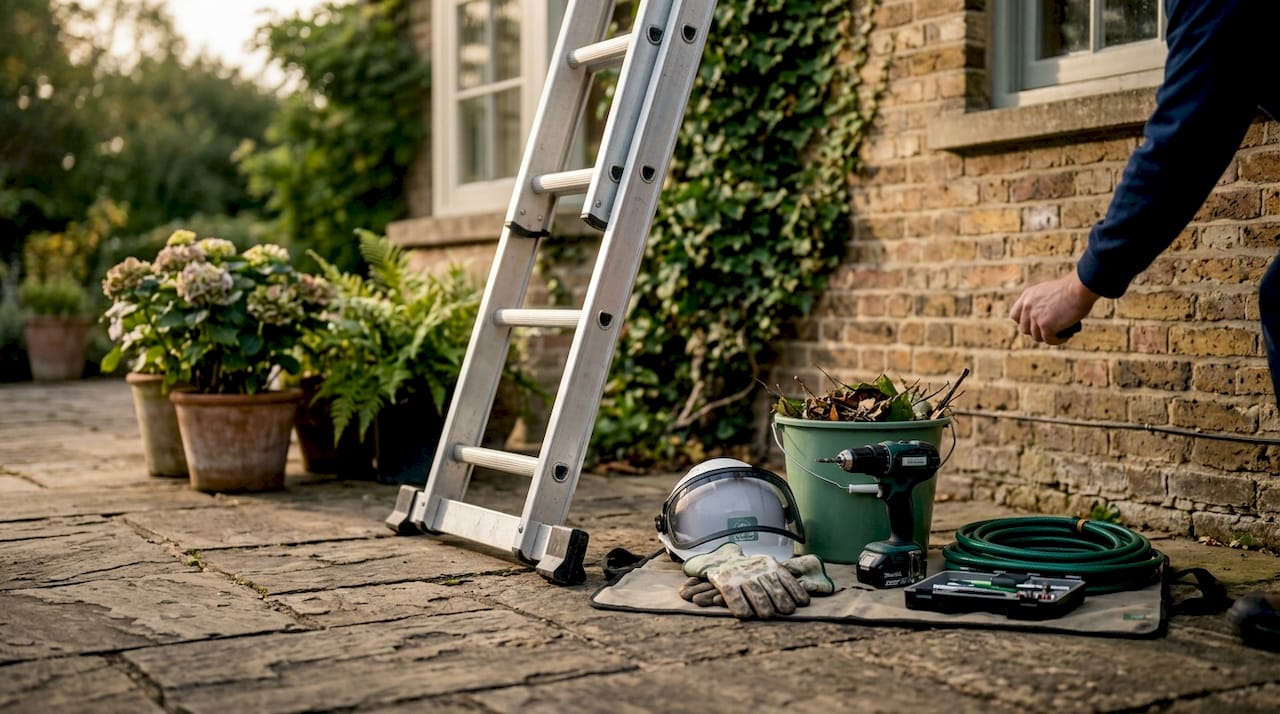
Pro Tip: Always work with a spotter on the ground. They can stabilize the ladder base, hand you tools, and call for help if something goes wrong. Working alone on a ladder above 10 feet is a risk no clean gutter is worth.
When to call a professional instead of doing it yourself: if your roofline exceeds two stories, if you have a physical condition that affects balance, or if you are uncomfortable on a ladder at any height, hire a licensed gutter service. The cost of a professional cleaning is a fraction of the cost of a fall-related injury or a hospital visit.
What are the step-by-step seasonal gutter cleaning and inspection processes?
The industry term for this process is “gutter maintenance inspection,” and it follows a specific sequence that maximizes efficiency and catches problems before they become expensive repairs. Skipping steps or working out of order leaves debris behind and misses damage that worsens over time.
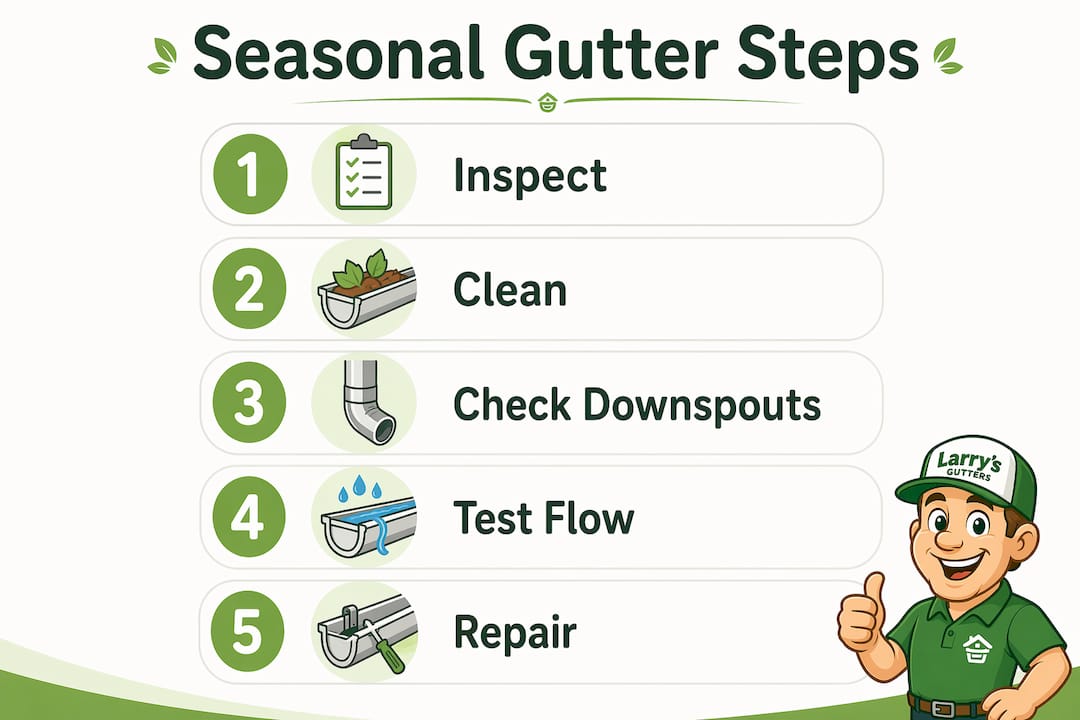
- Clear corners and downspout connections first. Corners and downspout openings collect the most debris and are the most common source of clogs. Removing blockages here first means water has somewhere to go when you flush the rest of the gutter.
- Scoop debris from straight gutter runs. Work from one end toward the downspout, depositing debris into a bucket or tarp below. Use your plastic scoop or gloved hands. Avoid metal tools that scratch the gutter lining.
- Flush the gutter with a garden hose. Start at the far end from the downspout and work toward it. Flushing from the far end pushes hidden debris out through the downspout rather than compacting it further inside. Watch for water pooling in any section, which signals a slope problem.
- Check and clear downspouts. Run the hose directly into the top of each downspout. If water backs up instead of flowing freely, insert a plumber’s snake from the bottom opening and work the clog loose. Flush again to confirm full clearance.
- Inspect for physical damage. Look for sagging sections, separated joints, rust spots, holes, and loose hangers. A correct gutter slope is about a quarter inch of drop per 10 feet of run. Anything flatter causes water to pool and overflow.
- Verify water exits 4 to 6 feet from the foundation. Run the hose again and watch where the water lands at the downspout exit. If it pools against the house, add a downspout extension. Foundation water intrusion is one of the most expensive repairs a homeowner faces.
- Document what you find. Note any damage, the date of cleaning, and any repairs made. A simple photo log on your phone is enough to track deterioration over time.
Pro Tip: Never use a sharp metal tool to pry compacted debris loose. You will puncture the gutter floor or scratch the coating, creating rust points that shorten the gutter’s lifespan by years.
| Maintenance step | What to look for |
|---|---|
| Clear corners and downspouts | Leaf mats, seed pods, compacted debris |
| Flush gutter runs | Water pooling, slow drainage, sagging sections |
| Inspect downspouts | Blockages, separated joints, improper exit distance |
| Check slope and hangers | Sags, loose screws, sections pulling from fascia |
| Verify foundation drainage | Water pooling within 4 feet of the home’s base |
Post-cleaning water flow verification is as important as removing the debris itself. A gutter that looks clean but drains slowly will overflow during the first heavy rain.
How does seasonal gutter care differ in Central Florida’s climate and storm patterns?
Central Florida does not follow the four-season rhythm that most national gutter maintenance guides assume. The region runs on two dominant cycles: a wet season from June through September and a drier period from October through May. Your gutter maintenance schedule needs to reflect that reality, not a generic spring-fall template.
Summer (June through September): This is the highest-risk period for gutter failure. Clogged gutters in humid climates trap moisture against roofing materials and siding, accelerating mold growth and wood rot. After every significant storm, inspect gutters for large branch debris, displaced sections, and downspout blockages caused by storm surge. Do not wait for your scheduled cleaning. A single afternoon of neglect after a tropical storm can mean weeks of water damage repair.
Fall (October through November): This is the season most homeowners associate with gutter cleaning, and for good reason. Oak trees, sweet gum, and pine trees common across Central Florida drop leaves and seed pods heavily in October and November. Time your fall cleaning after peak leaf drop, not before. Cleaning too early means you will be back on the ladder within two weeks.
Winter (December through February): Central Florida rarely sees freezing temperatures, but when it does, chipping ice from gutters causes direct physical damage to the gutter channel and creates a fall hazard. If ice forms, use calcium chloride in a tube sock laid along the gutter to melt it safely. Winter is also a good time for a thorough inspection since trees are less leafy and damage is easier to spot.
Spring (March through May): Complete a full cleaning and inspection before wet season begins. This is your most important scheduled maintenance window. Gutters going into June with partial blockages will overflow during the first major storm.
Additional considerations specific to Central Florida:
- Homes with live oaks or pine trees overhead need three to four cleanings per year, not two.
- Downspout extensions are especially important here. The role of gutters during storms is to move water away from the foundation fast. Extensions of at least four feet are the minimum in high-rainfall areas.
- Gutter guards reduce debris accumulation but do not eliminate it. Micro-mesh guards block most leaves and pine needles while allowing water through, but they still require annual inspection.
What common mistakes should Central Florida homeowners avoid?
Most gutter damage is self-inflicted, either through skipped maintenance or through well-intentioned cleaning done incorrectly. These are the mistakes Larrysgutters sees most often across Central Florida properties.
- Cleaning too early in fall. If you clean in early October before the oaks finish dropping, you will need to clean again in November. Wait until at least 80 percent of the leaves have fallen before scheduling your fall service.
- Ignoring sagging gutters and loose hangers. A sagging section disrupts the slope and creates a standing water pocket. That pocket breeds mosquitoes, accelerates rust, and overflows during rain. Tighten or replace hangers as soon as you spot a sag.
- Skipping post-storm inspections. A consistent maintenance schedule with spring and fall cleanings plus post-storm checks prevents most gutter-related water damage. The storm check takes 15 minutes and catches problems before they compound.
- Overreaching on the ladder. This is the single most common cause of gutter cleaning injuries. Move the ladder. Every time.
- Assuming gutter guards eliminate maintenance. Micro-mesh gutter guards reduce debris buildup significantly, but seed pods, shingle grit, and fine organic matter still accumulate on top of the mesh over time. Inspect guards annually and clear the surface.
“The gutters that cause the most damage are not the ones that were never installed. They are the ones that were installed and then forgotten.” This is the pattern Larrysgutters encounters on service calls across Orange, Seminole, and Osceola counties every wet season.
Key takeaways
Effective seasonal gutter maintenance in Central Florida requires at least two scheduled cleanings per year, post-storm inspections, correct slope verification, and proper downspout drainage to protect your home’s foundation and roof.
| Point | Details |
|---|---|
| Start with clog hotspots | Clear corners and downspout connections before cleaning straight gutter runs. |
| Flush to confirm drainage | Run a hose from the far end toward the downspout to verify full water flow. |
| Match schedule to climate | Central Florida’s wet season demands pre-summer and post-storm inspections, not just spring and fall. |
| Fix slope problems immediately | A quarter-inch drop per 10 feet is required; sagging sections cause overflow and foundation damage. |
| Ladder safety is non-negotiable | Use the 4:1 angle rule, maintain three points of contact, and always work with a spotter. |
What I’ve learned from years of Central Florida gutter work
The homeowners who avoid expensive water damage are not the ones with the fanciest gutter systems. They are the ones who get on a schedule and stick to it. Two cleanings a year is the floor, not the goal. If you have significant tree cover, three or four cleanings is the realistic number for Central Florida.
Gutter guards are worth the investment, but they are not a maintenance-free solution. I have seen micro-mesh guards clogged with shingle grit and pine pollen that looked perfectly clean from the ground. Annual inspection of the guard surface is still required.
The safety piece is where I see the most risk. Homeowners underestimate how quickly a ladder situation goes wrong. If you are not comfortable at height, or if your roofline is above one story, the professional cleaning cost is money well spent. A thorough gutter inspection checklist helps you stay organized whether you do the work yourself or verify a contractor’s work.
The most overlooked step in any seasonal gutter care guide is the post-flush check. Debris removal without confirming water exits the system completely is half a job. Always run the hose and watch the downspout exit before you put the ladder away.
— Larrysgutters
How Larrysgutters can help protect your home year-round
Keeping up with gutter maintenance across Central Florida’s storm seasons is demanding work, and it carries real safety risks. Larrysgutters provides professional gutter cleaning, inspection, and repair services across Orange, Seminole, Osceola, and surrounding counties, with technicians who know the region’s debris patterns and drainage challenges.

If your gutters are overdue for service, or if you want to reduce long-term maintenance with a professional gutter guard installation built for Florida’s climate, Larry’s Gutters can assess your system and recommend the right solution. For homes where gutters are damaged beyond repair, the team also handles full gutter replacement and seamless gutter installation. Contact Larrysgutters for a free quote and a maintenance plan tailored to your property.
FAQ
How often should Central Florida homeowners clean their gutters?
At minimum, clean gutters twice a year: once before wet season in late spring and once after peak leaf drop in fall. Homes with heavy tree cover or frequent storm exposure need three to four cleanings annually.
What are the first steps in seasonal gutter cleaning?
Start by clearing corners and downspout connections, since these areas collect the most debris and cause the most clogs. Then scoop straight gutter runs and flush the entire system with a garden hose from the far end toward the downspout.
How do I know if my gutters have the correct slope?
A properly sloped gutter drops about a quarter inch for every 10 feet of run toward the downspout. If water pools in any section after flushing, that section is sagging and needs hanger adjustment or repair.
Do gutter guards eliminate the need for seasonal maintenance?
No. Micro-mesh gutter guards reduce debris buildup significantly, but shingle grit, pollen, and fine organic matter still accumulate on the guard surface over time. Annual inspection and surface clearing remain necessary.
When is it safer to hire a professional for gutter maintenance?
Hire a professional if your roofline is above one story, if you are uncomfortable on a ladder, or if you spot structural damage like separated joints, large sagging sections, or fascia rot that requires repair beyond basic cleaning.
