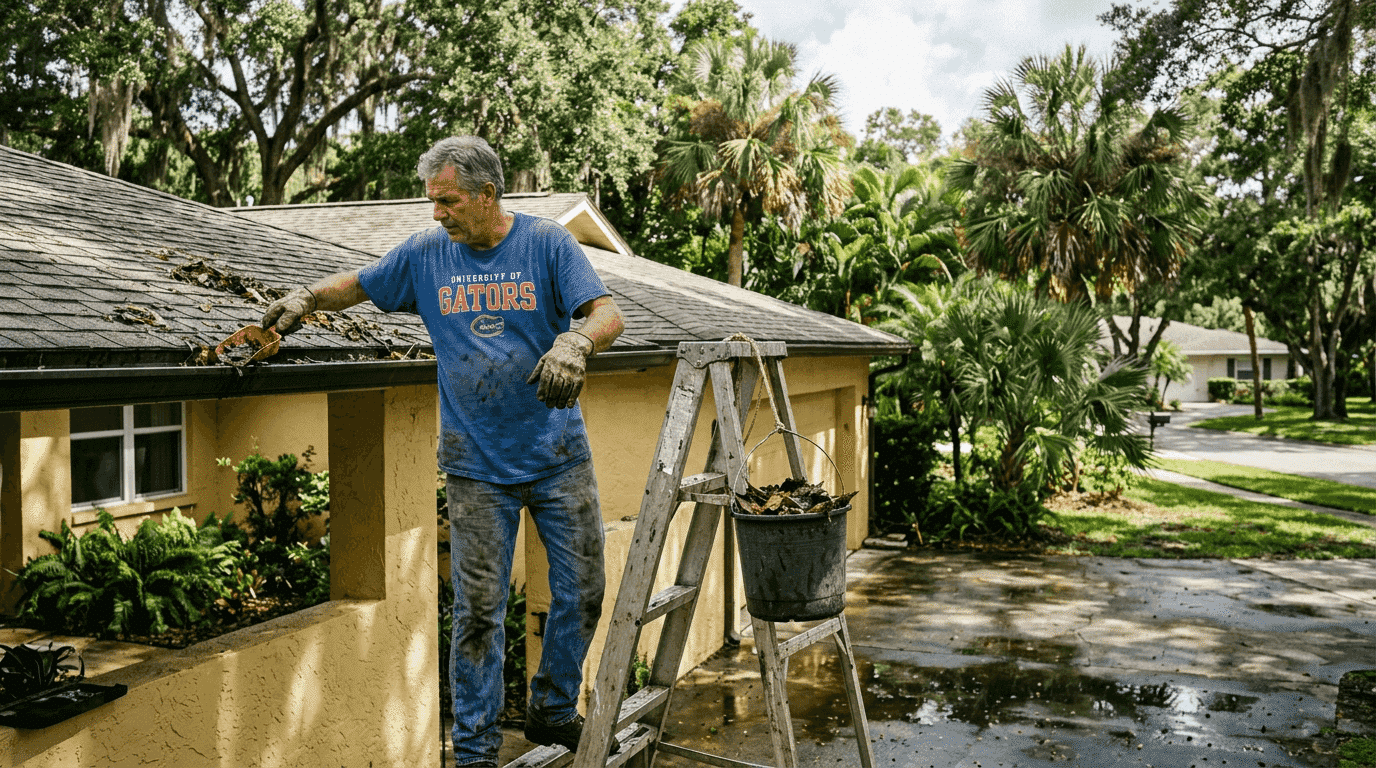
Central Florida homeowners face unique challenges when it comes to gutter maintenance. Heavy rainfall, high humidity, and abundant tree coverage create the perfect storm for clogged gutters and water damage. Without regular cleaning, your gutters can overflow, leading to foundation cracks, roof leaks, and costly repairs that often exceed thousands of dollars. A structured gutter cleaning checklist helps you stay ahead of these problems, protecting your home from water damage while saving money on emergency repairs. This guide provides a practical, step-by-step approach to maintaining clean, functional gutters year-round.
Table of Contents
- Criteria For An Effective Gutter Cleaning Checklist
- Step-By-Step Gutter Cleaning Checklist For Central Florida Homeowners
- Comparing Gutter Cleaning Methods: Diy Vs Professional Services
- Gutter Cleaning Checklist For Preparing Gutters Before Florida’s Rainy Season
- Protect Your Home With Professional Gutter Services From Larry’s Gutters
Key takeaways
| Point | Details |
|---|---|
| Regular cleaning prevents damage | Proper gutter maintenance stops water from damaging your foundation, roof, and siding |
| Frequency varies by location | Homes near trees need cleaning every 3-6 months, while others can wait longer |
| Professional methods work better | Specialized equipment removes debris safely without causing gutter damage |
| Neglect costs thousands | Ignoring gutters leads to foundation issues and repairs often exceeding $10,000 |
| Florida conditions demand attention | Tropical storms, salt air, and constant debris require proactive maintenance |
Criteria for an effective gutter cleaning checklist
A solid gutter cleaning checklist starts with comprehensive coverage of essential tasks. Your checklist should address debris removal from both gutters and downspouts, inspection of water flow patterns, and identification of potential damage. Regular gutter cleaning prevents water damage by ensuring proper drainage away from your foundation and roofline. Include specific steps for checking joints, seams, and mounting brackets that commonly fail under Florida’s weather conditions.
Safety measures deserve prominent placement on your checklist. Ladder stability, proper footwear, and equipment handling protocols prevent accidents during cleaning. Use a sturdy extension ladder with stabilizer bars, wear non-slip shoes, and never lean too far to either side. Keep your belt buckle between the ladder rails as a simple safety guide. Weather conditions matter too, so schedule cleaning on dry, calm days when surfaces aren’t slippery.
Tailoring your checklist to local conditions makes it more effective. Central Florida’s environment demands attention to specific factors like oak tree debris, pine needles, and palm fronds that create stubborn clogs. Your gutter maintenance checklist should account for the volume of organic material falling onto your roof throughout the year. Homes surrounded by mature trees accumulate debris faster than properties in open areas, requiring more frequent attention.
Damage indicators need their own section on your checklist. Look for rust spots, separated seams, sagging sections, and peeling paint during each cleaning session. These warning signs reveal problems before they become emergencies. Check for water stains on siding or fascia boards, which indicate overflow issues. Inspect the ground around your foundation for erosion patterns or pooling water after rainfall.
Your checklist should prepare you for Florida’s intense rainy season. Include steps for reinforcing loose hangers, clearing downspout outlets completely, and testing water flow with a garden hose. Address pest prevention by noting areas where standing water attracts mosquitoes or where debris provides nesting material for birds and rodents. A complete gutter inspection checklist covers these seasonal considerations alongside routine maintenance tasks.
Pro Tip: Take photos of your gutters from the same angles during each cleaning session. This visual record helps you track deterioration over time and provides documentation for insurance claims if storm damage occurs.
Step-by-step gutter cleaning checklist for Central Florida homeowners
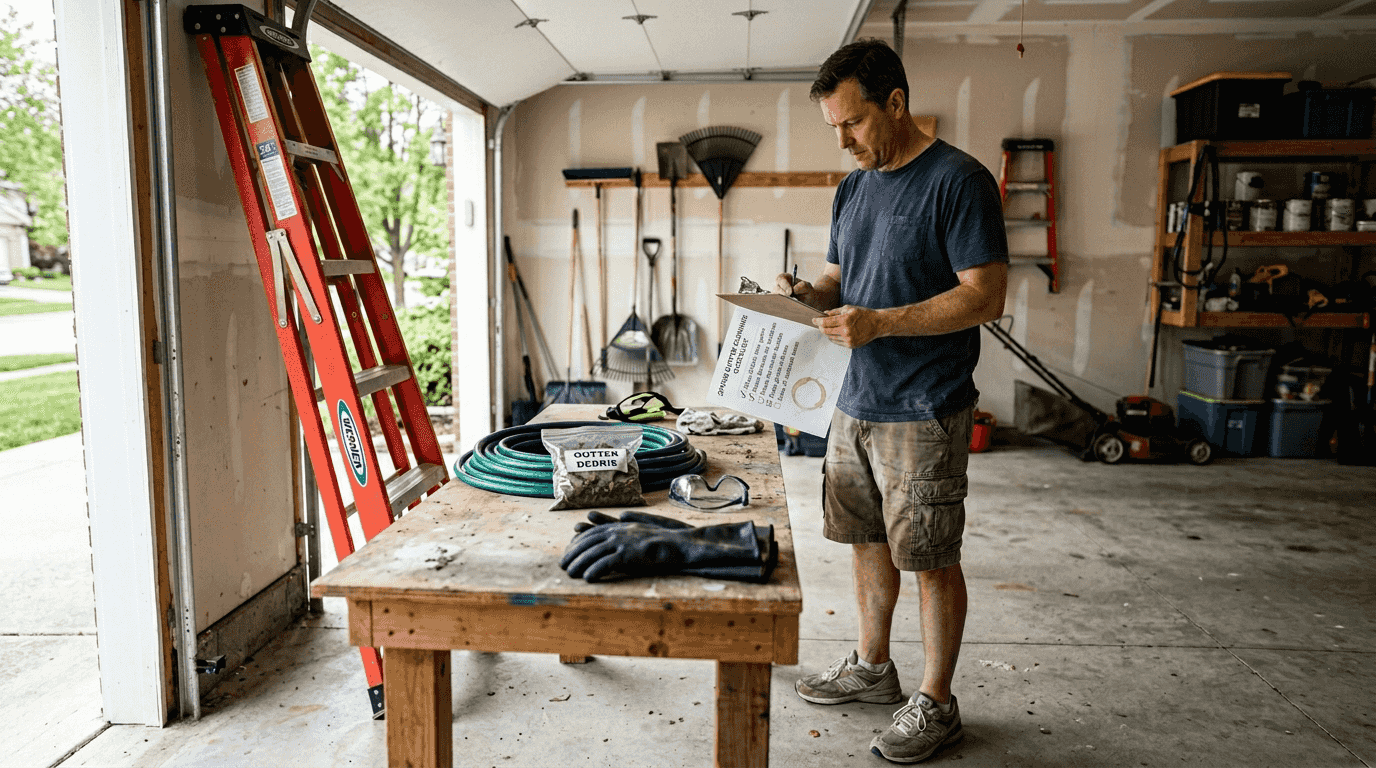
Start with thorough safety preparation and equipment gathering. Position your ladder on stable, level ground and have someone spot you if possible. Gather thick work gloves, a gutter scoop or small garden trowel, a bucket with a hook for debris, safety goggles, and a garden hose with a spray nozzle. Wear long sleeves to protect against insects and sharp debris edges. Check weather forecasts to avoid working during afternoon thunderstorms common in Central Florida.
Begin debris removal by working from downspout locations toward the middle of gutter runs. Scoop out leaves, twigs, and sediment by hand or with your trowel, placing material in your hanging bucket. Homes near mature trees require cleaning every 3-6 months because of constant leaf drop and seed pods. Pay special attention to valleys and corners where debris accumulates most heavily. Remove all organic material to prevent decomposition that creates acidic conditions damaging to aluminum gutters.
Flush your entire gutter system once debris is removed. Start at the end opposite each downspout and use your garden hose to push remaining sediment toward the outlets. Watch for proper water flow and note any areas where water pools or drains slowly. These spots indicate sagging that needs correction. Check each downspout by running water directly into the opening, if water backs up, you have a clog requiring additional attention. For stubborn blockages, use a plumber’s snake or remove the downspout elbow to clear it manually.
Conduct a detailed inspection while gutters are clean and visible. Look for separated joints, loose spikes or screws, and sections pulling away from the fascia board. Professional services use specialized equipment to identify subtle damage, but homeowners can spot obvious issues. Check for rust spots or holes, especially at seams and around fasteners. Test the pitch by pouring water at various points and confirming it flows toward downspouts without pooling.
Complete your cleaning with proper disposal and maintenance notes. Compost organic debris or bag it for yard waste pickup according to local regulations. Rinse your tools and store them properly for next time. Record the cleaning date, any damage found, and repairs needed in a maintenance log. This documentation helps you track patterns and plan future gutter cleaning tasks more effectively. Note which sections required the most work so you can monitor them closely.
Pro Tip: Mark your calendar for the next cleaning based on your home’s specific needs. Properties under heavy tree canopy need attention every three months, while homes in open areas can extend to six-month intervals. Setting reminders prevents the “out of sight, out of mind” problem that leads to neglect.
Comparing gutter cleaning methods: DIY vs professional services
DIY gutter cleaning offers cost savings and schedule flexibility for homeowners comfortable working on ladders. You control timing, can address problems immediately when noticed, and develop familiarity with your specific gutter system. The main expenses involve basic tools like a quality ladder, gloves, and cleaning implements, typically under $200 for a complete setup. However, DIY work carries safety risks, especially for two-story homes or properties with steep roof pitches. Physical limitations, fear of heights, or mobility issues make DIY cleaning impractical for many homeowners.
Professional services bring expertise, efficiency, and comprehensive solutions to gutter maintenance. Trained technicians spot subtle damage that homeowners often miss, preventing small problems from becoming expensive repairs. Professional cleaning uses controlled water flow and gentle techniques to avoid damaging gutters during debris removal. Services typically include disposal of debris, minor repairs, and detailed inspection reports. The cost ranges from $100 to $250 per cleaning for average homes, depending on size and gutter condition.
| Method | Advantages | Disadvantages | Best For |
|---|---|---|---|
| DIY Cleaning | Lower cost, flexible scheduling, immediate response to issues | Safety risks, physical demands, potential for missed damage | Single-story homes, physically capable owners, light debris |
| Professional Service | Expert inspection, insurance coverage, comprehensive cleaning, time savings | Higher cost, scheduling coordination, less frequent monitoring | Multi-story homes, heavy tree coverage, limited mobility |
Safety considerations heavily favor professional services for challenging situations. Professionals carry liability insurance, use commercial-grade equipment with safety features, and work in teams for added security. They’re trained in proper ladder placement, fall prevention, and handling electrical hazards near power lines. DIY cleaning becomes dangerous when gutters are high, slopes are steep, or you lack experience working at elevation. One fall can result in injuries far exceeding the cost of professional service.
Effectiveness varies based on tools and techniques used. Professionals employ commercial vacuums, pressure washers with controlled settings, and camera systems to inspect downspouts internally. These tools remove debris more completely than hand scooping alone. However, motivated homeowners following proper DIY gutter cleaning techniques can achieve excellent results with patience and attention to detail. The key difference lies in damage detection, where professional experience identifies problems early.
Central Florida’s environmental challenges affect both methods differently. Salt air from coastal areas accelerates corrosion, requiring professionals to apply protective treatments during service. Tropical storms dump massive amounts of debris suddenly, overwhelming DIY maintenance schedules. Neglecting gutter maintenance can lead to damage exceeding $10,000 when foundation or roof problems develop. Professional services often include emergency response after major storms, providing peace of mind during hurricane season. Consider your home’s specific exposure to these factors when choosing between methods, and remember that combining both approaches works well for many homeowners who handle routine cleaning but call professionals for seasonal deep cleaning and repairs.
Gutter cleaning checklist for preparing gutters before Florida’s rainy season
Thorough pre-season cleaning removes all accumulated debris before heavy rains arrive. Schedule this deep cleaning in April or May, before summer storms intensify. Remove every leaf, twig, and sediment deposit so water can flow freely when downpours hit. Pay extra attention to valley gutters and areas beneath overhanging branches where debris concentrates. Use a pressure washer on a gentle setting to remove stuck-on grime and biological growth that regular cleaning misses. This baseline cleanliness makes it easier to maintain gutters throughout the wet season.
Inspect and reinforce all gutter attachments before storms test your system. Check every hanger, spike, and bracket for tightness and stability. Florida’s tropical storms and salt air worsen gutter issues, so proactive reinforcement prevents failures during peak rainfall. Replace any rusted fasteners with stainless steel or coated screws that resist corrosion. Tighten loose sections and add extra hangers in spans longer than three feet. Test the entire system by pulling gently on sections to ensure they’re firmly attached to fascia boards.
Apply protective treatments to combat Florida’s harsh conditions:
- Clean gutters thoroughly, then apply rust-inhibiting primer to any bare metal spots
- Seal joints and seams with quality gutter sealant rated for outdoor use
- Consider applying a protective coating to aluminum gutters in coastal areas
- Touch up paint on steel gutters to prevent rust from spreading
- Treat wooden fascia boards with water-resistant sealant where gutters attach
Install or inspect gutter guards and screens before rainy season begins. Quality mesh systems dramatically reduce debris accumulation while allowing water to flow freely. Guards prove especially valuable for homes under oak trees or near wetlands where organic material falls constantly. Choose guards with small enough openings to block pine needles and seed pods common in Central Florida. Secure all guards firmly so summer storms don’t dislodge them. Clean existing guards of any accumulated debris from winter and spring months.
Trim vegetation strategically to minimize debris sources. Cut back branches hanging over your roof by at least six feet to reduce leaf drop directly into gutters. Remove dead branches that could break during storms and damage your gutter system. Trim shrubs and bushes near downspout outlets so they don’t obstruct water flow. Consider the growth patterns of Florida plants, many species grow rapidly during rainy season and may need mid-summer trimming too. Professional tree services can handle large jobs safely, especially for tall trees requiring climbing equipment.
Verify proper downspout drainage away from your foundation:
- Ensure downspout extensions direct water at least five feet from the house
- Check that splash blocks are positioned correctly and haven’t shifted
- Test the grade around your foundation, water should slope away from walls
- Clear any obstacles blocking water flow from downspout outlets
- Consider installing underground drainage pipes for chronic problem areas
- Mark downspout locations so you can monitor them easily during heavy rains
These preparation steps protect your home from water damage throughout Florida’s challenging rainy season. Document your pre-season work with photos and notes, creating a reference for future years. A well-prepared gutter system handles even the heaviest summer thunderstorms without overflow or damage, keeping your foundation dry and your home protected. Regular monitoring during rainy season, combined with this thorough preparation, ensures your gutters perform when you need them most. Consider scheduling a mid-season check in July or August to address any issues that develop during the wettest months, following updated cleaning guidelines for best results.
Protect your home with professional gutter services from Larry’s Gutters
Maintaining clean, functional gutters protects your Central Florida home from water damage, but professional expertise takes that protection further. Larry’s Gutters specializes in comprehensive gutter solutions designed specifically for Florida’s challenging climate. Our experienced team understands how heavy rainfall, tropical storms, and coastal conditions affect your gutter system’s performance. We provide expert cleaning services that remove debris thoroughly while inspecting for damage that homeowners often overlook.

Professional gutter guards reduce your maintenance burden significantly while protecting your home during intense storms. Our gutter guard installation services use quality materials engineered to handle Florida’s unique debris challenges, from oak leaves to pine needles. When repairs or replacement become necessary, our team delivers custom-fit seamless gutters that channel water efficiently away from your foundation. We follow proven installation procedures and use materials that resist corrosion in humid, salt-air environments. Trust Larry’s Gutters for complete gutter replacement when your system reaches the end of its service life, ensuring your home stays protected for years to come.
FAQ
What is the best frequency for gutter cleaning in Central Florida?
Cleaning frequency depends primarily on your property’s tree coverage and local weather patterns. Homes near mature trees require cleaning every 3-6 months due to constant leaf drop and organic debris. Properties in open areas with minimal overhead vegetation can extend cleaning intervals to twice yearly, typically before and after rainy season. Coastal homes may need more frequent attention because salt air accelerates corrosion and storms deposit additional debris.
What tools do I need for safe DIY gutter cleaning?
Essential equipment includes a sturdy extension ladder with stabilizer bars, thick work gloves to protect your hands, a plastic gutter scoop, a bucket with an S-hook for debris collection, and safety goggles. Add a garden hose with a spray nozzle for flushing gutters after debris removal. Wear non-slip shoes with good tread and consider a tool belt to keep supplies accessible while on the ladder. Never use a pressure washer without proper training, as excessive pressure damages gutters and creates safety hazards.
How can I tell if my gutters need repair or replacement?
Watch for sagging sections, separated seams, visible rust spots, and water overflowing during rainfall as primary damage indicators. Check for peeling paint on gutters or water stains on siding and fascia boards beneath gutter lines. Neglecting maintenance leads to foundation and roof damage that costs thousands to repair. Inspect joints for gaps or cracks, test hangers for looseness, and look for standing water that indicates improper pitch. Early detection through regular inspection allows for targeted repairs before complete replacement becomes necessary.
Are gutter guards worth the investment in Central Florida?
Gutter guards provide excellent value for Central Florida homeowners by reducing debris accumulation and lowering maintenance frequency. Quality guards block leaves, pine needles, and seed pods while allowing water to flow freely during heavy rainfall. The investment pays off through reduced cleaning costs, prevention of clogs that cause overflow damage, and protection of your gutter system’s longevity. Guards prove especially worthwhile for homes surrounded by trees or properties where climbing ladders poses safety concerns. Professional gutter guard installation ensures proper fit and performance during Florida’s intense storms.
