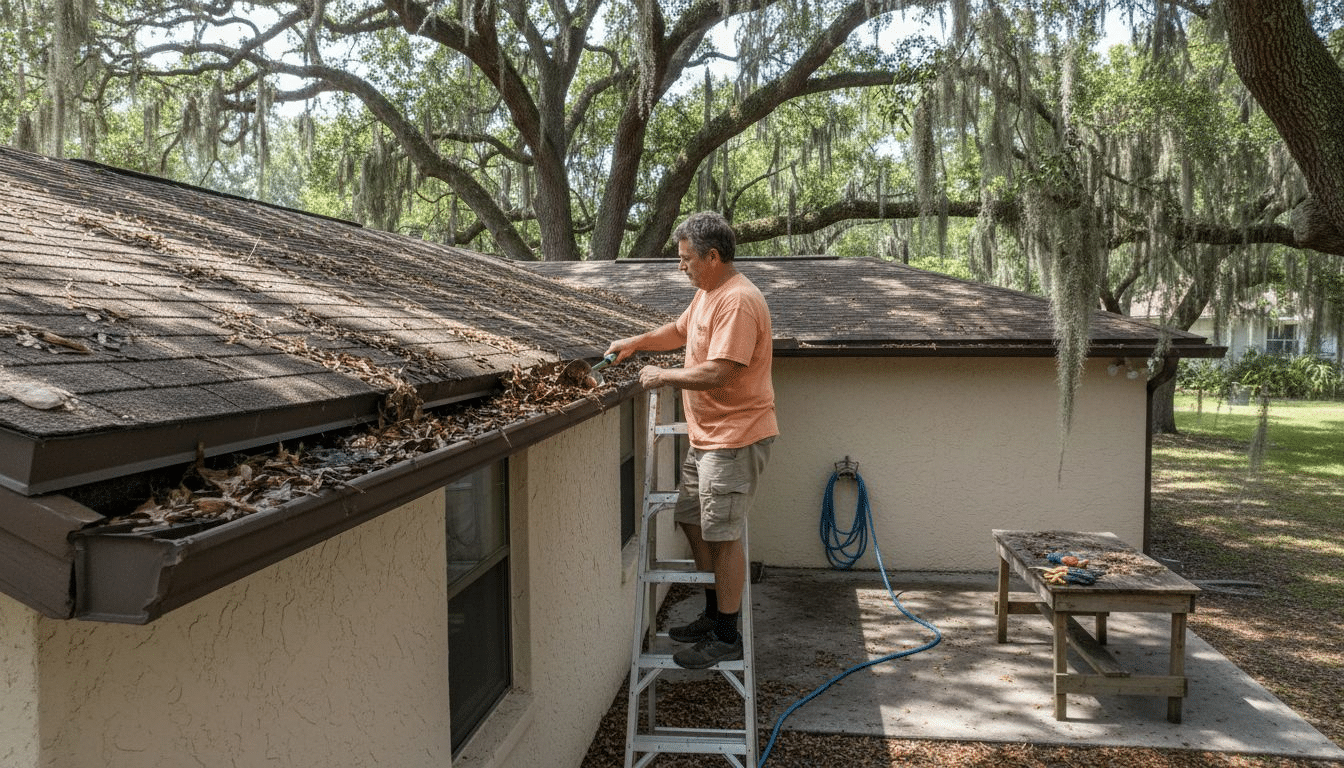
Heavy rainfall, pine needles, and oak debris clog gutters faster in Central Florida than almost anywhere else. Neglecting your gutters invites roof damage, foundation erosion, and landscape flooding that can cost thousands to repair. This checklist gives you a seasonal, region-specific maintenance plan to keep water flowing safely away from your home year-round.
Table of Contents
- Why Gutter Maintenance Matters In Central Florida
- Prerequisites: Tools, Safety Gear, And Knowledge You Need
- Step-By-Step Gutter Maintenance Process
- Common Mistakes And How To Avoid Them
- Expected Outcomes: What Success Looks Like
- Protect Your Home With Expert Gutter Services
- FAQ
Key takeaways
| Point | Details |
|---|---|
| Seasonal cleaning reduces damage | Clean gutters at least twice yearly to prevent overflow and structural issues. |
| Safety equipment prevents accidents | Use stable ladders, gloves, and eye protection during all gutter work. |
| Regular inspections catch problems early | Check for leaks, sagging, and loose fasteners every few months. |
| Gutter guards cut maintenance time | Installing guards can reduce cleaning frequency by up to 75%. |
| Proper downspout placement protects foundations | Extend discharge 4-6 feet from your home to avoid water pooling. |
Why gutter maintenance matters in Central Florida
Central Florida receives 50 to 65 inches of rain annually, creating massive water volume that your gutters must handle efficiently. When storms roll through, clogged gutters overflow and dump thousands of gallons directly against your home’s foundation and landscaping. The region’s dense tree coverage compounds the problem, as oak leaves, pine needles, and Spanish moss constantly fill gutter channels.
Pollen seasons bring another layer of complexity. Fine particles mix with moisture to form a cement-like paste that blocks water flow even when larger debris appears minimal. This hidden buildup goes unnoticed until you see water pouring over gutter edges during the next heavy rain.
Neglecting maintenance leads to roof edge deterioration, fascia rot, moisture intrusion, and foundation problems. Water that pools around your foundation causes cracks, settling, and basement seepage. Roof damage starts at the edges where backed-up water seeps under shingles, rotting the decking beneath.
Repair costs escalate quickly. Replacing rotted fascia boards runs several thousand dollars. Foundation repairs can exceed ten thousand. Regular gutter cleaning costs a fraction of these emergency fixes.
Understanding why gutters need maintenance in your specific climate helps you prioritize this task. The combination of rainfall intensity, debris volume, and humid conditions makes Central Florida particularly demanding on gutter systems.
Pro Tip: Schedule gutter inspections before and after hurricane season to catch damage early and prepare your system for peak rainfall months.
“Your gutters are the first line of defense against water damage. In Central Florida’s climate, they work harder than in most other regions, making consistent maintenance non-negotiable for home protection.”
Prerequisites: tools, safety gear, and knowledge you need
Before climbing any ladder, assemble the right equipment to work safely and effectively. Ladder safety causes more gutter maintenance injuries than any other factor. Use a sturdy extension ladder with stabilizer arms that keep it away from gutters and distribute weight properly.
Essential safety gear includes heavy-duty work gloves to protect against sharp edges and debris, safety glasses to shield your eyes from splashing water and falling particles, and non-slip shoes with good tread. Never work on gutters during wet or windy conditions.
Your tool kit should contain a plastic gutter scoop to remove debris without scratching aluminum, a garden hose with spray nozzle for flushing, a five-gallon bucket with hook for collecting waste, gutter sealant for small leaks, and a stiff-bristle brush for stubborn buildup. Keep a notepad to record issues you spot during inspection.
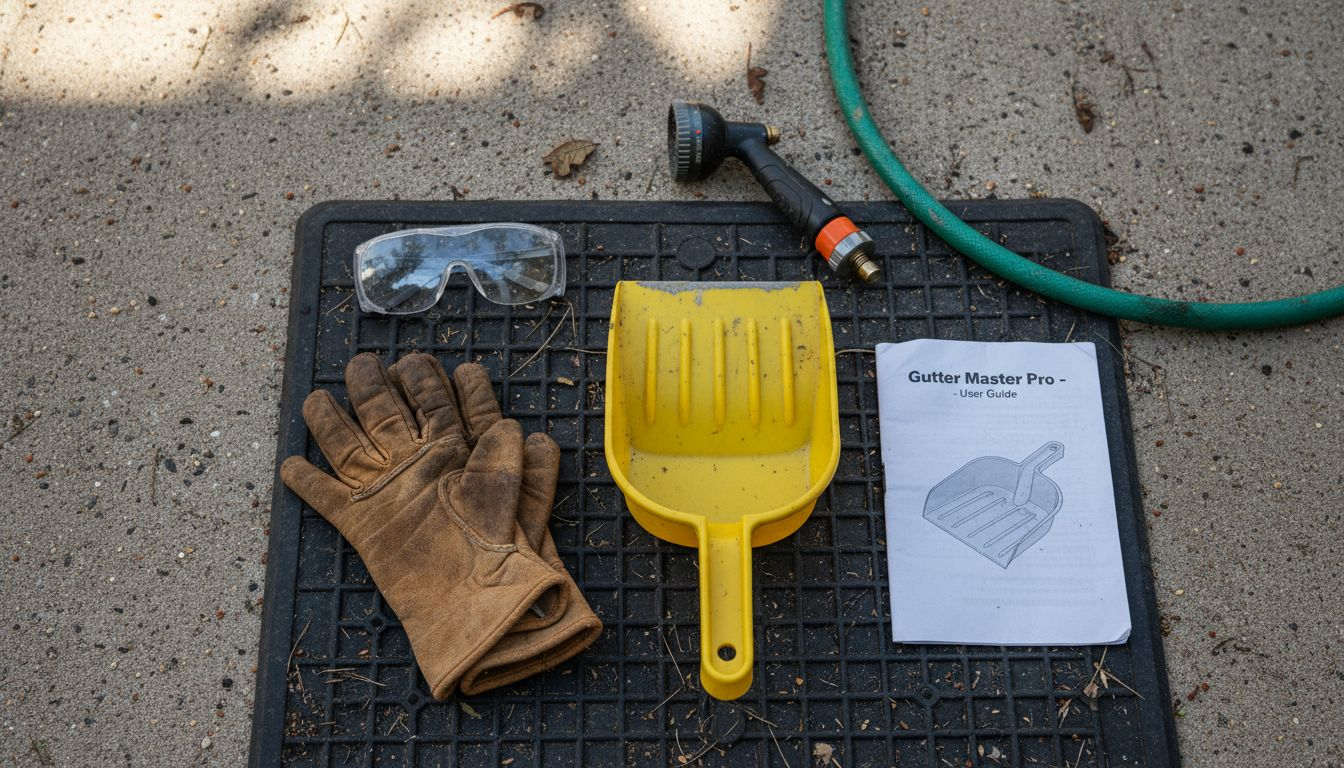
| Tool/Equipment | Purpose | Safety Note |
|---|---|---|
| Extension ladder with stabilizers | Safe roof access | Position on firm, level ground |
| Heavy-duty gloves | Hand protection | Check for tears before use |
| Safety glasses | Eye protection | Must have side shields |
| Plastic gutter scoop | Debris removal | Metal scrapers damage gutters |
| Garden hose | Flow testing | Use moderate pressure only |
Understand basic gutter anatomy before starting. Gutters slope slightly toward downspouts to encourage water flow. Hangers or brackets secure gutters to fascia boards. Downspouts carry water from gutter outlets to ground-level extensions. Recognizing these components helps you spot problems during inspection.
Check weather forecasts and avoid maintenance during storm predictions. Following gutter safety best practices prevents accidents that send hundreds of homeowners to emergency rooms annually. Review your gutter maintenance guide for Central Florida homes to understand regional considerations.
Pro Tip: Keep a spotter on the ground when working from ladders, especially on two-story homes where falls cause serious injuries.
Step-by-step gutter maintenance process
Start by clearing loose debris from gutter channels using your plastic scoop. Work in sections, moving your ladder frequently rather than overreaching. Deposit debris into your bucket rather than dropping it on landscaping below. Remove all leaves, twigs, and sediment until you see the gutter bottom.
Flush each section with your garden hose, starting at the end opposite the downspout. This pushes remaining debris toward the outlet and reveals any clogs. Watch for water backing up or draining slowly, which indicates blockages you missed or problems in downspouts.
Inspect gutters carefully during cleaning. Look for rust spots, holes, separated seams, sagging sections, and loose hangers. Test gutter pitch by pouring water in the middle and confirming it flows toward downspouts without pooling. Check fascia boards behind gutters for rot or water stains.
Clean downspouts by removing the bottom extension and flushing from the top. If water backs up, use a plumber’s snake or pressure washer to clear clogs. Stubborn blockages sometimes require disconnecting the downspout from the gutter outlet.
Central Florida Maintenance Schedule:
- Spring cleaning (March/April) after pollen season peaks
- Summer inspection (July) before hurricane season intensifies
- Fall cleaning (October/November) when oak leaves drop
- Winter check (January) after holiday decorations come down
Homes with dense tree coverage need cleaning every 2-3 months to prevent overflow. Adjust your gutter cleaning frequency in Florida based on your specific property’s tree density and debris accumulation rate.
| Season | Primary Tasks | Florida-Specific Concerns |
|---|---|---|
| Spring | Deep cleaning, pitch adjustment | Heavy pollen, pre-storm prep |
| Summer | Storm damage inspection | Hurricane debris, wind damage |
| Fall | Leaf removal, downspout clearing | Oak leaf accumulation |
| Winter | Light maintenance, system check | Dry season assessment |
Ensure downspout extensions discharge at least four to six feet from your foundation. Shorter distances allow water to pool near basement walls and crawl spaces. Add splash blocks or buried drainage pipes if extensions cannot reach adequate distance.
Consider installing or maintaining gutter guards to reduce debris accumulation. Quality guards block leaves while allowing water flow, cutting your maintenance frequency significantly. Review how to clean gutters on Florida homes for detailed regional techniques.
Pro Tip: Photograph problem areas during each inspection to track deterioration over time and prioritize repairs before small issues become emergencies.
Perform post-storm inspections within 24 hours of severe weather. High winds dislodge hangers and fill gutters with debris. Catching damage quickly prevents water from entering your home during the next rain.
Common mistakes and how to avoid them
Homeowners frequently ignore ladder safety, causing preventable falls. Never lean ladders directly against gutters, which can’t support your weight and will bend or detach. Always use ladder stabilizers and maintain three points of contact when climbing. Position ladders on firm, level ground, never on soft soil or sloped surfaces.
Skipping pollen removal leads to hidden clogs that appear minor until heavy rains hit. Pollen mixes with moisture to form dense blockages that regular debris scooping misses. Always flush gutters thoroughly with water after removing visible debris.
Failing to test water flow after cleaning leaves you unaware of remaining clogs. Run your hose for several minutes in each gutter section and watch for backup, slow drainage, or leaks. This simple test reveals problems you can fix immediately rather than discovering them during the next storm.
Leaving downspout discharge near your foundation invites expensive repairs. Water pools against basement walls, causing seepage and structural damage. Extend all downspouts at least four feet from your home, using flexible extensions or buried drainage pipes.
Neglecting post-storm gutter checks allows damage to compound. Wind loosens hangers, debris blocks flow, and small leaks become major problems. Inspect gutters within a day of any severe weather event.
Critical Safety Reminders:
- Never work from ladders during wet or windy conditions
- Always have someone nearby when working above ground level
- Wear non-slip shoes with good ankle support
- Keep your phone accessible in case of emergency
- Stop immediately if you feel unsteady or unsafe
Following gutter safety best practices eliminates most accidents. Most gutter-related injuries result from rushing, overreaching, or skipping basic safety protocols.
Expected outcomes: what success looks like
Properly maintained gutters channel water smoothly during even the heaviest Florida downpours. You should see steady flow from downspout outlets with no overflow at gutter edges. Water discharges well away from your foundation, keeping basements and crawl spaces dry.
Your home shows no signs of water damage around roof edges, fascia boards, or foundation. Paint stays intact on soffits and exterior walls near gutters. Landscaping near downspouts remains healthy without erosion channels or drowned plants.
Maintenance frequency drops dramatically with quality gutter guards installed. Homeowners report up to 75% reduction in cleaning needs, though annual inspections and occasional flushing remain necessary. Even with guards, pollen seasons require attention in Central Florida.
Seamless gutters last 20 to 30 years with proper maintenance, often exceeding manufacturer warranties. The lack of seams eliminates common leak points found in sectional systems. Learn about seamless gutter benefits to understand long-term value.
| Maintenance Level | Cleaning Frequency | Expected Gutter Lifespan | Annual Damage Risk |
|---|---|---|---|
| Neglected | Never | 5-10 years | High |
| Minimal | Once yearly | 10-15 years | Moderate |
| Regular | Twice yearly | 20-25 years | Low |
| Optimal (with guards) | Annually | 25-30+ years | Very Low |
Professional inspections confirm your system’s health and catch developing problems before they require expensive repairs. Annual professional assessments complement your own maintenance efforts, providing expert evaluation of structural integrity and drainage performance.
Success Indicators:
- Clear water flow during rain with no gutter overflow
- Dry foundation and basement areas year-round
- No water stains on soffits or exterior walls
- Gutters maintain proper pitch without sagging
- Downspouts discharge at safe distances from home
- No visible rust, holes, or separated seams
Achieving these outcomes protects your largest investment and avoids the stress and expense of water damage repairs. Consistent maintenance pays for itself many times over through extended gutter life and prevented structural damage.
Protect your home with expert gutter services
Professional installation ensures your gutter system performs optimally from the start. Custom-fitted seamless gutters eliminate leak-prone seams while handling Central Florida’s heavy rainfall efficiently. Expert installers calculate proper pitch, position hangers correctly, and select appropriate materials for your home’s specific needs.

Gutter guards installed by professionals reduce your maintenance burden significantly while protecting against the region’s constant debris. Quality guard systems block leaves and pine needles while allowing maximum water flow during storms. The gutter guard installation workflow in Florida ensures proper fit and function.
Seamless gutters minimize maintenance requirements and extend system lifespan well beyond sectional alternatives. The seamless gutter installation process creates custom-length runs that eliminate weak points where leaks typically develop.
Proper downspout placement protects your foundation from water damage that costs thousands to repair. Professional installation follows gutter downspout installation steps that ensure adequate drainage away from your home’s structure. Larry’s Gutters provides solutions tailored specifically to Central Florida homes, addressing the unique challenges of our climate and vegetation.
FAQ
How often should gutters be cleaned in Central Florida?
Clean gutters at least twice yearly if you have moderate tree coverage, typically in spring after pollen season and fall when leaves drop. Homes surrounded by dense oak or pine trees need cleaning every two to three months to prevent overflow. Adjust your gutter cleaning frequency in Florida based on actual debris accumulation you observe.
What safety precautions should I take during gutter maintenance?
Use a sturdy extension ladder with stabilizer arms positioned on firm, level ground. Wear heavy-duty gloves and safety glasses to protect against sharp edges and debris. Never work alone, always have a spotter on the ground, and avoid maintenance during wet or windy conditions. Following gutter safety best practices prevents the falls and injuries that send hundreds to emergency rooms yearly.
Can gutter guards eliminate the need for regular cleaning?
Gutter guards significantly reduce debris accumulation but do not completely eliminate maintenance needs. You still need annual inspections and occasional flushing, especially during heavy pollen seasons when fine particles bypass guards. Quality guards can reduce cleaning frequency by up to 75%, making maintenance easier while extending gutter lifespan. Understanding how gutter guards work in Florida helps set realistic expectations.
Why is post-storm gutter inspection important?
Severe weather dislodges hangers, fills gutters with debris, and can damage gutter sections through wind or falling branches. Inspecting within 24 hours lets you clear blockages and make repairs before the next rain causes water intrusion. Early detection prevents minor storm damage from becoming major structural problems. Follow gutter safety best practices when conducting post-storm inspections to avoid injury on wet surfaces.
