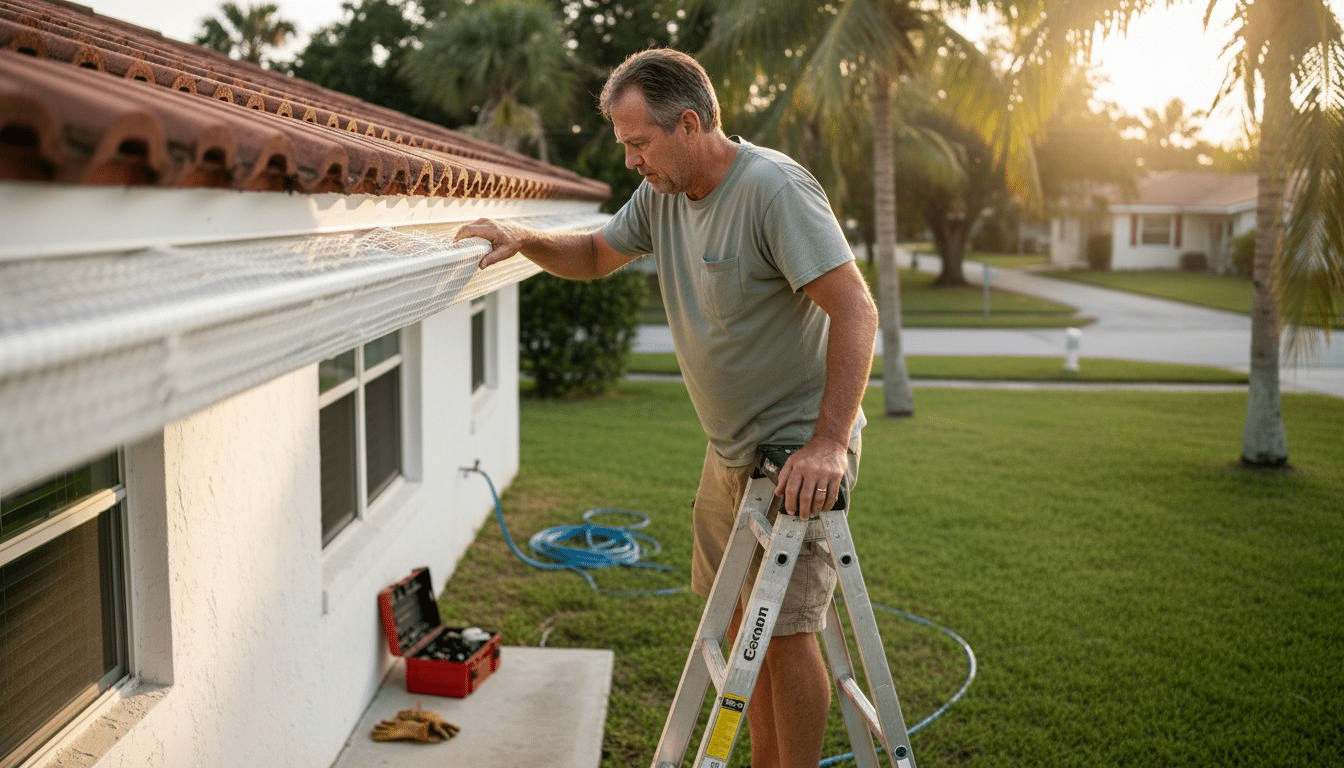
Central Florida homeowners understand that a single afternoon storm can unleash several inches of rain in minutes, flooding gutters and threatening foundations. Protecting your investment means thinking like a smart American homeowner and taking proactive steps against the region’s unpredictable weather. By mastering the process of gutter guard installation, you can safeguard your Lake, Marion, or Sumter County property against water damage and costly repairs, while gaining peace of mind before the next downpour.
Table of Contents
- Step 1: Assess Your Gutters and Measure Precisely
- Step 2: Gather Tools and Prep the Installation Area
- Step 3: Install Gutter Guards Securely Along the System
- Step 4: Check Alignment and Seal All Connections
- Step 5: Test Water Flow and Inspect for Gaps
Quick Summary
| Key Insight | Explanation |
|---|---|
| 1. Measure Gutters Accurately | Accurate measurements are crucial for selecting the right gutter guard system based on your home’s dimensions and rainfall intensity. |
| 2. Prepare Tools and Workspace | Assemble the necessary tools like safety glasses and gloves, and clear existing gutters to ensure a safe installation environment. |
| 3. Securely Install Gutter Guards | Proper installation with the correct fasteners prevents sagging, enhances stability, and withstands Florida’s heavy rainfall. |
| 4. Check Alignment and Seal Entities | Maintain a consistent slope and ensure all joints are sealed to prevent water leaks and protect your home during storms. |
| 5. Conduct Water Flow Testing | Use a garden hose to simulate rain, checking for leaks or blockages ensures that your gutter system operates effectively. |
Step 1: Assess Your Gutters and Measure Precisely
Getting accurate measurements of your gutters is crucial for successful installation and optimal water management in your Florida home. In this step, you will carefully evaluate your current gutter system and gather precise dimensions to help select the right gutter guard solution.
Begin by gathering essential tools for your assessment: a sturdy ladder, measuring tape, notepad, and clipboard. Carefully climb to roof level and inspect your existing gutters, checking their current condition and configuration. The National Association of Home Inspectors recommends examining gutter slope carefully, which should angle approximately 1/16-inch per foot toward downspouts to prevent water pooling. Look for signs of rust, cracks, or misalignment that might indicate needed repairs before installing new gutter guards.
Measure your gutter lengths systematically by running your measuring tape along each section, recording the exact linear footage. Pay special attention to roof edges where water flow concentrates most heavily. Using the Sheet Metal and Air Conditioning Contractors National Association sizing calculator can help you determine precise gutter dimensions based on your specific roof shape and local rainfall intensity. Accurate measurements will ensure your new gutter guard system handles Florida’s frequent heavy rainstorms effectively.
Pro Tip: Always measure twice and record measurements immediately to prevent costly mistakes during gutter guard installation.
Step 2: Gather Tools and Prep the Installation Area
Preparing your workspace and collecting the right tools is essential for a smooth and safe gutter guard installation. This step will help you organize your equipment and create a secure work environment that minimizes potential risks and ensures efficient progress.
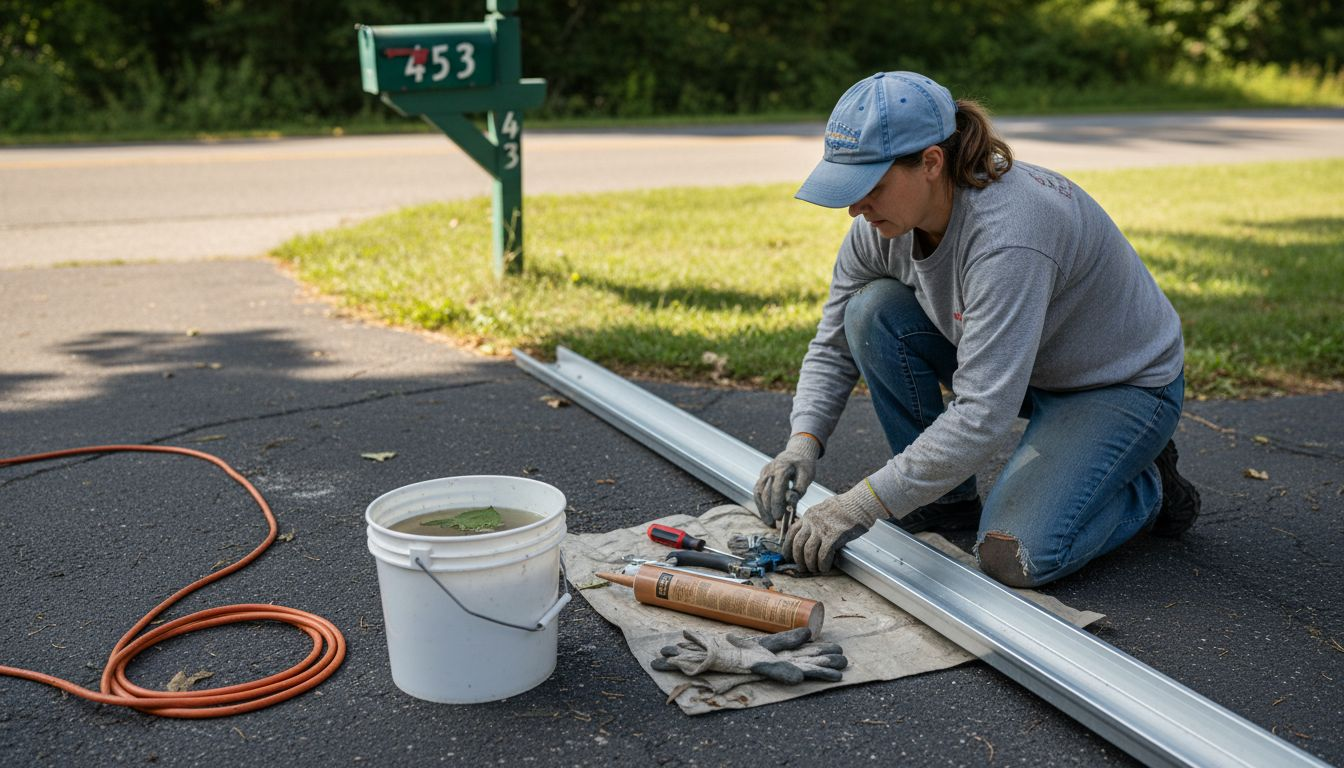
Start by assembling your toolkit. Professional gutter installation resources recommend gathering specific safety and installation equipment. Your essential toolkit should include an extension ladder rated for your home’s height, work gloves, safety glasses, measuring tape, power drill, level, chalk line, screw gun, silicone sealant, and appropriate fasteners. Choose a sturdy ladder that can support your weight and reach your roof safely, ensuring it has non slip feet and is positioned at the correct angle against your home’s exterior.
Before beginning installation, thoroughly clean your existing gutters to remove debris, leaves, and accumulated dirt. This preparation allows for better adhesion and alignment of your new gutter guards. Wikipedia research highlights the importance of clearing gutters to prevent potential damage during installation. Inspect the gutter system for any existing damage or loose sections that might need repair before proceeding with the guard installation.
Pro Tip: Always have a helper nearby when working on ladders and wear non slip shoes to minimize installation risks.
Step 3: Install Gutter Guards Securely Along the System
Installing gutter guards requires precision and careful attention to ensure your Florida home remains protected from water damage and debris accumulation. This step will guide you through securely attaching gutter guards to create a robust water management system that can withstand the region’s intense rainfall and unpredictable weather conditions.
Gutter installation standards emphasize the critical importance of secure attachment methods. Begin by positioning the first gutter guard section at one end of your gutter run, ensuring it aligns perfectly with the gutter’s edge. Use compatible fasteners designed for exterior use, typically stainless steel screws that resist corrosion from Florida’s humid environment. Space your fasteners approximately every 12 to 18 inches, which provides sufficient support to prevent sagging or movement during heavy storms.
Consumer research demonstrates that proper installation is crucial for maintaining gutter guard effectiveness. As you progress along the gutter system, overlap each guard section slightly to create a continuous protective barrier. Check that the guards sit flush against the gutter’s surface, with no gaps that might allow debris to slip through. Pay extra attention to corners and transitions, ensuring these areas are securely fastened and sealed to prevent potential water infiltration.
Pro Tip: Apply a thin bead of weatherproof sealant at connection points to enhance water resistance and prevent potential leakage.
Here is a summary of key gutter guard installation considerations for Florida homes:
| Consideration | Why It Matters | Florida-Specific Impact |
|---|---|---|
| Gutter Slope | Ensures water flows to downspouts | Handles frequent heavy rain |
| Fastener Selection | Prevents corrosion and loosening | Protects against humidity and storms |
| Gutter Guard Overlap | Blocks debris and maintains stability | Reduces clogging from heavy foliage |
| Sealing at Joints | Stops leaks at connection points | Critical in intense rain events |
Step 4: Check Alignment and Seal All Connections
The final stage of your gutter guard installation involves meticulously checking alignment and ensuring all connections are properly sealed. This critical step will protect your Florida home from potential water damage and guarantee the long-term performance of your new gutter system.
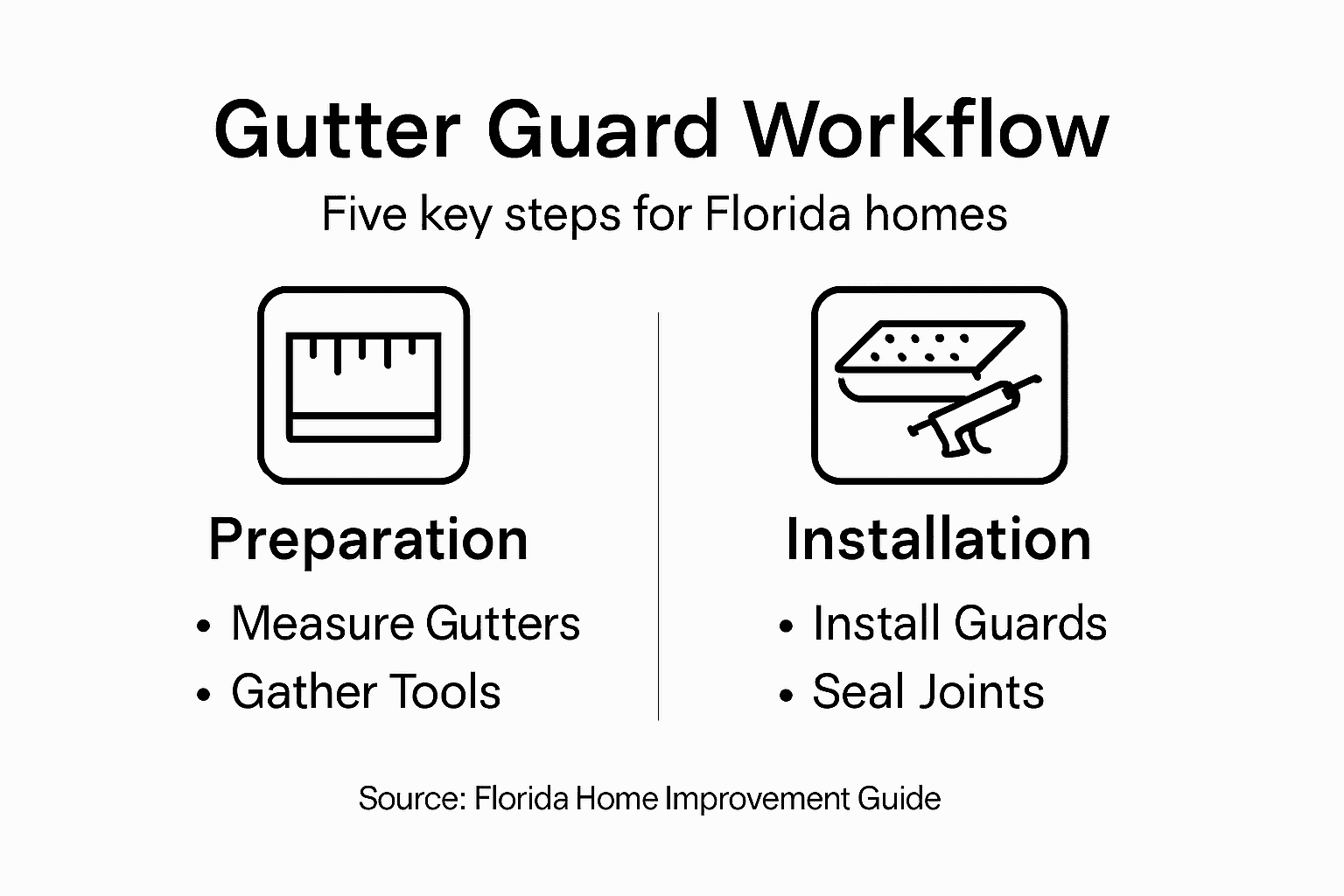
Professional gutter installation standards emphasize precise alignment and comprehensive sealing techniques. Use a carpenter’s level to verify that each gutter guard section maintains a consistent slope toward the downspouts, typically angling about 1/16 inch per foot. This slight gradient ensures water will flow efficiently and prevents potential standing water that could lead to debris accumulation or system failure.
Home inspection guidelines recommend a comprehensive sealing process for all gutter connections. Apply a high quality exterior grade silicone sealant at every joint and connection point, paying special attention to corner sections and transitions where water might potentially leak. Run your fingers gently along the sealed areas to ensure a smooth continuous seal with no gaps or air bubbles that could compromise water resistance. Take your time during this process, as proper sealing is crucial for protecting your home from water damage in Florida’s challenging weather conditions.
Pro Tip: Test your sealed gutter system by running a garden hose along the length and watching for any unexpected water leakage or improper drainage.
Step 5: Test Water Flow and Inspect for Gaps
Testing your newly installed gutter guard system is the final critical step that ensures your Florida home remains protected from water damage. This verification process will help you confirm that every component works precisely as intended, preventing potential water intrusion and drainage issues.
Gutter installation standards recommend a comprehensive water flow testing method. Start by using a garden hose to simulate heavy rainfall conditions, directing water along the entire gutter system. Observe how water moves through the guards, checking for smooth, uninterrupted flow toward downspouts. Watch carefully for any unexpected water spillover, leakage at connection points, or areas where water might pool or bypass the gutter guards.
Home inspection protocols emphasize thorough visual inspection during water testing. Move around your home’s perimeter, examining each section of the gutter system from ground level. Look for subtle signs of water escaping between guard sections, checking that debris guards remain firmly in place and that no unexpected water streams are forming along your home’s foundation. Pay special attention to corner sections and transitions, which are most likely to reveal potential installation weaknesses.
Pro Tip: Perform your water flow test during daylight and have a helper observe from different angles to catch any hard-to-spot drainage issues.
Compare different gutter guard testing and inspection elements:
| Inspection Aspect | Purpose | Best Practice |
|---|---|---|
| Water Flow Test | Detect leaks or blockages | Use garden hose for simulation |
| Visual Inspection | Find gaps and loose sections | Walk perimeter after test |
| Corner Check | Spot vulnerable transition spots | Pay special attention to edges |
| Helper Involvement | Ensure safety and thorough review | Have a second observer during test |
Protect Your Florida Home with Expert Gutter Guard Installation
Dealing with water damage risks and clogged gutters can be overwhelming, especially in Florida where heavy rain and storms are common. This article highlights the importance of precise measurement, proper installation, and thorough sealing to keep your gutters working flawlessly. If you want to avoid costly repairs and maintain a reliable water drainage system, professional gutter guard installation is the key. At Larry’s Gutters, we specialize in seamless gutter and gutter guard solutions custom-fit for Central Florida homes, ensuring your gutters handle intense rainfall and resist humidity-related corrosion.

Ready to stop second-guessing your gutter system and protect your home from water damage? Visit Larry’s Gutters to request your free quote today. Our expert team will guide you through seamless gutter installation, gutter guard fitting, and ongoing maintenance to keep your gutters in peak condition. Don’t wait for the next storm to find out if your gutters are ready. Contact us now and enjoy peace of mind with a professionally installed gutter system designed for Florida’s unique weather challenges.
Frequently Asked Questions
How do I assess my gutters for installation?
To assess your gutters, gather tools like a ladder and measuring tape. Inspect for any damage or misalignment, then measure the length of each gutter section accurately to ensure an effective gutter guard installation.
What tools do I need for installing gutter guards?
You will need various tools, including a sturdy ladder, safety glasses, work gloves, and a power drill. Gather these tools before starting to create a secure and efficient installation process.
How should I install gutter guards securely?
Begin by placing the first gutter guard section at the end of the gutter run and use fasteners to secure each section. Space the fasteners every 12 to 18 inches to provide support and prevent sagging during heavy rain.
What should I check after installing gutter guards?
After installation, check the alignment of each gutter guard section using a level. Ensure that they maintain a slight slope toward downspouts and seal all connections to prevent leaks and ensure proper water drainage.
How can I test the water flow in my gutter guard system?
Simulate rain by using a garden hose to pour water along the gutter system. Observe the flow to catch any leaks or blockages, ensuring that water drains efficiently toward downspouts without pooling.
What are the key considerations for gutter guard installation in Florida?
Focus on proper gutter slope, corrosion-resistant fasteners, overlapping sections, and sealing at joints. These factors are essential for maintaining gutter effectiveness against Florida’s frequent heavy rains.
