
TL;DR:
- Regular gutter maintenance involves cleaning, inspecting, and flushing to prevent costly damage to your home’s foundation and fascia. Using proper tools, following a safe ladder setup, and maintaining downspout extensions are essential for effective care, while neglecting these steps often leads to severe repairs. Even with guards installed, routine inspections after storms are necessary to ensure optimal water flow and system performance.
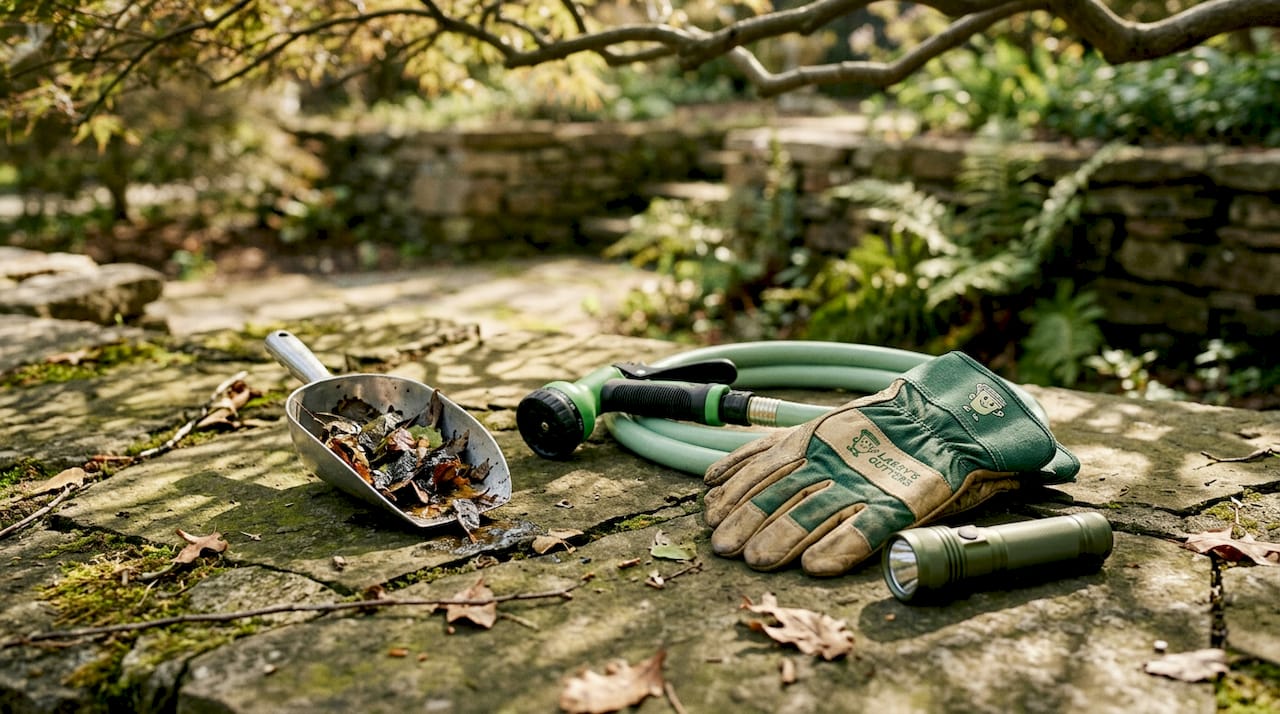
Gutter care dos and don’ts are defined as the set of proven practices and critical mistakes that determine whether your gutter system protects your home or quietly destroys it. Clogged or damaged gutters push water into your fascia, foundation, and siding, turning a $50 cleaning job into a $5,000 repair. The tools you need are straightforward: a gutter scoop, an extension ladder with a stabilizer, work gloves, and a garden hose with a spray nozzle. Follow this gutter maintenance checklist to stay ahead of every season’s debris load and keep your system running the way it was designed to.
1. The core gutter care dos and don’ts every homeowner must know
Gutter maintenance, the industry term for the full cycle of cleaning, inspection, and repair, is not just about scooping leaves. Cleaning is more than leaf removal; it includes inspecting slope, hangers, fascia, and downspout discharge to confirm the entire system functions as one unit. A gutter trough that looks clean can still fail if the downspout is blocked or the pitch has shifted. Think of your gutters as a single system with one job: moving water from the roof to the ground without touching your home’s structure along the way.
The most important rule in gutter care is consistency. Skipping one season creates compacted debris that holds moisture against the metal, accelerates rust, and adds weight that pulls hangers loose. The second most important rule is safety. More homeowners are injured on ladders during gutter cleaning than during almost any other routine home maintenance task.
2. Do clean gutters on the right schedule
Clean gutters at least twice per year, in late spring after pollen and seed drop and in late fall after leaves have fallen. This baseline applies to most homes. If your property has oak, maple, or pine trees overhanging the roofline, move to a quarterly schedule. Those species drop needles, seeds, and catkins that compact fast and block downspouts within weeks.
Timing matters beyond just frequency. Fall cleaning must happen before the first freeze. Wet debris that freezes inside a gutter expands, bends the trough, and can pull hangers completely out of the fascia. In Central Florida, the concern shifts to summer storm season, when a single afternoon storm can deposit enough debris to block a downspout overnight.
Pro Tip: Schedule your fall cleaning for late November rather than early October. Cleaning too early means you will be back up the ladder again after the bulk of the leaves fall.
3. Do use the right tools for the job
The right equipment makes gutter cleaning faster, safer, and less damaging to the gutters themselves. Plastic gutter scoops are the correct choice over metal ones because they conform to the gutter’s curved profile without gouging aluminum. A garden hose fitted with a pistol-grip spray nozzle lets you control water pressure precisely. For hard-to-reach sections, a gutter cleaning wand attachment extends your reach without repositioning the ladder as often.
Here is the core tool list every homeowner should have before starting:
- Plastic gutter scoop or small trowel
- Extension ladder sized to your home (16 ft for single-story, 24 ft for two-story)
- Ladder stabilizer (standoff) to protect gutters and improve balance
- Garden hose with pistol-grip nozzle
- Heavy-duty work gloves and safety glasses
- Debris bucket with a ladder hook
- Downspout strainers to reduce future clogging
Review the full gutter maintenance tools list before your next cleaning session to confirm you have everything on hand.
4. Do flush gutters and downspouts to confirm clear flow
Removing visible debris is only half the job. After scooping, flush the gutter from the far end toward the downspout and watch the water move. Flushing from the far end acts as a diagnostic: if water pools mid-run, you have a slope problem or a hidden blockage. If water exits the downspout cleanly at ground level, the system is clear.
Downspout blockages are deceptive. Even if the gutter trough looks clean, a clog in the downspout or underground drain causes the same overflow damage as a full trough. If water overflows above the downspout outlet rather than exiting at the bottom, the downspout is blocked. Clear it by flushing from the top with a garden hose or feeding a plumber’s snake down from the top opening.
Pro Tip: Check the water flow at ground level, not just at the downspout opening. Underground drain extensions can clog silently and redirect water straight toward your foundation.
5. Do maintain proper downspout discharge distance
Downspouts that deposit water directly at the base of your home are one of the most common and most overlooked causes of foundation damage. Downspouts should discharge water at least 4 to 6 feet from the foundation to prevent soil saturation. Splash blocks and downspout extenders are inexpensive fixes that accomplish this. A proper downspout installation guide covers the correct discharge angles and extension options for different yard grades.
Check the discharge point every time you clean. Extenders get knocked out of position by lawn mowers, foot traffic, and heavy rain. A displaced extender can undo months of careful gutter maintenance in a single storm.
6. Do prioritize ladder safety above everything else
Improper ladder placement and overreaching are the leading causes of gutter cleaning injuries. The fix is simple but requires discipline: move the ladder more often than feels necessary. Most people overreach because repositioning feels like extra work. That extra work is what keeps you off the ground.
Follow these steps every time you set up a ladder:
- Use an extension ladder rated for your weight plus tools and debris.
- Set the ladder at a 4:1 angle: one foot out for every four feet of height.
- Place the feet on firm, level ground. Use a ladder leveler on uneven surfaces.
- Attach a ladder stabilizer to keep the ladder off the gutter and distribute contact points. These cost $30 to $70 and prevent both gutter damage and tip-over accidents.
- Maintain three points of contact at all times: two hands and one foot, or two feet and one hand.
- Never lean past your hip. If you cannot reach comfortably, climb down and move the ladder.
Pro Tip: Never lean a ladder directly against a gutter. The gutter will bend, the ladder will slip, and you will fall. A stabilizer is not optional equipment.
7. Don’t neglect downspouts or ignore overflow signs
Overflowing gutters and staining below the gutter line are the clearest signs that your system needs immediate attention. Water stains on fascia boards mean water has been sitting in the trough long enough to overflow repeatedly. That moisture rots wood, attracts pests, and eventually compromises the roof edge. Do not wait for the next scheduled cleaning if you see these signs after a rainstorm.
Downspout neglect is the single most common gutter maintenance mistake. Homeowners clean the trough and skip the downspout entirely, then wonder why water still pools near the foundation. Every cleaning session must include a downspout flush.
8. Don’t use a pressure washer on your gutters
A pressure washer feels like an efficient solution, but it causes more damage than it prevents. High-pressure water drives debris under shingles, forces water into fascia seams, and can strip protective coatings from aluminum gutters. A standard garden hose with a spray nozzle delivers enough pressure to flush debris and test flow without the collateral damage.
The same logic applies to ice removal in winter climates. Never pry ice out of gutters with a tool. Prying bends the trough, cracks seams, and pulls hangers loose. Use calcium chloride ice melt in a nylon stocking laid across the gutter to melt ice channels safely.
9. Don’t assume gutter guards eliminate maintenance
Gutter guards reduce how often you clean, but they do not eliminate the need to clean. No gutter guard fully eliminates maintenance. Micro-mesh guards perform best among available types, but debris still accumulates on the guard surface and fine material passes through over time. Inspect and clean guards at least once per year, and check them after major storms.
The gutter guard installation workflow matters as much as the product itself. Guards installed incorrectly can trap debris more effectively than no guard at all, creating a mat of compacted material that blocks water entry into the trough.
10. Don’t skip post-storm inspections
Scheduled cleaning after major storms is necessary regardless of your regular maintenance timetable. A single storm can deposit enough debris to block a downspout completely, and that blockage will cause overflow damage before your next scheduled cleaning. A post-storm check takes 15 minutes and costs nothing. Ignoring it can cost thousands.
Check for displaced downspout extenders, debris accumulation at downspout openings, sagging sections caused by debris weight, and any visible separation at gutter joints or hangers.
Key takeaways
Effective gutter maintenance requires cleaning twice per year at minimum, flushing downspouts every session, and following strict ladder safety protocols to prevent both property damage and injury.
| Point | Details |
|---|---|
| Clean on schedule | Clean at least twice per year; quarterly for homes with heavy tree coverage. |
| Flush every session | Always flush gutters and downspouts after debris removal to confirm clear flow. |
| Ladder safety is non-negotiable | Use a stabilizer, follow the 4:1 angle rule, and move the ladder instead of overreaching. |
| Downspout discharge distance | Extend downspouts at least 4 to 6 feet from the foundation to protect against water damage. |
| Gutter guards still need inspection | Even micro-mesh guards require annual cleaning and post-storm checks. |
What I have learned from years of watching gutters fail
The most expensive gutter repairs I have seen all share one cause: deferred maintenance on downspouts. Homeowners clean the trough, skip the flush, and discover six months later that their fascia is rotting or their foundation has shifted. The downspout is the most neglected part of the system and the most critical.
The second pattern I keep seeing is over-reliance on gutter guards. Guards are a useful tool for reducing cleaning frequency, not eliminating it. A homeowner who installs micro-mesh guards and stops inspecting entirely will eventually find a mat of compacted pine needles sitting on top of the guard, redirecting every raindrop over the edge of the gutter. Combine guards with a seasonal cleaning routine and you get real protection.
On tools: you do not need expensive equipment. A $15 plastic scoop, a $50 stabilizer, and a garden hose handle 90% of what a typical home requires. Spend money on the stabilizer before anything else. It is the one piece of equipment that directly prevents injury. Tree trimming is the most overlooked preventive step of all. Cutting back branches that overhang the roofline by even three feet can cut your cleaning frequency in half.
— Larrysgutters
Why seamless gutters make maintenance easier long-term
If you are spending significant time every year cleaning, patching, and re-sealing sectional gutters, the system itself may be the problem. Seamless gutters eliminate the joints where leaks and debris accumulation concentrate, making every cleaning session faster and every inspection simpler. Larrysgutters specializes in custom-fit seamless gutter installation designed for Central Florida’s heavy rainfall and storm patterns.

Larrysgutters also installs gutter guards and downspout extensions, and the team can advise on the right configuration for your tree coverage and roof pitch. If you are weighing the upgrade, the breakdown of seamless gutter value covers what homeowners actually get for the investment. Request a free quote directly through the Larrysgutters website and get a system built for your specific home.
FAQ
How often should gutters be cleaned?
Clean gutters at least twice per year, in late spring and late fall. Homes with oak, maple, or pine trees overhead need quarterly cleaning.
What is the safest way to clean gutters?
Use an extension ladder with a stabilizer, follow the 4:1 angle rule, and maintain three points of contact at all times. Move the ladder frequently rather than overreaching.
Do gutter guards eliminate the need to clean?
No. Micro-mesh guards perform best but still require annual inspection and cleaning because debris accumulates on the guard surface over time.
How far should downspouts discharge from the foundation?
Downspouts should discharge water at least 4 to 6 feet from the foundation. Use splash blocks or extenders to reach that distance and check their position after every storm.
What are the signs that gutters need immediate attention?
Overflowing water and staining below the gutter line indicate clogging or damage that requires cleaning and inspection right away, regardless of your regular schedule.