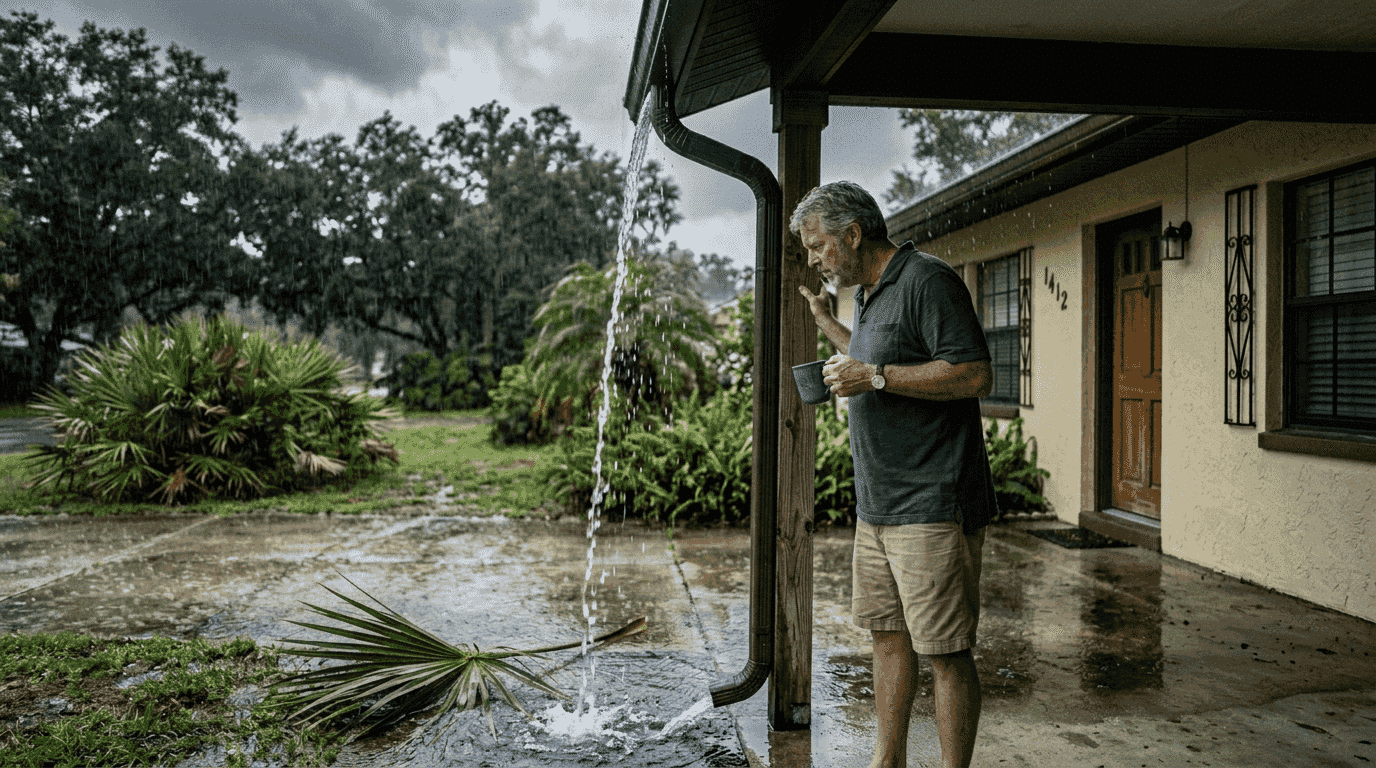
A typical 2,000 square foot roof in Central Florida sheds over 1,200 gallons per inch of rain during heavy storms. Without properly functioning gutters, this massive volume overwhelms landscapes, erodes foundations, and causes costly water damage. This guide reveals how to select, install, and maintain gutters that protect your home through Central Florida’s intense storm seasons.
Table of Contents
- Understanding The Role Of Gutters In Central Florida Storms
- Gutter Installation Best Practices For Storm Management
- Choosing The Right Gutter Size And Material
- Maintenance Practices To Keep Gutters Storm-Ready
- Common Misconceptions About Gutters During Storms
Key takeaways
| Point | Details |
|---|---|
| Water volume management | Gutters channel thousands of gallons away from foundations during storms, preventing erosion and structural damage. |
| Installation precision matters | Correct pitch of 1/4 inch per 10 feet ensures water flows efficiently without pooling or overflowing. |
| Material selection impacts durability | Metal gutters handle 40% more water than smaller alternatives and resist storm damage better than vinyl. |
| Maintenance prevents failures | Cleaning twice yearly and using gutter guards reduces clog-related overflow by up to 70%. |
| Professional expertise protects investments | Custom installation and seasonal maintenance programs ensure gutters remain storm-ready year-round. |
Understanding the role of gutters in Central Florida storms
Central Florida homeowners face some of the most intense rainfall in the United States. During summer thunderstorms, a typical roof must manage an extraordinary volume of water in minutes. A 2,000 square foot roof sheds over 1,200 gallons per inch of rainfall, creating a cascade that can devastate unprepared properties.
Gutters serve as your home’s primary defense against this deluge. They capture runoff at the roofline and direct it through downspouts to safe drainage areas away from your foundation. Without this organized water management system, stormwater pours directly off roof edges onto the ground below.
This uncontrolled flow creates immediate problems. Water pools against foundation walls, seeping into microscopic cracks and expanding them over time. Soil erodes around your home’s perimeter, destabilizing the foundation and creating uneven settling. Landscaping suffers as heavy runoff washes away mulch, topsoil, and even plants.
The damage compounds with each storm. Foundation cracks widen, allowing moisture intrusion that leads to mold growth inside walls. Exterior paint and siding deteriorate from constant water exposure. Even concrete driveways and walkways crack as soil underneath washes away.
Key protection benefits of functional gutters:
- Foundation preservation by directing water away from walls and preventing soil erosion
- Landscape protection by controlling water flow to designated drainage areas
- Exterior surface preservation by preventing water damage to siding, paint, and trim
- Basement and crawl space protection by reducing moisture intrusion risks
Pro Tip: Walk around your property during the next heavy rain. Watch where water flows off your roof. Any areas where water streams directly down indicate gutter problems that need immediate attention.
Understanding why gutters matter for Florida homes helps you prioritize this critical home protection system. The investment in quality gutters pays dividends by preventing thousands in potential water damage repairs.
Gutter installation best practices for storm management
Proper installation separates functional gutters from systems that fail during critical moments. The most crucial factor is pitch, the slight downward angle that guides water toward downspouts. Industry standards recommend 1/4 inch slope per 10 feet to maintain consistent flow without creating visible sagging.
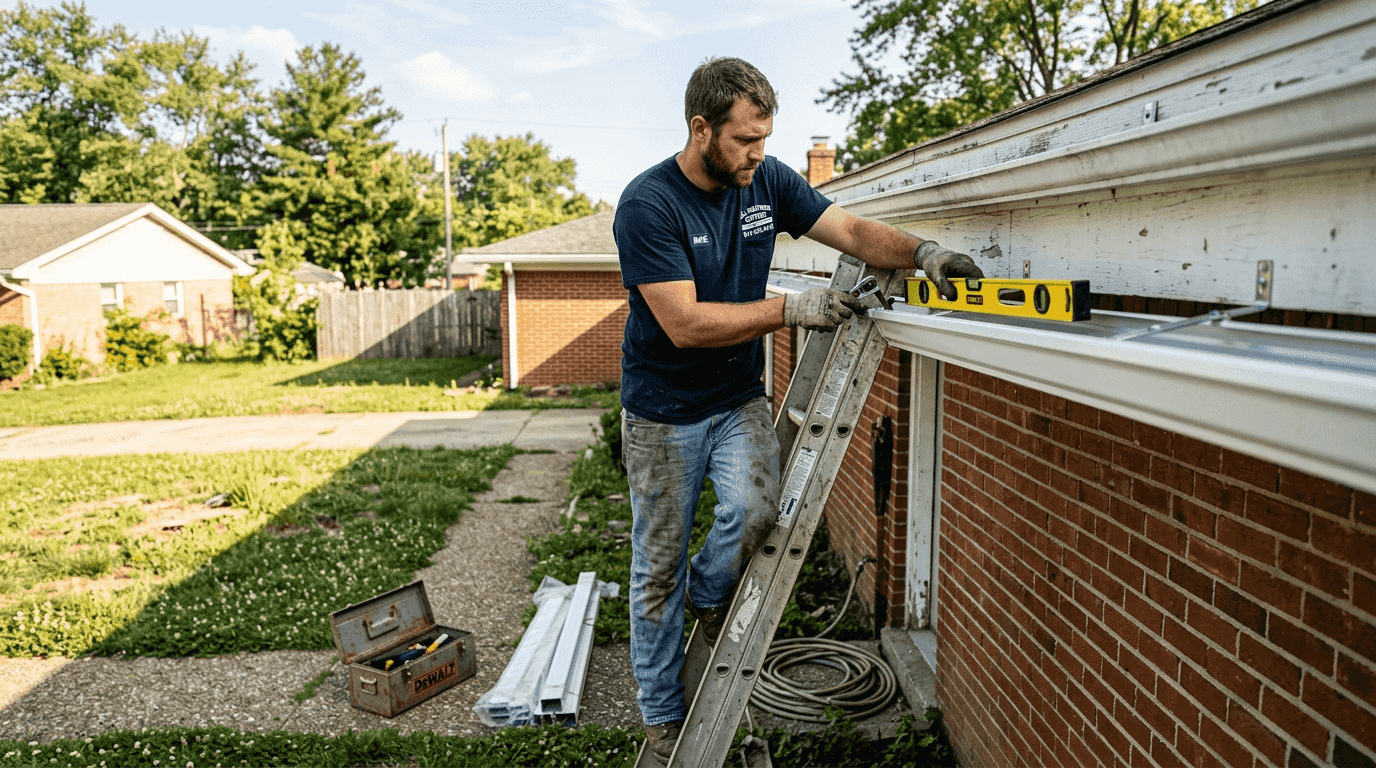
Incorrect pitch creates multiple problems. Gutters that are too level allow water to pool, attracting mosquitoes and adding weight that stresses hangers. Gutters pitched too steeply look visually unappealing and may not catch water effectively during light rains. Both scenarios lead to overflow during heavy storms when you need protection most.
Downspout placement requires strategic planning based on your roof’s square footage and Central Florida’s rainfall intensity. Each downspout should serve no more than 35 feet of gutter run for optimal drainage during peak storms. Corner locations work best, directing water away from high-traffic areas and sensitive landscaping.
Critical installation steps for storm resilience:
- Measure roof area precisely to calculate required gutter capacity
- Mark exact pitch measurements every 10 feet along the fascia board
- Install heavy-duty hangers every 24 inches to support water weight during storms
- Position downspouts to direct water at least 10 feet from the foundation
- Test the system with a hose to identify any pooling or overflow issues before storms arrive
Custom measurements matter because every home faces unique challenges. Roof complexity, surrounding trees, and soil drainage characteristics all influence ideal gutter configuration. Generic installations often fail because they ignore these site-specific factors.
Pro Tip: Schedule installation during dry weather when contractors can take precise measurements and ensure proper alignment. Rushing installation during storm season often leads to compromised pitch accuracy.
Professional installers bring specialized tools that ensure precision. Laser levels verify pitch across long runs. Custom seamless gutter machines create perfectly sized sections without leak-prone seams. This expertise makes the difference between gutters that perform for decades and systems that require constant repairs. Following a comprehensive gutter installation checklist for Central Florida ensures nothing gets overlooked.
Choosing the right gutter size and material
Gutter capacity directly impacts storm performance. Standard 5-inch gutters handle moderate rainfall but struggle during Central Florida’s intense downpours. Six-inch gutters provide significantly greater capacity, reducing overflow risk when you need protection most. The size difference might seem minor, but 6-inch gutters handle 40% more water than their smaller counterparts.
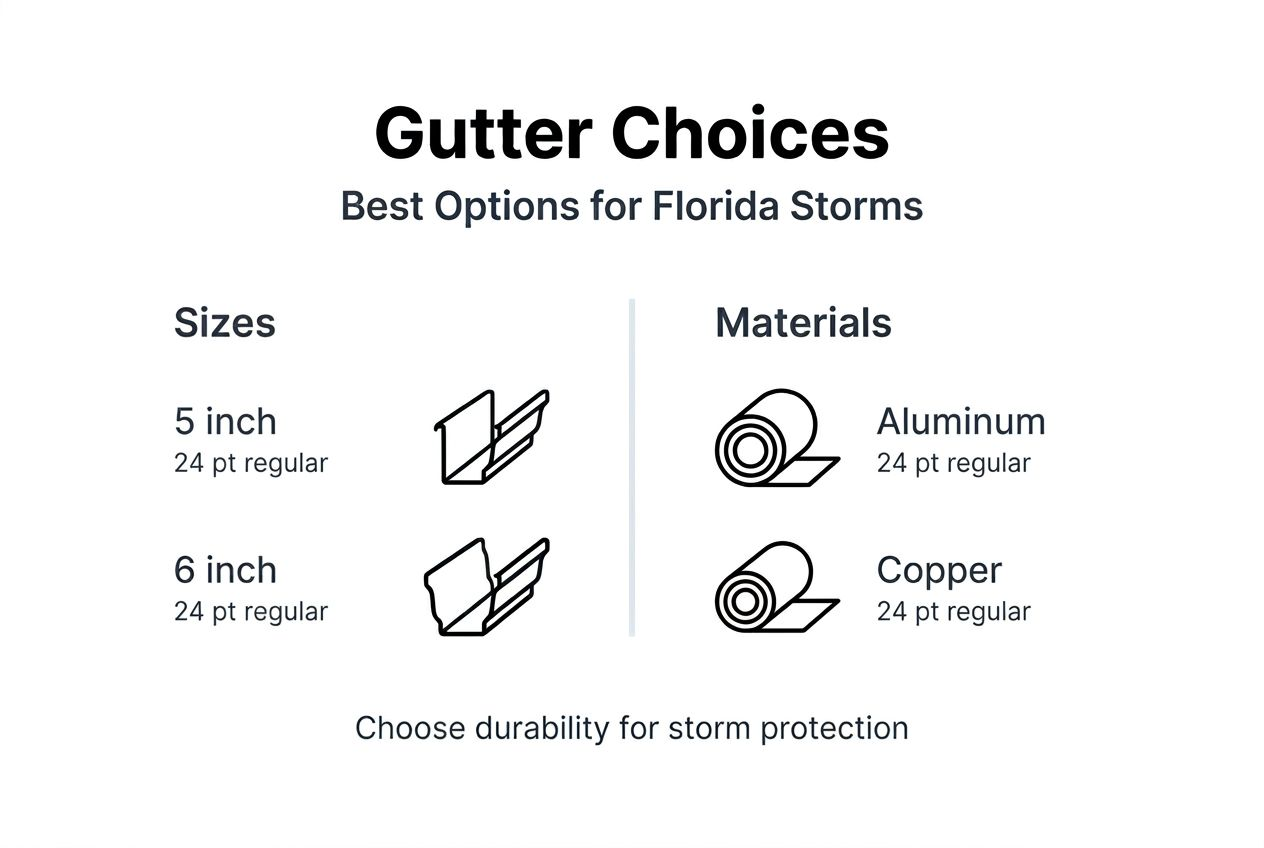
Material selection affects both durability and maintenance requirements. Aluminum gutters dominate Central Florida installations because they resist corrosion in humid climates while remaining lightweight enough for easy installation. Protective coatings extend lifespan by preventing oxidation from constant moisture exposure.
Vinyl gutters offer lower upfront costs but rarely match metal performance over time. Florida’s intense UV exposure causes vinyl to become brittle and crack. Temperature fluctuations lead to expansion and contraction that loosens joints. Most vinyl systems require replacement within 10 years, while quality aluminum gutters last 20 years or more.
Material comparison for Central Florida conditions:
| Material | Storm Capacity | Durability | Maintenance | Cost |
|---|---|---|---|---|
| 6-inch Aluminum | Excellent | 20+ years | Low | Moderate |
| 5-inch Aluminum | Good | 20+ years | Low | Lower |
| Vinyl | Fair | 8-10 years | Moderate | Lowest |
| Copper | Excellent | 50+ years | Very Low | Highest |
Seamless construction eliminates weak points where leaks typically develop. Traditional sectional gutters join every 10 feet, creating dozens of potential failure points. Seamless gutters feature continuous runs with joints only at corners and downspouts, dramatically reducing leak risk.
Pro Tip: Calculate total cost over 20 years, not just initial installation. A higher quality system that lasts twice as long with less maintenance often costs less than replacing budget gutters multiple times.
Copper gutters represent the premium option, offering unmatched longevity and developing an attractive patina over time. However, their significantly higher cost makes them impractical for most homeowners. Aluminum provides the best balance of performance, durability, and value for Central Florida’s demanding conditions. Understanding cost-effective gutter options helps you make informed decisions that protect your budget and your home.
Maintenance practices to keep gutters storm-ready
Clogged gutters transform from protective systems into damage sources during storms. Accumulated leaves, pine needles, and debris block water flow, causing overflow that defeats the entire purpose of having gutters. Water spills over edges exactly where you don’t want it: directly against your foundation and landscaping.
Regular cleaning prevents these failures. Cleaning reduces clogging by up to 70% when performed on a consistent schedule. Central Florida homeowners should clean gutters at minimum twice yearly: once in late spring after oak pollen season and again in early winter before the rainy season intensifies.
Gutter guards provide an additional defense layer by blocking large debris while allowing water to flow through. Mesh screens, foam inserts, and reverse-curve systems each offer different benefits. Quality guards reduce maintenance frequency but don’t eliminate it entirely. Small debris still accumulates over time, requiring periodic inspection and cleaning.
Essential maintenance tasks for storm readiness:
- Remove all leaves, twigs, and debris from gutter channels and downspouts
- Flush gutters with a hose to check flow and identify any remaining blockages
- Inspect hangers and brackets for looseness or damage from storm winds
- Check for rust spots or holes that need sealing before they expand
- Verify downspout extensions direct water far enough from the foundation
Inspection timing matters as much as cleaning frequency. Schedule checks immediately after major storms to catch damage before the next weather event. Look for sagging sections that indicate stressed hangers or water weight issues. Test water flow during inspections by running a hose to simulate moderate rainfall.
Pro Tip: Mark your calendar with specific maintenance dates rather than waiting until you notice problems. Proactive scheduling prevents forgotten tasks that lead to storm season emergencies.
Seasonal preparation becomes routine with a systematic approach. Following a detailed gutter maintenance checklist for Central Florida ensures nothing gets overlooked. Professional maintenance services handle these tasks for homeowners who lack time or prefer expert care. They spot developing issues early and make corrections before small problems become expensive repairs. Learning proven gutter cleaning tips for Central Florida homeowners helps you maintain systems effectively between professional service visits.
Common misconceptions about gutters during storms
Many homeowners believe larger gutters automatically solve overflow problems. While size matters, installation quality determines actual performance. Oversized gutters installed with incorrect pitch still pool water and fail during heavy rains. Proper slope and strategic downspout placement matter more than raw capacity in most situations.
Another widespread myth suggests gutters are maintenance-free once installed. This dangerous assumption leads to neglected systems that fail when storms hit. All gutters require regular attention regardless of quality or cost. Even the best materials and construction can’t prevent debris accumulation from surrounding vegetation.
Gutter guards create perhaps the biggest misconception of all. Marketing materials often promise
Recommended
- Why Gutters Matter for Central Florida Homes
- Gutter Systems: Protecting Central Florida Homes Effectively
- Role of Gutters in Home Protection—Florida Needs
- Gutter System Basics – Protecting Central Florida Homes
- Afwatering bij kozijnen: Voorkom Vochtproblemen
- Gutter Services The Villages FL
- Larry’s Gutters
