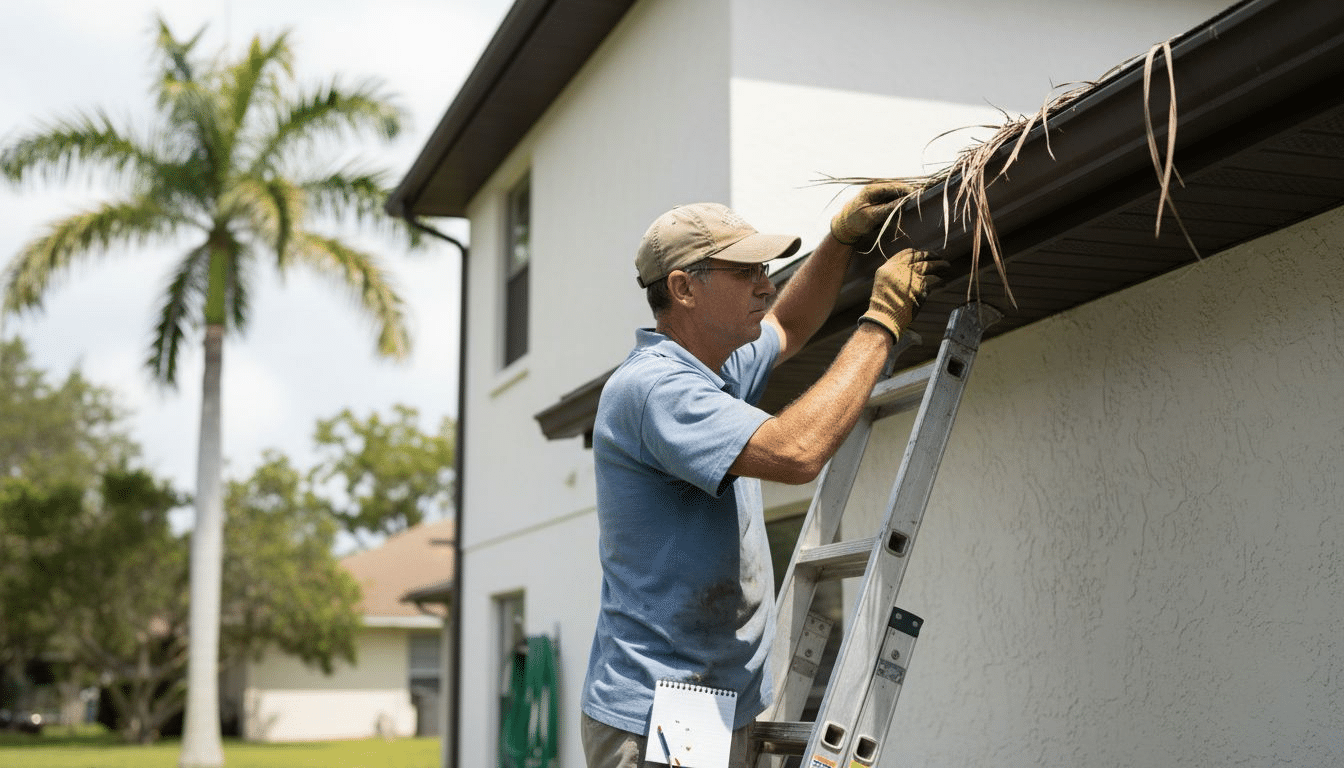
Water damage in Central Florida can turn a quiet evening into a costly headache for any homeowner. With our heavy storms in Lake, Marion, and Sumter counties, a small gutter problem often leads to foundation issues and mold faster than you expect. A thorough evaluation of your gutter system is more than routine—it protects your property and keeps repairs manageable. This guide breaks down what a reliable gutter inspection checklist covers so you can confidently safeguard your home against Florida’s toughest weather.
Table of Contents
- Defining A Gutter Inspection Checklist
- Common Issues And Inspection Points
- Essential Tools And Safety Practices
- Risks Of Neglected Gutters In Florida
- Expert Tips For Effective Inspections
Key Takeaways
| Point | Details |
|---|---|
| Gutter System Evaluation | Conduct a thorough inspection of your gutter system, checking for leaks, rust, and proper water flow to prevent foundation damage. |
| Climate Considerations | In Central Florida, adjust inspections to monitor for heavy rain, humidity, and debris, which can affect gutter performance. |
| Safety Practices | Always prioritize safety during inspections by maintaining three points of contact and using a sturdy ladder on stable ground. |
| Preventative Maintenance | Schedule gutter cleanings twice yearly and inspections after heavy storms to minimize the risk of costly repairs and maintenance issues. |
Defining a Gutter Inspection Checklist
A gutter inspection checklist is your roadmap for evaluating whether your home’s guttering system works the way it should. It’s not just about looking at the gutters—it’s about confirming they can handle Florida’s intense rainfall and protect your foundation from water damage.
At its core, a gutter inspection checklist involves a thorough evaluation of your entire guttering system. This includes the horizontal channels that collect water, the downspouts that carry it away, brackets, fasteners, and joints that hold everything together. The goal is straightforward: confirm your gutters are functioning properly to keep water away from your home’s foundation.
Think of it like a health checkup for your gutters. Just as a doctor checks your blood pressure, reflexes, and heart function, an inspection checks whether your gutters are correctly sized, free of leaks, rust, cracks, or holes, and positioned to divert water at least 4 to 6 feet away from your foundation. This distance matters significantly in Central Florida’s wet climate.
According to InterNACHI standards for gutter inspection, inspectors evaluate system adequacy, structural integrity, and functionality as part of comprehensive roof inspection in residential properties. The inspection ensures your guttering system can handle environmental loads and perform its core function: protecting your home from moisture problems like mold and wood rot.
Why does this checklist exist? Because problems in your gutter system can trigger expensive water damage inside your home. A small crack today becomes a major foundation issue in six months if water pools around your home’s base.
What Gets Inspected
A proper checklist covers these critical areas:
- Gutters and channels for leaks, rust, holes, and proper pitch
- Downspouts for secure connections and proper water discharge
- Brackets and fasteners for secure attachment to your roofline
- Joints and seams for separation or deterioration
- Water flow to confirm gutters direct water appropriately away from your foundation
- Debris accumulation that blocks water movement
- Roof flanges where gutters connect to your roofing system
Each component has a specific role in the overall system. When any part fails, the entire system’s effectiveness declines. ANSI/SPRI GT-1 standards establish uniform definitions and test requirements for evaluating gutter structural performance and durability across residential properties.
In Central Florida, your inspection checklist should also account for our specific climate challenges. Heavy afternoon thunderstorms, occasional hurricane-force winds, and persistent humidity all stress your gutter system differently than milder climates experience.
A gutter inspection checklist transforms vague concerns into a systematic evaluation that identifies problems before they become expensive repairs.
Pro tip: Schedule your gutter inspection after heavy storms in Florida to catch storm-related damage before it worsens, and have a second inspection done in late fall when leaves are most likely to clog your system.
Common Issues and Inspection Points
Your gutters face constant stress in Central Florida. From intense rainfall to humidity and debris, they encounter challenges year-round. Knowing what to look for during an inspection helps you catch problems before they damage your home.
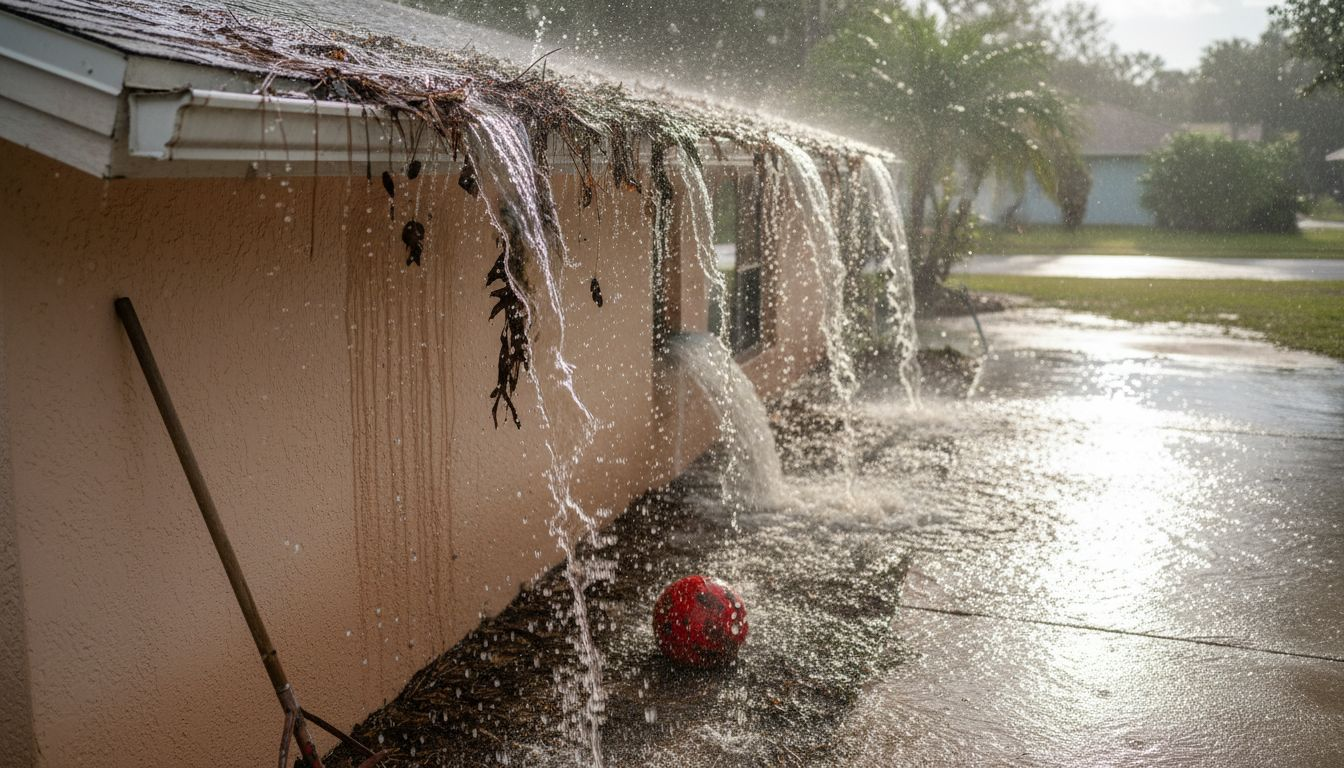
The most common gutter problems fall into several categories. Inadequate sizing causes overflow during heavy rain, allowing water to spill over the sides instead of flowing through the downspout. Rust, cracks, and holes develop over time, creating leak points that drip water onto your soffit, fascia, and eventually your foundation. Improper slope prevents water from draining correctly, causing standing water that accelerates rust and attracts mosquitoes.
Downspout problems are equally serious. If your downspout doesn’t extend far enough from your foundation, water dumps right next to your home’s base. This pools around your foundation and seeps into your crawlspace or basement. You need water diverted at least 4 to 6 feet away to prevent moisture damage.
Debris accumulation blocks water flow completely. Leaves, pine needles, and roof granules pile up in your gutters, especially in fall and after storms. This standing water and debris accumulation creates ideal conditions for rust, mold growth, and pest infestations.
Key Inspection Points
When you inspect your gutters, focus on these specific areas:
- Gutter pitch and slope to confirm water flows toward downspouts
- Seams and joints where sections connect—common leak locations
- Fasteners and brackets to ensure gutters are securely attached
- Downspout extension and final discharge location
- Gutter interior condition for rust spots, holes, and deterioration
- Roof flange connection where gutters meet your roofline
- Water flow patterns during or after rain to spot overflow issues
Structural integrity matters significantly. Gutter attachment strength and resistance to environmental stressors determine whether your gutters can handle Florida’s wind loads and heavy rainfall without detaching or failing at joints.
In Central Florida, pay special attention to debris after thunderstorms. Our heavy afternoon downpours often bring branches and roof material into gutters. Check your gutters within 24 hours of any storm.
The difference between a minor repair and a major foundation problem often comes down to catching gutter issues during inspection before they escalate.
Pro tip: Use binoculars to inspect your gutters from the ground first—this helps you spot obvious problems like sagging sections, separated joints, or missing downspout extensions before climbing a ladder.
Essential Tools and Safety Practices
Gutter inspection isn’t just about what you look for—it’s about doing it safely with the right equipment. A poorly executed inspection can land you in the emergency room faster than a Florida thunderstorm arrives. The good news: proper preparation prevents most accidents.
You’ll need specific tools to inspect your gutters effectively. A sturdy ladder is non-negotiable, but it must be appropriate for your home’s height and placed on stable, level ground. Work gloves protect your hands from sharp edges, rust, and debris. A flashlight helps you see inside gutters and identify corrosion, holes, and damage you’d miss in shadows.
Additional tools make inspection more thorough. A transit level or slope gauge confirms your gutters pitch correctly toward downspouts. A moisture meter detects water damage in fascia boards and soffit areas. A camera or smartphone documents conditions for future reference or to show contractors what needs repair.
Safety comes before everything else. Occupational safety guidelines emphasize using personal protective equipment including gloves and eye protection when inspecting gutters. You must also ensure appropriate ladder placement and check for electrical hazards near power lines.
Non-Negotiable Safety Rules
These practices prevent falls, injuries, and accidents:
- Use a sturdy ladder with secure footing on level ground
- Maintain three points of contact (two hands and one foot, or two feet and one hand)
- Never lean sideways to reach gutters—reposition the ladder instead
- Wear protective gloves to prevent cuts from sharp edges
- Avoid wet or windy conditions that increase slip risk
- Never work alone—have someone spot you at ground level
- Check for power lines before positioning your ladder
Weather timing matters significantly. Avoid inspection during wet or windy weather to prevent accidents. An afternoon after a dry day gives you better visibility and safer conditions than the day after a storm.
Florida’s heat adds another factor. Inspect during early morning or late afternoon when temperatures are cooler. Metal gutters become extremely hot in midday sun and can cause burns.
Safe inspection practices protect you as much as they protect your home—rushing this step isn’t worth the risk.
Pro tip: Invest in a ladder stabilizer or standoff attachment that keeps your ladder a safe distance from gutters while you work, dramatically reducing strain on your arms and back.
Risks of Neglected Gutters in Florida
Neglected gutters aren’t just an aesthetic problem in Florida—they’re a serious threat to your home’s structural integrity and safety. The combination of our climate, vegetation, and fire risk creates unique challenges that make gutter maintenance non-negotiable.
Moisture damage tops the list of risks from neglected gutters. When gutters clog or fail, water overflows onto your fascia, soffit, and foundation. This trapped moisture seeps into wood, creating ideal conditions for mold, rot, and carpenter ants. Over time, structural damage becomes expensive to repair. Foundation issues can cost $10,000 to $25,000 or more to fix.
Debris accumulation accelerates all these problems. Leaves, pine needles, and roof granules pile up in clogged gutters, trapping moisture and creating weight that pulls gutters away from your roofline. This standing water also attracts mosquitoes and serves as breeding grounds for disease.
Florida’s wildfire risk adds another critical concern. Neglected gutters accumulate combustible debris like leaves and pine needles, increasing wildfire risk by allowing embers to ignite material that can spread fire to your roof’s edge and into your attic. In Central Florida’s wildfire-prone areas, this threat is real and growing.
Specific Florida Risks
Your region faces distinct challenges:
- Moisture and humidity from our subtropical climate accelerate rust and decay
- Heavy rainfall overwhelms undersized or clogged gutters, causing overflow
- Pine needles and debris accumulate year-round, blocking water flow
- Wind damage during storms can separate gutters from fascia
- Fire hazards from embers igniting trapped debris in clogged gutters
- Foundation settling from water pooling around your home’s base
Material matters significantly too. Metal gutters remain in place during fire, while plastic gutters may detach and spread fire to combustible surroundings. Vinyl gutters also degrade faster in Florida’s intense sun and heat.
Here’s how gutter materials compare for Florida homes:
| Material Type | Durability in Florida | Fire Resistance | Typical Lifespan |
|---|---|---|---|
| Aluminum | Resists rust, handles rain | Stays in place during fire | 20-30 years |
| Vinyl | Prone to sun damage | May detach, spreads fire | 10-15 years |
| Galvanized Steel | Strong, may rust without care | Good if coated properly | 15-20 years |
| Copper | Excellent corrosion resistance | Does not melt or detach | 30+ years |
Costs add up quickly when you ignore gutter problems. A $500 gutter repair today prevents a $15,000 foundation repair tomorrow. Water damage to attics, crawlspaces, and interior walls compounds the financial impact.
Neglected gutters transform a manageable maintenance task into catastrophic home damage that threatens your family’s safety and your property’s value.
Pro tip: Schedule gutter cleanings twice yearly—spring and late fall—to prevent debris buildup during Florida’s heavy rain and wind seasons, protecting your home before problems develop.
Expert Tips for Effective Inspections
Effective gutter inspections require more than just looking at your gutters. You need to know what measurements matter, what drainage means, and how to spot problems before they become catastrophic. These expert-backed tips will transform your inspection from casual observation to thorough evaluation.
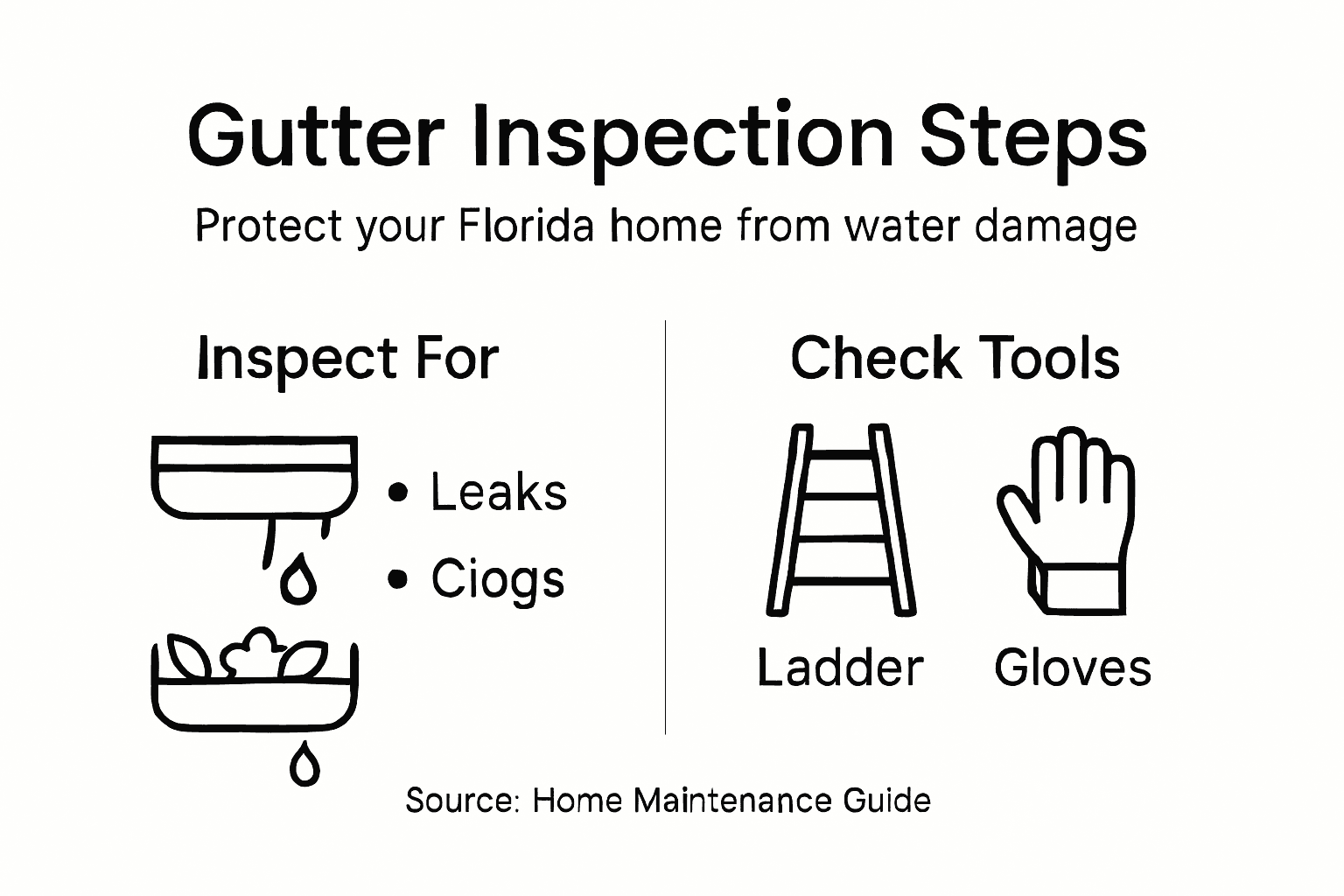
Slope is critical for drainage. Your gutters should pitch toward downspouts at approximately 1/16-inch per foot. This gentle slope keeps water moving without being visible to the eye. If your gutters are level or slope the wrong direction, water pools and creates rust, leaks, and structural damage.
Downspout placement determines whether your inspection actually protects your home. Water should divert at least 4 to 6 feet away from your foundation. Measure the distance from where water exits your downspout to where it hits the ground. If it’s closer than 4 feet, water will pool around your foundation and cause moisture problems.
Gutter sizing matters based on your roof’s dimensions. Standard sizes include 4-inch, 5-inch, and 6-inch gutters. Larger roofs need larger gutters to handle volume during Florida’s intense rainfall. Maintaining sufficient downspout capacity and using appropriate gutter sizes according to roof size helps prevent overflow and water damage.
What to Check During Inspection
Focus your attention on these specific elements:
- Pitch and slope toward downspouts using a level
- Rust spots indicating corrosion starting points
- Leaks and seepage at seams and joints
- Debris accumulation blocking water flow
- Downspout extension distance from foundation
- Fastener condition to ensure gutters stay attached
- Structural integrity of brackets and supports
Structural integrity extends beyond what you see from the ground. Gutters must resist environmental loads such as wind, water, ice, and snow while maintaining secure fastening to avoid detachment. In Florida, this means your system handles both hurricane-force winds and heavy downpours.
Document your findings during inspection. Take photos of rust, leaks, sagging sections, and debris accumulation. This documentation helps you remember problems and provides contractors with clear information for repair estimates.
Timing your inspection matters significantly. Inspect after heavy rain to see how your gutters perform under stress. Check again during dry periods to assess damage without water flow obscuring the view.
Effective inspections combine precise measurements, visual assessment, and documentation—turning vague concerns into actionable information that prevents expensive repairs.
Pro tip: Inspect your gutters quarterly in Florida—at least once every three months—because our weather, debris, and humidity create problems faster than in other regions, catching issues before they escalate.
Compare inspection frequency and outcomes for gutter maintenance:
| Inspection Frequency | Problem Detection Speed | Risk of Costly Damage |
|---|---|---|
| Quarterly (Florida) | Issues spotted before escalation | Low with regular checks |
| Twice yearly (most states) | Delays catching urgent damage | Moderate-late repairs |
| After storms | Immediate storm-related fixes | Minimizes storm impact |
Protect Your Florida Home with Expert Gutter Solutions
The gutter inspection checklist highlights critical challenges Florida homeowners face such as clogged gutters, improper slope, rust, and foundation-threatening water pooling. These issues demand a reliable, custom-fit gutter system that handles heavy rainfall and storm debris while keeping water safely away from your foundation. At Larry’s Gutters, we understand these risks and provide seamless gutter installation, precise repairs, and gutter guard protection designed specifically for Central Florida’s climate and unique needs.

Don’t wait until rust spots, leaks, or clogged downspouts turn into costly structural damage. Get proactive about your home’s defense with Larry’s Gutters. Visit Larry’s Gutters today to request your free quote and discover services for gutter cleaning and repair, seamless gutter installation, and gutter guard installation. Protect your home from water damage and Florida’s unpredictable weather with experienced professionals you can trust.
Frequently Asked Questions
What is a gutter inspection checklist?
A gutter inspection checklist is a systematic tool used to evaluate the performance and condition of a home’s gutter system, ensuring it can effectively manage rainfall and protect against water damage.
What common issues should I look for during a gutter inspection?
During a gutter inspection, you should check for leaks, rust, cracks, holes, proper pitch and slope, debris accumulation, and ensure downspouts direct water at least 4 to 6 feet away from the foundation.
How often should I perform a gutter inspection?
It is recommended to inspect your gutters quarterly or at least twice a year, especially after heavy rain or storms, to catch any issues before they escalate into more significant problems.
What tools do I need for inspecting my gutters?
Essential tools for gutter inspection include a sturdy ladder, gloves, a flashlight, a moisture meter, a level to check for pitch, and a camera to document any findings for follow-up repairs.
