
TL;DR:
- Shared gutters between homes are drainage systems that span property boundaries, collecting rainwater from multiple roofs. Responsibility for maintenance and repairs depends on recorded easements, deeds, and agreements, not physical sharing alone. Proper documentation, communication, and professional inspections are essential to prevent costly disputes and ensure effective shared gutter management.
Shared gutters between homes are continuous rainwater drainage sections that run across two or more adjoining properties, collecting and directing water from multiple rooflines into a single system. You find them most often on semi-detached houses, terraced homes, and townhouses where the rooflines meet at or near a shared boundary. Understanding who owns what, who pays for repairs, and what happens when things go wrong is not just useful knowledge. It can save you from a costly dispute with the person next door.
What shared gutters between homes actually are
The industry term for this setup is “shared” or “party” guttering, and it describes two distinct situations. The first is a physically continuous gutter section that spans both properties, collecting runoff from two roofs into one channel. The second is a system where each home has its own gutter, but water discharge crosses the property boundary before reaching a drain. Both situations create shared responsibility, even when the hardware looks independent.
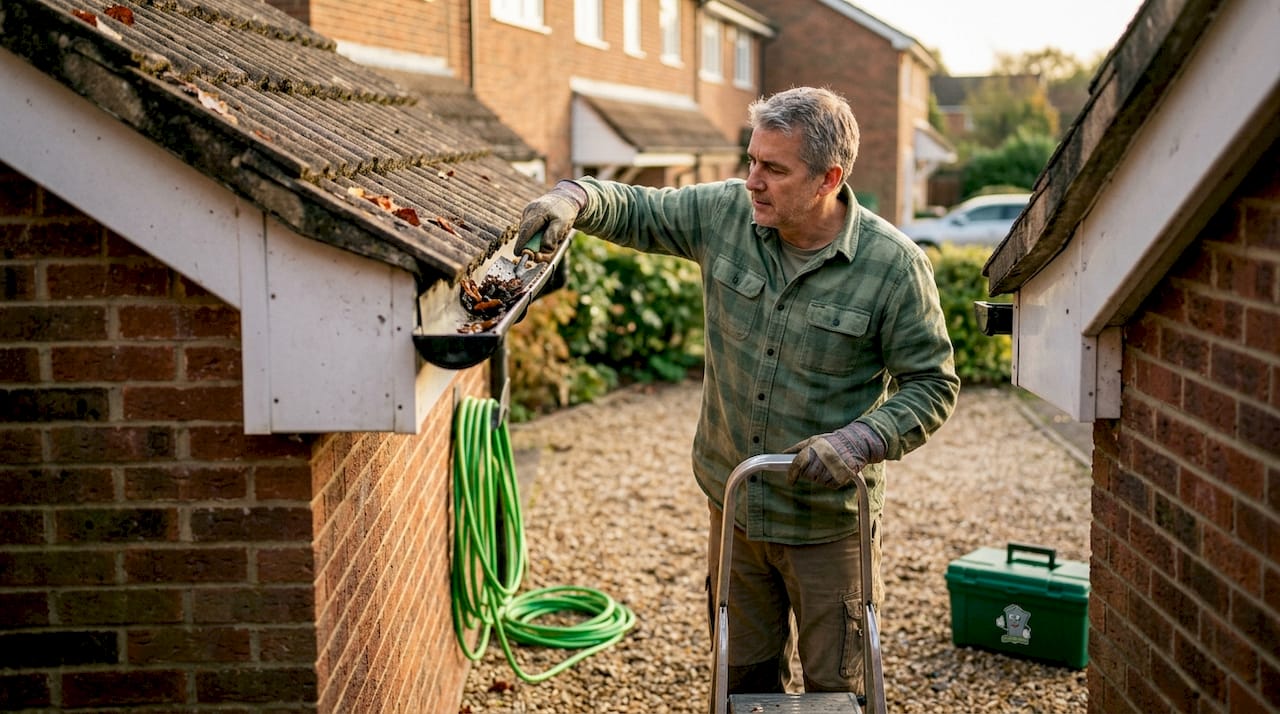
Semi-detached and terraced homes in Florida and across the U.S. commonly use a single downspout positioned at the shared boundary to serve both units. That one downspout is the point where ownership questions get complicated. Legal responsibility depends on recorded easements, deed language, and local rules, not on the physical fact that two homes share a gutter. This distinction matters enormously when a repair bill arrives.
Shared gutter systems also appear in HOA communities and planned developments where the original builder installed a single drainage solution across multiple lots to reduce material costs. In those cases, the HOA’s governing documents typically define maintenance obligations. If you are buying a home in one of these communities, reading those documents before closing is not optional.
Who is responsible for maintaining and repairing shared gutters?
Responsibility for shared gutter maintenance is one of the most misunderstood topics in residential property ownership. Sharing a gutter does not mean sharing ownership. Responsibility depends on which physical components connect to which property and on any recorded easements or written agreements, not on the visual appearance of the system.
Here is how responsibility typically breaks down in practice:
- Your side of the gutter: Each homeowner is generally responsible for the section of guttering attached to their own fascia board and roofline, even when that section feeds into a shared downspout.
- Shared downspipes: Both parties may share responsibility for a blocked or damaged downspout in terraced or semi-detached housing, particularly when it serves both units equally.
- Easement agreements: A recorded easement can override default rules entirely, assigning full maintenance costs to one party or splitting them by a defined formula.
- HOA rules: In planned communities, the HOA declaration often assigns maintenance to the association itself, removing the dispute from neighbor-to-neighbor territory.
The legal stakes are real. Improperly discharged rainwater onto a neighbor’s property creates liability for nuisance or trespass. In jurisdictions like New York, discharge volume and method affect liability directly, and municipal codes set enforceable standards for runoff management. Florida homeowners face similar exposure under state nuisance law, particularly during the heavy rainfall season from June through September.
Pro Tip: Get any verbal maintenance agreement with your neighbor in writing, signed, and notarized. A one-page document specifying who handles cleaning, who pays for repairs, and how costs are split prevents the vast majority of shared gutter disputes before they start.
Documenting your maintenance history also matters. Keep dated photos after every cleaning, save receipts from any contractor work, and note any conversations with your neighbor about gutter condition. That paper trail becomes your defense if a dispute reaches a mediator or small claims court.
What common problems and disputes occur with shared gutter systems?
Shared gutter systems fail in predictable ways, and most disputes trace back to the same short list of physical defects. Common problems include blockages from leaf debris, sagging joints caused by bracket failure, incorrect pitch that pools water instead of draining it, and undersized guttering that overflows during heavy rain. Each defect creates a water pathway that can cross property lines and cause damage.
The disputes that follow these defects tend to escalate quickly because both homeowners feel the other is responsible. Water does not respect boundary lines, and damp penetration into a shared wall is notoriously difficult to attribute to one source without professional assessment.
| Problem type | Typical consequence | Common dispute trigger |
|---|---|---|
| Leaf blockage | Overflow onto fascia and soffit | Neighbor claims damage from your debris |
| Sagging joint | Standing water, joint failure | Leak into shared wall cavity |
| Incorrect pitch | Pooling, mosquito breeding | Structural damp in adjacent unit |
| Undersized gutter | Overflow during storms | Water discharge onto neighbor’s land |
| Blocked shared downspout | Backup into both units | Cost dispute over who pays for clearing |
Expert witness reports in guttering disputes focus on tracing water flow from the defect to the damage, requiring photographic evidence, site measurements, and documented water pathways. Professional surveyors use calibrated moisture meters and thermal imaging to link a specific gutter defect to a specific patch of damp, removing the guesswork that fuels neighbor conflicts. Without that objective evidence, disputes often stall because each party points at the other.
Understanding downspout drainage is particularly relevant here. A downspout positioned even a few inches over a property line can create a trespass claim if it discharges water onto the neighbor’s soil. Florida’s sandy soils absorb water quickly, but concentrated discharge from a downspout can still erode landscaping, flood a foundation, or saturate a crawl space.
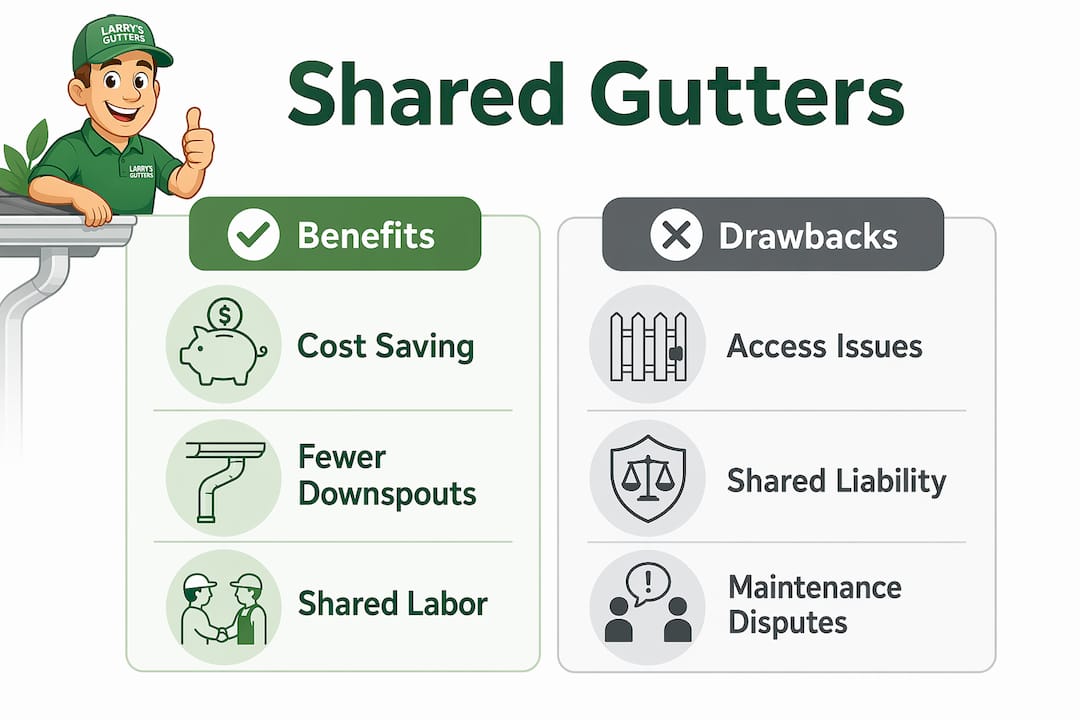
What are the benefits and drawbacks of shared gutter systems?
Shared gutter systems exist because they offer real advantages in certain property configurations, but those advantages come with trade-offs worth understanding before you buy or renovate.
| Factor | Shared gutters | Independent gutters |
|---|---|---|
| Installation cost | Lower per unit due to shared materials | Higher per unit, full system per home |
| Maintenance coordination | Requires neighbor agreement | Fully within your control |
| Dispute risk | Higher, shared liability | Lower, clear ownership |
| Design flexibility | Limited by shared boundary | Full flexibility |
| HOA/code compliance | Often mandated in planned communities | Standard in detached homes |
The cost savings are genuine. Fewer downspouts, shorter gutter runs, and shared labor during installation reduce the upfront expense for both homeowners. Coordinated installation also ensures proper alignment and reduces total project time, which matters when you are scheduling work around a neighbor’s availability.
The drawbacks center on control. You cannot simply call a contractor and schedule a repair without considering access to your neighbor’s property, their schedule, and their willingness to share costs. If your neighbor is unresponsive or disputes their share of a repair bill, your options narrow to legal remedies that cost more than the repair itself.
Pro Tip: If you are buying a home with a shared gutter system, ask the seller for any existing gutter sharing agreements or HOA documents that address maintenance. Review them with your real estate attorney before closing. Discovering an undocumented shared downspout after purchase is a common and avoidable surprise.
Regional building codes also affect your options. Some Florida counties require specific downspout placement and discharge methods under stormwater management ordinances. Checking with your local building department before modifying a shared system prevents code violations that could require costly corrections.
How can homeowners effectively manage and maintain shared gutters?
Managing a shared gutter system well comes down to communication, documentation, and a consistent maintenance schedule. These five steps cover the practical side of keeping a joint system in good condition.
- Draft a written maintenance agreement. Written agreements prevent disputes by clarifying cost splits, access rights, and maintenance standards. Include who handles routine cleaning, how repair costs are divided, and what happens in an emergency. A real estate attorney can draft a simple agreement for a few hundred dollars.
- Schedule biannual inspections. Clean and inspect gutters in late spring before Florida’s rainy season and again in late fall after leaf drop. Both neighbors should be present or at least notified before any contractor accesses the shared system.
- Document every service visit. Photograph the gutter condition before and after cleaning. Save all contractor invoices. Note the date and findings in a shared log that both neighbors can access, even if it is just a shared folder in Google Drive.
- Know when to call a professional. Sagging sections, visible joint separation, or water staining on the fascia are signs that gutters may need replacing. A professional inspection gives you an objective assessment you can share with your neighbor to justify repair costs.
- Address access rights in writing. If a repair requires standing on your neighbor’s property or accessing their side of the system, a written access agreement protects both parties. This is especially relevant for shared downspouts positioned at the boundary line.
Gutter repair options range from simple joint resealing to full section replacement, and the right choice depends on the age and condition of the existing system. For Florida homes, seamless aluminum gutters are the standard because they eliminate the joints where most leaks originate. If you are coordinating a shared replacement, timing it with other exterior work reduces total labor costs for both homeowners.
Pro Tip: Install gutter guards on shared systems to dramatically reduce cleaning frequency. Fewer blockages mean fewer disputes over who failed to maintain their section. Mesh-style guards work well in Florida’s environment, where pine needles and palm debris are the primary clog sources.
Key takeaways
Shared gutter systems require clear written agreements and consistent maintenance to prevent disputes, because legal responsibility depends on documentation and local rules, not on the physical fact of sharing a gutter.
| Point | Details |
|---|---|
| Responsibility is not automatic | Legal liability depends on easements, deeds, and written agreements, not on shared hardware. |
| Documentation prevents disputes | Dated photos, contractor receipts, and signed agreements are your best protection against neighbor conflicts. |
| Common defects are predictable | Blockages, sagging joints, and incorrect pitch cause most shared gutter failures and disputes. |
| Benefits require coordination | Cost savings from shared systems only materialize when both neighbors commit to joint maintenance. |
| Professional inspection resolves conflicts | Objective moisture measurements and photographic evidence from a licensed inspector settle disputes faster than neighbor negotiations. |
What I’ve learned from years of shared gutter calls
The homeowners who call Larrysgutters about shared gutter problems almost always share one thing in common: they never had a conversation with their neighbor about the system until something went wrong. By that point, a $200 cleaning job has turned into a $2,000 repair with a side of neighborhood tension.
The biggest misconception I see is that sharing a gutter means sharing ownership equally. It does not. Ownership follows the deed and any recorded easements, and those documents often assign responsibility in ways that surprise both neighbors. The homeowner who assumed their neighbor was responsible for the shared downspout is frequently the one who ends up paying for the damage caused by the backup.
What actually works is treating the shared gutter as a shared asset from day one, the same way you would treat a shared fence or a shared driveway. Set the terms in writing before there is a problem. Agree on a cleaning schedule. Decide how you will split unexpected repair costs. That conversation takes thirty minutes and prevents years of friction.
Professional inspections are underused in this context. Most homeowners only call a gutter company when they see a problem. Scheduling an inspection every two years gives you objective documentation of the system’s condition, which is worth far more than its cost if a dispute ever reaches a mediator. Thermal imaging and moisture readings from a qualified inspector tell a story that neighbor opinions cannot.
The cost-sharing benefits of shared gutters are real, but they require active management to capture. Homeowners who treat shared gutters as someone else’s problem until water appears on their ceiling are the ones who pay the most in the end.
— Larrysgutters
Get professional help with your shared gutter system
Shared gutter problems rarely fix themselves, and waiting until water damage appears inside your home makes every repair more expensive.

Larry’s Gutters specializes in residential gutter inspection, cleaning, repair, and full replacement across Central Florida. Whether you need an objective assessment of a shared system to share with your neighbor, a professional repair that meets local code requirements, or a full seamless gutter installation to replace an aging joint system, the team at Larrysgutters delivers reliable results. Explore the gutter repair options available for your home, or check the gutter replacement steps guide to understand what a full replacement involves. Contact Larrysgutters today for a free quote and get your shared gutter situation resolved before the next rainy season.
FAQ
What are shared gutters between homes?
Shared gutters are continuous gutter sections or drainage systems that collect and direct rainwater from two or more adjoining properties, most commonly found on semi-detached homes, terraced houses, and townhouses. They may share physical hardware or simply share a water discharge pathway that crosses property boundaries.
Are shared gutters legal?
Shared gutter systems are legal and common in attached housing configurations. Legal responsibility depends on recorded easements, deed language, and local building codes rather than the existence of the shared system itself.
Who pays for shared gutter repairs?
Repair costs depend on your deed, any recorded easement, and written agreements between neighbors. Without a written agreement, both parties may share responsibility for a shared downspout, while each homeowner typically covers repairs to their own gutter section.
How often should shared gutters be cleaned?
Shared gutters in Florida should be cleaned at least twice a year, in late spring before the rainy season and in late fall after debris accumulation. Homes near pine trees or palms may need quarterly cleaning to prevent blockages that cause overflow disputes.
What is a gutter sharing agreement?
A gutter sharing agreement is a written document between neighboring homeowners that defines maintenance responsibilities, cost-splitting rules, access rights, and repair protocols for a shared gutter system. Written agreements prevent disputes by removing ambiguity about who handles what and when.
