TL;DR:
- Preparing gutters for storms involves cleaning, inspecting, and repairing to ensure proper water flow before heavy rain. Regular maintenance prevents flooding, roof rot, and foundation damage, especially in high-rainfall regions like Florida. Proper timing of cleaning and installation of gutter guards are key to effective storm readiness.
Preparing gutters for storms is defined as the systematic process of cleaning, inspecting, and reinforcing your gutter system before heavy rain or high winds arrive. Neglected gutters cause basement flooding, roof rot, and foundation erosion. Industry standards recommend cleaning gutters at least twice yearly, with adjustments for heavy tree coverage or high-rainfall regions. In Florida, where storm season brings intense, repeated downpours, that baseline is rarely enough. The steps to prepare gutters for storms covered here follow a proven sequence: clean first, inspect second, repair third, and optimize water flow last.
1. Start with a full gutter cleaning
Cleaning is the foundation of every storm preparation checklist. Debris-packed gutters cannot move water fast enough during a heavy storm, and overflow is the direct cause of siding stains, soil erosion, and basement leaks.
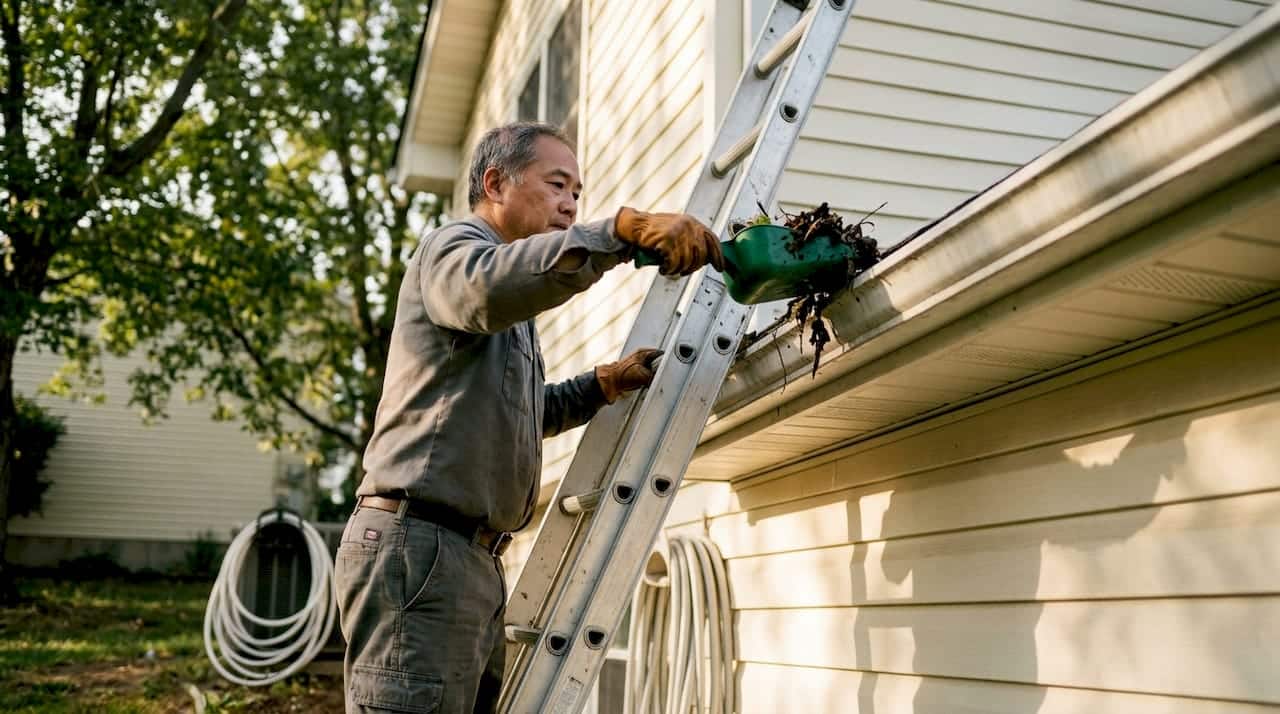
Work from the downspout outward, pulling leaves, twigs, and compacted sediment by hand or with a gutter scoop. A sturdy extension ladder, thick work gloves, and a five-gallon bucket are the minimum tools you need. For homes surrounded by pine trees, wet/dry vacuums on low suction remove pine needles more effectively than manual scooping. High-pressure washing can push debris deeper into downspout elbows and damage seams, so avoid it for routine cleaning.
After removing debris, flush the entire gutter run with a garden hose. Watch for water backing up, draining slowly, or pooling in the middle of a run. Those are signs of a pitch problem or a hidden clog, not just a dirty gutter.
Pro Tip: Set a five-minute timer after you start flushing. If water overflows before the timer ends during moderate flow, you have a clog that needs clearing before the next storm.
Always use a ladder stabilizer to keep the ladder off the gutter itself. If your roofline is above two stories or steeply pitched, hire a professional. A fall costs far more than a cleaning service.
2. Inspect for sagging, rust, and loose fasteners
Cleaning reveals problems that are invisible from the ground. Walk the full length of every gutter run after flushing and look for specific failure points.
- Sagging sections: A gutter that dips in the middle holds standing water, which accelerates rust and adds weight that pulls fasteners loose.
- Loose or missing hangers: Spikes pull out of fascia boards over time. Replacing spikes with screw-style hangers restores holding strength and extends gutter life significantly.
- Leaking seams: Look for rust streaks or dried mud lines below joints. These show where water escapes during rain.
- Rust spots: Small rust patches can be wire-brushed and sealed. Large rust sections mean the metal has thinned and the gutter needs replacement.
- Separation from fascia: A gap between the gutter back and the fascia board lets water run behind the gutter and rot the wood.
Gutter pitch should measure approximately 1/4 inch drop per 10 feet of run toward the downspout. That slope keeps water moving and prevents the standing water that causes corrosion. You can check pitch with a simple level and a tape measure.
Pro Tip: Press firmly on the gutter at several points along the run. If it flexes or moves more than a half-inch, the hangers are loose and need tightening or replacement before storm season.
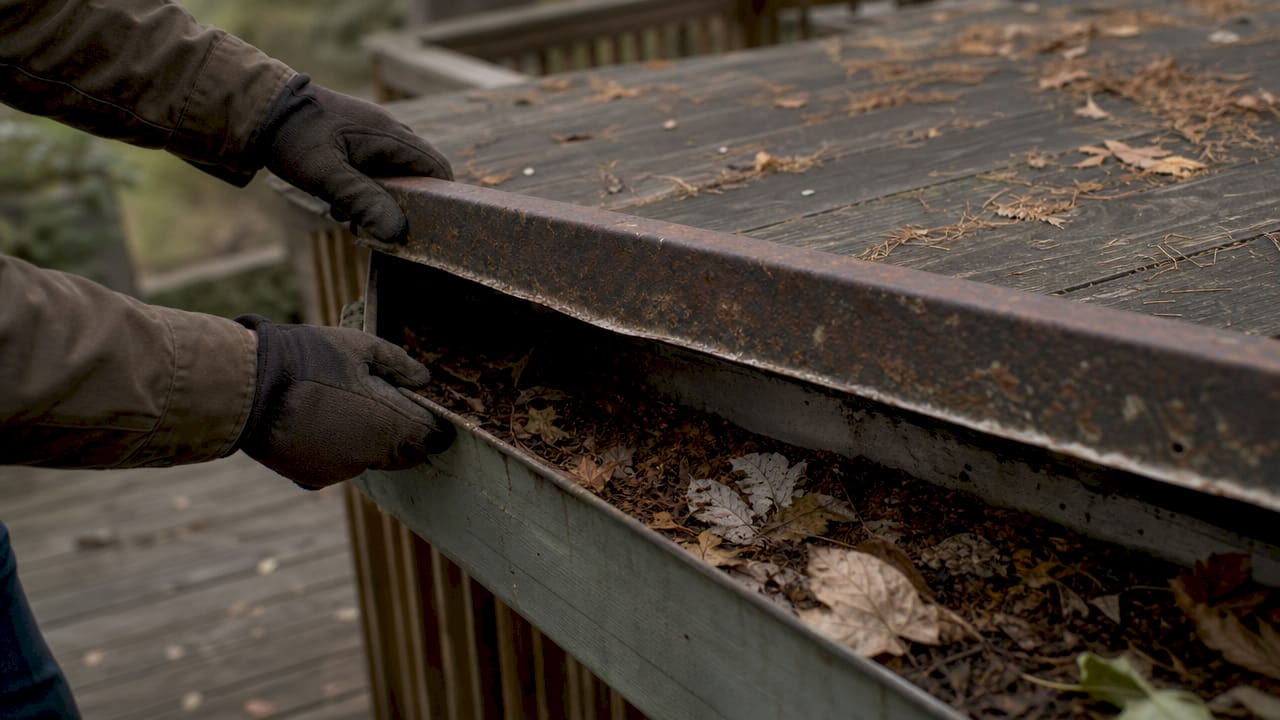
Small repairs are worth doing yourself. Silicone gutter sealant fixes leaking seams in under 20 minutes. Tightening or replacing hangers takes a drill and a box of gutter screws. When damage is widespread or the gutter has separated from the fascia along multiple sections, call a professional. Patching a failing system costs more in the long run than replacing it. The gutter inspection checklist from Larrysgutters covers every failure point worth checking before Florida’s rainy season.
3. Clear and test every downspout
Downspouts are the exit point for all the water your gutters collect. A clogged downspout turns a clean gutter into a holding tank.
- Run a garden hose at full pressure into the top of each downspout. Watch the bottom for strong, steady flow.
- If flow is weak or absent, insert a plumber’s snake or auger from the bottom opening and work it upward to break the clog.
- Flush again after clearing to confirm the blockage is fully gone.
- Check every elbow joint for debris packing. Elbows are the most common clog point because debris slows and settles there.
- Confirm the downspout outlet is not buried in soil or blocked by mulch. Both conditions force water back up into the system.
Extending downspouts 4 to 6 feet away from the foundation significantly reduces soil saturation and basement leaks. That distance keeps roof runoff from pooling against the foundation wall, which is the leading cause of basement water intrusion. Splash blocks direct water across a hard surface and away from the home. Flexible downspout extensions work well for homes with landscaping close to the foundation.
Restoration professionals identify proper downspout extension as the single most effective defense against water intrusion in residential homes. A $15 extension prevents thousands of dollars in foundation repair.
4. Check the slope and drainage path
Water that sits in a gutter for more than a few minutes after rain stops is a sign of a pitch problem. The gutter is not draining toward the downspout fast enough.
Use a level to check the slope along a 10-foot section. The low end should sit about 1/4 inch below the high end. If the gutter runs level or tilts away from the downspout, loosen the hangers, adjust the angle, and re-secure them. This fix takes under an hour and prevents standing water from corroding the gutter from the inside.
Also check where water goes once it leaves the downspout extension. The discharge area should slope away from the home. Flat or inward-sloping ground sends water back toward the foundation. Regrading a small area with topsoil or installing a French drain solves persistent pooling near the home.
5. Reinforce gutter attachments before high winds
High winds are as dangerous to gutters as heavy rain. A gutter that is only loosely attached to the fascia can tear away during a storm, taking sections of the fascia board with it.
Check every hanger along the run. Hangers should sit no more than 24 inches apart. If you find gaps larger than that, add hangers in between. Screw-style hangers grip the fascia far better than the original spike-and-ferrule system used in older homes. If your gutters still use spikes, replacing them with screws is one of the highest-value upgrades you can make before storm season.
Also check the end caps at each gutter terminus. End caps that have pulled away or cracked will leak during heavy rain. Reseal them with silicone gutter sealant or replace them if the metal has corroded. For detailed repair guidance, the gutter repair tips from Larrysgutters walk through both DIY fixes and when professional help makes more sense.
6. Time your maintenance to the storm calendar
An additional cleaning 2 to 4 weeks before peak storm season gives gutters maximum flow capacity when it matters most. For Central Florida homeowners, that means a pre-hurricane season cleaning in late may or early june, before the Atlantic hurricane season peaks in september.
- Clean gutters at least twice yearly: once in late spring and once in late fall.
- Add a third cleaning if your yard has heavy tree coverage or if you live in a high-rainfall zone.
- Inspect gutters after every major storm, not just at the start of the season.
- Check for debris accumulation after any storm that drops more than two inches of rain.
Clogged gutters show warning signs including overflow during rain, water stains on siding, and pooling near the foundation. Catching these signs early means a cleaning job instead of a repair bill. The Florida rainy season preparation guide from Larrysgutters covers the exact timing that works for Central Florida’s weather patterns.
7. Consider gutter guards to reduce debris buildup
Gutter guards do not eliminate maintenance, but they reduce it significantly. Micro-mesh guards block small debris like pine needles and shingle grit, cutting cleaning frequency by up to 90%. That reduction matters most for homeowners with tall trees close to the roofline.
Guards come in several types: screen guards, foam inserts, surface tension guards, and micro-mesh panels. Micro-mesh is the most effective at blocking fine debris while allowing water to pass freely. Foam inserts trap debris inside the foam itself and require replacement every few years. Screen guards handle large leaves well but let smaller debris through.
Even with guards installed, annual inspection is necessary. Debris can accumulate on top of the mesh and restrict flow. Guards also need to be removed periodically to clean the gutter channel beneath them. The types of gutter guards guide from Larrysgutters explains which options perform best in Florida’s climate. For homes in areas with heavy pine coverage, combining micro-mesh guards with a pre-storm-season inspection gives the best long-term result.
For broader storm readiness beyond gutters, pairing your gutter prep with whole-home generator planning covers the power outage risk that often accompanies severe weather.
Key Takeaways
Preparing gutters for storms requires cleaning, inspecting, repairing, and managing water flow as a connected sequence, not a checklist of isolated tasks.
| Point | Details |
|---|---|
| Clean before inspecting | Remove all debris first so structural problems are visible during the inspection. |
| Check pitch and fasteners | Gutters need a 1/4-inch drop per 10 feet and secure screw-style hangers to survive storms. |
| Extend downspouts 4 to 6 feet | Proper discharge distance is the most effective defense against foundation water damage. |
| Time cleaning to storm season | Add a pre-season cleaning 2 to 4 weeks before peak storm months for maximum flow capacity. |
| Gutter guards reduce, not eliminate, maintenance | Micro-mesh guards cut cleaning frequency significantly but still require annual inspection. |
What I have learned from watching gutters fail
The most common mistake I see homeowners make is treating gutter cleaning as a once-a-year chore they schedule in the fall. That timing misses the entire storm season. By the time october arrives, the damage is already done. Gutters that overflow in july are not a cleaning problem. They are a timing problem.
The second most overlooked issue is downspout discharge. Homeowners spend an hour cleaning the gutter channel and then ignore the fact that the downspout drops water six inches from the foundation. A $15 extension and a splash block would have prevented the basement leak that cost them $4,000 to remediate.
Inspection and cleaning work best when done together. Cleaning alone tells you the gutter is clear. Inspection tells you whether it will hold up under 60 mph winds and three inches of rain in an hour. Doing both in the same visit is the only way to know your system is actually ready. The gutter maintenance checklist from Larrysgutters combines both steps into a single workflow built for Florida’s specific storm conditions.
Proactive maintenance costs a fraction of reactive repair. A gutter that tears away in a storm takes fascia board, soffit, and sometimes roof decking with it. The repair bill for that scenario starts at several thousand dollars. The cost of a pre-season cleaning and inspection is a small fraction of that.
— Results
Larrysgutters can handle what storms demand
Storm season in Central Florida does not give you much warning. When a system forms in the Gulf, you have days, not weeks, to get your home ready.

Larry’s Gutters specializes in seamless gutter installation built to handle Florida’s heaviest rainfall. Seamless gutters have no mid-run joints, which means fewer leak points and stronger performance under storm conditions. Larrysgutters also installs gutter guards matched to your specific tree coverage and roof type, reducing how often you need to clean. Whether you need a pre-season inspection, a repair, or a full system upgrade, Larrysgutters serves homeowners across multiple Central Florida counties. Contact Larrysgutters for a free quote before storm season peaks.
FAQ
How often should I clean gutters before storm season?
Clean gutters at least twice yearly, and add a cleaning 2 to 4 weeks before peak storm season. Homes with heavy tree coverage or high annual rainfall may need quarterly cleaning.
What is the correct downspout extension length?
Downspouts should direct water at least 4 to 6 feet away from the foundation. That distance prevents soil saturation and reduces basement flooding risk significantly.
Can I use a pressure washer to clean gutters?
Pressure washing is not recommended for routine gutter cleaning. High pressure pushes debris deeper into downspout elbows and can damage gutter seams. A garden hose with a spray nozzle is the right tool for flushing after manual debris removal.
Do gutter guards eliminate the need for cleaning?
Gutter guards reduce cleaning frequency but do not eliminate it. Micro-mesh guards cut debris buildup significantly, but annual inspection is still necessary to check for debris on top of the mesh and confirm clear flow.
What is the correct gutter pitch for proper drainage?
The standard pitch is approximately 1/4 inch of drop per 10 feet of gutter run toward the downspout. A gutter that runs level or tilts away from the downspout will hold standing water and corrode faster.
