
TL;DR:
- Proper gutter maintenance prevents costly water damage during Florida’s rapid storm surges.
- Homeowners should clean and inspect gutters twice annually with essential tools and correct techniques.
- Professional help ensures optimal gutter system performance and long-term home protection.
Central Florida’s rainy season is not a slow build. It arrives fast, with storms that dump inches of rain in under an hour. If your gutters are clogged, sagging, or improperly pitched, that water has nowhere to go except into your fascia boards, behind your siding, and down toward your foundation. Water damage repairs from a single neglected storm can run well into the thousands. This guide walks you through everything you need to know: why preparation matters, what tools to gather, how to clean and inspect your gutters properly, and the mistakes that catch most homeowners off guard.
Table of Contents
- Why gutter preparation matters before Florida’s rainy season
- What you need: Tools and materials checklist
- Step-by-step: Cleaning and inspecting your gutters
- Common mistakes and troubleshooting tips
- The truth most gutter guides overlook
- Get expert help for worry-free rainy seasons
- Frequently asked questions
Key Takeaways
| Point | Details |
|---|---|
| Early preparation saves money | Cleaning and inspecting gutters before the rainy season protects your home from costly water damage. |
| Proper tools make it easy | Using the right gear and safety steps prevents accidents and ensures a thorough job. |
| Professional help is smart for complex jobs | Tough gutter problems or advanced installations should be left to Central Florida experts. |
| Routine is key | Regular upkeep keeps gutters working year after year—even with unpredictable Florida weather. |
Why gutter preparation matters before Florida’s rainy season
Florida storms do not give you time to react. A clear morning can turn into a downpour within minutes, and your gutters are expected to handle that surge without hesitation. Most homeowners think about gutters only after something goes wrong. By then, the damage is already done.
Here is the number that puts it in perspective: gutters on a 2,000 sq ft roof must channel over 1,200 gallons of water for every inch of rainfall during a Florida storm. That is not a trickle. That is a serious volume of water moving fast, and any weak point in your system becomes a liability.
When gutters are blocked with leaves, seed pods, or compacted debris, water backs up and spills over the edge. That overflow does not just wet the ground. It soaks into your fascia boards, which rot quickly in Florida’s humidity. It pools near your foundation, where it can cause cracking and settling over time. It seeps under your roofline and creates the conditions for mold and structural damage.
Gutter maintenance is not optional. It is your first line of defense every single season.
The benefits of pre-season gutter cleaning go beyond just clearing debris. A proper pre-season check catches early signs of corrosion, loose hangers, and pitch problems before a storm forces them into full failure.
Here is what ignoring your gutters can cost you:
- Fascia and soffit replacement: $600 to $2,000 depending on extent
- Foundation waterproofing or repair: $2,000 to $10,000 or more
- Roof deck repair from water intrusion: $1,500 to $5,000
- Mold remediation inside walls: $1,000 to $4,000
- Full gutter system replacement: $1,200 to $3,500
None of these are small expenses. And every one of them is preventable with consistent gutter maintenance before the season begins.
What you need: Tools and materials checklist
Once you understand the risks, the right tools and materials make the job safer and more effective. Going up on a ladder without the right gear is how minor maintenance turns into an emergency room visit.
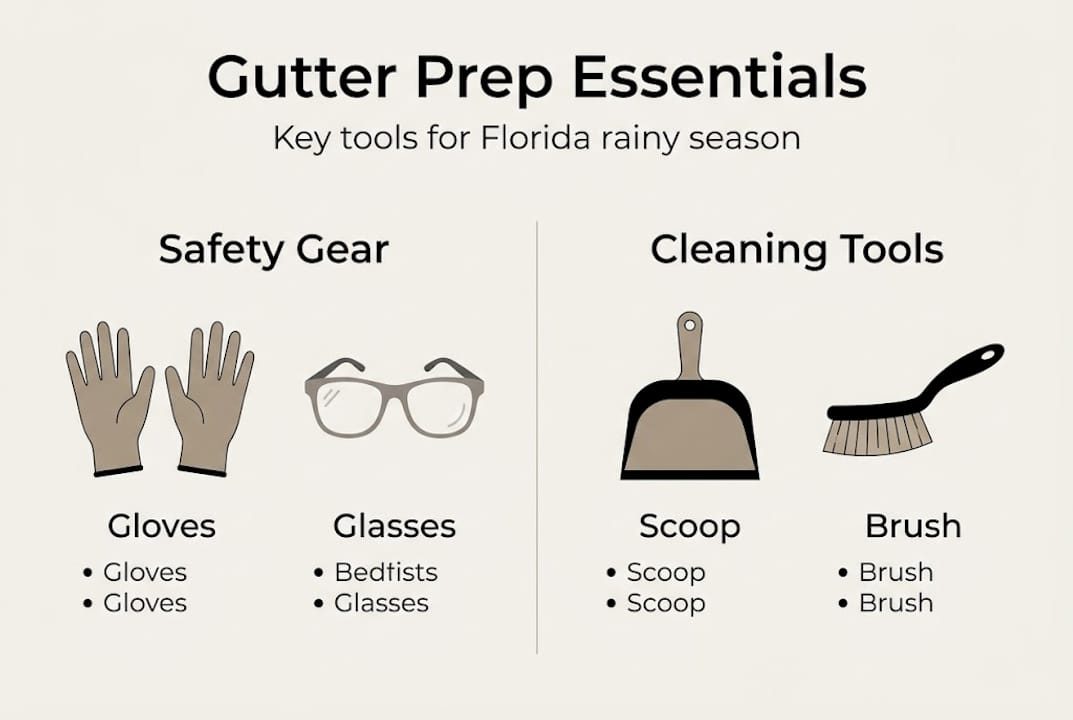
Here is a full checklist of what you need before you start:
| Tool or material | Purpose |
|---|---|
| Work gloves | Protect hands from sharp debris and edges |
| Safety glasses | Shield eyes from flushed debris and water |
| Gutter scoop or trowel | Remove compacted leaves and buildup |
| Garden hose with spray nozzle | Flush gutters and test downspout flow |
| Extension ladder with stabilizer bar | Reach gutters safely without leaning on them |
| Bucket or tarp | Collect debris without leaving a mess |
| Gutter sealant | Seal small leaks at seams and end caps |
| Replacement hangers or screws | Refasten loose sections |
| Downspout snake or auger | Clear stubborn blockages in downspouts |
The gutter maintenance tools you choose matter more than most people realize. A quality scoop with a flexible edge conforms to the gutter channel and removes debris in far fewer passes. A ladder stabilizer bar keeps you from resting the ladder directly against the gutter, which can bend or detach it.
Optional but highly recommended add-ons include:
- Gutter guards to reduce future debris buildup
- Foam or brush inserts for downspout openings
- Touch-up paint for exposed metal sections
- Zip screws for reattaching loose gutter sections
Pro Tip: A stabilizer bar for your ladder is one of the best investments you can make. It keeps the ladder steady, protects your gutters from pressure damage, and lets you work with both hands free.
One thing worth noting: seamless gutters have 80% fewer leaks compared to sectional systems when properly maintained with the right tools. If your current gutters have multiple seams, that is where leaks start, and no amount of cleaning will fix a bad joint. A correctly pitched and fastened system is what makes all this maintenance worthwhile.
Step-by-step: Cleaning and inspecting your gutters
With tools in hand, you are ready to perform the most important annual gutter maintenance steps. Follow this process from start to finish for the best results.
- Position your ladder safely. Place it on flat, stable ground. Use your stabilizer bar so the ladder rests against the wall, not the gutter. Have someone nearby whenever possible.
- Start at the high end. Always begin cleaning at the end farthest from the downspout. Work toward the downspout opening so debris moves naturally in the right direction.
- Remove debris by hand or scoop. Pull out leaves, seed pods, and compacted material. Drop it into a bucket or onto a tarp below. Do not flush debris toward the downspout before clearing the bulk of it.
- Flush with a garden hose. Run water through the gutter from the high end toward the downspout. Watch for slow drainage, pooling, or overflow. These are signs of remaining clogs or pitch problems.
- Check downspout flow. Water should exit freely at the bottom. If it backs up, use a downspout snake to clear the blockage. A blocked downspout is just as dangerous as a clogged gutter channel.
- Inspect for damage. Look for gaps at seams, rust spots, bent sections, loose hangers, and areas where the gutter pulls away from the fascia. Mark anything that needs repair.
- Check the pitch. The correct slope is 1/4 inch per 10 feet of gutter run. A mismatch causes pooling and overflow during heavy storms. You can check this with a simple level.
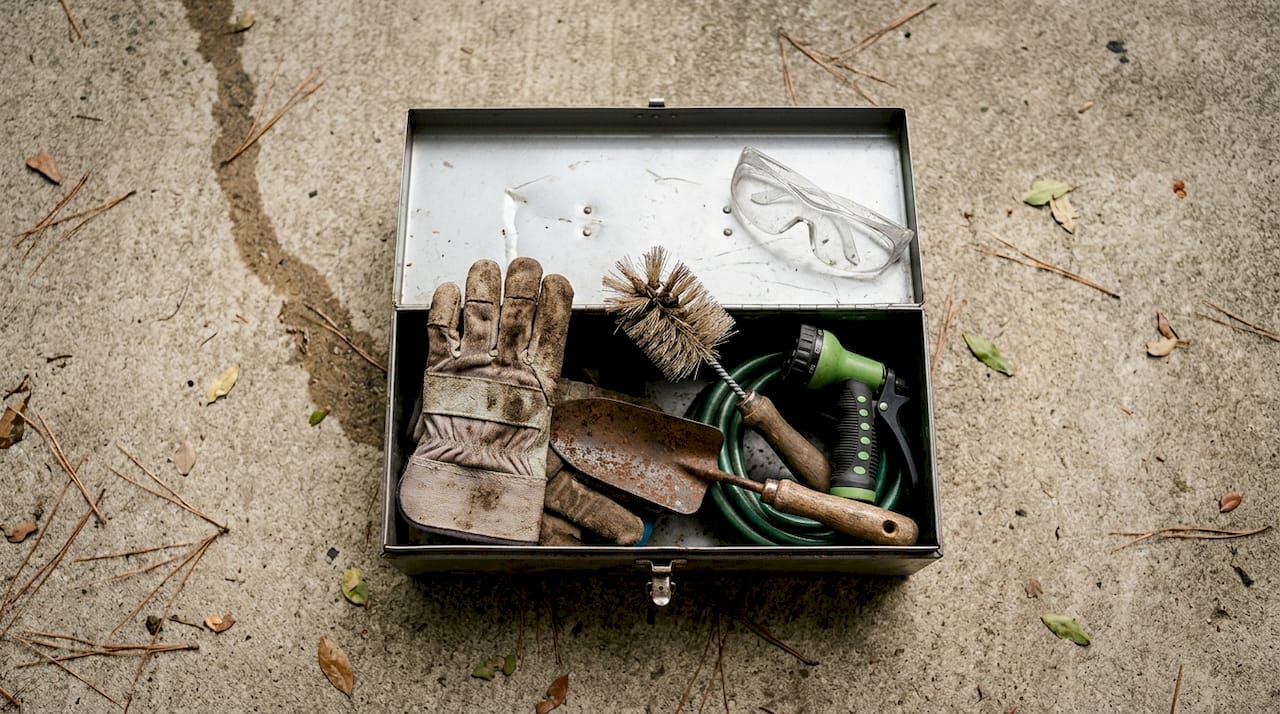
Use a sturdy ladder on flat ground. Never overreach or work alone.
Pro Tip: Angle your hose nozzle slightly downstream and use a strong stream to push debris toward the downspout. Starting from the highest point ensures you are always working with gravity, not against it.
Cleaning gutters at least twice a year prevents clogs and extends the life of your entire system. For Central Florida homeowners, that means once before rainy season and once after the heaviest storm months pass. Check out these Central Florida cleaning tips and additional maintenance steps to stay ahead of seasonal wear.
Common mistakes and troubleshooting tips
Even with regular upkeep, some problems are common. Recognizing and preventing them saves time and money.
Here is a quick comparison of DIY versus professional gutter preparation:
| Task | DIY approach | Professional approach |
|---|---|---|
| Debris removal | Manual scooping and flushing | Vacuuming, flushing, full inspection |
| Pitch correction | Eyeballed or skipped | Measured and adjusted precisely |
| Leak sealing | Sealant applied to visible spots | All seams checked and sealed |
| Hanger replacement | Replaced if obviously loose | All fasteners checked and torqued |
| Downspout clearing | Snake or hose pressure | Camera inspection if needed |
Improperly pitched gutters cause chronic overflow, especially in Florida roof valleys where water volume spikes during storms. This is one area where DIY often falls short.
Common mistakes homeowners make:
- Forgetting to check and reseal end caps, which are a top source of drip leaks
- Ignoring downspout blockages because the gutter channel looks clear
- Missing leaks at seams because they only appear under heavy water flow
- Skipping the pitch check because the gutter looks level to the eye
- Cleaning only the front gutters and ignoring rear or side runs
Roof valleys and areas under heavy tree overhangs collect debris faster than open sections. In Florida, oak trees drop leaves and pollen year-round, and palm fronds can wedge tightly into gutter channels. These spots need more frequent attention.
For minor clogs, a downspout snake or a strong hose burst usually clears the blockage. For leaks at seams, clean the area thoroughly and apply a flexible gutter sealant rated for outdoor use. If you are seeing gutter leaks at multiple points, or if sections are sagging despite tightened hangers, that is a signal to bring in a professional. You can also review these repair tips for Florida homes to decide what you can handle yourself.
The truth most gutter guides overlook
Most guides stop at the how-to and skip the harder conversation: some gutter problems look fine from the ground and are anything but. We see it constantly. A homeowner does a solid cleaning job, everything looks good from the driveway, and then the first major storm reveals a pitch problem or a failing seam that was invisible without getting close.
The reality is that seamless gutters and professionally set slopes dramatically reduce emergency repairs. Florida’s humidity accelerates every small mistake. A seam that would last five years in a dry climate fails in one here. A pitch that is off by just a fraction creates standing water that breeds mosquitoes and corrodes metal faster than you would expect.
Homeowners can absolutely handle basic cleaning and minor repairs. But wind-driven rain, complex rooflines, and multi-story homes are a different situation. The cost of a professional inspection and tune-up is almost always less than the first repair bill after a storm. Sometimes hiring out is genuinely the cheaper option, not the lazy one. Check out these gutter system maintenance tips to understand where the line is between DIY and professional territory.
Get expert help for worry-free rainy seasons
You now have a clear picture of what it takes to protect your home before Florida’s storms arrive. But knowing the steps and having the time, tools, and experience to execute them perfectly are two different things.

At Larry’s Gutters, we specialize in exactly this. Our team handles the full seamless gutter installation process, ensuring correct pitch, secure fasteners, and leak-free performance from day one. If you want to add protection, our gutter guard installation workflow keeps debris out so your system stays clear between cleanings. Need a full walkthrough before you commit? Start with our step-by-step installation guide and see what a properly built system looks like. Contact us for a free assessment before the next storm season hits.
Frequently asked questions
How often should I clean my gutters in Central Florida?
Clean gutters at least twice a year, once just before rainy season starts and again after the heaviest storm months end. Homes with heavy tree coverage may need quarterly attention.
What’s the proper slope for gutters to handle Florida storms?
The ideal slope is 1/4 inch per 10 feet of gutter run. Anything less causes pooling; anything more can make water move too fast and overshoot the downspout.
Can I just use gutter guards instead of cleaning?
Gutter guards reduce how often you need to clean, but they do not replace cleaning entirely. Seamless gutters with guards still need periodic inspection to catch fine debris, shingle grit, and any guard sections that shift.
What are the main signs that gutters need repair?
Watch for overflow during rain, sagging sections, rust staining, leaks at seams, or water pooling near your foundation after a storm. Any one of these signals a repair is overdue.
Recommended
- Rain Gutter Maintenance Steps for Florida Homes
- How to Clean Gutters for Safe Florida Home Protection
- DIY Gutter Cleaning Tips for Florida Homeowners
- Upgrade gutter drainage: step-by-step guide for Florida
- Shingle Roof Renewal | Certified Fresh Roof Applicator | South Florida
- Gutter Services Gainesville FL
