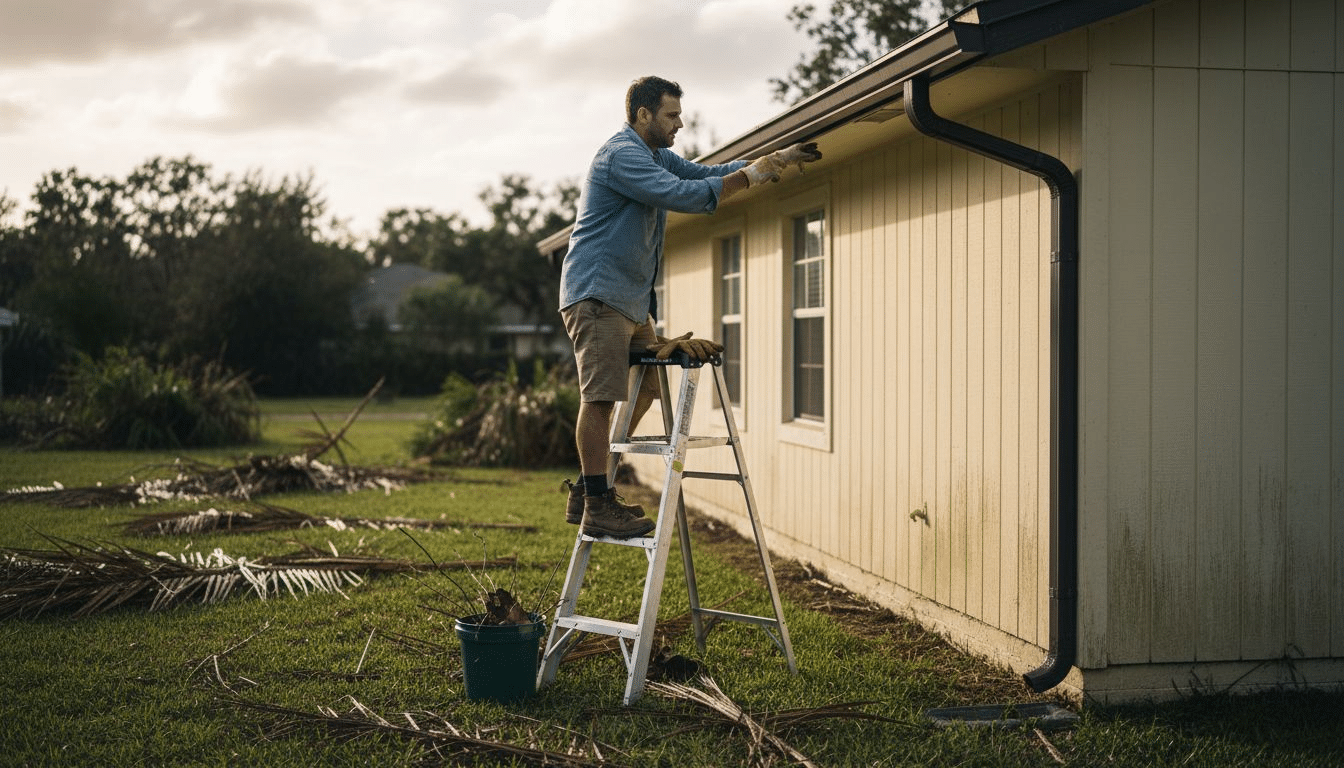
Florida storms can unleash torrents that overwhelm even the sturdiest American-built homes, leaving gutters vulnerable to damage that few expect. With more than 70 inches of rain falling in some Central Florida areas each year, failing gutter systems can quickly escalate into foundation problems or costly repairs. Homeowners in Lake, Marion, and Sumter counties need smart, timely solutions for keeping gutters in peak condition so their homes stay protected from relentless downpours.
Table of Contents
- Inspect Gutters For Common Damage After Storms
- Clear Debris Regularly To Prevent Clogs
- Seal Leaks With Weatherproof Materials
- Secure Loose Gutters And Downspouts
- Replace Damaged Sections Without Delay
- Install Gutter Guards For Added Protection
- Schedule Annual Professional Gutter Inspections
Quick Summary
| Takeaway | Explanation |
|---|---|
| 1. Inspect Gutters Post-Storms | Check for damage like cracks and dents after storms to avoid water issues. |
| 2. Clean Gutters Regularly | Clear debris biannually to prevent clogs, especially after storms. |
| 3. Seal Leaks Properly | Use high-quality weatherproof sealants for joints and corners to prevent leaks. |
| 4. Secure Gutters and Downspouts | Ensure all attachments are tight to maintain water flow and prevent sagging. |
| 5. Schedule Annual Inspections | Get professional evaluations annually to identify potential problems before they escalate. |
1. Inspect Gutters for Common Damage After Storms
Florida homeowners know that storms can wreak havoc on gutters faster than lightning strikes. After severe weather events, a thorough gutter inspection becomes your first line of defense against potential water damage. Understanding how storms impact your home’s drainage system is critical for preventing long-term structural issues.
Storms in Florida can cause significant stress on gutter systems through high winds, heavy rainfall, and flying debris. Professional inspectors recommend carefully examining your gutters for signs of damage like cracks, dents, sagging sections, and loose attachments. Gutter inspection techniques typically involve checking for rust, holes, and improper water diversion that could compromise your home’s foundation protection.
Start your inspection by walking around your property and looking for visible signs of gutter damage. Check for standing water, which indicates potential clogging or improper slope. Examine downspouts to ensure they direct water at least 5 feet away from your home’s foundation. Look for paint peeling near gutter lines, rust spots, or water stains on exterior walls that might signal drainage problems.
Specifically target areas where tree branches or storm debris might have caused impact damage. Inspect gutter seams and attachment points for separation or weakness. Pay close attention to corners and connection points where leaks frequently develop. Remember that even small damage can lead to significant water infiltration if left unaddressed.
Pro tip: Conduct your gutter inspection within 48 hours after a major storm to catch and repair damage before it escalates into costly home repairs.
2. Clear Debris Regularly to Prevent Clogs
Clogged gutters are a homeowner’s silent nightmare, especially in Florida’s lush and storm-prone environment. Leaves, branches, and organic debris can quickly transform your gutter system from a water management solution to a potential source of significant property damage.
Debris accumulation creates serious problems for your home’s water management infrastructure. Gutter maintenance practices reveal that regular cleaning prevents water overflow which can compromise your home’s foundation and interior walls. When gutters become blocked, rainwater cannot properly divert away from your property, leading to potential moisture intrusion and structural issues.
To effectively clear debris, start by using a sturdy ladder and wearing protective gloves. Remove leaves, twigs, and accumulated dirt by hand or with a specialized gutter cleaning tool. Pay special attention to corners and downspout connections where debris tends to collect. Flush the gutters with a garden hose afterward to ensure water flows smoothly and identify any potential leaks or blockages.
Consider the unique challenges of Florida’s landscape. Homes surrounded by oak trees or tropical vegetation will require more frequent cleaning due to increased leaf and organic matter falling throughout the year. Some homeowners opt for gutter guards to reduce debris accumulation, though these still require periodic inspection and maintenance.
Pro tip: Schedule gutter cleaning at least twice a year, with additional checks after major storms or hurricane season to prevent unexpected water damage.
3. Seal Leaks with Weatherproof Materials
Florida’s intense weather demands more than just routine gutter maintenance water damage prevention requires strategic leak sealing. Your home’s gutter system is the first line of defense against moisture intrusion that can compromise structural integrity.
Weatherproofing techniques play a critical role in protecting your home from water damage. Gutter leaks often occur at joints, corners, and connection points where metal meets metal or where gutters attach to your home’s fascia. These vulnerable areas require careful attention and specialized sealing materials that can withstand Florida’s extreme humidity and frequent storms.
Choose high quality weatherproof sealants specifically designed for exterior use. Silicone based and polyurethane sealants work best for gutter repairs because they remain flexible and create a watertight barrier. Before applying any sealant, clean the area thoroughly and ensure surfaces are completely dry. Use a caulking gun for precise application and smooth the material with a putty knife to create an even seal.
Pay special attention to areas where different materials meet such as aluminum gutters connecting to wooden fascia boards. These transition points are most prone to leakage and require extra care. Look for small holes or hairline cracks that might not be immediately visible but can cause significant water damage over time. Some homeowners choose to use aluminum flashing as an additional protective layer at these critical connection points.
Pro tip: Apply weatherproof sealant during dry weather and allow at least 24 hours of cure time before expecting rainfall to test the seal.
4. Secure Loose Gutters and Downspouts
Loose gutters are more than an aesthetic problem they represent a serious threat to your home’s structural integrity. In Florida’s unpredictable climate, properly secured gutters are not just recommended they are essential for preventing water damage.
Gutter maintenance practices reveal that secure attachments are critical for effective water management. When gutters become loose they can sag pull away from the roofline and fail to direct water away from your home’s foundation. This creates potential for significant water damage that can compromise your property’s structural elements.
Inspect your gutter mounting brackets and hangers carefully. Look for signs of rust corrosion or metal fatigue that might compromise their strength. Use galvanized or stainless steel mounting hardware that can withstand Florida’s humid environment. When replacing brackets ensure they are spaced approximately every three feet to provide maximum support and prevent sagging.
Pay special attention to downspouts as well. These vertical pipes must be securely fastened to your home’s exterior wall and positioned to direct water at least five feet away from the foundation. Check that connections are tight and that the downspout is not pulling away from the gutter or wall. Consider using additional mounting straps if you notice any movement or instability.
Pro tip: Conduct a comprehensive gutter system check during the dry season to identify and repair loose components before the intense Florida storm season begins.
5. Replace Damaged Sections Without Delay
In Florida’s challenging climate, a small gutter problem can quickly escalate into a major home maintenance nightmare. Damaged gutter sections are not just an eyesore they represent a critical vulnerability in your home’s water management system.
Gutter maintenance guidelines emphasize the importance of prompt replacement when sections become compromised. Rust holes cracks or sections pulling away from your roofline can allow water to seep into your home’s foundation walls and interior spaces. These seemingly minor issues can lead to thousands of dollars in potential water damage if left unaddressed.
When inspecting your gutters look for telltale signs of damage such as rust spots visible holes water stains on exterior walls or sections that appear bent or misaligned. Pay special attention to areas near downspouts and roof corners where water flow is most concentrated. For aluminum gutters small holes can be patched temporarily but larger damaged sections should be replaced entirely to ensure proper water diversion.
Choose replacement sections that match your existing gutter material and profile. Seamless aluminum gutters are particularly popular in Florida due to their durability and resistance to corrosion. Ensure new sections are properly sealed and aligned to maintain the correct slope for efficient water drainage. When in doubt about your repair capabilities consider consulting a professional who specializes in gutter maintenance.
Pro tip: Schedule gutter replacements during the dry season to minimize potential water exposure and ensure optimal installation conditions.
6. Install Gutter Guards for Added Protection
Florida homeowners face a unique challenge with gutter maintenance due to the state’s abundant foliage and unpredictable weather. Gutter guards represent a proactive solution to protect your home from potential water damage and reduce ongoing maintenance requirements.
Gutter guard effectiveness varies depending on design and local environmental conditions. These protective systems prevent leaves twigs and debris from clogging your gutter system while allowing water to flow freely. Different types of guards including mesh screens solid covers and perforated designs offer varying levels of protection tailored to specific residential needs.
When selecting gutter guards for your Florida home consider the unique challenges of your specific location. Homes near oak trees or in areas with heavy pine needle drop might require more robust guard systems. Micro mesh guards work exceptionally well in regions with fine organic debris while surface tension guards can handle larger leaf volumes. Look for guards made from corrosion resistant materials like aluminum or stainless steel that can withstand Florida’s humid environment.
Professional installation is crucial to ensure maximum effectiveness. Improperly installed gutter guards can create additional problems like water overflow or debris accumulation. Seek professionals who understand local climate challenges and can recommend guards specifically suited to Central Florida’s unique environmental conditions.
Pro tip: Choose gutter guards with fine mesh designs that block even the smallest debris while maintaining optimal water flow during intense Florida rainstorms.
7. Schedule Annual Professional Gutter Inspections
Annual professional gutter inspections are not just a recommendation they are a critical investment in protecting your Florida home from potential water damage. Think of these inspections as a preventative health checkup for your home’s drainage system.
Gutter maintenance standards highlight the importance of expert evaluations to catch issues before they become costly repairs. Professional inspectors can identify subtle problems that homeowners might overlook such as slight misalignments improper slope or early signs of corrosion that could compromise your gutter system’s effectiveness.
During a professional inspection technicians will carefully examine every aspect of your gutter system. They will assess the securement of mounting brackets check for potential leaks evaluate the condition of downspouts and ensure that water is being efficiently directed away from your home’s foundation. In Florida’s challenging climate with frequent storms and high humidity these inspections become even more crucial.
Timing is everything when scheduling these inspections. Aim to have your gutters professionally evaluated just before the heavy rainfall season typically in late spring or early summer. This proactive approach allows you to address any potential issues before the most intense weather periods arrive. Some homeowners also opt for a follow up inspection after hurricane season to assess any damage caused by extreme weather events.
Pro tip: Keep a detailed maintenance log from each professional inspection to track your gutter system’s condition and identify patterns of wear or potential future issues.
The table below summarizes key strategies and recommendations for maintaining gutter systems, ensuring proper function, and preventing water damage based on the comprehensive article provided.
| Section | Actions | Advantages |
|---|---|---|
| Inspect Gutters for Damage | Examine for cracks, loose fittings, and signs of clogging. Ensure water is diverted 5 feet from the foundation. | Prevents long-term issues and identifies areas requiring immediate repair. |
| Clear Debris Regularly | Remove leaves and dirt by hand or tools; flush gutters and downspouts with water. | Ensures water flows effectively, protecting the foundation from water damage. |
| Seal Leaks with Weatherproof Material | Use silicone or polyurethane sealant on dry, clean gutters. Reinforce with aluminum flashing if needed. | Prevents leaks that can cause structural issues or moisture buildup. |
| Secure Loose Components | Inspect and replace weakened brackets or fasteners. Secure downspouts properly. | Maintains structural stability and ensures efficient drainage. |
| Replace Damaged Sections | Replace rusted or cracked sections; align and seal new additions carefully. | Restores gutter efficiency and prevents water intrusion. |
| Install Gutter Guards | Choose suitable guards and install them to reduce debris buildup. Inspect periodically. | Minimizes maintenance needs and prevents clogging. |
| Schedule Annual Inspections | Hire professionals for a comprehensive gutter system check, especially before heavy rainfall seasons. | Identifies potential problems preemptively, avoiding costly repairs. |
Protect Your Florida Home with Expert Gutter Solutions from Larry’s Gutters
Storm damage, clogged gutters, leaks, and loose attachments are some of the toughest challenges Florida homeowners face when it comes to maintaining effective water drainage. The risks of water damage, foundation issues, and costly repairs grow quickly if these problems are not addressed promptly. This is where Larry’s Gutters steps in to help with high-quality seamless gutter installation, reliable gutter repairs, and professional maintenance tailored specifically for Central Florida’s unique weather.

Don’t wait until damaged sections or leaks threaten your home’s safety. Visit Larry’s Gutters to explore our comprehensive gutter repair and installation services. Whether you need a custom-fit seamless gutter system, expert gutter guard installation, or regular cleaning and maintenance, our experienced team is here to protect your investment. Take action now and request your free quote to ensure your gutters keep your home safe through every storm.
Frequently Asked Questions
How can I inspect my gutters for damage after a storm?
After a storm, inspect your gutters by walking around your property to check for visible signs of damage such as cracks, sagging sections, or rust spots. Look for standing water or peeling paint near the gutters to identify potential issues; perform this inspection within 48 hours of the storm for the best results.
What should I do to prevent clogs in my gutters?
To prevent clogs, clear debris from your gutters regularly, ideally at least twice a year or more frequently if you live in a heavily wooded area. Use a sturdy ladder and protective gloves to remove leaves and twigs, then flush the gutters with a hose to ensure proper water flow.
How can I seal leaks in my gutters effectively?
Seal leaks in your gutters by using a high-quality weatherproof sealant designed for exterior use, such as silicone or polyurethane. Clean the area around the leak thoroughly before applying the sealant, and allow it to cure for at least 24 hours before expecting rain.
How do I secure loose gutters and downspouts?
To secure loose gutters, check all mounting brackets and hangers for signs of rust or corrosion, then replace any damaged parts with galvanized or stainless steel hardware. Ensure that mounting brackets are spaced about every three feet to provide strong support and prevent sagging.
When should I replace damaged gutter sections?
Replace damaged gutter sections promptly when you notice rust spots, holes, or misaligned areas. Schedule the replacement during the dry season to minimize water exposure and ensure optimal conditions for installation.
What are the benefits of installing gutter guards?
Installing gutter guards can significantly reduce the accumulation of debris in your gutters, minimizing maintenance and potential clogs. Select guards designed for your specific environment, and ensure they are professionally installed for maximum effectiveness.
Recommended
- 7 Essential Gutter Repair Tips for Florida Homeowners
- 7 Smart Gutter Upgrade Ideas for Florida Homeowners
- Gutter Troubleshooting: Prevent Water Damage in Florida
- Gutter Maintenance Checklist: Preventing Florida Water Damage
- 7 Essential Steps for Your Home Renovation Checklist
- Gutter Installation Gainesville FL
- Gutter Installation Alachua FL
