
TL;DR:
- Gutter leakage occurs when water escapes from the gutter channel at points other than the downspout, causing home damage. Early detection through visual ground inspections, water tests, and symptom recognition helps prevent costly repairs. Regular professional inspections and maintenance are essential for keeping gutters functioning properly and avoiding hidden damage.
Gutter leakage is defined as water escaping the gutter channel at any point other than the downspout outlet, and it is one of the leading causes of preventable home water damage. Knowing how to spot gutter leaks early stops that damage before it reaches your fascia, foundation, or interior walls. Dry interior inspections identify about 60–70% of leak sources in aged gutter systems before any water is introduced. Industry guidelines from Consumer Reports advise at least two thorough inspections per year, ideally in spring and fall. The most common failure points are joints, seams, and mitered corners, where sealant breaks down over time.
1. How to spot gutter leaks using visual clues from the ground
Ground-level inspection is the safest and most practical first step for any homeowner. Binocular scanning from the ground after a rainstorm lets you see active drips, rust streaks, and sagging sections without ever touching a ladder. Look along the full gutter run for dark water stains on the fascia boards directly behind the gutter. Those stains almost always mean water is escaping at a joint or end cap.
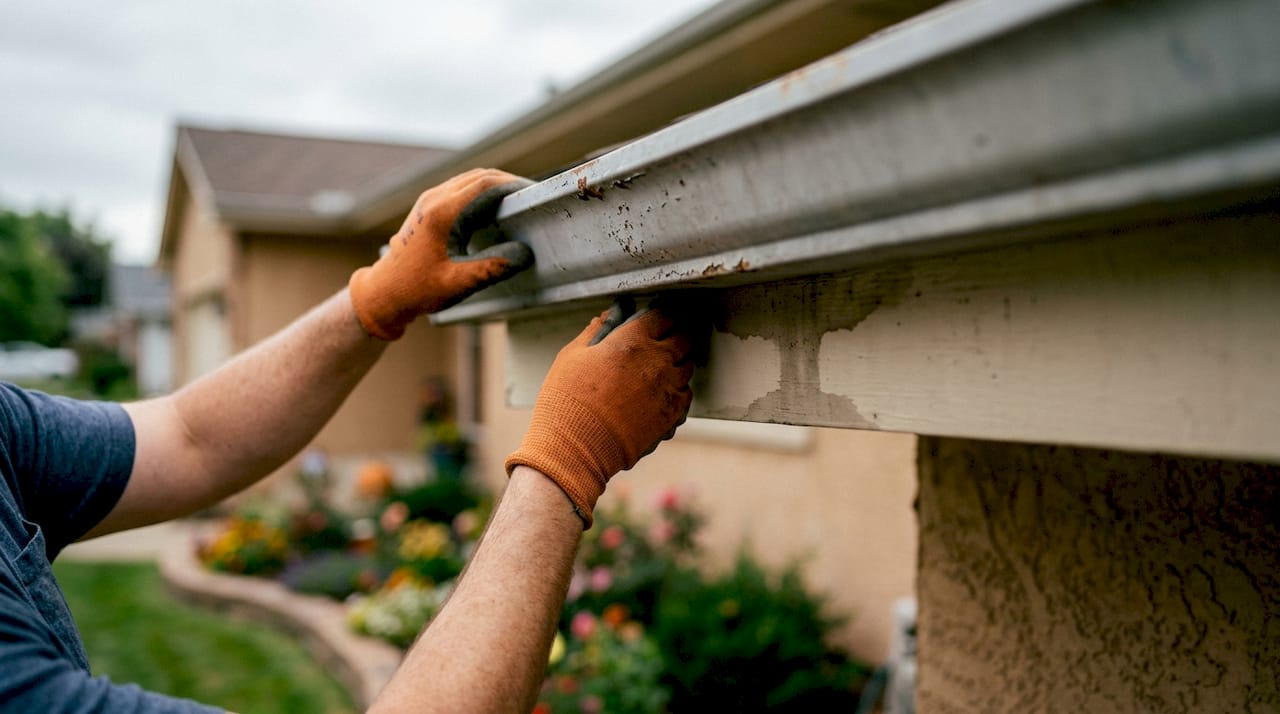
Scan the exterior walls below the gutter line for vertical streaks or paint that is peeling away from the surface. Peeling paint near the roofline is a reliable early warning sign that water has been running where it should not. Check the ground directly below the gutter after rain. Soft, eroded soil or a muddy trench running parallel to the house wall points to overflow or a breach in the gutter bottom.
Pro Tip: Inspect your gutters within 30 minutes of a rainstorm ending. Active leaks are easiest to spot while the system is still wet and dripping.
2. Common gutter leak signs on your home’s exterior
Water stains and dark streaks on your fascia, soffits, or exterior siding are the clearest gutter leak signs. Fascia rot is especially telling because it develops only when water sits against wood repeatedly. If you press a screwdriver into the fascia and it sinks easily, water damage is already advanced.
Look for these specific symptoms:
- Dark vertical streaks on siding below the gutter line, caused by water spilling over or dripping from a breach
- Bubbling or peeling paint on exterior walls near the gutter, indicating repeated moisture contact
- Sagging gutter sections where water pools instead of draining, adding weight that bends the channel
- Mold, moss, or algae growth on the wall or soffit directly below the gutter run
- Granule buildup inside the gutter from shingle erosion, which clogs flow and causes water to back up and seep
- Pooling water near the foundation after rain, a sign that water is not being directed away from the house
Each of these symptoms points to a specific failure mode. Sagging, for example, usually means a hanger has failed or the gutter pitch is wrong. Mold on the soffit means water has been sitting against that surface for weeks or months.
Pro Tip: Walk the full perimeter of your home after the next heavy rain and photograph every stain, streak, or soft spot you find. That photo record becomes your baseline for tracking whether problems are getting worse.
3. How to inspect gutters safely and effectively
Safe inspection follows a clear sequence. Start at ground level, then move to a ladder only when you have already identified a specific area that needs a closer look. Essential safety gear includes non-slip shoes, work gloves, and a stabilizer bar that keeps the ladder away from the gutter itself.
Follow these steps for a thorough inspection:
- Do a dry rag test first. Wipe the underside of the gutter channel with a dry cloth before running any water. Professionals recommend wiping the underside dry before hose testing because existing moisture hides tiny active leaks that only show up on a dry surface.
- Run a garden hose test. Place the hose at the far end of the gutter run, away from the downspout. Let water flow steadily for two to three minutes while you watch for drips, overflow, or water running behind the gutter.
- Check the slope with a level. Gutters need a minimum pitch of 1/16 inch per linear foot toward the downspout. A level placed inside the gutter channel tells you immediately if the pitch is off.
- Inspect every joint and end cap. Run your fingers along each seam while the hose is running. Even a pinhole breach produces a detectable drip at this stage.
- Use a moisture meter on the fascia. A moisture meter pressed against the wood behind the gutter gives a reading that confirms hidden water damage even when the surface looks dry.
Pro Tip: Thermal imaging cameras, available at most tool rental stores, detect water trapped in fascia or soffits that a moisture meter cannot reach. Use one if you suspect hidden damage after a visual inspection comes back inconclusive.
4. Where gutter leaks most commonly occur and why
The location of a leak tells you its cause. Joints, seams, and mitered corners are the primary failure points in sectional gutter systems because they rely on sealant that degrades over time. Butyl-based sealants degrade within 5–10 years due to UV exposure and temperature swings. Once the sealant cracks, water finds the gap immediately.
| Leak location | Primary cause | What you will see |
|---|---|---|
| Joints and seams | Sealant breakdown after 5–10 years | Dripping between gutter sections during rain |
| Mitered corners | Thermal expansion and sealant failure | Water running down the corner of the fascia |
| Gutter bottom | Rust or corrosion in galvanized steel | Brown staining directly below the gutter |
| End caps | Poor original seal or impact damage | Water dripping from the closed end of the run |
| Along the full run | Improper pitch causing overflow | Water spilling over the front lip during rain |
Rust and corrosion deserve special attention in galvanized steel systems. Once rust penetrates the metal, the hole grows with every rain cycle. Overflow caused by incorrect pitch is a different problem entirely. It mimics a breach but is actually a slope issue corrected by adjusting hanger spacing, not by applying sealant.
5. Practical steps to confirm and pinpoint the leak source
Combining the dry test and the hose test gives you the most accurate diagnosis. Dry inspections catch 60–70% of leaks, and the hose test closes the gap by revealing leaks that only appear under water pressure. Use both every time.
- Start with the dry rag test along the full gutter run, marking any damp spots with painter’s tape
- Run the garden hose from the far end and watch each marked spot for active dripping
- Apply sustained water pressure directly to lap joints and mitered corners for at least 60 seconds each
- Check the gutter slope with a level at multiple points along the run to rule out pitch as the cause of overflow
- Look for discoloration inside the gutter channel. Yellow or brown staining inside the trough marks where water sits between rains, indicating a low spot or blocked flow
- Photograph every finding with a timestamp. That documentation helps you track whether a small leak is growing and gives any repair professional a clear starting point
Monitoring your water meter is an additional check. Unexplained spikes in water usage can indicate hidden leaks in the gutter system or connected plumbing. Cross-reference a high meter reading with visible gutter symptoms to confirm the source.
6. How to tell if it is a gutter leak or a roof leak
Homeowners often confuse gutter overflow stains with roof leaks, and misdiagnosing the source leads to wasted repair money. The location of water stains is the clearest diagnostic tool you have.
- Gutter leaks produce stains along the edges of ceilings, on exterior walls near the roofline, or on fascia and soffit boards
- Roof leaks cause stains in the center of ceilings, in attic insulation, or on interior walls away from the building edge
- Fascia rot is almost always a gutter problem. Roof leaks rarely cause wood rot at the fascia because roof water travels down the deck, not along the edge
- Dripping from the gutter lip during rain is normal when the system is full. Dripping from the underside of the gutter between rains is a leak
- Warped or soft soffit panels directly below the gutter run point to gutter overflow, not a roof breach
Roof leaks typically show damage centered in ceilings or attics, while gutter leaks concentrate damage at the building’s edges. When you see peeling paint on exterior siding below the gutter line, that is a gutter problem until proven otherwise. Check the full gutter inspection checklist before calling a roofer.
Key takeaways
Detecting gutter leaks early requires combining ground-level visual checks, a dry rag test, and a garden hose test to confirm the exact source before any repair begins.
| Point | Details |
|---|---|
| Start from the ground | Use binoculars after rain to spot drips, stains, and sagging without ladder risk. |
| Dry test before water test | Wipe gutters dry first; this reveals tiny leaks that moisture hides during hose testing. |
| Joints fail first | Sealant at seams and corners degrades within 5–10 years and is the most common leak source. |
| Pitch matters as much as sealant | A slope below 1/16 inch per foot causes overflow that looks like a breach but is not. |
| Stain location diagnoses the source | Edge and fascia stains mean gutters; center-ceiling stains mean roof. |
What I have learned from years of watching gutters fail
The most expensive gutter repairs I have seen were not caused by catastrophic storms. They were caused by small leaks that homeowners noticed and ignored for one or two seasons. A pinhole at a joint costs almost nothing to reseal. That same pinhole, left alone through a Florida rainy season, rots the fascia, soaks the soffit, and eventually lets moisture into the wall cavity.
The twice-yearly inspection schedule that Consumer Reports and industry professionals recommend is not excessive. Spring catches damage from winter temperature swings. Fall catches anything that developed during the heavy summer rain season, which is exactly when Central Florida gutters take the hardest beating.
Ground-level inspection with binoculars is genuinely underrated. Most homeowners assume they need to climb a ladder to find anything useful. A good pair of binoculars and 15 minutes after a rainstorm will catch the majority of active leaks. Save the ladder for confirming what you already suspect.
The other thing I would push back on is the idea that gutter problems are always obvious. Fascia rot can develop for months behind a gutter that looks fine from the street. Press the wood. Use a moisture meter. Do not trust your eyes alone when you are dealing with a material that hides damage behind its own profile. The annual inspection steps that Larrysgutters recommends exist precisely because visual checks alone miss what is happening behind the gutter channel.
— Results
Larrysgutters can help you stay ahead of gutter leaks
Spotting a leak is step one. Getting it fixed before it costs you thousands in structural repairs is step two.

Larry’s Gutters specializes in residential gutter solutions across Central Florida, where heavy rainfall makes a functioning gutter system non-negotiable. Seamless gutters eliminate the joints and seams where most leaks start, giving you a system with far fewer failure points. For homes already showing leak symptoms, the Larrysgutters repair team identifies the exact breach and fixes it correctly the first time. Gutter guard installation prevents the debris buildup that leads to overflow and seepage. Request a free quote and get a professional set of eyes on your gutters before the next rainy season arrives.
FAQ
What are the first signs of a gutter leak?
Dark streaks on the fascia, peeling paint on exterior walls near the roofline, and pooling water at the foundation are the earliest visible signs. Catching these symptoms before they worsen prevents fascia rot and foundation damage.
How do I test my gutters for leaks at home?
Wipe the underside of the gutter dry with a rag, then run a garden hose from the far end of the run and watch for drips at joints and seams. This two-step method catches the majority of active leaks without professional equipment.
What is a gutter scupper and can it leak?
A gutter scupper is an opening cut into a parapet wall or flat roof edge that allows water to drain off the roof surface into a downspout or away from the building. Scuppers can leak at their flashing connections or if debris blocks the opening and causes water to back up.
How often should I inspect my gutters for leaks?
Industry guidelines recommend at least two thorough inspections per year, once in spring and once in fall, to catch damage from seasonal weather changes before it becomes a structural problem.
How do I know if it is a gutter leak or a roof leak?
Gutter leaks produce stains along ceiling edges, on fascia boards, and on exterior walls near the roofline. Roof leaks cause stains in the center of ceilings or in attic insulation. Stain location is the most reliable diagnostic tool for telling the two apart.
