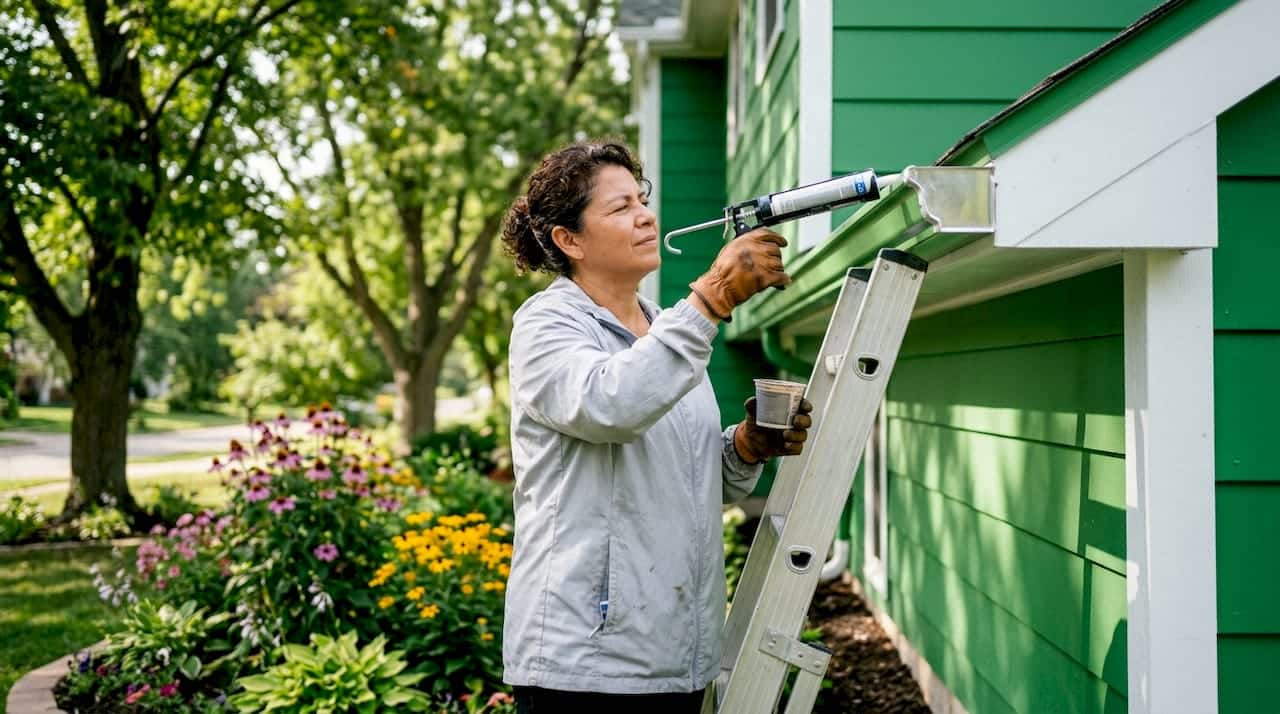
TL;DR:
- A gutter stop end seals the open end of a gutter to prevent water overflow and protect the home from moisture damage. Proper installation, correct material choice, and regular inspection are essential to ensure longevity and prevent costly repairs. Many homeowners overlook these small components until water damage becomes visible, making routine maintenance crucial.
A gutter stop end is defined as the closure piece that seals the open terminal end of a gutter run, blocking water from spilling off the edge and directing it toward the downspout instead. Without this component, water would pour freely off the end of your gutter, soaking your fascia boards, siding, and foundation. The industry term is “gutter end cap,” and both names refer to the same part. Standard residential systems use 5-inch K-style profiles with aluminum caps ranging from 0.019 to 0.032 inches thick. Understanding what a gutter stop end does is the first step toward protecting your home from preventable water damage.
What is a gutter stop end and why does it matter?
A gutter end cap seals the open terminal end of a gutter to prevent water overflow and protect fascia boards, siding, and foundation areas from moisture damage. Every gutter run has at least one open end, and without a cap, that end becomes a direct water exit point during any rainstorm. In Central Florida, where heavy downpours are routine, an unsealed gutter end can dump gallons of water against your home’s structure within minutes.
End caps are among the highest-stress points in any gutter system. Water velocity stalls at the terminal end, concentrating pressure against the cap and its sealant bond. That concentrated force is why end caps fail more often than mid-run sections, and why the quality of both the cap and its installation matters more than most homeowners expect.
The part itself is simple: a formed piece of metal or vinyl shaped to match the gutter profile, pressed into the open end, sealed, and fastened. Simple does not mean unimportant. A failed end cap is one of the most common causes of fascia rot and foundation moisture intrusion in residential homes.
What are the different types of gutter stop ends?
Gutter end caps come in two main configurations: external and internal. Knowing the difference helps you choose the right gutter termination type for your specific setup.
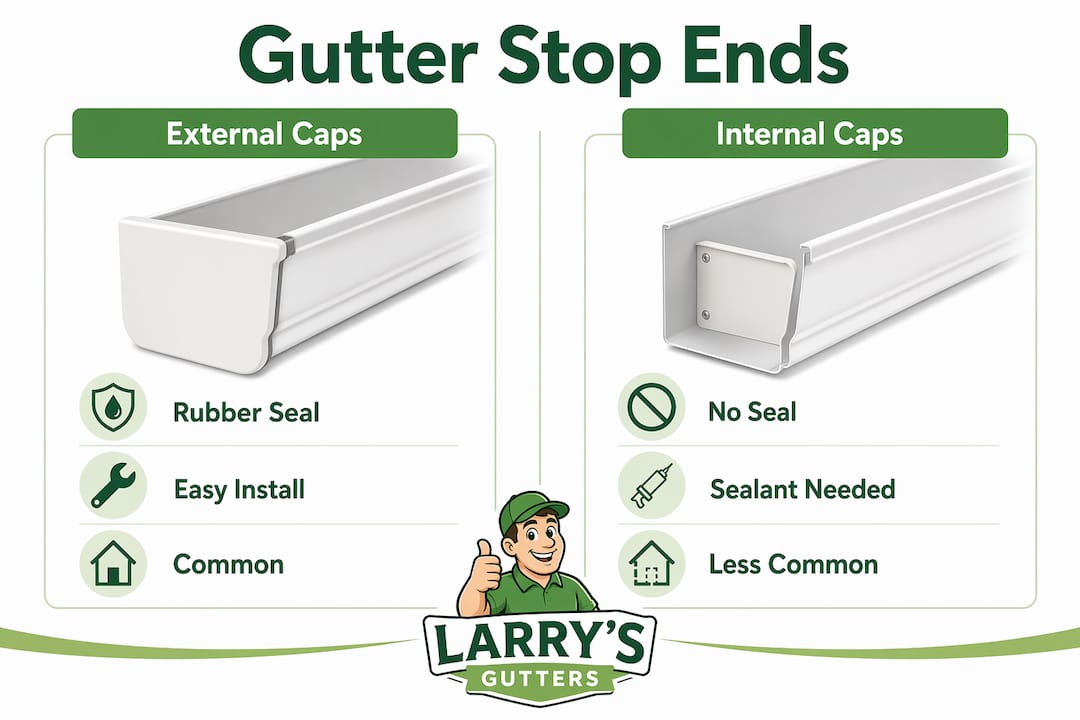
External stop ends fit over the outside of the gutter opening. They are the most common type used in residential systems and typically include a rubber or foam seal that compresses against the gutter face for a watertight fit. External caps work well on straight gutter runs and are easier to install without professional tools.
Internal stop ends fit inside the gutter channel. They lack built-in rubber seals and rely entirely on applied sealant for waterproofing. Installers use them at angled runs, at outlet connections, or when the external profile would interfere with adjacent components. They require more precise fitting and a heavier bead of sealant to perform reliably.
Beyond internal versus external, end caps are also left-hand or right-hand specific. Selecting the wrong orientation is one of the most frequent DIY errors, resulting in poor fit and leaks at the joint. Always confirm the hand orientation before purchasing a replacement cap.
| Type | Seal included | Best use | Installation difficulty |
|---|---|---|---|
| External stop end | Yes (rubber or foam) | Straight gutter runs | Low |
| Internal stop end | No (sealant only) | Angled runs, outlet ends | Moderate |
Both types must match the gutter profile exactly. A K-style cap does not fit a half-round gutter, and a 5-inch cap will not seat correctly on a 6-inch channel.
What materials are used for gutter end caps?
Material choice determines how long your end cap lasts and how well it handles your local climate. Three materials dominate the residential market: aluminum, vinyl, and copper.
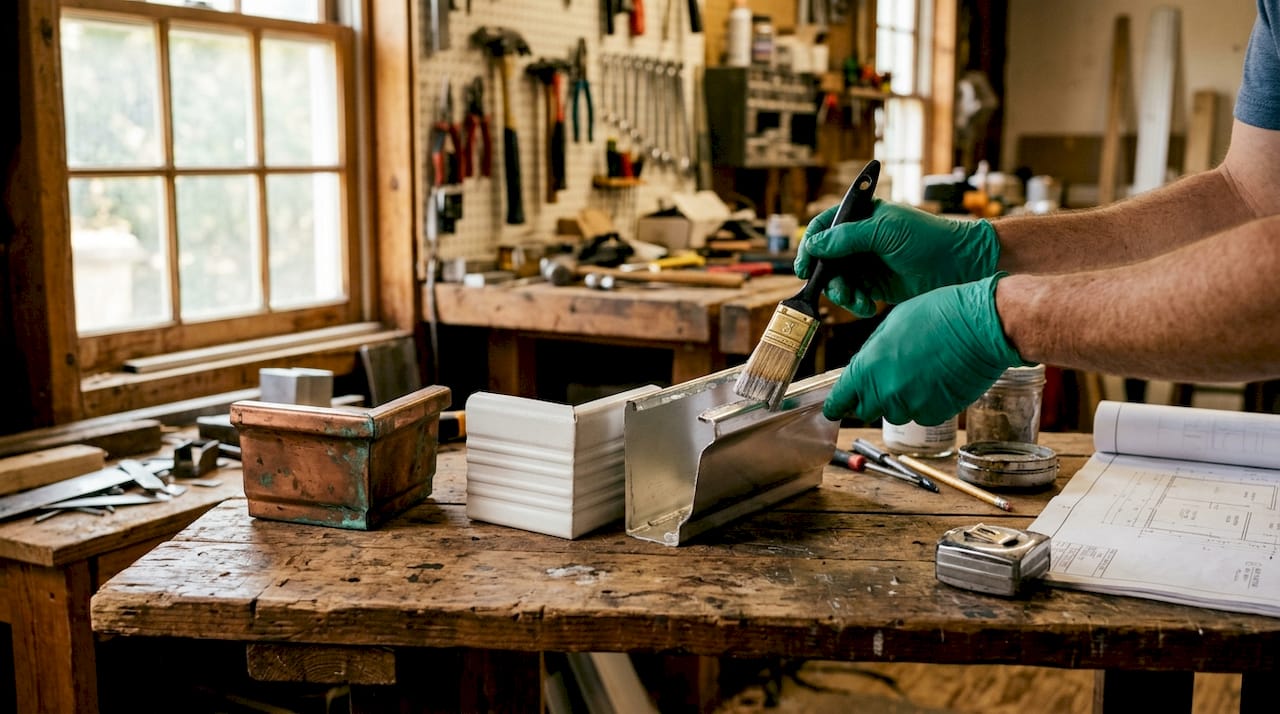
Aluminum is the industry standard for residential gutter systems. It is lightweight, rust-resistant, and available in a wide range of colors to match painted gutters. Aluminum caps in the 0.027-inch thickness range offer a good balance of durability and workability. Aluminum performs reliably across most climates and is the default choice for new installations.
Vinyl costs less upfront but carries a real drawback in sunny climates. UV exposure causes vinyl to become brittle over time, leading to cracks and gaps at the joint. In Florida’s intense sun, vinyl end caps can degrade noticeably faster than aluminum. They work acceptably in shaded or mild climates but are not the best choice for Central Florida homes.
Copper is the premium option. It is extremely durable, develops a natural patina that resists corrosion, and can last decades. The trade-off is cost and installation complexity. Copper caps require soldering rather than riveting, which means professional installation is necessary. Copper also must only be paired with copper gutters. Mixing copper with aluminum or galvanized steel creates galvanic corrosion, which accelerates failure at every contact point.
Pro Tip: Always match your end cap material to your existing gutter material. Mixing metals causes galvanic corrosion that eats through fasteners and sealant bonds faster than weather alone ever would.
Professionals also recommend matching cap material to climate. In regions with large temperature swings, aluminum with a quality sealant outperforms vinyl because it expands and contracts without cracking.
How to install gutter stop ends correctly
A proper installation follows a specific sequence. Skipping steps is the primary reason end caps fail within a few years.
- Clean the gutter end thoroughly. Remove all debris, old sealant, and oxidation from the inside of the gutter channel and the face where the cap will seat. Use a wire brush to get down to bare metal. Applying sealant over old material produces a short-lived bond that fails at the first thermal cycle.
- Dry-fit the cap before sealing. Press the cap into position without sealant to confirm it seats fully and matches the profile. Check the hand orientation. A cap that does not sit flush will leak regardless of how much sealant you apply.
- Apply exterior-grade sealant inside the cap. Run a continuous bead of high-quality, exterior-grade gutter sealant around the interior perimeter of the cap. Press the cap firmly onto the gutter end, working out any air pockets. The sealant acts as a bedding layer, filling microscopic gaps between the cap and the gutter wall.
- Fasten with matching rivets. Drive aluminum pop rivets through the cap and gutter wall on both sides. Aluminum rivets on aluminum gutters prevent galvanic corrosion and resist loosening from thermal expansion and contraction cycles. Use stainless steel rivets only when specified by the manufacturer.
- Seal the rivet heads. Apply a small dab of sealant over each rivet head. Rivets create small penetrations in the metal, and unsealed heads are a direct path for water intrusion.
- Allow full cure time before exposure. Most exterior-grade gutter sealants require 24 hours to cure fully. Avoid running water through the gutter during that window.
Pro Tip: If your home has gutter guards installed, remove them before working on stop ends. Guards that overlap the end cap area block access and can trap moisture against the joint, hiding leaks until the damage is already done.
Gutter guards can also cause water to overshoot the end cap if they are not trimmed or fitted correctly at the terminal end. Always check the guard-to-cap interface after reinstallation.
What are the signs of gutter stop end failure?
Catching a failing end cap early saves you from replacing fascia boards or treating foundation moisture. The signs are specific and easy to spot during a routine annual gutter inspection.
- Dripping at the gutter end during rain. Water running down the outside of the cap face or dripping from the bottom corner of the end cap is the clearest sign of sealant failure.
- Staining on fascia or siding below the gutter end. Dark streaks or paint bubbling directly below the end cap indicate chronic moisture contact.
- Wood rot on the fascia board. Soft or discolored wood behind the gutter end is a sign the leak has been active long enough to saturate the wood. This repair is significantly more expensive than replacing the cap.
- Visible sealant cracking or separation. Sealant that has pulled away from the metal surface, turned chalky, or cracked is no longer waterproof.
Sealant failure from thermal expansion and UV exposure typically occurs within 3–5 years when low-quality sealant is used or when new sealant is applied over old material. That timeline shortens in climates with extreme heat or cold.
Many homeowners wait until they see visible water damage before addressing end cap issues. By that point, the fascia often needs replacement alongside the cap. Annual inspections catch sealant cracking before it becomes a structural repair. A quick visual check each fall and after major storms takes less than ten minutes and costs nothing.
Pro Tip: Run a garden hose into the gutter and watch the end cap closely. A slow drip under normal water pressure will become a significant leak during a heavy Florida downpour.
Key Takeaways
A gutter stop end is the single component most responsible for preventing water damage at the terminal ends of your gutter system, and its performance depends entirely on correct material selection, proper installation, and regular inspection.
| Point | Details |
|---|---|
| Definition and function | A gutter end cap seals the open terminal end of a gutter run to stop water overflow and protect fascia, siding, and foundation. |
| Two main types | External caps include built-in seals and suit straight runs; internal caps rely on sealant and work at angles or outlets. |
| Material matters | Aluminum is the standard choice; avoid vinyl in high-UV climates and never mix metals with copper caps. |
| Installation sequence | Clean to bare metal, dry-fit, bed with sealant, rivet with matching fasteners, and seal rivet heads. |
| Maintenance frequency | Inspect end caps annually and after major storms; replace cracked sealant before fascia damage develops. |
The part most homeowners ignore until it’s too late
After years of seeing gutter systems across Central Florida, the pattern is consistent: homeowners spend money on new gutters, quality guards, and proper downspout placement, then completely ignore the end caps until water is running down their fascia boards.
End caps are not glamorous. They are small, inexpensive, and easy to overlook during a quick visual check from the ground. That invisibility is exactly what makes them dangerous. A $4 cap with failing sealant can cause $800 worth of fascia replacement if left unaddressed through a Florida rainy season.
The other mistake I see repeatedly is DIYers applying fresh sealant directly over old, cracked material. It looks like a fix. It is not. The new sealant bonds to the old layer, not to the metal, and the whole thing peels away within a season. Getting down to bare metal with a wire brush is not optional. It is the entire job.
Material selection also gets underestimated. Vinyl caps are sold at every hardware store and they look identical to aluminum caps on the shelf. In Florida’s UV intensity, vinyl becomes brittle within a few years. Aluminum costs a few dollars more and lasts significantly longer. That is not a close call.
The homeowners who avoid expensive repairs are the ones who spend ten minutes twice a year checking their gutter ends, running a hose test, and resealing anything that looks questionable. Prevention at this scale is genuinely cheap. Repair after the fact is not.
— Larrysgutters
Gutter stop end help from Larrysgutters
Getting end caps right the first time means your entire gutter system performs the way it should through every Florida storm season.

Larry’s Gutters installs and repairs residential gutter systems across Central Florida, including proper end cap fitting, mechanical fastening, and exterior-grade sealing on every job. Whether you need a full gutter installation or a targeted leak repair at the end cap, the team brings the right materials and the right process to the work. If you are unsure whether your current end caps are holding, a professional inspection takes the guesswork out of it. Contact Larrysgutters for a free quote and get your gutter system protected before the next heavy rain.
FAQ
What is a gutter stop end?
A gutter stop end, also called a gutter end cap, is the closure piece that seals the open terminal end of a gutter run to prevent water from spilling off the edge. It directs water toward the downspout and protects fascia boards, siding, and the foundation from moisture damage.
What is the difference between a gutter stop end and an outlet?
A gutter stop end seals the terminal end of the gutter with no opening, while a gutter outlet is a fitting with a hole that connects the gutter channel to a downspout. They serve opposite functions: one closes the run, the other opens it to drainage.
How long do gutter end caps last?
End cap longevity depends on material and sealant quality. Poor-quality sealant or sealant applied over old material can fail within 3–5 years. Aluminum caps with exterior-grade sealant and proper mechanical fastening last significantly longer under normal conditions.
Can I install a gutter stop end myself?
Yes, external end caps on standard K-style gutters are a manageable DIY repair. The critical steps are cleaning to bare metal, using the correct hand orientation, applying fresh sealant as a bedding layer, and fastening with matching aluminum rivets.
Do gutter guards affect end cap installation?
Gutter guards that extend to the terminal end of the gutter can block access to stop ends and must be removed before inspection or repair. Guards that are not trimmed correctly at the end cap can also cause water to overshoot the cap during heavy rain.
