
TL;DR:
- Gutter leaks are primarily caused by blockages, failed seals, improper slope, and physical damage, which often interact and worsen each other. Addressing the root causes through proper maintenance, correct slope, and quality installation is crucial to preventing leaks and damage. Simply re-caulking or patching without fixing underlying issues leads to recurring problems and costly repairs.
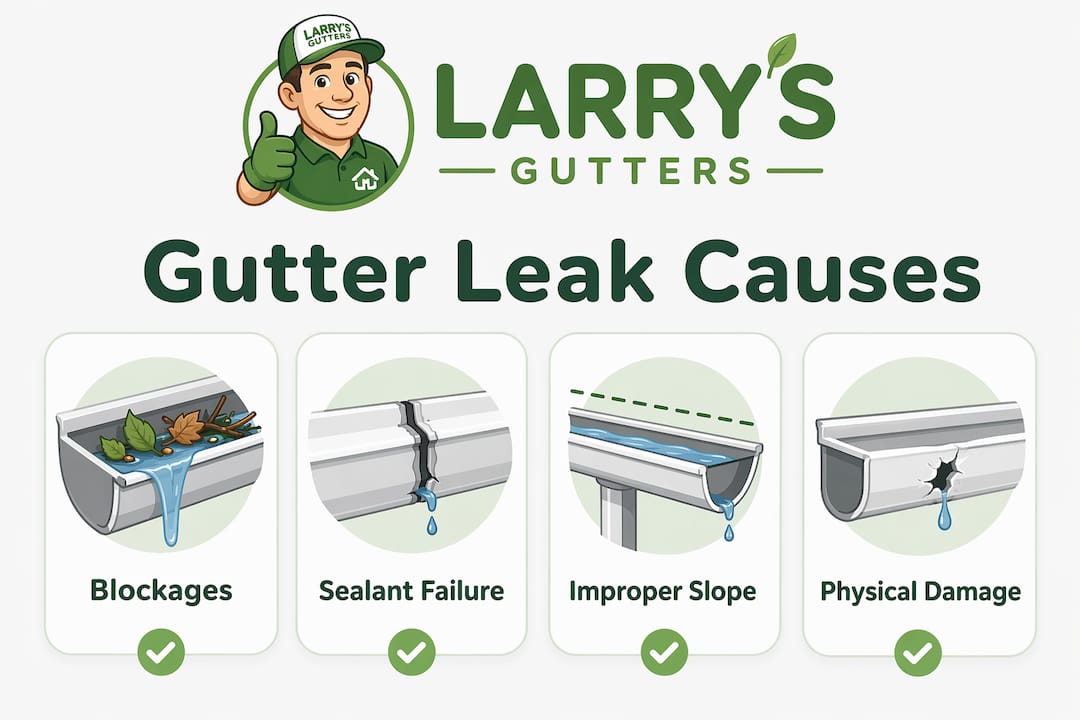
Gutter leaks are defined as water escaping the gutter channel before reaching the downspout, caused primarily by blockages, failed sealant at joints, improper slope, and physical damage to the gutter material. Understanding what causes gutter leaks saves you from expensive foundation repairs, rotted fascia boards, and flooded basements. The four root causes are not independent. They interact and accelerate each other, which is why a single clogged section can trigger a chain of common gutter problems across your entire system. Catching the right cause early is the difference between a $15 tube of sealant and a full gutter replacement.
What causes gutter leaks: blockages and overflow
Clogs cause most gutter leaks by blocking water flow, forcing water to pool and spill over the back edge of the gutter instead of draining through the downspout. Leaves, pine needles, roof granules from aging shingles, and twigs are the most common culprits. In Central Florida, oak leaves and Spanish moss add to the debris load year-round, not just in fall.
When water pools behind a blockage, it creates back-pressure. That pressure pushes water under the roofline, through weak seams, and behind the gutter channel itself. Water running behind the gutter is one of the most destructive outcomes because it soaks the fascia board and wall sheathing without any visible dripping at the gutter face.
Debris also adds significant weight. A section of gutter packed with wet leaves can weigh several times more than the gutter itself. That weight pulls hangers loose and causes the gutter to sag, which creates low spots where water pools permanently, even after the debris is cleared.
- Leaves and twigs block the channel and downspout inlet
- Roof granules from aging shingles accumulate at low points
- Standing water from blockages accelerates rust and sealant breakdown
- Sagging from debris weight creates permanent pooling zones
Pro Tip: Clean your gutters at least twice a year in Central Florida. After any major storm, do a quick visual check for debris buildup near downspout inlets, since that is where blockages start first.
A gutter maintenance checklist tailored to Florida’s weather patterns will help you stay ahead of debris buildup before it turns into a leak.
Why do gutters leak at joints, seams, and end caps?
Sealant failure at joints and seams is the second most common gutter leak cause, driven by UV exposure, temperature cycling, and the constant stress of moving water. Sectional gutters have joints every 10 feet or so, and every one of those joints is a potential leak point. The sealant used at those connections typically needs reapplication every 5–10 years.
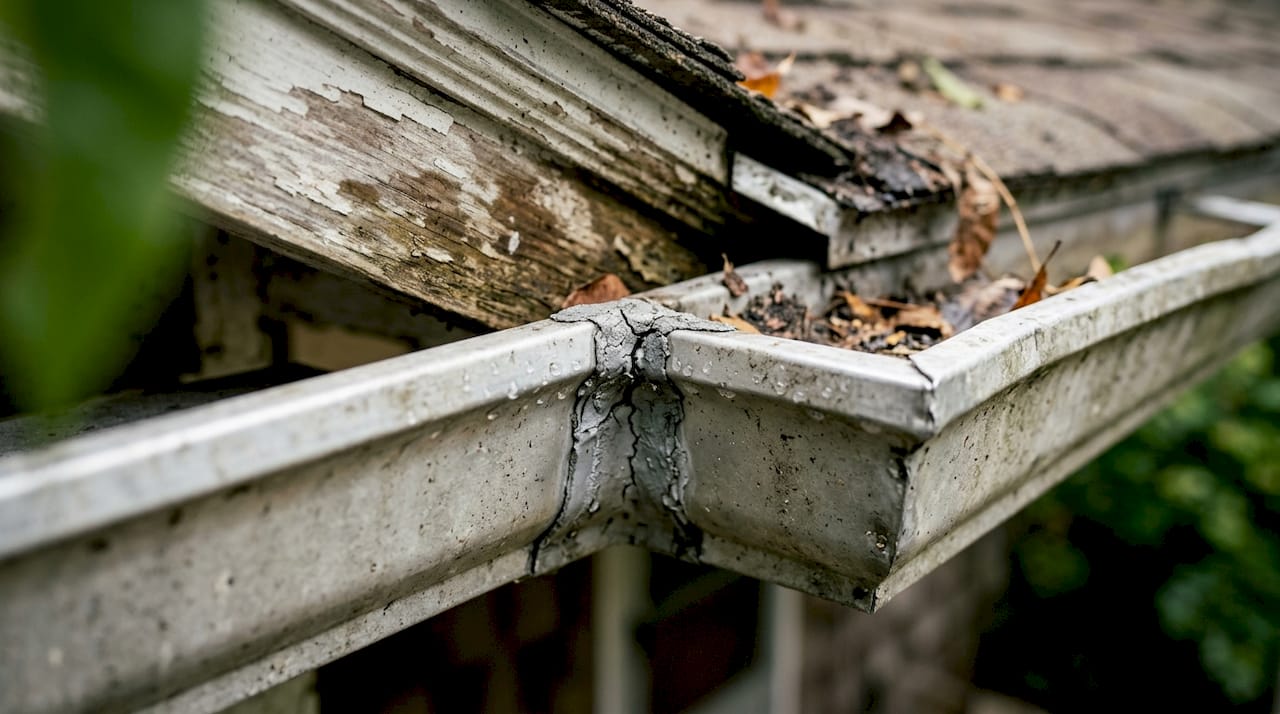
End caps and mitered corners take the hardest hits. Water concentrates at corners before turning toward the downspout, and thermal expansion causes the metal to flex repeatedly. That flexing cracks the sealant bond over time. End caps and corners are frequent leak points because the sealant at these joints breaks down faster than anywhere else in the system.
Downspout outlet areas are another overlooked zone. Debris and standing moisture accumulate around the outlet opening, accelerating corrosion and creating leaks that homeowners often mistake for fascia damage. If you see staining on your fascia board directly below the downspout connection, the outlet seal is the first place to check.
| Leak Location | Primary Cause | Repair Approach |
|---|---|---|
| Lap joints | Sealant deterioration from UV and water | Clean, dry, and reseal with gutter sealant |
| Mitered corners | Thermal expansion cracking sealant bond | Reseal or replace corner fitting |
| End caps | Water pressure and sealant age | Replace end cap and reseal |
| Downspout outlet | Debris buildup and corrosion | Clean outlet, treat rust, reseal |
Pro Tip: When resealing a joint, use a gutter-specific butyl or polyurethane sealant rather than standard silicone caulk. Standard silicone does not bond well to metal under wet conditions and fails faster.
Understanding gutter joint leakage in detail will help you identify whether a seam repair is enough or whether the underlying pitch problem is driving the failure.
How does improper gutter slope cause leaks?
Incorrect gutter pitch is one of the most overlooked gutter leak causes, and it is responsible for a large share of repeat leaks that homeowners cannot seem to fix. SMACNA standards recommend a minimum pitch of approximately 1/4 inch of drop per 10 feet of gutter run. Without that slope, water sits in the channel instead of flowing toward the downspout.
Here is what happens when the slope is wrong:
- Water pools in the flat or reversed section of the gutter.
- Standing water softens and degrades sealant at nearby joints.
- The added weight of pooled water pulls hangers loose, causing sagging.
- Sagging creates more low spots, compounding the pooling problem.
- Rust and corrosion develop in the standing water zone, eventually creating holes.
A reversed slope, where the gutter tilts away from the downspout, sends water toward the end cap instead. That end cap then takes constant water pressure it was never designed to handle, and it fails. Maintaining proper pitch is the single most effective way to extend sealant life and prevent structural damage to the gutter system.
The simplest diagnostic tool is a garden hose. Run water into the gutter at the far end from the downspout and watch where it pools. If water sits anywhere for more than a few seconds after you stop the flow, the pitch is off at that point. A controlled hose test like this reveals hidden pitch problems and blockages that a dry visual inspection misses entirely.
Gutters that overflow during heavy rain but appear clean are often a slope problem, not a debris problem. Undersized or sagged gutters cannot move water fast enough during Florida’s intense downpours, and the overflow increases pressure on every seam in the system.
Physical damage and material degradation
Rust, cracks, holes, and loose hangers are the most visible signs of gutter damage, and each one creates a direct path for water to escape the system. UV exposure and temperature swings cause older steel and galvanized gutters to crack and corrode, especially in Florida where the sun is intense year-round. Aluminum gutters resist rust but can crack from physical impacts like falling branches or ladder placement.
Loose or failed hangers cause gutters to pull away from the fascia, creating a gap where water pours behind the gutter instead of into it. This is particularly damaging because the water then runs directly down the wall, soaking insulation and framing over time. Hangers typically fail when debris weight stresses them repeatedly or when the fascia board itself begins to rot.
| Damage Type | Cause | Signs to Look For |
|---|---|---|
| Rust and corrosion | Standing water, UV exposure | Orange staining, flaking metal, pinholes |
| Cracks and holes | Physical impact, material fatigue | Visible splits, daylight through gutter |
| Loose hangers | Debris weight, fascia rot | Gutter pulling away from roofline |
| Sagging sections | Hanger failure, pooled water weight | Visible dip in gutter profile |
Knowing when gutters need replacing versus when a repair is enough saves you money and prevents you from patching a system that has already failed structurally. Pinholes and small cracks are repairable. A gutter that sags in multiple sections, shows widespread rust, or has pulled away from the fascia in several spots is a replacement candidate.
Key takeaways
Gutter leaks stem from four root causes: blockages, sealant failure at joints, improper slope, and physical damage, and fixing only the symptom without addressing the root cause leads to repeat failures.
| Point | Details |
|---|---|
| Blockages drive most leaks | Clear debris from gutters twice yearly to prevent pooling and back-pressure damage. |
| Joints and seams fail over time | Reseal lap joints, end caps, and corners every 5–10 years with gutter-specific sealant. |
| Slope determines drainage | Maintain a 1/4-inch drop per 10 feet to prevent standing water and sealant breakdown. |
| Physical damage compounds fast | Inspect hangers and gutter material annually; replace sagging or corroded sections promptly. |
| Fix root causes, not symptoms | Re-caulking without correcting slope or hanger issues produces recurring leaks. |
The repair mistake most homeowners make
Most homeowners I talk to have re-caulked the same seam two or three times and cannot figure out why it keeps leaking. The answer is almost always slope. Simply re-caulking a seam without correcting the underlying pitch or securing loose hangers produces the same leak within one or two seasons. The sealant is not the problem. The standing water that destroys the sealant is the problem.
The diagnostic approach that actually works is a two-stage inspection. Start with a dry visual check: look for rust staining, sagging sections, gaps at the fascia, and cracked end caps. Then run a hose test and watch exactly where water pools or escapes. Staged inspections that combine dry and wet methods locate the true source of a leak far more accurately than guessing from the ground.
Sealant failure often follows from a larger issue like poor pitch or a blockage. Treat the sealant failure and you get a temporary fix. Treat the pitch and the blockage and the sealant repair lasts. That distinction is what separates a one-time repair from a recurring maintenance headache.
One more thing worth knowing: leaks visible only during rain and damage found during a dry inspection require different responses. A drip you can only see in a storm points to a flow-related issue, usually slope or overflow. Staining and rot you find on a dry day point to a chronic seepage problem at a joint or hanger gap. Knowing which type you are dealing with tells you exactly where to look first.
— Larrysgutters
Stop gutter leaks before they damage your home
If your gutters are leaking, the fastest path to a permanent fix is a system designed to eliminate the most common failure points from the start.

Larry’s Gutters installs seamless gutters that remove the lap joints and seams where most leaks begin. Every installation is pitched correctly and secured with properly spaced hangers, so the slope and structural issues that cause repeat leaks are addressed before the first raindrop falls. For homes already dealing with debris-driven overflow, Larrysgutters also offers gutter guard installation that keeps leaves and granules out of the channel year-round. If you are in Central Florida and want a free quote, contact Larrysgutters directly to schedule an inspection.
FAQ
What is the most common cause of gutter leaks?
Blockages from leaves, twigs, and roof granules are the most common cause. They force water to pool and overflow instead of draining, which stresses seams and accelerates sealant failure.
How do i know if my gutter slope is causing leaks?
Run a garden hose into the far end of the gutter and watch for pooling. Water that sits in the channel after the flow stops indicates a pitch problem at that location.
How often should gutter sealant be replaced?
Sealant at joints, end caps, and corners typically needs reapplication every 5–10 years. UV exposure and temperature cycling in Florida can shorten that window.
Can loose hangers cause gutter leaks?
Yes. Loose hangers let the gutter pull away from the fascia, creating a gap where water runs behind the gutter and soaks the wall rather than draining through the downspout.
When should i repair gutters versus replace them?
Repair isolated cracks, pinholes, or failed seams. Replace gutters that sag in multiple sections, show widespread corrosion, or have pulled away from the fascia in several spots.
