TL;DR:
- Properly designed rainwater harvesting gutters integrate roof, drainage, and storage components to handle Florida’s intense rainfall. First-flush diverters prevent contamination by discarding initial runoff, ensuring cleaner water in storage tanks. Accurate sizing, regular maintenance, and compliance with local regulations are essential for effective and safe rainwater collection systems.
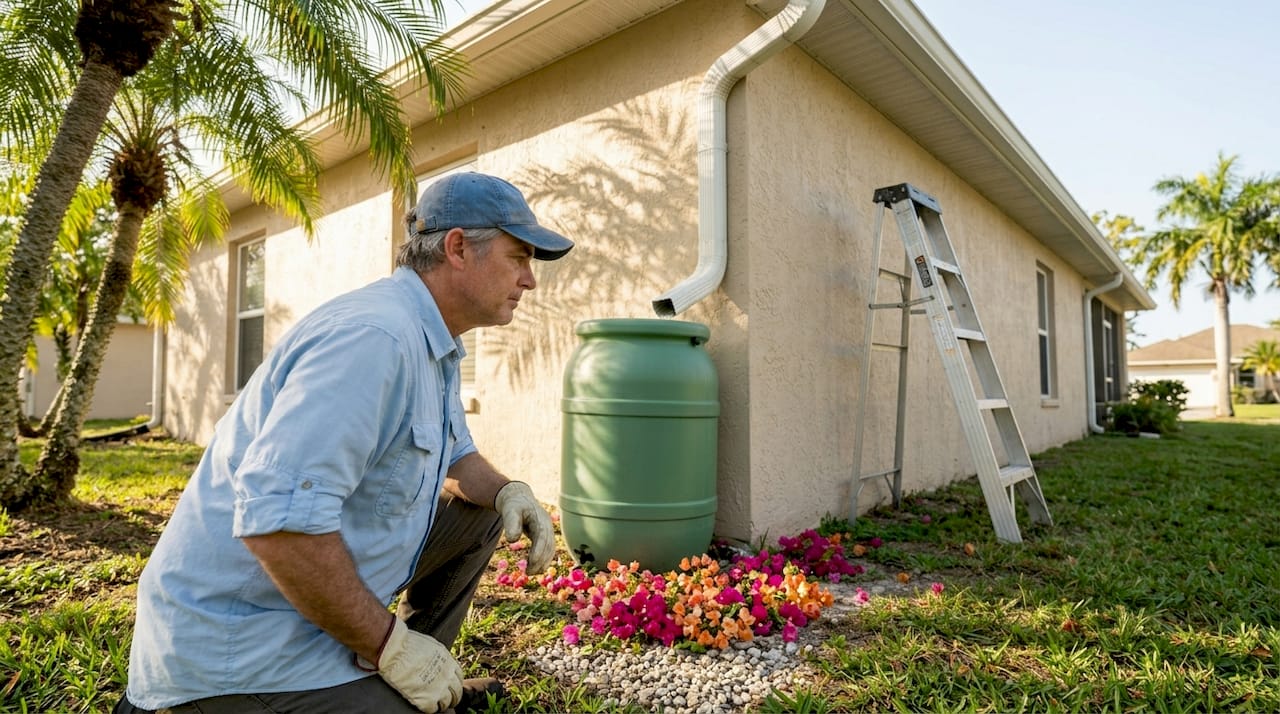
Central Florida homeowners know the rain here is not gentle. When afternoon storms drop inches of water in under an hour, your gutters either handle it or your home pays the price. Understanding what is a rainwater harvesting gutter goes beyond knowing it “catches water.” Most homeowners assume any standard gutter works for collection, but that thinking is exactly what leads to overflow, contaminated storage tanks, and missed opportunity. A properly designed rainwater harvesting gutter system is a purposeful integration of your roof, drainage infrastructure, and water storage, engineered to handle Florida’s intensity and keep collected water clean.
Table of Contents
- Understanding rainwater harvesting gutters and how they work
- The critical role of first-flush diverters in gutter-integrated systems
- Sizing gutters for optimal rainwater harvesting in Central Florida
- Legal considerations and maintenance tips for rainwater harvesting gutters in Florida
- Why many rainwater harvesting gutters fail and how to avoid common pitfalls
- Professional gutter solutions for effective rainwater harvesting in Central Florida
- Frequently asked questions
Understanding rainwater harvesting gutters and how they work
A rainwater harvesting gutter is a modified or purpose-configured gutter system that does more than route water off your roof. It directs captured runoff through a sequence of components that filter, divert, and store water for reuse. As noted in gutter industry research, rainwater harvesting systems represent a distinct engineering intersection where roof drainage meets collection and filtration standards. That intersection matters, because skipping any one component in the chain creates failure points.
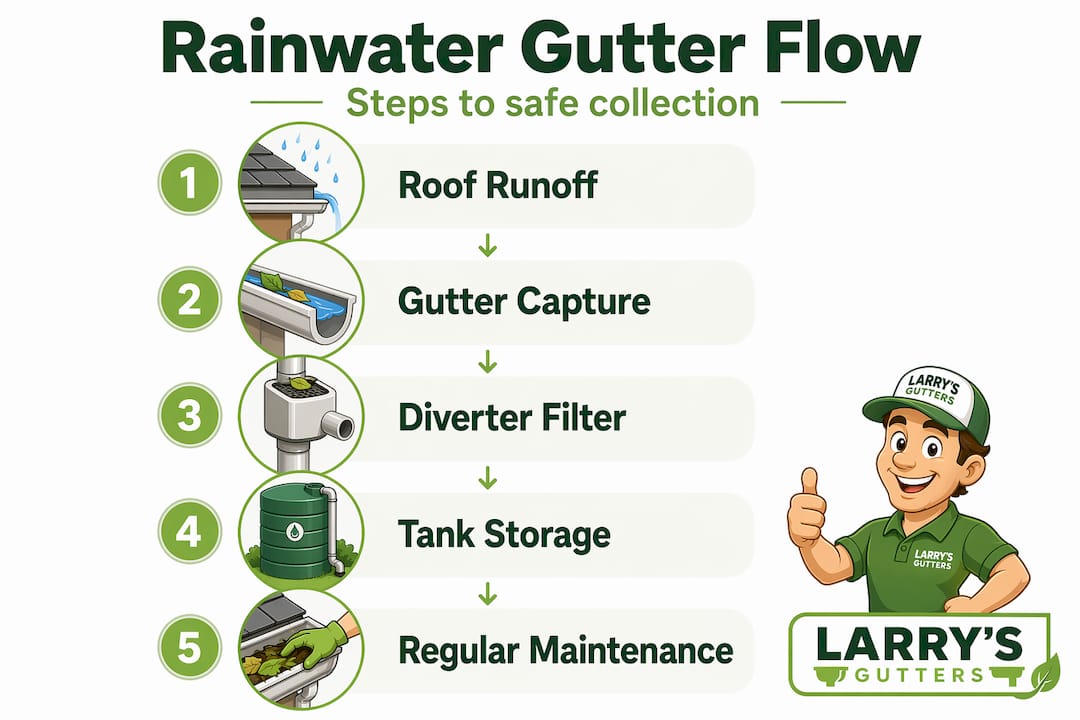
Here is how a complete rainwater harvesting system flows from rooftop to storage:
- Roof catchment surface: Your roof is the collection platform. Larger roof areas collect more water, but surface material affects water quality. Metal roofing is ideal; asphalt shingles require more filtration.
- Gutters and downspouts: These channel water off the roof and toward the collection infrastructure. Their size, slope, and material directly affect collection volume and speed.
- First-flush diverter: A device that captures and discards the first, most contaminated surge of runoff before clean water enters storage. More on this shortly.
- Conveyance pipes: After diversion, clean water travels through pipes to the storage vessel. PVC Schedule 40 is the most common material.
- Filtration stage: A mesh screen or multi-stage filter removes debris, insects, and fine particles before water reaches the tank.
- Storage tank or cistern: Rain barrels handle small volumes; underground cisterns handle large-scale collection.
Proper integration of all these parts, covered in detail in our gutter system components guide, reduces contamination risk and dramatically increases how much usable water you actually collect. The system is only as strong as its weakest link.
Now that you know what rainwater harvesting gutters are, let’s explore the essential feature that ensures clean water collection.
The critical role of first-flush diverters in gutter-integrated systems
Think of the first-flush diverter as a bouncer for your storage tank. It stops the bad stuff from getting in. Every time it rains, the initial runoff washes bird droppings, dust, insect debris, oxidized roofing material, and airborne pollutants directly off your roof. That first wave of water is the dirtiest, and it must be discarded before clean water enters your storage.
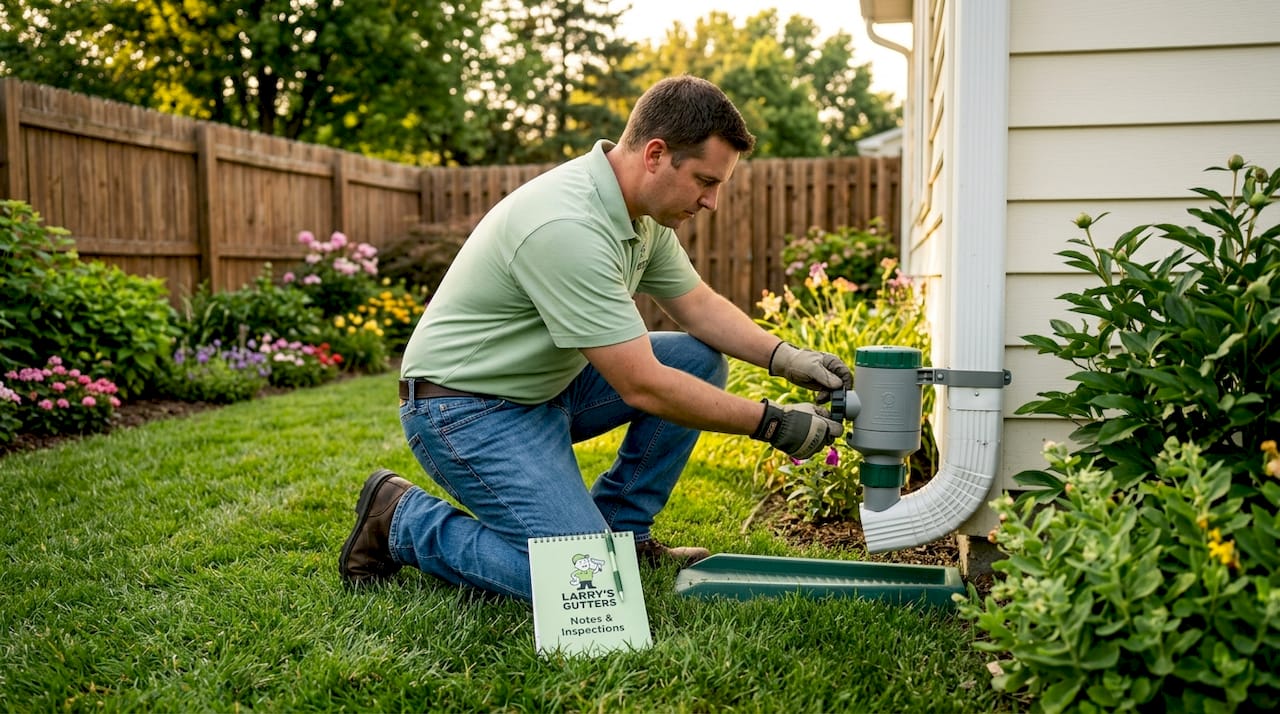
The industry standard is to divert a minimum of 1 gallon for every 100 square feet of roof catchment area. For a 2,000 square foot roof, that means a 20-gallon diverter capacity minimum. Most homeowners undersize this component and wonder why algae blooms form in their tanks within weeks.
A few key facts about diverter design:
- Pipe material: 4-inch Schedule 40 PVC is the standard for residential systems.
- Length calculation: Pipe length determines diverter volume. A 4-inch pipe holds roughly 0.65 gallons per foot, so a 20-gallon requirement needs approximately 31 feet of pipe.
- Float valve: A simple float valve inside the diverter releases slowly between rain events, emptying the pipe so it is ready for the next storm.
Staying current with rain gutter maintenance steps ensures your diverter valve stays functional between seasons.
Pro Tip: Always round your diverter size up, never down. A slightly oversized diverter is harmless. An undersized one allows contaminated water into your storage tank, where bacteria and algae thrive in Florida’s heat. Fixing a contaminated tank is expensive and time-consuming.
With contamination control understood, next we examine sizing gutters for Central Florida’s heavy rainfall conditions.
Sizing gutters for optimal rainwater harvesting in Central Florida
Here is where most rainwater harvesting installations go wrong in Florida: homeowners or contractors size gutters for average rainfall, not peak intensity. Central Florida is not average. Afternoon thunderstorms regularly deliver 4 to 6 inches of rain per hour. As gutter system research confirms, using standard baseline rainfall intensity of 1 inch per hour leads to severely undersized gutters here.
When gutters overflow, you lose collected water and risk water damage to your foundation, fascia boards, and landscaping. Proper sizing prevents both.
Here is a practical comparison to guide your decisions:
| Gutter size | Style | Max flow capacity | Best suited for |
|---|---|---|---|
| 5-inch | K-style | Moderate rainfall up to 2 in/hr | Small roof sections, low-pitch roofs |
| 6-inch | K-style | Heavy rainfall up to 4 in/hr | Most Central Florida homes |
| 6-inch | Half-round | High-volume collection systems | Larger roofs, full harvesting setups |
| 7-inch | K-style | Extreme intensity events | Commercial or large residential |
A few additional sizing factors worth knowing:
- Roof pitch affects flow speed. Steeper roofs shed water faster, requiring larger gutters to handle the surge.
- Downspout quantity matters. One downspout per 20 feet of gutter is the baseline. For harvesting systems, you want fewer, larger downspouts feeding directly into your diverter.
- Collector positioning: Place your main collection downspout at the lowest gutter corner to maximize volume reaching your storage system.
Understanding how gutters perform in storm season helps you anticipate exactly where overflow risks appear under peak-intensity events. Our rainy season preparation guide walks through the full pre-season checklist.
Pro Tip: Pull your local NOAA Atlas 14 data for your zip code and size your gutters for the 100-year, 5-minute storm intensity figure. It sounds extreme, but in Central Florida that number is far less surprising than you might expect, and building to it protects your home from events that used to feel rare but now happen multiple times per decade.
Now that gutter sizing is clear, let’s cover the legalities and maintenance essential for your rainwater system’s success.
Legal considerations and maintenance tips for rainwater harvesting gutters in Florida
Florida is actually one of the more rainwater-friendly states legally. Under Florida Statutes § 373.62, residential rainwater harvesting is explicitly legal and encouraged. That said, the permit picture gets more complicated as systems get larger.
Here is what you need to know about permits and rules:
- Rain barrels under 500 gallons: Generally no permit required in most Florida counties. Straightforward to install and maintain.
- Cisterns and larger systems: Often require permits, especially in Orange County. These systems must meet local safety codes for structural installation, overflow management, and mosquito prevention.
- HOA rules: Your homeowner’s association may have restrictions on visible tank placement or colors even if the county has no objection.
Maintenance is the part of rainwater harvesting that most homeowners deprioritize until something fails. In Florida’s heat and humidity, neglected systems develop mosquito breeding in standing water, algae blooms in tanks, and debris-clogged diverters that funnel contaminated water straight into storage.
Here is a quarterly maintenance routine that keeps your system running properly:
- Inspect and clean gutters. Remove leaves, debris, and any sediment buildup. Clogged gutters overflow before they collect.
- Flush downspouts. Run water through each downspout to confirm no blockages between gutter and diverter.
- Test the first-flush diverter. Confirm the float valve drains properly between events. Replace the valve if it sticks.
- Check filtration screens. Clean mesh screens at tank entry points. Tears or holes let debris and insects in.
- Inspect the storage tank. Look for sediment buildup on the tank floor, signs of algae, or any cracks in barrel or cistern walls.
Our gutter maintenance checklist and seasonal gutter cleaning resources give you a full framework. You can also find targeted gutter cleaning tips for Central Florida homeowners that address the region’s specific debris patterns.
Pro Tip: Schedule one cleaning before Florida’s rainy season starts in June and another in October when hurricane season winds down. Those two cleanings catch the highest-risk periods for debris buildup and system overload.
With legal and maintenance clarity, let’s explore expert perspectives that homeowners often overlook.
Why many rainwater harvesting gutters fail and how to avoid common pitfalls
After years of working on gutter systems across Central Florida, there is a clear pattern in why rainwater harvesting setups underperform or fail outright. It is almost never the concept that fails. It is the execution.
The first and most damaging mistake is sizing gutters for average rainfall. When a homeowner picks up a standard 5-inch K-style gutter because “that is what everyone uses,” they are not thinking about the 5-inch-per-hour storm that rolls through in August. That gutter overflows in minutes. The water that should go to storage ends up against the foundation.
The second mistake is the first-flush diverter problem. Skipping or undersizing the diverter is the most dangerous mistake in gutter-integrated systems, and it is surprisingly common. People install a small diverter to save money or skip it entirely because it looks complicated. Then they wonder why the stored water smells bad or looks greenish after a few weeks. In Florida’s summer heat, a contaminated tank becomes a health issue quickly.
The third mistake is treating maintenance as optional. A rainwater harvesting gutter system is not passive infrastructure. It needs consistent attention, especially in a climate where organic material grows fast and debris builds up after every storm. We track gutter system maintenance tips that show exactly how quickly neglected systems degrade versus those on a regular schedule. The difference is significant.
There is also a knowledge gap that rarely gets discussed: many homeowners do not know that harvested rainwater, even well-filtered, should not be used for drinking without additional treatment. It is excellent for irrigation, toilet flushing, and laundry. But the assumption that “fresh rainwater is clean water” leads to dangerous shortcuts in filtration and storage design. Understanding the system’s appropriate use is part of making it work safely.
The fix for all of these issues is straightforward: size for peak intensity, prioritize an accurate diverter, and commit to a maintenance schedule before the system is installed, not after it fails.
Professional gutter solutions for effective rainwater harvesting in Central Florida
Getting a rainwater harvesting gutter system right in Central Florida requires more than good intentions. It requires sizing, component integration, and local code knowledge that makes the difference between a system that protects your home and one that creates new problems.

Larry’s Gutters specializes in exactly this. We install gutter systems built for Florida’s roof drainage demands, customize downspout configurations for rainwater collection, and integrate first-flush diverters correctly sized for your specific roof footprint. We know what Central Florida storms demand from a gutter and we build to that standard, not the national average. Whether you need a full system installed before rainy season or want to prepare your existing gutters for better water collection, we are ready to help. Our gutter downspout installation guide is a good starting point if you want to understand what the installation process looks like before calling us for a free quote.
Frequently asked questions
What is the purpose of a first-flush diverter in a rainwater harvesting gutter system?
A first-flush diverter captures and discards the initial contaminated roof runoff before clean water enters the storage tank. As confirmed by harvesting system research, the first water off your roof carries the most contaminants and must be separated to protect stored water quality.
Do I need a permit for rainwater harvesting gutters in Florida?
Generally, small systems like standard rain barrels do not require permits, but systems storing over 500 gallons may need permits depending on your county. Orange County specifically and others have permit requirements for larger cistern installations.
How often should I maintain my rainwater harvesting gutters?
Quarterly maintenance, covering gutter cleaning, downspout flushing, diverter testing, and screen inspection, is the recommended standard. Quarterly cleaning and inspection prevents the debris buildup and valve failures that are the most common causes of system failure in Florida’s climate.
Why are standard gutters often insufficient for rainwater harvesting in Central Florida?
Standard gutters are sized for average rainfall rates, not the peak intensities Central Florida actually experiences. Sizing for average rainfall without accounting for peak storms means gutters overflow during the events when you have the most water to collect and the most home to protect.
