Water damage, mold, and foundation problems often start with overlooked gutters. When Florida storms hit and your gutters are clogged or leaking, rainwater pools around your home where it does the most harm. Preventing these costly issues requires more than just an occasional glance at your roofline.
With the right approach, you can keep your gutter system working efficiently despite Florida’s stormy weather. This guide reveals practical steps for protecting your foundation, avoiding leaks, and reducing the risk of mold growth, as supported by research from trusted sources like the EPA and CDC. Each strategy offers actionable ways to guard your home and reduce future repair bills.
Get ready to discover effective improvements you can start today to keep your Central Florida home safe and your gutter system in top shape year-round.
Table of Contents
- Regularly Clean Gutters To Prevent Clogs
- Inspect For Leaks And Seal Troubled Areas
- Check Downspouts For Proper Water Flow
- Install Gutter Guards For Added Protection
- Trim Nearby Trees To Minimize Debris
- Schedule Professional Gutter Inspections
Quick Summary
| Key Message | Explanation |
|---|---|
| 1. Regularly Clean Gutters | Clean gutters at least twice a year to prevent clogs that can cause extensive water damage. |
| 2. Inspect for Leaks Promptly | Identify and seal leaks quickly to avoid costly structural damage due to water infiltration. |
| 3. Ensure Downspouts Direct Water Away | Maintain clear downspouts to ensure proper water flow away from your home’s foundation, preventing erosion. |
| 4. Install Gutter Guards | Gutter guards can significantly reduce clogging and cleaning frequency while protecting your home from water damage. |
| 5. Schedule Professional Inspections | Have professionals inspect gutters regularly to catch issues early, ensuring optimal performance and avoiding expensive repairs. |
1. Regularly Clean Gutters to Prevent Clogs
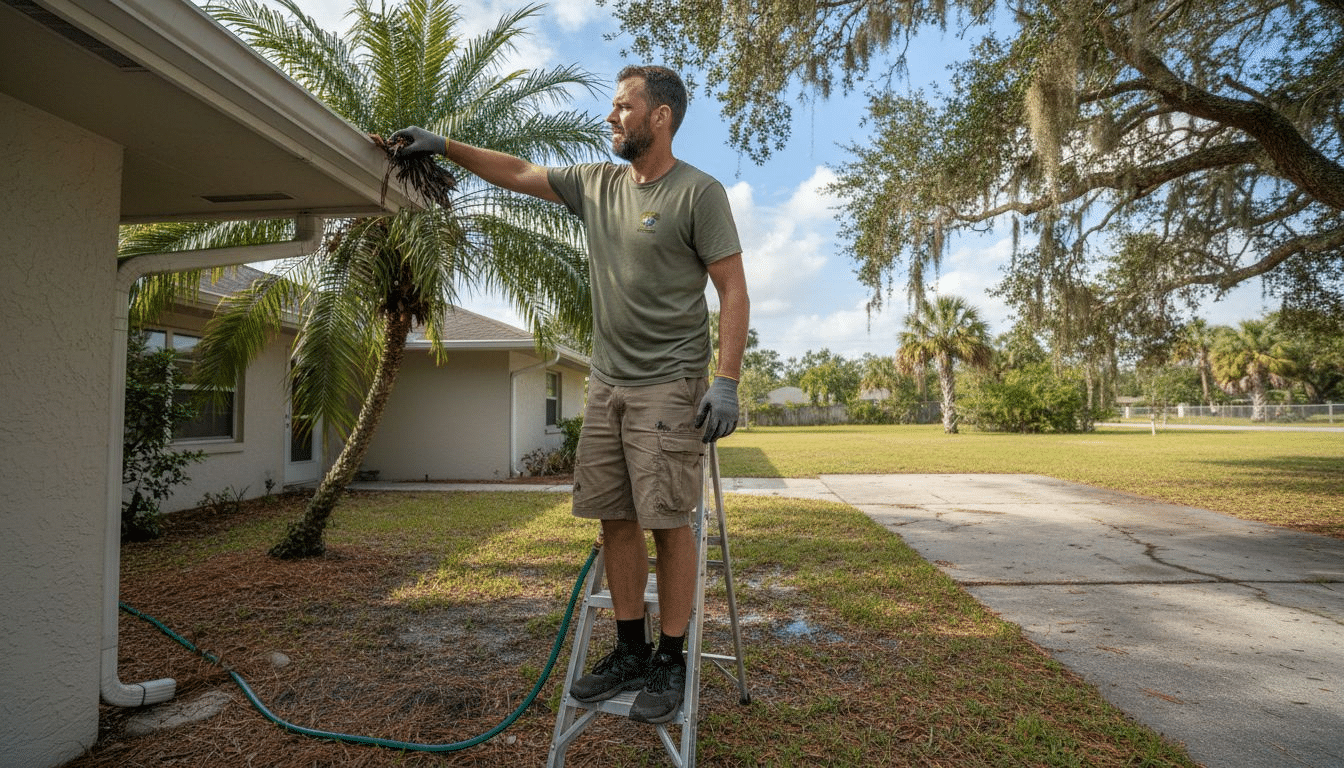
Clogged gutters are one of the biggest threats to your Florida home. When debris piles up, water backs up and causes expensive damage that could have been prevented with regular maintenance.
Your gutters work by collecting rainwater from your roof and directing it safely away from your home’s foundation. In Florida’s humid climate with frequent storms, this system is your first line of defense against water damage. But leaves, pine needles, and organic debris quickly accumulate and block water flow.
Here’s what happens when gutters clog:
- Water overflows onto your roof, foundation, and landscaping
- Moisture pools inside gutters, creating conditions for mold growth
- The added weight stresses gutter fasteners and brackets
- Standing water becomes a mosquito breeding ground
- Debris ignites more easily in fire-prone conditions
Why regular cleaning matters in Central Florida specifically:
Lake, Marion, and Sumter counties experience heavy seasonal rainfall combined with dense tree coverage. This combination means your gutters fill with debris faster than in other regions. Cleaning gutters regularly prevents the buildup that leads to overflow and structural damage.
Mold and mildew thrive in damp conditions, and clogged gutters create the perfect environment for organic material to develop. This damages your gutter system itself, siding, fascia, and can even affect your roof’s structural integrity over time.
Regular gutter cleaning is not just maintenance—it’s protection against mold, water damage, and foundation problems that can cost thousands to repair.
What you should clean out:
- Leaves and twigs from nearby trees
- Pine needles and pollen accumulation
- Sediment, dirt, and organic matter
- Any debris blocking downspout openings
The frequency matters too. Most Central Florida homeowners need to clean gutters at least twice yearly, though homes near trees may need quarterly cleaning. After heavy storms or during fall when trees shed, inspect your gutters immediately.
Cleaning gutters keeps water flowing properly, prevents foundation erosion, and stops mold from taking hold in your home’s most vulnerable areas.
Pro tip: Set a calendar reminder for spring and fall gutter cleaning, and inspect after heavy storms—Florida’s unpredictable weather means clogs can form quickly between regular maintenance cycles.
2. Inspect for Leaks and Seal Troubled Areas
Small leaks in your gutters today become major water damage tomorrow. Finding and fixing leaks early prevents costly repairs and protects your home’s foundation from water infiltration.
Gutters develop leaks for several reasons. Rust holes appear in aging metal gutters, seams separate from freeze-thaw cycles, and fasteners loosen over time. Florida’s intense sun and humidity accelerate deterioration in ways homeowners often overlook until water is already dripping down their walls.
Leaks waste water and cause structural damage that spreads quickly. Identifying leaks early prevents water from pooling in your attic, soffit, and foundation. Once water breaches these areas, you’re facing mold, wood rot, and expensive remediation.
How to spot gutter leaks:
- Look for water stains on your exterior walls or fascia
- Check underneath gutters during or after rainfall
- Inspect seams and joints where sections connect
- Notice if water drips from gutter edges instead of downspouts
- Feel for soft spots in wood behind gutters (sign of moisture)
Once you find a leak, sealing it properly matters. Small pinhole leaks can be sealed with gutter sealant or roofing cement. Separated seams need cleaning, drying, and professional-grade sealant applied correctly. Larger holes or rusted sections may require gutter patching or replacement of that section.
The key is addressing leaks before they expand. Timely leak detection and repair preserves your entire gutter system and prevents water from reaching vulnerable areas like your foundation and crawl space.
A small leak sealed today costs far less than water damage repaired tomorrow. Address leaks immediately when you spot them.
Sealing best practices:
- Clean the area thoroughly and let it dry completely
- Use quality sealant rated for outdoor weather exposure
- Apply sealant generously to ensure full coverage
- Allow proper drying time before exposing to rain
- Consider professional sealing for complex leaks or seam issues
Regular inspection catches leaks early. Walk around your home’s exterior quarterly, especially after heavy storms. Look for water stains, damp wood, or visible deterioration. In Central Florida’s humid climate, leaks develop faster than in drier regions, so vigilance matters more.
Pro tip: Inspect gutters from the ground using binoculars during daylight after a heavy rain, when wet gutters and water stains are most visible, then schedule repairs before the next storm arrives.
3. Check Downspouts for Proper Water Flow
Downspouts are your gutter system’s delivery system. If water doesn’t flow freely through them and away from your home, everything backs up and causes damage. Checking downspouts regularly ensures water reaches where it needs to go.
Downspouts collect runoff from your gutters and direct it away from your foundation. When they clog or disconnect, water pools around your home’s base, leading to foundation settling, crawl space flooding, and soil erosion. In Florida’s heavy rain seasons, a blocked downspout can saturate your foundation in hours.
Proper water flow requires two things: clear passages and correct direction. Debris accumulates inside downspouts just like in gutters. Leaves, sediment, and twigs block the opening, forcing water to overflow at the gutter connection point. Even partial blockages slow water to a trickle, which pools instead of flowing away.
Signs your downspouts need attention:
- Water overflows from gutter edges instead of flowing through downspout openings
- Downspout outlets clog with visible debris or sediment buildup
- Water pools at your foundation or in nearby landscaping
- Downspouts hang loose or have separated seams
- Rust holes or cracks appear in metal downspouts
Water direction matters equally. Downspouts should direct water at least 5 to 10 feet away from your foundation to prevent soil saturation and foundation problems. Many homes have downspouts that discharge water directly onto driveways or patios, which flows back toward the house. This defeats the entire purpose of your gutter system.
Proper downspout setup:
- Clear any visible clogs from downspout openings
- Ensure downspouts extend away from foundation toward landscaping or lawn
- Use downspout extensions or splash blocks to redirect water farther out
- Direct water to permeable surfaces like grass or gardens rather than concrete
- Check for loose fasteners and bent sections that restrict flow
Redirecting downspouts to permeable surfaces improves water infiltration and reduces erosion risk around your home. This protects both your foundation and your landscaping.
Downspouts solve half the problem only if water can escape. Check that water flows freely through them and travels far enough from your home.
In Central Florida’s sandy soil, water moves quickly and can undermine foundations. Proper downspout drainage prevents this damage before it starts. Test your system during the next rain by watching where water exits your downspouts and how far it travels.
Pro tip: Install downspout extensions that allow you to adjust water direction seasonally, preventing water from pooling in landscaping during dry months while maintaining proper foundation drainage during Florida’s wet season.
4. Install Gutter Guards for Added Protection
Gutter guards are one of the smartest investments you can make for your home. They reduce the frequency of gutter cleaning, prevent debris from clogging your system, and protect your home from water damage caused by backed-up gutters.
Gutter guards sit on top of or inside your gutters to block leaves, pine needles, and other debris from entering while allowing water to flow through. They work like a filter, preventing the accumulation that leads to clogs. In Florida, where heavy rainfall combines with dense tree coverage, guards reduce cleaning needs significantly.
Without guards, you’re cleaning gutters constantly. With guards properly installed, you clean far less often. This saves time, reduces ladder work, and prevents the damage that occurs when gutters back up during heavy storms.
How gutter guards benefit your system:
- Prevent leaf and needle accumulation in gutters
- Reduce clogging that causes water backup
- Minimize the need for frequent cleaning
- Protect against pest nesting in gutters
- Extend your gutter system’s lifespan
- Reduce fire hazards from flammable debris
Proper installation matters tremendously. Gutter guards require correct sizing and installation to handle your area’s rainfall while maintaining water flow. Poorly installed guards can actually trap water or create their own clogs.
Different guard styles work differently. Some sit on top of gutters, others fit inside. Some use mesh, others use foam or solid panels. How gutter guards work depends on their design, with each type offering different levels of debris protection and water flow efficiency.
Maintenance still matters. While guards reduce cleaning frequency, they occasionally need inspection and debris removal. This is far less work than cleaning uncovered gutters, but it’s still part of the maintenance plan. Periodic inspection of gutter guards ensures they stay effective and water flows freely.
Gutter guards don’t eliminate maintenance entirely, but they reduce it dramatically while protecting your home from the water damage that clogged gutters cause.
What to expect with guards installed:
- Cleaning needs drop from twice yearly to once or twice if trees are nearby
- Initial installation cost is offset by reduced maintenance over time
- Water still flows freely during heavy Florida downpours
- Debris sits on top of guards rather than inside gutters
- Your system stays protected even during your busy months
In Central Florida, guards are practically standard for homes with mature trees nearby. They’re especially valuable in Lake, Marion, and Sumter counties where pine trees constantly shed needles. The investment pays for itself through reduced cleaning costs and prevention of water damage.
Pro tip: Have gutter guards professionally installed by specialists who understand Florida rainfall patterns, ensuring proper slope and sizing to handle your area’s intense summer storms while maintaining reliable water flow year-round.
5. Trim Nearby Trees to Minimize Debris
Trees are beautiful until their debris ends up in your gutters. Strategic trimming keeps trees healthy while dramatically reducing the leaves and branches that clog your gutter system.
Overhanging branches deposit leaves, needles, and twigs directly into your gutters during storms and windy weather. In Central Florida, where pine trees are abundant, this debris accumulation happens constantly. The more branches hanging over your roof, the more often you clean gutters or deal with clogs.
Why tree trimming helps your gutters:
- Removes branches that hang directly over roof and gutters
- Eliminates dead or diseased branches that break and fall
- Reduces leaf and needle shedding into gutter system
- Decreases debris accumulation between cleanings
- Prevents branch damage during Florida storms
- Supports overall tree health and structure
Proper tree pruning maintains health while reducing hazards from falling limbs. Removing dead wood prevents branches from snapping during summer thunderstorms. This keeps debris from piling into gutters and protects your roof from impact damage.
Trimming doesn’t mean cutting down trees. Strategic pruning removes specific branches that pose problems. Focus on branches hanging over your roof, branches touching your house, and any dead or diseased wood. Trees naturally reduce stormwater runoff through their root systems, so maintaining healthy trees benefits your entire property.
Timing matters in Florida. Trim trees in late winter or early spring before new growth begins. Avoid trimming during hurricane season when you might need the wind-breaking protection trees provide. Fall is also a good time since many trees shed their leaves then anyway.
Strategic tree trimming protects your gutters while keeping trees healthy and strong. It’s an investment in both your gutter system and your landscape.
Trees to prioritize for trimming:
- Pine trees with branches over your roof
- Oaks dropping acorns and leaves
- Trees with dead branches showing
- Any tree within 10 feet of your roof line
- Trees with multiple branches rubbing your house
In Lake, Marion, and Sumter counties, pine trees dominate the landscape. Their needles are notorious for gutter clogs. Trimming pines reduces needle shedding by 50 percent or more. Combined with gutter guards, regular trimming means minimal gutter maintenance.
Hire professionals for large branches. Climbing tall trees and cutting large limbs safely requires equipment and expertise. The cost of professional trimming is far less than repairing water damage from clogged gutters or roof damage from falling branches.
Pro tip: Schedule tree trimming in February or March before spring growth, then reassess in September after summer storms pass, removing any branches damaged by lightning or wind while your gutters stay cleaner throughout the year.
6. Schedule Professional Gutter Inspections
Professional gutter inspections are your home’s best defense against water damage. A trained inspector can spot problems you’d miss, catch issues before they become expensive, and document your gutter system’s condition for insurance and resale purposes.
You can clean gutters and spot obvious problems, but professionals see what lurks beneath the surface. They check for structural damage, hidden leaks, fastener corrosion, and improper slopes that prevent drainage. They also assess whether your gutters match your roof’s water volume during Florida’s intense storms.
Regular inspections catch small problems early. A pinhole leak sealed today costs nothing. That same leak ignored for months causes water damage costing thousands. Professional inspection and preventive maintenance extend gutter system longevity by identifying issues before they spiral into major repairs.
What professional inspectors check:
- Gutter alignment and slope for proper drainage
- Seams and joints for separation or corrosion
- Fasteners and brackets for looseness or rust
- Downspout connections and extensions
- Signs of water damage on fascia and soffit
- Gutter guard condition and effectiveness
- Overall structural integrity of the system
Scheduled inspections with formal checklists ensure nothing gets overlooked. Professional inspectors document findings in writing, creating a record of your gutter system’s condition. This documentation matters for insurance claims and when selling your home.
Timing matters in Florida. Schedule inspections after hurricane season to assess storm damage. Spring inspection catches issues from winter weather. Fall inspection before rainy season ensures everything functions before heavy rainfall arrives. Many homeowners schedule inspections annually or biannually depending on tree coverage.
Professionals have equipment you don’t own. They use ladders safely, access difficult angles, and have tools to measure slope and check water flow. They spot rust patterns, worn sealant, and structural weakening that indicate replacement timing.
Professional inspections provide peace of mind and documented proof that your gutter system is protecting your home effectively.
Why professionals matter in Central Florida:
- They understand Florida’s intense rainfall patterns
- They recognize damage from humidity and salt spray
- They know which problems develop in our sandy soil conditions
- They spot issues specific to Florida’s weather extremes
- They recommend solutions suited to our climate
Your gutter system protects everything your home is worth. Professional inspections ensure it’s doing that job. A comprehensive maintenance guide helps you understand what professionals look for and how to maintain your system between visits.
Pro tip: Schedule professional inspections in March after winter weather and again in August before fall storm season, creating a documented maintenance record that protects your investment and catches problems before Florida’s heavy rains arrive.
Below is a comprehensive table summarizing the maintenance strategies and tips discussed throughout the article to ensure a robust and efficient gutter system for your home.
| Strategy | Details | Benefits |
|---|---|---|
| Clean gutters regularly | Remove leaves, pine needles, and other debris from gutters twice annually or after heavy storms. | Prevents clogs, avoids water damage to foundation and landscaping, and reduces mold and mosquito breeding risks. |
| Inspect for leaks | Check for signs of leakage or rust in gutters, especially during or after rain. Seal minor leaks promptly with appropriate materials. | Prevents water damage, preserves structural integrity of gutters, and reduces the risk of costly repairs due to expanded leaks and structural damage. |
| Maintain downspouts | Ensure downspouts are clear of obstructions and direct water at least 5 to 10 feet away from the foundation using extensions or splash blocks. | Facilitates efficient water flow, prevents foundation erosion, and ensures drainage into permeable areas, improving water management. |
| Install gutter guards | Fit guards onto gutters to block debris like leaves and pine needles, while allowing water to pass through. | Reduces cleaning frequency, minimizes clogs, increases gutter lifespan, and enhances system efficiency by preventing debris build-up. |
| Prune surrounding trees | Remove encroaching or dead branches to limit debris, reduce gutter maintenance, and prevent damage from falling limbs during storms. | Supports gutter functionality by minimizing debris accumulation, prolongs gutter lifespan, and promotes tree health while reducing risk of property damage. |
| Professional inspections | Schedule biannual inspections by experts to identify hidden issues and ensure all components, including slopes and fasteners, are functioning optimally. | Detects unseen issues early, documents gutter condition for maintenance records or insurance, and solidifies the system’s protection against water damage in Florida’s unique climate. |
Protect Your Florida Home with Expert Gutter Solutions from Larry’s Gutters
Maintaining your gutter system is essential to prevent costly water damage, foundation issues, and mold growth that threaten your Central Florida home. From regular cleaning to leak repairs and installing gutter guards, the challenges of Florida’s heavy rainfall and abundant tree debris demand specialized care. Don’t let clogged gutters or faulty downspouts cause frustration and expensive repairs.
Larry’s Gutters offers comprehensive services tailored to these exact concerns. Whether you need professional seamless gutter installation, effective gutter guard installation, or reliable cleaning and repair solutions, our expert team understands Florida’s unique climate and how to keep your system performing flawlessly. Protect your home with custom-fit gutters designed to handle the weather you face every season.

Safeguard your home before the next heavy rain arrives. Visit Larry’s Gutters today to request a free quote or schedule a professional inspection. Stay ahead of costly water damage and enjoy peace of mind knowing your gutters are in expert hands.
Frequently Asked Questions
How often should I clean my gutters in Florida?
Cleaning your gutters at least twice a year is recommended for Florida homeowners. If your home is near a lot of trees, consider cleaning them quarterly to prevent buildup from leaves and debris.
What should I look for during a gutter inspection?
During your inspection, check for leaks, rust, and signs of water stains on walls. Inspect seams, joints, and downspout connections to ensure everything is functioning properly.
How can I determine if my downspouts are functioning correctly?
To check your downspouts, observe whether water flows freely during a rainstorm and drains at least 5 to 10 feet away from your foundation. If water pools around your home or overflows at the gutter edges, address any clogs or misalignments immediately.
What are the benefits of installing gutter guards?
Gutter guards minimize debris accumulation, reducing the frequency of gutter cleaning. With guards installed, you may only need to clean your gutters once or twice a year instead of two or more times.
When is the best time to trim trees around my home?
Trim trees in late winter or early spring to reduce leaves and branches from entering your gutters during storms. This proactive measure helps maintain both tree health and the efficiency of your gutter system.
Why should I schedule professional gutter inspections?
Professional inspections identify hidden issues that might lead to costly water damage, such as structural weaknesses or corrosion. Schedule these inspections annually or biannually to ensure your system is properly maintained and protected.
Recommended
- 7 Essential Gutter Repair Tips for Florida Homeowners
- 7 Essential Gutter Repair Tips 2025 for Florida Homeowners
- 7 Essential Gutter Protection Tips for Florida Homeowners
- 7 Smart Gutter Upgrade Ideas for Florida Homeowners
- 7 essentiële onderhoudstips aluminium kozijnen voor huizen
- Gutter Services Gainesville FL
- Gutter Services The Villages FL
