TL;DR:
- Properly sized and maintained gutters prevent water damage in Florida’s heavy rainfall.
- Seamless aluminum gutters with correct slope and downspout placement are most effective.
- Regular inspections and regional-specific sizing ensure reliable drainage and storm readiness.
Flooded yards, stained fascia boards, and cracked foundations are not just cosmetic problems in Central Florida. They are expensive consequences of gutters that cannot keep up with the region’s brutal rainfall. Lake, Marion, and Sumter counties receive 40 to 70 inches of rain annually, and summer storms can dump several inches in under an hour. The good news is that most of this damage is preventable. With the right gutter strategy, properly sized materials, and a consistent maintenance routine, you can protect your home before the next storm rolls in.
Table of Contents
- Assessing your current gutter system
- Choosing the right gutter materials and sizes
- Optimizing gutter slopes and downspout placement
- Advanced upgrades: guards, extensions, and storm readiness
- Maintenance essentials for trouble-free drainage
- What most guides miss about Florida gutter drainage
- Upgrade your gutter system with local expertise
- Frequently asked questions
Key Takeaways
| Point | Details |
|---|---|
| Gutter slope and sizing | Sloped gutters and the right size prevent overflow in Florida’s heavy rains. |
| Routine maintenance | Biannual cleaning and checks keep your drainage system working and your home safe. |
| Upgrade for resilience | Choose seamless aluminum and add guards or extensions to protect against local weather. |
| Local customization matters | Climate-specific installation outperforms off-the-shelf solutions in Central Florida. |
Assessing your current gutter system
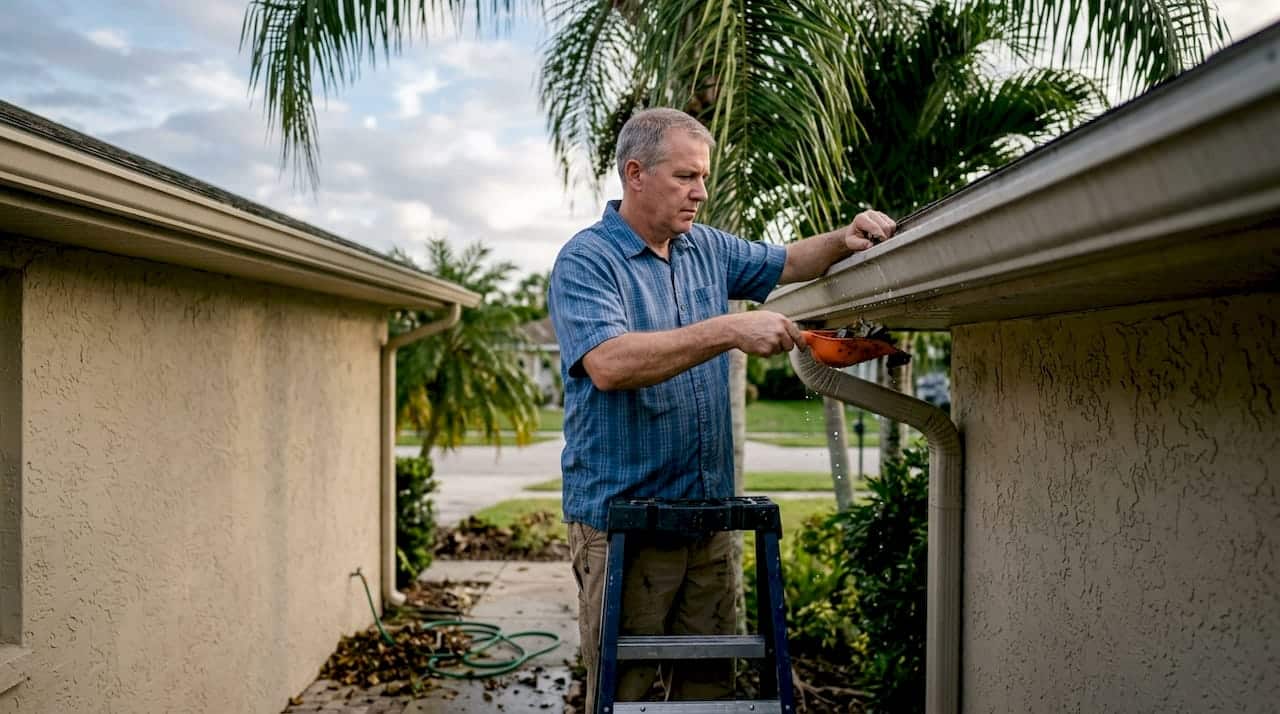
Before spending a dollar on upgrades, take a hard look at what you already have. Walk around your home during or right after a heavy rain and watch how water moves. You are looking for specific warning signs that tell you exactly where your system is failing.
Common signs of poor gutter drainage include:
- Overflowing water spilling over the front edge of the gutter during rain
- Pooling water near the foundation or along the drip line
- Rust stains or streaks on siding and fascia boards
- Soil erosion in garden beds directly below the roofline
- Sagging sections that hold standing water between storms
Once you spot the symptoms, check your gutter slope. Gutters need to angle toward the downspout at a rate of 1/16 to 1/4 inch per foot. If a section runs flat or tilts the wrong way, water sits and eventually overflows or breeds mosquitoes. You can verify slope with a simple level and a tape measure.
Also count your downspouts. A single downspout serving a long gutter run is almost always undersized for Florida conditions. Check that each downspout is clear and that water exits well away from the house.
Following a gutter maintenance checklist gives you a reliable framework so nothing gets missed during your inspection. If you want to understand the root causes of failure, reading about why gutters fail in heavy rain can save you from repeating the same mistakes after an upgrade.
Regular maintenance twice per year prevents 85 to 95 percent of water damage, and post-storm checks are especially critical in Central Florida where debris accumulates fast.
Pro Tip: After every major storm, spend five minutes walking your roofline. Look for leaves packed into downspout openings and check that gutter hangers are still tight. Catching small blockages early costs nothing. Ignoring them can cost thousands.
Choosing the right gutter materials and sizes
Once you know what your current system is missing, you can make smarter decisions about materials and sizing. Not all gutters perform equally in Florida’s climate, and choosing the wrong product is one of the most common and costly mistakes homeowners make.
Material comparison for Central Florida homes
| Material | Durability | Maintenance | Best for Florida? |
|---|---|---|---|
| Seamless aluminum | High | Low | Yes, top choice |
| Vinyl | Low | Medium | No, warps in heat |
| Steel | Medium | High (rusts) | Not ideal |
| Copper | Very high | Low | Yes, but costly |
Seamless aluminum gutters are the preferred choice in Florida for several strong reasons. They have no seams along the run, which means far fewer leak points. Aluminum resists corrosion from humidity and salt air, and it handles the expansion and contraction caused by Florida’s intense heat without cracking. Vinyl, by contrast, becomes brittle under prolonged UV exposure and warps during summer, creating gaps that let water escape exactly where you do not want it.
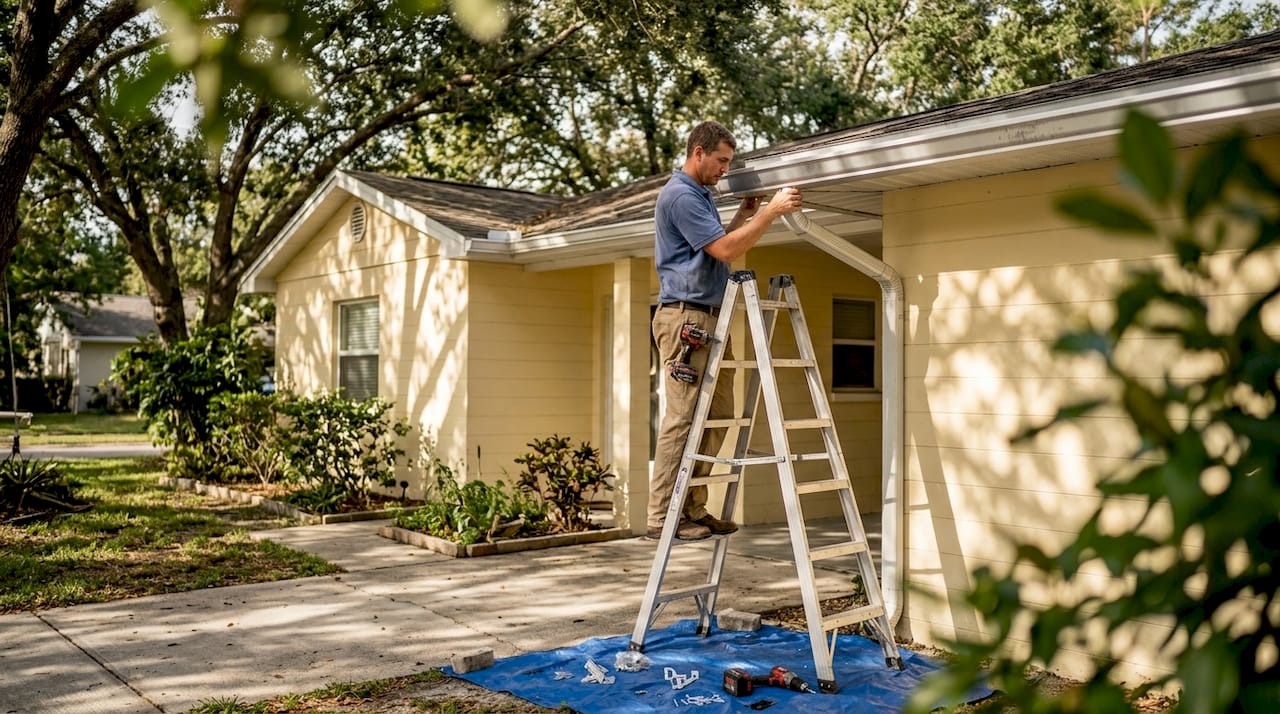
Size matters just as much as material. Most builders install 5-inch gutters as a standard, but that size is simply not enough for many Central Florida homes. Six-inch gutters are preferred here because Central Florida receives 40 to 70 inches of rain annually, with design storms exceeding 4 inches per hour, making the added capacity essential for larger roof areas.
Key sizing factors to consider:
- Roof square footage: Larger roofs shed more water per minute
- Roof pitch: Steeper pitches accelerate runoff significantly
- Rainfall intensity: Use NOAA Atlas 14 data for your specific county
- Downspout count: More outlets reduce pressure on each gutter section
Learning about gutter material types specific to this region helps you avoid materials that look fine in a showroom but fail within a few seasons outdoors. And understanding [seamless gutter performance](https://larrysgutters.com/seamless gutters-80-percent-fewer-leaks-florida-homes) data makes the case for going seamless even clearer.
Optimizing gutter slopes and downspout placement
Selecting the right materials is crucial, but installation details determine whether your system will truly protect the home. Even premium gutters fail when they are hung at the wrong angle or drain into the wrong spot.
Recommended slope and spacing at a glance
| Element | Recommended spec |
|---|---|
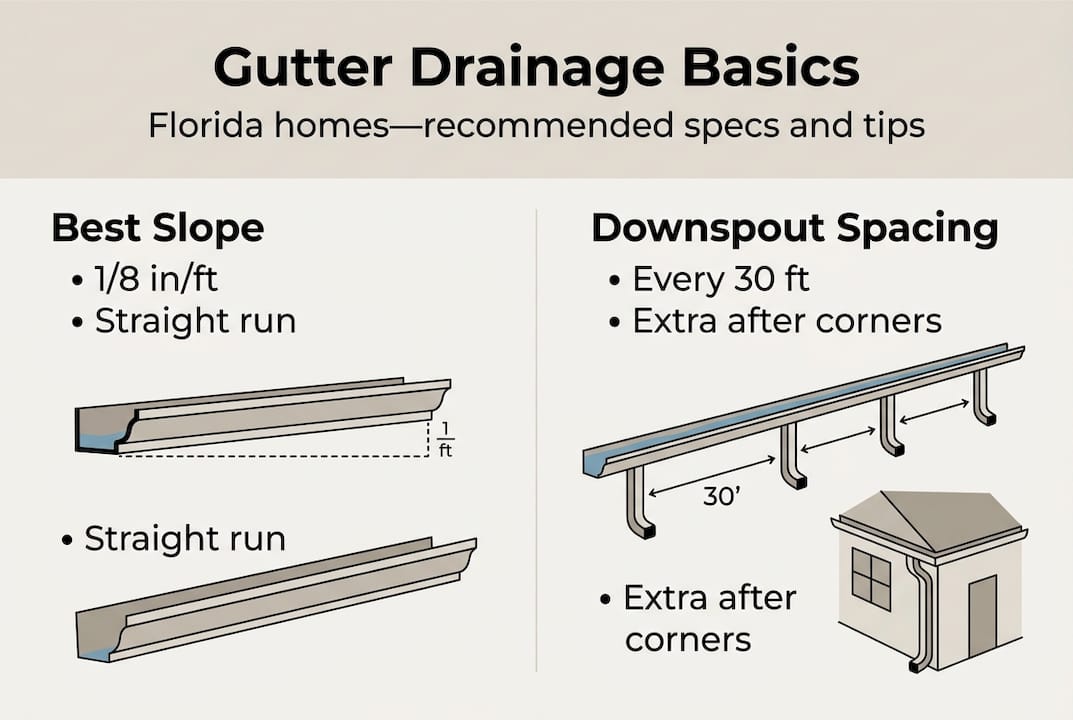
| Gutter slope | 1/16 to 1/4 inch per foot |
| Slope per 30 feet | 1.5 inches toward downspout |
| Downspout spacing | Every 30 to 40 feet |
| Downspout extension | 5 to 10 feet from foundation |
Proper gutter slope is typically 1/16 to 1/4 inch per foot, or about 1.5 inches for every 30 feet of run, directed toward the downspout.
Follow these steps to adjust or verify your slope:
- Snap a chalk line from the high end of the gutter to the downspout outlet
- Measure the drop over the total run length
- Adjust hanger brackets up or down until the slope falls within range
- Re-check after the next rain to confirm water moves without pooling
Downspout placement is equally important. Downspouts placed every 30 to 40 feet and extended at least 5 to 10 feet from the foundation prevent erosion and structural damage. In Lake, Marion, and Sumter counties, the clay-heavy soil absorbs water slowly. Water that pools near the foundation can cause soil heave, shifting slabs, and cracked walls over time.
Splash blocks are a minimum. For flood-prone yards or homes on clay soil, underground piping that carries water to a drainage swale or street is a far more reliable solution.
Pro Tip: Use a garden hose to simulate rainfall after any slope adjustment. Watch where the water goes and confirm it exits at the downspout extension, not back toward the house.
For a detailed walkthrough, the downspout installation steps guide covers everything from cutting outlets to securing extensions. If overflow is still an issue after adjustments, overflow solutions for heavy rain covers additional fixes.
Advanced upgrades: guards, extensions, and storm readiness
With your basics right, you can maximize drainage and minimize maintenance by adding targeted upgrades. These are not luxury add-ons. In Central Florida, they are practical tools for surviving a long storm season.
Gutter guard options worth considering:
- Micro-mesh guards block pine needles, oak tassels, and shingle grit while allowing water through at high flow rates
- Surface tension (reverse curve) guards work well for moderate debris but can fail under very heavy rainfall
- Foam inserts are inexpensive but trap debris inside the gutter over time
In high-debris areas with pines and oaks common across Lake, Marion, and Sumter counties, micro-mesh guards combined with proper sizing are the recommended approach. Undersized gutters paired with any guard type will still overflow during a hurricane.
For flood-prone yards, consider these steps:
- Install downspout extensions that connect to underground PVC piping
- Route the piping to a drainage swale, dry well, or street curb
- Add a pop-up emitter at the end so the system stays sealed except when active
- Check the emitter and pipe joints before each hurricane season
Learn more about your options by reviewing gutter guard types and gutter repair options if existing sections need work before adding guards.
Pro Tip: Schedule a pre-hurricane season inspection every May. Clear all guards, check every hanger, and confirm downspout extensions are secure. One hour of prep can prevent days of cleanup.
Maintenance essentials for trouble-free drainage
No upgrade lasts without a plan to keep your drainage system clear and flowing. Central Florida’s year-round growing season means debris accumulates faster than in most other regions. A consistent schedule is the only way to stay ahead of it.
Your seasonal maintenance routine:
- Spring (March to April): Clean gutters of winter debris, flush downspouts with a hose, check hangers and end caps, inspect sealant at joints
- Fall (October to November): Clear oak leaves and pine needles, verify slope is still correct, check for rust or cracks, test downspout flow
- After every major storm: Remove packed debris from downspout openings, check for displaced sections, look for new staining on fascia or siding
Twice-yearly cleaning and inspection prevents 85 to 95 percent of water damage, and post-storm checks are non-negotiable in a region where storms arrive fast and leave heavy debris behind.
Safety first: always use a stable, four-point ladder on level ground. Never lean a ladder against the gutter itself. Keep a spotter nearby and stay clear of overhead power lines.
The Central Florida gutter maintenance guide gives you a printable checklist you can keep in the garage and pull out each season.
Pro Tip: Set two recurring phone reminders right now, one for April and one for October. Label them “gutter check” so the task does not get buried under other seasonal chores.
What most guides miss about Florida gutter drainage
Most national gutter guides use capacity charts built around average rainfall figures from across the country. Central Florida is not average. Our storms are fast, intense, and frequent in ways that standard sizing tables simply do not account for.
Professional sizing uses a formula: roof area multiplied by rainfall intensity, divided by 96.23, gives you the gallons per minute your system must handle. Using NOAA Atlas 14 data for Central Florida, a 100-year, 5-minute storm event produces 4 to 6 inches per hour. That is the number your gutters should be sized for, not the national average.
We see it every season. A homeowner installs brand-new gutters using standard specs from a big-box store guide, and the first real Florida thunderstorm sends water cascading over the front edge. The gutters are not defective. They are just undersized for this specific climate.
Local expertise changes the outcome. When you work with someone who sizes gutters using regional rainfall data and understands the clay soil conditions in Lake, Marion, and Sumter counties, you get a system built for what actually happens here. Explore custom gutter features designed specifically for Central Florida conditions to understand what regional customization looks like in practice.
Upgrade your gutter system with local expertise
You now have a clear picture of what it takes to protect your Central Florida home from water damage. The next step is making sure the work gets done right the first time.

At Larry’s Gutters, we specialize in professional gutter installation sized for real Florida rainfall, not national averages. Whether you need a full system replacement, gutter guard installation to cut down on cleaning, or ongoing maintenance services to keep everything flowing season after season, we serve homeowners across Lake, Marion, and Sumter counties. Contact us today for a free assessment and find out exactly what your home needs before the next storm arrives.
Frequently asked questions
How much slope should my gutters have for proper drainage?
Gutters should slope 1/16 to 1/4 inch per foot toward the downspouts. Any flatter and water sits; any steeper and it rushes past the outlet.
How often should I clean my gutters in Central Florida?
Clean and inspect at least twice a year, in spring and fall, and add a quick check after any major storm. Twice-yearly maintenance prevents the vast majority of water damage in this region.
Are 5-inch or 6-inch gutters better for Central Florida homes?
Six-inch gutters are the better choice for most Central Florida homes because they handle the high rainfall intensity and larger roof areas common here.
How far should downspouts extend from my house?
Downspouts should carry water at least 5 to 10 feet from the foundation. Extending water away from the house protects against erosion and keeps moisture out of the soil near your slab.
Do gutter guards really help in areas with lots of trees?
Yes, but only when paired with correctly sized gutters. Micro-mesh guards in high-debris areas like those with pines and oaks reduce clogging significantly, but an undersized gutter will still overflow during a heavy storm.
