TL;DR:
- Many homeowners believe that installing any gutter screen will permanently prevent clogs, but this often leads to wasted money and overflow issues. Gutter screens are mesh panels that block larger debris while allowing water flow, yet fine particles may still accumulate, necessitating periodic cleaning. Proper assessment, installation, and maintenance are essential for gutter screens to effectively reduce cleaning frequency without masking underlying gutter damage.
Most homeowners think slapping any mesh product over their gutters will end their clogging problems for good. That belief leads to wasted money, failed installations, and gutters that overflow anyway. A gutter screen is a physical barrier, typically made from metal or plastic mesh, that sits over your gutter channel to let rainwater pass through while stopping leaves, twigs, and other debris from piling up inside. Understanding exactly what a gutter screen is, how it works, and when it actually helps is the difference between a smart home investment and an expensive disappointment.
Table of Contents
- Key Takeaways
- What a gutter screen is and how it works
- Pros and cons of gutter screens
- Types of gutter screens and other guard options
- Downspout cleanout screens and underground drain protection
- How to choose, install, and maintain gutter screens
- My honest take on what gutter screens can and cannot do
- Ready to protect your gutters the right way?
- FAQ
Key Takeaways
| Point | Details |
|---|---|
| Gutter screens block debris | Mesh panels let water in while keeping leaves, branches, and larger debris out of your gutter channel. |
| No screen eliminates all maintenance | Fine debris and shingle grit can still accumulate, so periodic cleaning remains necessary. |
| Material and mesh size matter | Micro-mesh outperforms standard mesh for fine filtration but costs more and needs more frequent cleaning. |
| Fix gutters before installing screens | Installing screens over sagging or rotted gutters worsens damage and voids warranties. |
| Downspout screens protect underground drains | Specialized cleanout screens at the downspout prevent costly underground pipe blockages. |
What a gutter screen is and how it works
A gutter screen is a panel or roll of mesh material placed over the open top of a rain gutter. Its job is simple: water flows through the openings in the mesh and into the gutter channel, while solid debris gets stopped at the surface and eventually blows or falls away.
Screens use mesh or perforated panels to block larger debris, but smaller material may still pass through over time. Standard screens typically have openings around 3/8 of an inch, large enough to catch leaves and pine needles but not fine particles like dirt or shingle grit. That is a distinction worth understanding before you buy.
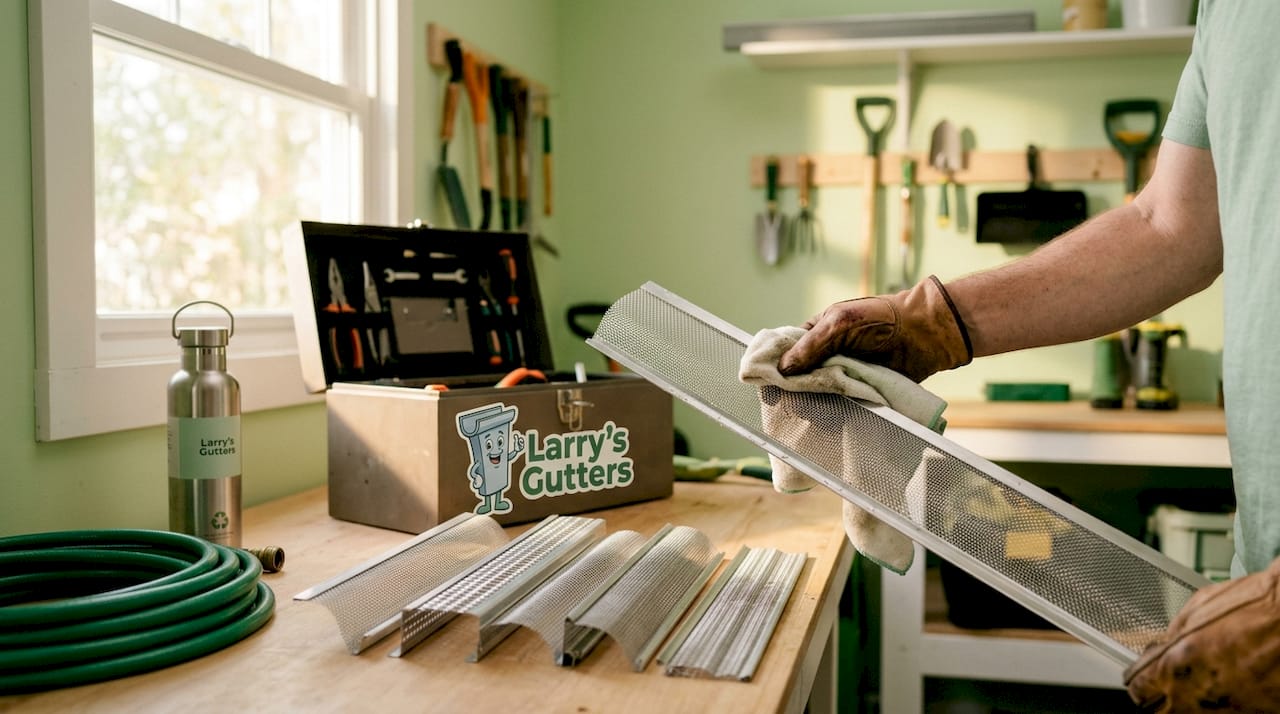
The most common materials are aluminum, galvanized steel, and plastic. Aluminum and steel hold up far better in weather extremes and resist rust, while plastic costs less but can warp or crack in direct sun. Here are the main installation styles you will encounter:
- Lay-on-top screens: These simply rest across the gutter opening with no fasteners. They are the cheapest and easiest to install but also the easiest for wind to displace.
- Clip-on screens: These attach to the gutter’s front lip, providing more stability than lay-on models without requiring any roof work.
- Attached or integrated screens: These are screwed or fastened directly to the gutter and sometimes slide under roof shingles. They offer the most secure fit and best long-term performance.
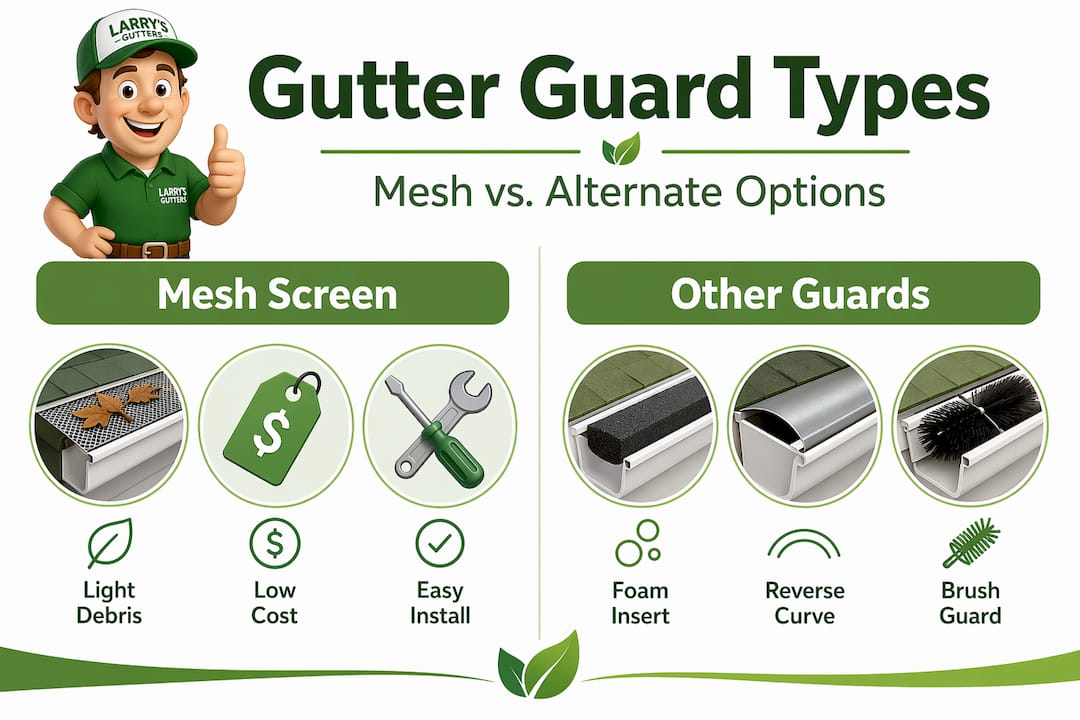
Gutter screens are often grouped with other products under the broader term “gutter guards,” but they are a specific subcategory. Gutter guards also include foam inserts, reverse-curve covers, and brush systems. Screens are distinct because they rely purely on a physical mesh barrier rather than surface tension or sponge-like absorption.
Pros and cons of gutter screens
Gutter screens offer real benefits, but they are not a set-and-forget solution. Knowing both sides of the equation helps you decide if they match your property’s situation.
What gutter screens do well:
- They reduce how often you need to climb a ladder for a full cleanout, which matters enormously for safety.
- Budget-friendly options start under $1 per linear foot for basic plastic screens, making them accessible for most homeowners.
- Gutter guards reduce the frequency of cleanouts and prevent backups, rot, and foundation damage when they are the right fit for your home.
- Easy clip-on and lay-on styles can be installed without professional help on a single-story home.
- Gutter screens can last 5 to 10 years depending on the material and your local climate, making them a reasonable medium-term investment.
Where gutter screens fall short:
- Screens with larger openings allow fine debris like seed pods, shingle grit, and pollen to get through and accumulate at the gutter floor. That buildup still needs to be cleared out periodically.
- In heavy leaf-fall environments, wet leaves can mat across the screen surface and redirect water over the gutter edge instead of into it.
- Plastic screens degrade faster in Florida’s intense UV exposure and are more likely to become brittle and crack within just a few years.
- Standard screens offer little protection against pest entry. Mosquitoes and small insects can still breed in standing water that collects below the mesh.
Pro Tip: If your yard has heavy tree coverage, especially pines or sweet gums, budget for at least one cleaning per season even with screens installed. These trees drop debris small enough to slip through most standard mesh openings.
In terms of weather resistance, aluminum and stainless steel screens hold up best in Florida’s rainy seasons and intense sun. Rust-resistant materials like aluminum and stainless steel are what separate durable gutter protection from products that fail within a couple of seasons.
Types of gutter screens and other guard options
Not all gutter screening solutions are built the same, and the differences between types affect how much protection you actually get. Here is a comparison of the main options available for your property:
| Guard Type | Best For | Maintenance Level | Relative Cost |
|---|---|---|---|
| Standard mesh screen | Light to moderate leaf debris | Low to moderate | Low |
| Micro-mesh screen | Fine debris, shingle grit | Moderate (more frequent) | Medium to high |
| Foam insert | Budget DIY installs | High (mold risk) | Low |
| Reverse-curve guard | Heavy rainfall areas | Low | High |
| Brush guard | Light debris environments | High | Medium |
Micro-mesh screens stop finer particles like shingle grit but need regular cleaning to maintain their effectiveness. The trade-off is real. A micro-mesh product filters debris that standard mesh misses entirely, but the tiny openings also clog faster, especially in areas with heavy pollen or pine needles. You get better protection and more frequent maintenance obligations at the same time.
Here is how the other common gutter guard types compare in practice:
- Foam inserts sit inside the gutter and absorb water while blocking debris. They are cheap and easy to install, but they trap moisture and organic material, creating a perfect environment for mold and plant growth over time.
- Reverse-curve guards use surface tension to direct water into the gutter while debris falls off the edge. They handle heavy rain well but can fail in slow drizzles when surface tension pulls light debris inside.
- Brush guards look like giant pipe cleaners sitting inside the gutter channel. They catch large leaves but accumulate smaller debris deep in the bristles, making thorough cleaning difficult.
For homeowners in Central Florida, where protection system selection should account for intense rainfall and year-round tree shedding, micro-mesh or reverse-curve systems generally outperform basic screens. You can review a detailed breakdown of these gutter guard types to match the right product to your specific tree coverage and rainfall patterns.
Downspout cleanout screens and underground drain protection
Most conversations about gutter screens focus entirely on what goes on top of the gutter. The downspout is just as vulnerable and often overlooked.
A downspout cleanout screen is a specialized insert placed inside or at the opening of your downspout, typically 3 to 5 feet above the ground. Its purpose is to catch debris before it travels down into underground drainage pipes where it can create a blockage that requires excavation to fix. Downspout screens prevent debris from clogging underground drainage, reducing costly excavation risks.
The specs matter for these products. They are typically made from 0.027-inch thick aluminum frames paired with stainless steel mesh, and they come in standard sizes including 2×3, 3×4, and 4×5 inches to fit different downspout dimensions.
| Specification | Detail |
|---|---|
| Frame material | 0.027-inch thick aluminum |
| Mesh material | Stainless steel |
| Common sizes | 2×3, 3×4, 4×5 inches |
| Typical placement height | 3 to 5 feet above ground |
Pro Tip: Property managers overseeing multiple units should prioritize downspout cleanout screens. Ground-level maintenance access reduces ladder use, cuts labor time, and allows a quick check during routine walkthroughs instead of scheduling full gutter cleaning visits.
The cost of ignoring downspout protection can be steep. Underground drain repairs often require digging up landscaping, walkways, or even driveways to reach a blockage. A simple screen insert that costs a few dollars per downspout makes that outcome far less likely.
How to choose, install, and maintain gutter screens
Making the right decision about gutter screens starts well before you purchase anything. Here is a practical sequence that helps homeowners and property managers avoid the most common mistakes:
- Assess your tree coverage first. Walk your property and note what types of trees hang over or near your roofline. Heavy pine, oak, or sweet gum coverage calls for tighter mesh or micro-mesh screens, not the cheapest standard option available.
- Check your gutter and fascia condition. Installing screens over sagging gutters or rotted fascia creates gaps for debris and traps moisture that accelerates further damage. Repair the structure before adding any protection product on top.
- Choose the right installation style for your roof type. Screens that slide under shingles can void your roof warranty on some products. Clip-on and lay-on styles avoid that risk entirely. Always verify with your roofing manufacturer before using an attached-style screen.
- Install with care or hire a professional. Improper installation creates gaps or damage that leads to debris entry and voided product warranties. A poorly fitted screen is often worse than no screen at all because it gives a false sense of security.
- Schedule routine inspections. Even well-installed screens need a visual check twice a year. After major storms, check for displaced panels, sagging sections, or debris buildup that is redirecting water over the gutter edge.
- Verify warranty terms before committing. Some manufacturers require professional installation to honor the warranty. Know what you are agreeing to before you buy. Installation quality is as critical as the product itself for long-term performance.
Refer to a guide on avoiding gutter repair mistakes before you start, especially if your home has gone a few years without a professional inspection.
My honest take on what gutter screens can and cannot do
I have worked with enough homeowners to know that gutter screens solve one specific problem well. They reduce how often you physically deal with your gutters. That is genuinely valuable. But I have also seen plenty of situations where a homeowner spent money on screens, skipped the structural inspection, and ended up with rotting fascia boards two years later because water was pooling behind a screen that did not sit flush.
My take is this: a gutter screen is a maintenance reducer, not a maintenance eliminator. The homeowners who get the most out of them are the ones who treat them as one layer of a broader protection strategy, not the final answer.
I have also noticed that the environment matters more than the product brand in most cases. A quality standard mesh screen on a property with minimal tree coverage will outperform a premium micro-mesh screen in a yard packed with pine trees that never gets cleaned. The screen cannot overcome its environment if you ignore it.
If your gutters or fascia are in rough shape, fix those first. A screen installed on a compromised gutter system just hides the damage while it gets worse. I would rather see someone spend money on a proper seamless gutter installation before adding any screen product on top. Get the foundation right, then protect it.
— Larrysgutters
Ready to protect your gutters the right way?
At Larry’s Gutters, we work with Central Florida homeowners every day to find gutter protection that actually fits their property, not just whatever is cheapest or easiest to install. Whether you are starting fresh or upgrading an existing system, the right combination of gutters and guards makes a measurable difference in how your home handles Florida’s heavy rainfall.

You can explore whether seamless gutters are worth it for your specific situation, or review our gutter guard installation workflow to understand what a professional installation actually involves. If you want a recommendation tailored to your home’s tree coverage, roof type, and drainage setup, reach out for a free quote. We will give you a straight answer, not a sales pitch.
FAQ
What exactly is a gutter screen?
A gutter screen is a mesh or perforated panel placed over the top of a rain gutter to block debris like leaves and twigs while allowing water to flow through into the gutter channel.
Do gutter screens eliminate the need for gutter cleaning?
No. Gutter screens reduce cleaning frequency, but fine debris and shingle grit can still accumulate and require periodic removal to keep water flowing properly.
What is the difference between a gutter screen and a gutter guard?
Gutter screens are a type of gutter guard that uses a mesh barrier. Other gutter guard types include foam inserts, reverse-curve covers, and brush systems, each using different mechanisms to block debris.
How long do gutter screens last?
Standard gutter screens typically last 5 to 10 years, depending on the material and local climate conditions. Aluminum and stainless steel options hold up longer than plastic in harsh weather.
Should I install a gutter screen myself or hire a professional?
Simple clip-on or lay-on screens can be a DIY project on a single-story home, but improper installation voids most product warranties and can create gaps that let in debris. For attached systems or any home over one story, professional installation is the safer choice.
