TL;DR:
- Gutter discoloration results from chemical bonds formed by asphalt runoff, oxidation, and pollutants. Proper diagnosis and targeted chemical treatments are essential to remove each type of stain and prevent damage. Using gutter guards and maintaining proper drainage can significantly reduce staining risk in Florida’s harsh climate.
Gutter discoloration is defined as the visible staining, streaking, or color change that occurs when substances like asphalt runoff, algae, oxidation byproducts, and airborne pollutants bond chemically to your gutter’s surface. These stains are not cosmetic accidents. They signal real chemical reactions between your roof materials and your gutter system, and they resist ordinary soap and water because the bond is physical, not just surface dirt. Understanding why gutters discolor is the first step toward protecting both your home’s appearance and its structural integrity. Florida’s intense UV exposure and heavy rainfall make Central Florida homeowners especially vulnerable to accelerated staining.
Why do gutters discolor? The chemical and environmental causes
Gutter discoloration, known in the industry as “tiger striping” when it appears as dark vertical streaks, results from multiple combined factors rather than a single cause. UV exposure, humidity, roof degradation, and gutter design all work together to create the conditions for staining. This matters because blaming one factor leads homeowners to apply the wrong fix.
The most common stain source is asphalt shingle petroleum residue. As rain hits your roof, it picks up oils and fine particles from the shingles and carries them into the gutter. There, those petroleum compounds bond electrostatically to the oxidized aluminum surface, creating streaks that pressure washing cannot break. In high-UV environments, these bonds become permanent within 1–2 years.
Shingle granule loss accelerates this process. The Asphalt Roofing Manufacturers Association confirms that granule shedding increases significantly after 15–20 years of UV exposure. As granules wash off aging shingles, they carry petroleum residue directly into the gutter channel, intensifying streaking.
Oxidation adds another layer of complexity. Aluminum gutters oxidize naturally over 5–10 years, developing a chalky, porous surface. That rough texture acts like a sponge, trapping pollutants and petrochemical residues that would otherwise rinse away. Once oxidation sets in, staining accelerates noticeably.
One overlooked cause is new roof installation. Shingle replacement releases carbon dust and debris that settles directly onto gutters, causing sudden intense streaking. Homeowners often mistake this for a gutter defect, when the source is actually roofing debris fallout.
- UV radiation breaks down both shingle coatings and gutter finishes simultaneously
- High humidity in Florida accelerates biological growth like algae and mildew
- Air pollution deposits fine particulate matter that bonds to oxidized surfaces
- Heat cycling causes gutters to expand and contract, opening micro-cracks that trap contaminants
Pro Tip: If your gutters streaked suddenly after a roof replacement, the cause is almost certainly carbon dust from the new shingles, not a gutter defect. Clean within 30 days before the residue bonds permanently.
How do different gutter stain types compare?
Not every gutter stain has the same cause, and treating the wrong stain type with the wrong method can damage your gutters permanently. The three main stain categories are tiger stripes, oxidation staining, and biological staining.
Tiger stripes are dark vertical streaks running down the outside face of the gutter. They form from petroleum-based chemical attachments from asphalt shingles and are commonly mistaken for dirt or mold. Aggressive scrubbing erodes the protective coating on aluminum gutters without removing the stain. The correct treatment requires a chemical solvent that dissolves the petrochemical bond.
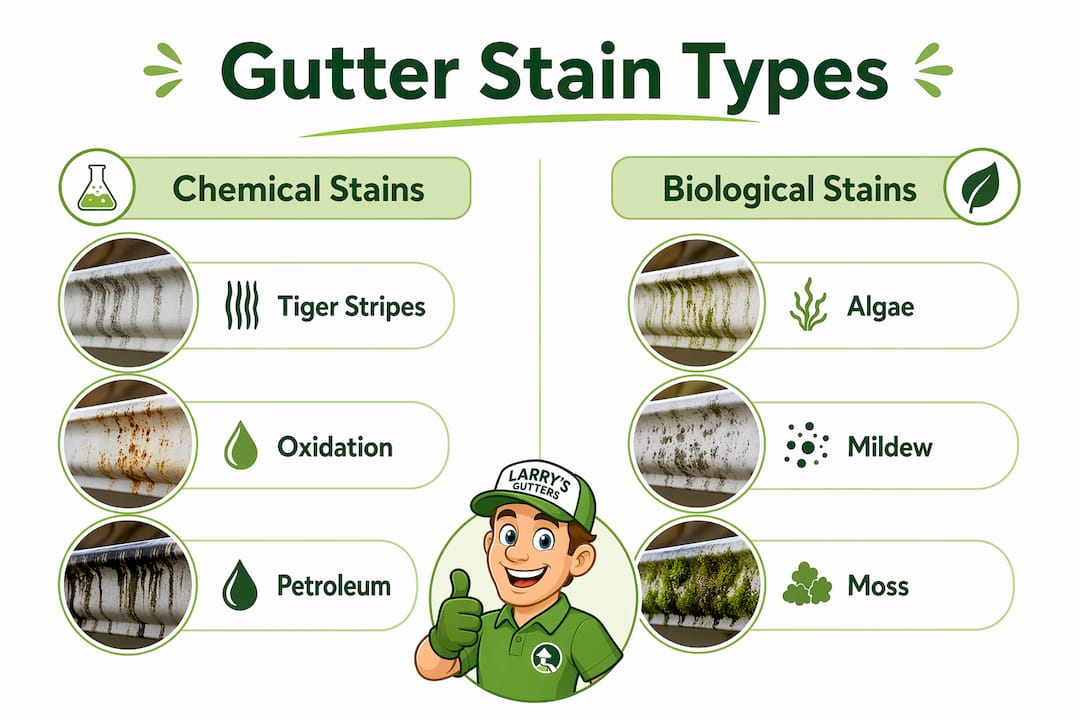
Oxidation staining appears as a chalky white or gray film across the gutter surface. It develops as aluminum reacts with oxygen over time, creating a porous surface that traps everything from road dust to organic matter. Oxidation staining makes all other stain types worse because it gives contaminants a rough surface to grip.
Biological staining shows up as green, black, or brown patches caused by algae, mildew, or moss. Florida’s heat and humidity create ideal conditions for biological growth inside and on the outside of gutters. These stains respond to different treatments than petroleum-based streaks.
| Stain type | Visual appearance | Primary cause | Recommended treatment |
|---|---|---|---|
| Tiger stripes | Dark vertical streaks on exterior | Asphalt petroleum residue bonding | Petrochemical solvent, nonabrasive application |
| Oxidation staining | Chalky white or gray film | Aluminum reacting with oxygen | pH-balanced cleaner, light scrubbing |
| Biological staining | Green, black, or brown patches | Algae, mildew, or moss growth | Mildewcide or diluted bleach solution |
| Carbon dust staining | Uniform dark coating | New shingle installation debris | Gentle solvent wash within 30 days |
Correct diagnosis before cleaning protects your gutters. Using bleach on tiger stripes, for example, does not dissolve the petrochemical bond and can damage the finish. Checking your roof and gutter coordination helps you understand which stain type your specific roof material is most likely to produce.
- Tiger stripes: look for vertical dark lines on the front face of the gutter
- Oxidation: look for a dull, chalky texture across the entire gutter surface
- Biological: look for patchy growth, often with a fuzzy or slimy texture
- Carbon dust: look for uniform dark coating appearing suddenly after roof work
How does gutter design and maintenance affect staining risk?
Gutter design directly controls how much contaminated water contacts your gutter surfaces and for how long. Poor design multiplies staining risk significantly.
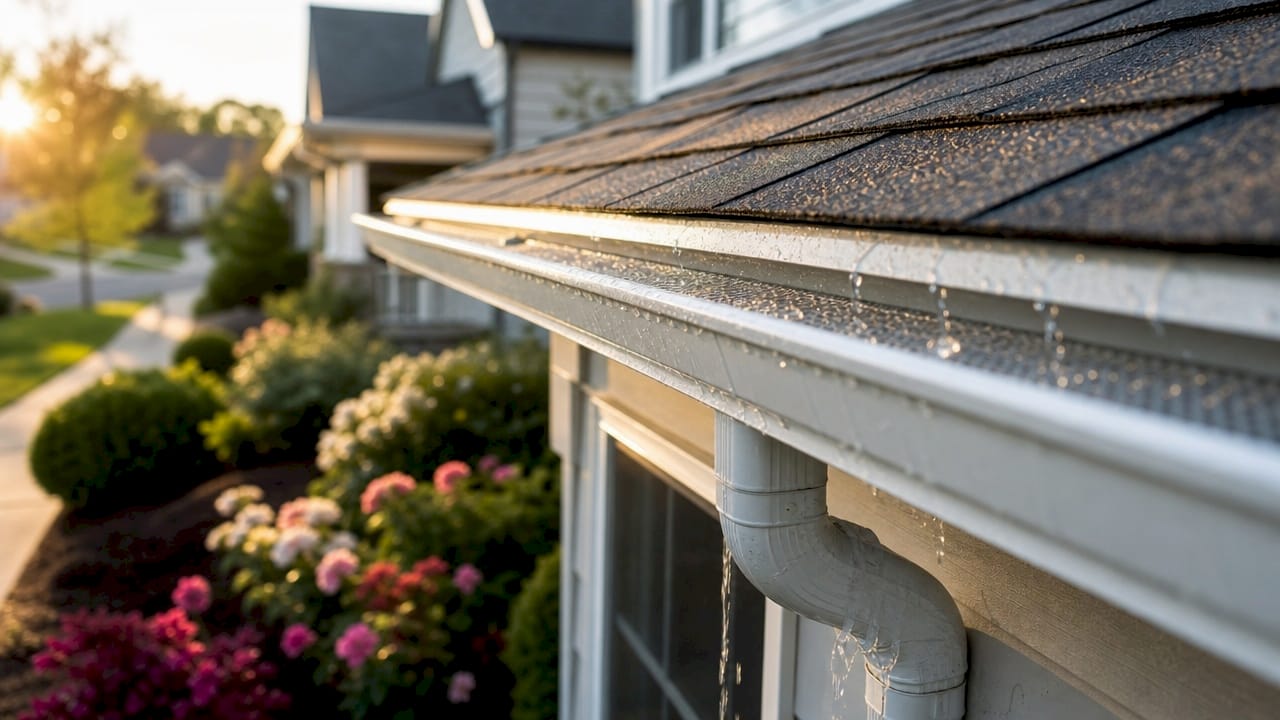
Gutters with incorrect pitch create standing water. Localized stains can appear within a single storm cycle when water overflows repeatedly at the same point. Each overflow event deposits another layer of contaminants, and those layers bond progressively deeper into the oxidized surface.
Missing or undersized downspout extensions are another major factor. When water cannot drain fast enough, it backs up and overflows the gutter lip, running down the exterior face and creating the classic tiger stripe pattern. Fixing the drainage path removes the contamination route entirely. Reviewing gutter leak fixes often reveals pitch and extension problems that homeowners had not connected to their staining issue.
Gutter guards reduce staining risk by limiting the debris and overflow that reach the gutter surface. High-quality gutter guards prevent debris buildup and standing water, which are two of the primary conditions that accelerate discoloration. Guards also reduce the frequency of required cleaning, cutting down on the physical contact that can wear away protective coatings.
A maintenance routine that addresses staining risk includes these steps:
- Inspect gutter pitch twice a year and adjust hangers if water pools anywhere in the channel
- Clear all downspout extensions and verify they direct water at least 4 feet from the foundation
- Remove organic debris after every major storm to prevent biological staining from taking hold
- Check gutter guards for blockages that could force overflow onto the exterior face
- Rinse gutters with a garden hose after cleaning the roof to flush petroleum residue before it bonds
Pro Tip: After Florida’s summer storm season, run a garden hose through each gutter section and watch the flow rate at the downspout. Slow drainage means a pitch problem or blockage that will cause staining within the next few rain cycles.
What are the most effective methods for removing and preventing gutter stains?
Effective stain removal starts with matching the cleaning method to the stain type. Using the wrong product wastes time and risks permanent damage to your gutters.
For tiger stripes, the only effective approach is a solvent formulated to break petrochemical bonds. Bleach alone is ineffective against these stains and can damage the anodized finish. Products like Gutter Zap or similar petrochemical solvents dissolve the bond without mechanical abrasion. Apply with a soft cloth or nonabrasive pad, let the product dwell for the recommended time, then rinse thoroughly.
For oxidation and biological stains, pH-balanced detergents in the 7.5–8.5 range with nonabrasive brushes remove buildup without stripping the gutter’s protective layer. This approach balances cleaning power with surface protection. Avoid wire brushes or abrasive pads on any gutter surface.
Prevention is more cost-effective than repeated cleaning. Timely cleaning and installing guards significantly lower stain recurrence by removing accumulation points and keeping water flowing efficiently. The Florida gutter maintenance checklist from Larrysgutters outlines a seasonal schedule that keeps staining under control year-round.
- Use petrochemical solvents for tiger stripes, not soap or bleach
- Apply pH-balanced cleaners for oxidation and biological stains
- Never use pressure washing as a first step on bonded stains; it spreads residue and can dent aluminum
- Hire a professional when stains cover more than half the gutter surface or when gutters show oxidation damage
- Install gutter guards as a long-term prevention measure, not just a clog solution
| Stain type | DIY solution | When to call a professional |
|---|---|---|
| Tiger stripes | Petrochemical solvent with soft cloth | Stains cover full gutter length or are older than 2 years |
| Oxidation staining | pH-balanced cleaner, nonabrasive brush | Chalky coating is thick or gutter finish is peeling |
| Biological staining | Diluted mildewcide or bleach solution | Mold growth is inside the gutter channel or on fascia |
| Carbon dust staining | Gentle solvent wash within 30 days | Stain has bonded and resists solvent treatment |
Key Takeaways
Gutter discoloration results from chemical bonding between asphalt petroleum residues, oxidation byproducts, and environmental pollutants, and it requires targeted chemical treatment rather than simple scrubbing or pressure washing.
| Point | Details |
|---|---|
| Tiger stripes need solvents | Petrochemical bonds resist soap and bleach; use a dedicated solvent product. |
| Oxidation accelerates all staining | Aluminum oxidizes over 5–10 years, creating a porous surface that traps contaminants faster. |
| Design flaws multiply staining | Poor pitch and missing downspout extensions cause repeated overflow that deposits stain layers. |
| Gutter guards cut staining risk | Guards prevent debris buildup and overflow, the two main conditions that drive discoloration. |
| Diagnose before you clean | Using the wrong product for the wrong stain type can permanently damage your gutter finish. |
What I’ve learned after years of watching gutters stain in Florida heat
The most common mistake I see homeowners make is reaching for a pressure washer the moment they spot streaks. Pressure washing feels productive, but on bonded tiger stripes it spreads the petrochemical residue sideways and drives it deeper into an oxidized surface. You end up with a wider stain and a damaged finish.
Florida’s climate is genuinely different from what most national cleaning guides assume. The combination of intense UV, high humidity, and frequent heavy rain means stains form faster and bond harder here than in cooler states. A stain that a homeowner in the Pacific Northwest might have two or three years to address becomes permanent in Central Florida within 12–18 months. That timeline changes the calculus on when to act.
The other thing I consistently see underestimated is the role of roof age. Once shingles pass the 15-year mark, granule loss accelerates sharply, and the gutter staining that follows is not a cleaning problem. It is a roof problem expressing itself on your gutters. Addressing the source, whether through shingle replacement or a roofing professional’s assessment, stops the staining cycle at its origin.
My honest recommendation: treat gutter staining as a diagnostic signal, not just a cosmetic issue. Streaks tell you something about your roof condition, your drainage design, and your gutter’s age. Read them correctly and you prevent bigger problems.
— Larrysgutters
Larrysgutters can help you stop gutter staining at the source
Cleaning stains off gutters solves today’s problem. Preventing them from returning requires the right system installed correctly.

Larry’s Gutters specializes in gutter guard installation for Central Florida homeowners, using guards designed to handle Florida’s heavy rainfall while blocking the debris and overflow that cause most staining. A properly installed guard system reduces cleaning frequency and cuts the contamination pathways that create tiger stripes and biological growth. For homeowners whose gutters are already showing significant oxidation or damage, Larrysgutters also offers full gutter replacement with seamless aluminum systems custom-fit to your roofline. Contact Larrysgutters for a free quote and find out which solution fits your home.
FAQ
What causes the black streaks on the outside of gutters?
Black streaks on gutters are called tiger stripes and form when petroleum residues from asphalt shingles bond electrostatically to oxidized aluminum. They are not dirt or mold and require a petrochemical solvent to remove.
Why do gutters turn brown or green?
Brown discoloration usually comes from tannins in organic debris like leaves and pine needles sitting in standing water. Green staining is biological growth, typically algae or mildew, which thrives in Florida’s humid conditions.
Can pressure washing remove gutter stains?
Pressure washing alone does not remove bonded tiger stripes and can spread petroleum residue across a wider area. Use a targeted chemical solvent first, then rinse with low pressure.
How do gutter guards help prevent discoloration?
Gutter guards limit debris buildup and reduce overflow events, which are the two primary conditions that deposit staining compounds on gutter surfaces. They are the most effective long-term prevention tool available.
When should I replace gutters instead of cleaning them?
Replace gutters when oxidation has created deep pitting, when the finish is peeling across large sections, or when repeated staining returns within one season despite proper cleaning. Heavily oxidized gutters trap contaminants faster than new gutters and cannot be restored to a clean surface through cleaning alone.
