
TL;DR:
- Regular gutter cleaning and inspection are essential in Central Florida due to year-round debris from local trees and storms. Installing micro-mesh guards and trimming branches at least six feet from the roof greatly reduce clog risks. Flushing downspouts after each cleaning prevents backups and protects foundations from water damage.
Preventing gutter clogs means keeping your gutters free of debris through scheduled cleaning, protective installations, and regular inspections. Central Florida homeowners face a specific challenge: the region’s mix of pine trees, live oaks, and subtropical storms creates year-round debris pressure that most generic gutter guides ignore. The good news is that a consistent routine, the right gutter guard type, and a few landscaping adjustments can cut your clog risk dramatically. This guide covers every practical step, from cleaning schedules to downspout troubleshooting, tailored to Florida’s climate.
What is the best gutter cleaning schedule for Central Florida?
Cleaning gutters at least twice yearly, in spring and fall, is the baseline recommendation for most homeowners. Florida’s seasonal patterns shift that baseline. Late spring brings seed and blossom drop from oaks and maples. Late fall delivers the main leaf drop. Both seasons push debris directly into your gutters, and a single afternoon storm can undo a cleaning you did just weeks before.
Homes surrounded by pine trees or live oaks need cleaning three to four times per year. Pine needles are thin enough to slip past many gutter guards and dense enough to mat together and block water flow completely. If your yard has heavy tree coverage, quarterly cleaning is not excessive. It is the minimum that keeps your system working.
The tools you need for a proper cleaning are straightforward:
- Work gloves to protect your hands from sharp debris and metal edges
- A plastic scoop or trowel to remove packed leaves and sediment
- A garden hose with a spray nozzle to flush the trough and test flow
- A plumber’s snake or wire hanger to break up blockages inside downspouts
- A stable ladder with a standoff bracket to keep it away from the gutter itself
Pro Tip: Always have a second person present when working on a ladder. Set the ladder on firm, level ground and never lean it directly against the gutter trough, which can bend or crack under your weight.
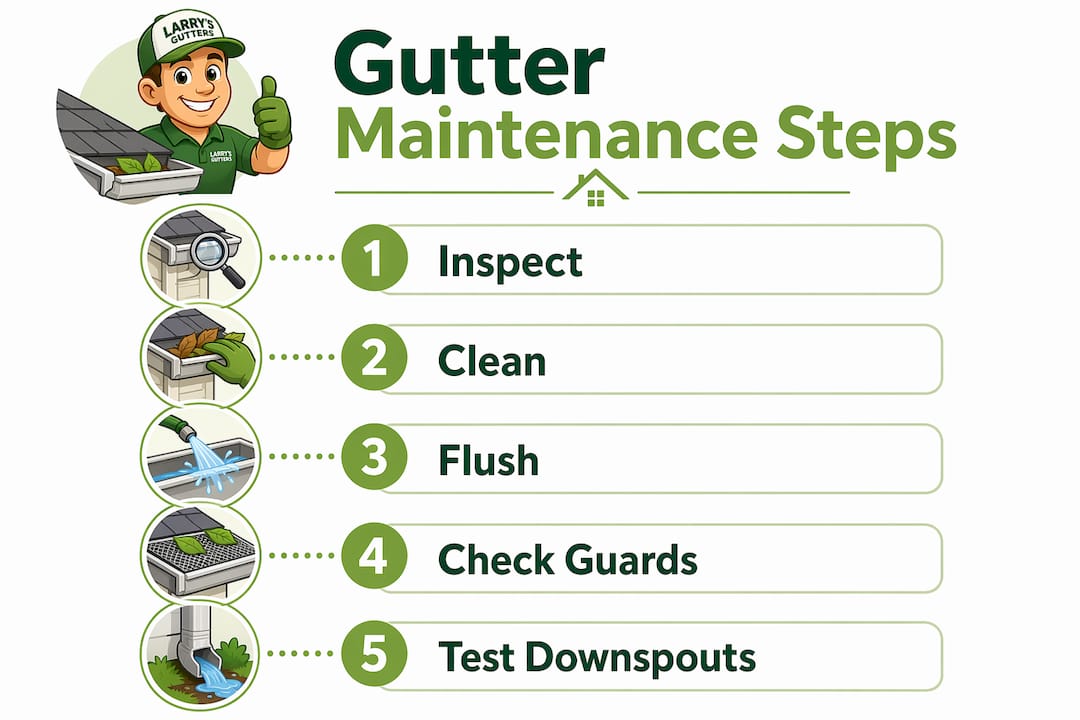
After scooping debris, flush the gutter from the far end toward the downspout with your garden hose. Watch the water flow. If it pools or moves slowly, you have a slope problem or a partial blockage. If it backs up at the downspout, the clog is below the trough, not in it.
How do gutter guards work and what types suit Florida homes best?
Gutter guards reduce clog frequency and cut down on how often you need to clean, but no guard offers 100% protection. That distinction matters. Homeowners who install guards and then ignore their gutters for years often discover buildup at the edges and inside the guard itself. Guards are a maintenance tool, not a permanent fix.
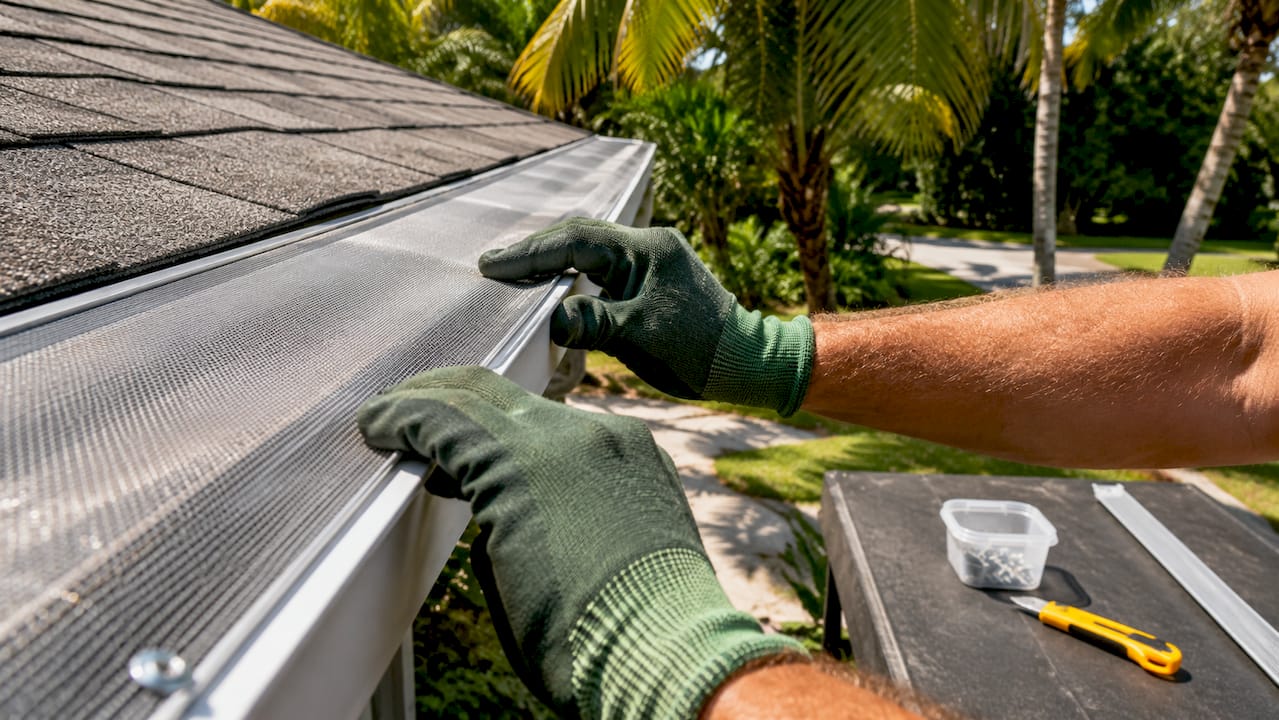
Florida’s debris profile, which includes pine needles, fine seed granules, and small blossoms, makes guard selection more important than in other climates. Here is how the main types compare:
| Guard type | How it works | Best for Florida? | Maintenance needed |
|---|---|---|---|
| Micro-mesh | Fine screen blocks small debris | Yes, best option | Rinse periodically |
| Screen/mesh | Open grid keeps out large debris | Partial, misses pine needles | Clean edges seasonally |
| Reverse curve | Water clings to curve, debris falls off | Limited, clogs in heavy rain | Inspect after storms |
| Foam/brush | Sits inside gutter, filters debris | No, debris embeds in foam | Frequent replacement |
Micro-mesh guards are the strongest choice for Central Florida. The fine screen blocks pine needles and seed granules that slip through standard mesh guards. Gutter guards for Central Florida homes provide a detailed breakdown of how each type performs against local debris types.
Even the best gutter guards are not “set and forget.” Debris builds up on top of the guard surface and at the edges over time. A quick rinse with a garden hose twice a year keeps the mesh clear. Ignoring that step causes water to sheet over the guard instead of flowing through it, which defeats the purpose entirely.
Pro Tip: After installing any gutter guard, run a garden hose along the full length of the gutter during the next rainstorm to confirm water is entering the guard and not sheeting off the roof edge.
For a full look at why guards are worth the investment, top reasons to install gutter guards covers the long-term cost and protection benefits in detail.
What landscaping and maintenance steps prevent gutter blockages?
The most overlooked clog prevention strategy is what happens before debris ever reaches your gutter. Trimming tree branches at least 6–10 feet from the roof edge reduces the volume of leaves, twigs, and seed pods that land directly in your gutters. That single step cuts cleaning frequency and extends the life of any gutter guard you install.
Beyond trimming, your gutter system itself needs physical maintenance to stay functional:
- Check gutter slope. Gutters should slope a quarter inch for every 10 feet toward the downspout. A level or a slow-draining gutter after cleaning signals a slope problem.
- Look for sagging sections. Sagging creates low spots where water and debris collect. Tighten or replace the hangers holding that section to the fascia board.
- Inspect for rust, cracks, and leaks. Small leaks at seams or end caps let water drip behind the fascia, which causes wood rot over time.
- Flush downspouts separately. Run your garden hose directly into the top of each downspout. Water should exit freely at the bottom. Resistance means a blockage inside.
- Use a plumber’s snake for stubborn clogs. Feed it down from the top of the downspout to break up compacted debris at elbows and joints.
Downspouts and proper discharge points are where most backups originate, even when the gutter trough looks clean. Flushing each downspout individually is the step most homeowners skip, and it is the step that causes the most repeat problems.
Downspout extensions matter just as much as the downspout itself. Downspout discharge at least 4–6 feet from your foundation protects your slab and landscaping from erosion. Splash blocks work for short distances. Flexible extensions or buried drain pipes work better for homes with tight yard space.
| Maintenance task | Frequency | Tool needed |
|---|---|---|
| Gutter trough cleaning | 2–4 times per year | Gloves, scoop, garden hose |
| Downspout flushing | Every cleaning session | Garden hose, plumber’s snake |
| Gutter guard rinsing | 2 times per year | Garden hose |
| Branch trimming | Annually or as needed | Pruning saw, pole saw |
| Full system inspection | Spring and fall | Flashlight, ladder |
What are the most common gutter clog mistakes and how do you fix them?
The most common mistake Central Florida homeowners make is cleaning the gutter trough and ignoring the downspout. Most clogs occur at downspout outlets and elbows, not in the open trough. You can have a spotless gutter and a completely blocked downspout at the same time. Always flush the downspout as the final step of every cleaning.
Here are the most frequent errors and how to correct them:
- Skipping downspout cleaning. Flush each downspout with a garden hose after every trough cleaning. If water backs up, use a plumber’s snake from the top to clear the blockage at the elbow or outlet.
- Ignoring minor overflow. A gutter that overflows during light rain is not just a nuisance. Repeated overflow after cleaning signals a slope problem, insufficient gutter capacity, or a hidden downspout clog. Diagnose the cause before the next storm.
- Treating gutter guards as permanent protection. Guards need periodic rinsing and edge inspection. Debris that builds up on top of a guard eventually causes the same overflow as a clogged trough.
- Waiting too long between cleanings. After a major storm, check your gutters within 48 hours. Florida storms drop large volumes of debris in short periods, and wet debris compacts faster than dry leaves.
- Skipping professional help for two-story homes. Working on a ladder above one story carries real fall risk. A professional cleaning costs far less than an emergency room visit or a foundation repair from chronic overflow.
Routine inspections catch minor issues like sagging and small leaks before they become major repairs. A 10-minute visual check after each storm takes almost no time and can prevent hundreds of dollars in damage.
Pro Tip: Test your downspouts with a garden hose before and after every storm season. If water exits slowly or not at all, clear the blockage immediately. Waiting until the next scheduled cleaning lets the clog compact and harden.
For a deeper look at diagnosing overflow and system failures, the gutter troubleshooting guide for Florida homes walks through the most common causes step by step.
Key Takeaways
Preventing gutter clogs in Central Florida requires cleaning at least twice yearly, flushing downspouts every session, installing micro-mesh guards, and trimming branches 6–10 feet from the roof edge.
| Point | Details |
|---|---|
| Clean on a Florida schedule | Clean gutters in late spring and late fall, plus after major storms. |
| Flush downspouts every time | Most clogs form at elbows and outlets, not in the open trough. |
| Choose micro-mesh guards | Micro-mesh blocks pine needles and fine debris better than screen or foam types. |
| Trim branches back far enough | Keep branches at least 6–10 feet from the roof edge to reduce debris load. |
| Extend downspout discharge | Discharge water at least 4–6 feet from the foundation to prevent erosion and damage. |
What I’ve learned after years of watching Florida gutters fail
The homeowners I see dealing with the worst water damage are almost never the ones who skipped cleaning entirely. They are the ones who cleaned the trough, felt good about it, and never touched the downspout. That single blind spot causes more foundation problems, more fascia rot, and more repeat service calls than any other mistake in this climate.
Florida is not a forgiving environment for a neglected gutter system. The storms are fast and heavy. The trees drop debris in waves, not just in fall. And the humidity means that any moisture trapped behind a sagging gutter or a cracked seam turns into rot within a season or two.
My honest opinion on gutter guards: they are worth installing, but only if you understand what they actually do. They reduce how often you need to clean. They do not eliminate the need. Homeowners who install micro-mesh guards and then check them twice a year spend far less time on ladders than those who skip guards entirely. But homeowners who install guards and walk away are setting themselves up for a nasty surprise.
The gutter maintenance checklist for Florida is the closest thing to a foolproof system I have seen for keeping a residential gutter running well year after year. Pair it with annual branch trimming and a good micro-mesh guard, and you will spend more time enjoying your yard than maintaining your gutters.
— Larrysgutters
How Larrysgutters can help protect your home’s drainage system
Central Florida homeowners who want professional support for their gutter system have a reliable local option in Larry’s Gutters. The company specializes in seamless gutter installation, gutter guard installation, and repair services across multiple Florida counties.

If your downspouts are aging, improperly pitched, or undersized for your roof’s drainage load, the gutter downspout installation guide walks through the full process and explains when a professional installation makes more sense than a DIY repair. For homeowners ready to add guard protection, the gutter guard installation workflow for Florida covers product selection and proper fitting for local debris conditions. Contact Larrysgutters directly for a free quote and a system assessment tailored to your home.
FAQ
How often should I clean my gutters in Central Florida?
Clean gutters at least twice a year, in late spring and late fall, and add extra cleanings after major storms or if your yard has heavy tree coverage.
Do gutter guards eliminate the need for cleaning?
No. Gutter guards reduce clog frequency but still require periodic rinsing and edge inspection to prevent debris buildup on the guard surface itself.
How do I know if my downspout is clogged?
Run a garden hose into the top of the downspout. If water backs up or exits slowly, the clog is likely at an elbow or outlet and needs clearing with a plumber’s snake.
How far should downspouts discharge from my foundation?
Downspouts should discharge at least 4–6 feet from the foundation using extensions or splash blocks to prevent erosion and water intrusion.
What is the best gutter guard type for Florida pine needle debris?
Micro-mesh guards are the most effective option for Florida homes because the fine screen blocks pine needles and small seed granules that pass through standard screen or mesh guards.
