TL;DR:
- Gutter aprons prevent water from seeping behind fascia and causing damage in Central Florida.
- They are essential for managing heavy rain, wind-driven rain, and steep roofs.
- Skipping an apron can lead to costly fascia rot, mold, and foundation issues.
Central Florida receives 40-60 inches of rainfall every year, and most of that water hits your roof at full force. Your gutters are supposed to catch it. But here’s what many homeowners miss: if there’s no gutter apron installed, water doesn’t always make it into the gutter. Instead, it sneaks behind the gutter trough, soaks into your fascia boards, and silently causes rot and mold that you won’t notice until the damage is already expensive. This guide breaks down exactly what a gutter apron is, how it compares to a drip edge, and why it’s one of the most important components protecting your Central Florida home.
Table of Contents
- What is a gutter apron and what does it do?
- Gutter apron vs. drip edge: What’s the difference?
- Why Central Florida homes specifically need gutter aprons
- Does a gutter apron really prevent water damage? Real risks and payoffs
- Our take: Why skipping a gutter apron could cost Central Florida homeowners thousands
- Protect your home from Florida storms with professional gutter solutions
- Frequently asked questions
Key Takeaways
| Point | Details |
|---|---|
| Gutter apron definition | A gutter apron is a wide metal flashing that bridges the gap between shingles and gutters, directing water away from your fascia. |
| Central Florida necessity | Heavy rainfall and strong storms in Central Florida make gutter aprons critical for protecting homes from water infiltration. |
| Drip edge vs. apron | Using both drip edge and gutter apron offers layered, code-compliant protection for guttered roofs. |
| Damage prevention | A properly installed apron protects against costly rot, mold, and water claims by diverting water safely into gutters. |
What is a gutter apron and what does it do?
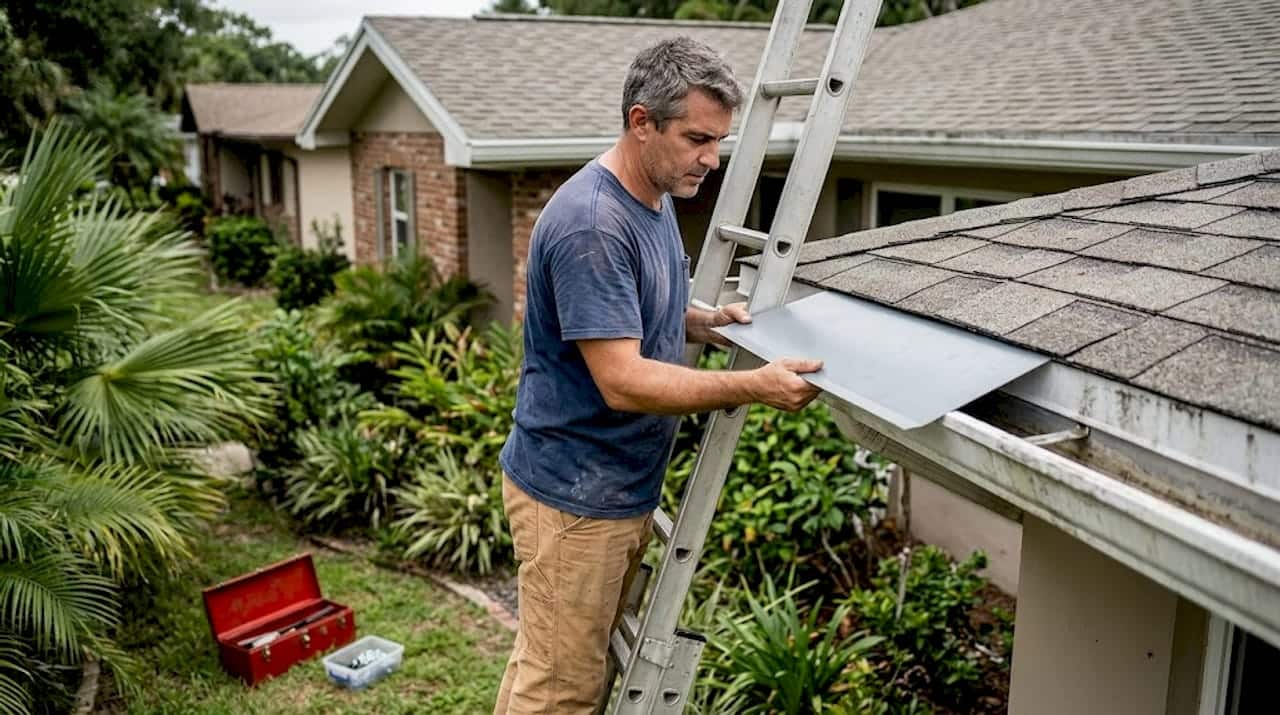
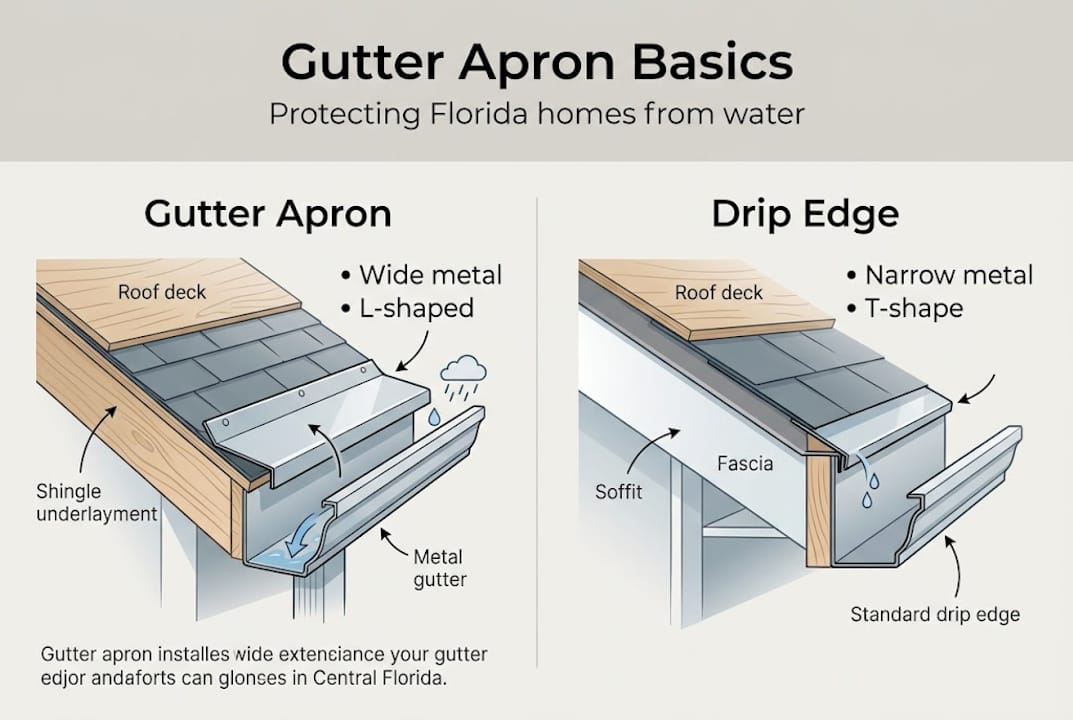
A gutter apron is a wide, L-shaped piece of metal that slides underneath your roof shingles and lays over the front edge of your gutter trough. Think of it as a metal ramp. Water rolling off your roof hits the apron and gets directed straight into the gutter, rather than running down the back of it or behind it entirely.
Without this piece in place, you get what installers call “overshoot” or “backdraft drip.” That’s when water flows past the gutter opening and drips directly onto your fascia board, the trim piece that runs along the lower edge of your roofline. Over time, that moisture causes wood rot, mold growth, paint peeling, and eventually structural damage to your roofline.
Here’s what makes a gutter apron different from doing nothing at all:
- It extends under the shingles, creating a sealed connection between roof and gutter
- It bridges the gap between roof deck and gutter trough
- It blocks wind-driven rain from getting behind the gutter entirely
- It keeps fascia boards dry, which extends their lifespan significantly
- It works even when gutters shift slightly over time due to heat expansion
In Central Florida’s climate, where gutter aprons prevent overshoot and wind-driven rain infiltration especially on steep or metal roofs, this component is not optional. Our summer storms don’t just drop rain straight down. Wind pushes it sideways, and that angled rainfall can get behind even a well-installed gutter if there’s no apron sealing the connection.
Understanding how gutters prevent water damage starts with understanding every piece of the system, and the apron is one people often overlook because it’s mostly hidden.
Pro Tip: Pairing a gutter apron with 6-inch gutters gives your system the capacity to handle drainage from up to 1,040 square feet of roof surface during a heavy Florida downpour. That combination dramatically reduces overflow risk during afternoon thunderstorms.
Gutter apron vs. drip edge: What’s the difference?
Now you know the basics of a gutter apron, it’s important to understand how it compares to the other key roof-edge component: the drip edge.
Both are metal flashing pieces installed at the edge of your roof. Both help manage water runoff. But they serve different purposes, and confusing them can lead to a gap in your home’s protection.
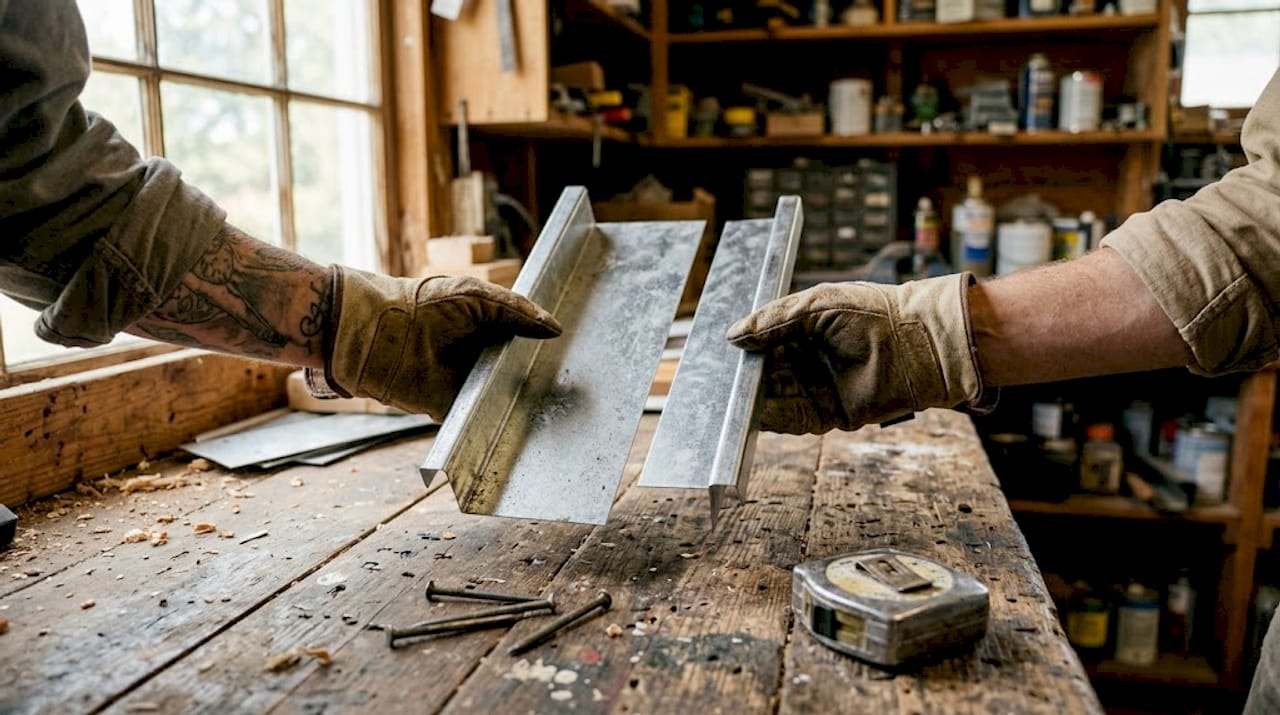
A drip edge is a narrower piece, usually shaped like a T or L, installed directly against the roof deck to direct water away from the fascia and into the gutter area. It’s code-required for new roofs in most jurisdictions, while a gutter apron is wider and designed to guide water directly into gutter troughs.
| Feature | Drip Edge | Gutter Apron |
|---|---|---|
| Shape | Narrow T or L | Wide L, longer flange |
| Position | Against roof deck edge | Under shingles, over gutter |
| Primary job | Protect fascia, general water direction | Channel water into gutter trough |
| Code required? | Often yes, for new roofs | Usually not, but recommended |
| Best for | Homes with or without gutters | Homes with gutters only |
| Width | 2-4 inches typical | 4-6 inches typical |
The key takeaway: a drip edge is a general roof-edge protector, while a gutter apron is purpose-built for homes with gutters. Using both together creates a layered defense that works even in the most intense Central Florida storms.
“Using both a drip edge and a gutter apron offers the best protection for gutter-equipped homes in wet, storm-prone climates. Together, they close off every potential water entry point at the roof edge.”
For Central Florida homeowners, the practical move is to install both. Keeping your gutters clean is also essential, because even a perfect apron can’t compensate for clogged gutters overflowing during a storm. And don’t overlook your downspouts either: properly managed downspouts protect your home from water damage by moving water far enough away from your foundation.
Why Central Florida homes specifically need gutter aprons
Distinguishing the hardware is important, but the real question is why a gutter apron isn’t just “nice to have” but critical for Central Florida homes.
Let’s start with the numbers. Central Florida’s 40-60 inches of intense rainfall annually, combined with frequent tropical storms, creates constant pressure on every part of your home’s exterior. And 1 in 67 homes files a water damage claim, with most damage starting from undetected water infiltration at the roof perimeter.
Here’s how Florida’s conditions translate into real problems without a gutter apron:
| Climate challenge | How it creates damage | How a gutter apron helps |
|---|---|---|
| Heavy rainfall volume | Overwhelms gutters, water overshoots | Sealed connection keeps water directed in |
| Wind-driven rain | Forces water behind gutters | Apron blocks the entry point |
| Steep roof pitches | Water gains speed, jumps gutter edge | Apron catches fast-moving water flow |
| Metal roofs | Smooth surface sheds water fast | Wide apron flange catches rapid runoff |
| Intense heat cycles | Causes fascia wood to dry and crack | Dry fascia stays stable longer |
Top 3 reasons Central Florida homes fail without gutter aprons:
- Hidden fascia rot: Water that seeps behind gutters doesn’t show up immediately. By the time you see paint bubbling or soft wood, the rot has usually spread several feet in each direction.
- Mold behind roofline trim: Moisture trapped between the gutter and fascia creates the perfect environment for mold. In Florida’s heat, mold spreads faster than in cooler climates.
- Foundation risk from overflow: Without an apron, gutters that fill beyond capacity during storms overflow at the back edge, sending water straight down your exterior wall and toward your foundation.
Following solid Central Florida gutter tips and understanding how gutters prevent flooding in this region are important steps, but they only work if your gutter system is complete from the start.
Does a gutter apron really prevent water damage? Real risks and payoffs
Armed with the context of why gutter aprons matter in Central Florida, let’s address the ultimate question: do they really make a difference against water damage?
The short answer is yes, and here’s why. Gutter aprons reduce overflow in storms, lengthen fascia life, and lower mold risk. These aren’t abstract benefits. Fascia board replacement runs $6 to $20 per linear foot installed. On a typical Florida ranch home with 150 linear feet of roofline, replacing rotted fascia costs $900 to $3,000 or more. A gutter apron costs a fraction of that.
Here’s what a properly installed gutter apron protects against:
- Wood rot in fascia boards from chronic moisture exposure
- Mold and mildew growth along the roofline that can spread indoors
- Paint failure on exterior trim caused by repeated wet-dry cycles
- Water intrusion into the attic or wall cavity during wind-driven storms
- Gutter pull-away caused by water weight forcing gutters outward
One important clarification: a gutter apron is not a replacement for gutter guards. Consensus strongly favors gutter aprons for rainy climates, but they serve different roles. A gutter apron manages water flow at the roof edge. A gutter guard manages debris inside the gutter channel. You need both for a fully protected system.
“Think of your gutter apron and gutter guard as a team. The apron gets water into the gutter efficiently. The guard keeps that gutter clear so it can actually drain. Missing either one creates a weak link in the system.”
Pro Tip: If your home has roof and home protection gaps from aging gutters, adding an apron during a gutter repair is far more cost-effective than waiting until fascia damage forces a full roofline renovation.
For homeowners concerned about long-term costs, understanding foundation protection from gutters is another reason to get your entire system working correctly from the start.
Our take: Why skipping a gutter apron could cost Central Florida homeowners thousands
After years of inspecting gutter systems across Central Florida, we’ve noticed a clear pattern: homes with water-damaged fascia almost never had a properly installed gutter apron. It’s not a coincidence.
Many contractors skip the apron because it’s not always code-required. Some homeowners skip it to save a few dollars on a gutter installation. And honestly, that decision makes sense in the moment. An apron adds modest cost upfront. But one aggressive Florida storm can cause more moisture damage behind that gutter than the apron would have cost over ten years.
A quality gutter apron typically costs $3 to $6 per linear foot installed. Fascia replacement, mold remediation, or attic water damage repair can easily run $2,000 to $8,000 or more. The math is not complicated. The apron wins every time.
We also see homeowners who rely on clean gutters to prevent claims but overlook the apron entirely. Cleaning your gutters is essential. But if there’s no apron, water is still bypassing the system at the source. You can have spotlessly clean gutters and still watch your fascia rot from the inside out.
Central Florida is not a climate where you can cut corners on water management. This region makes every missing component more expensive over time.
Protect your home from Florida storms with professional gutter solutions
If you’ve realized a missing or neglected gutter apron puts your property at risk, here’s how to move forward confidently.

At Larry’s Gutters, we assess your entire gutter system, not just individual pieces. That means checking your apron, gutter sizing, downspout placement, and drainage path all at once. Whether you need a new installation or a repair, our team handles it with the attention to detail that Central Florida’s weather demands. Explore our resources on gutter downspout installation, follow a proven rain gutter maintenance plan, or learn about your gutter replacement options. Get a free quote and protect your home before the next storm arrives.
Frequently asked questions
Does every Central Florida home need a gutter apron?
Most homes with gutters in Central Florida need aprons to prevent water infiltration and hidden damage. This is especially true for homes with steep or metal roofs where water moves faster and overshoot is more likely.
Can I install a gutter apron myself?
Handy homeowners can install gutter aprons, but correct placement under existing shingles is tricky and mistakes can cause leaks or void roofing warranties. Professional installation is often the safer choice.
Is a gutter apron the same as a gutter guard?
No. A gutter apron guides water into the gutter at the roof edge, while a gutter guard keeps leaves and debris out of the gutter channel. Both are needed for full protection of your gutter system.
How much roof area can a gutter apron and 6-inch gutter handle?
A 6-inch gutter with a properly installed apron can drain up to 1,040 square feet of roof surface in heavy rain, making it well-suited for most Central Florida residential roofs.
Recommended
- Role of Gutters in Home Protection—Florida Needs
- Why Florida Homes Need Gutters for Protection
- How Gutters Prevent Water Damage: Florida Homeowner Guide
- Gutter Sizing Explained: Protecting Florida Homes
- When and How to Maintain Custom Steel Homes in Florida – Ofir Engineering
- Gutter Services Gainesville FL
