
TL;DR:
- Proper gutter maintenance and sizing are crucial to prevent mold in Central Florida’s humid climate.
- Gutters direct water away from the home, reducing foundation, roof, and siding moisture risk.
- Regular cleaning, appropriate gutter guards, and expert installation help avoid costly mold issues.
Most Central Florida homeowners think of gutters as a seasonal concern, something to check after a big storm and forget about the rest of the year. That thinking is exactly what leads to costly mold problems. Clogged gutters trigger mold remediation costs that can reach tens of thousands of dollars, while simple prevention costs a fraction of that. Florida’s relentless humidity means water that pools near your foundation, siding, or roof deck does not just sit there. It feeds mold within 24 to 48 hours. Understanding how your gutter system connects directly to your home’s mold risk is one of the most practical things you can do as a homeowner here.
Table of Contents
- Why Florida’s climate makes gutters essential for mold prevention
- How gutters control moisture to block mold in your home
- Gutter guards: Added protection or maintenance trap in Florida?
- Gutter failures and mistakes that invite mold into your home
- A local expert’s take: What most guides miss about mold and gutters
- Protect your home: Next steps for gutter solutions in Central Florida
- Frequently asked questions
Key Takeaways
| Point | Details |
|---|---|
| Gutters block mold risk | Well-maintained gutters prevent moisture buildup that causes indoor mold. |
| Florida weather increases mold hazard | High humidity and rain make gutters essential in Central Florida. |
| Gutter guards help but require upkeep | Guards reduce debris but don’t eliminate cleaning in our climate. |
| Mistakes amplify mold risk | Improper sizing, installation, or ignoring post-storm checks can worsen problems. |
Why Florida’s climate makes gutters essential for mold prevention
Central Florida is not like the rest of the country when it comes to moisture. The combination of heat, humidity, and frequent rain creates conditions where mold does not just grow, it thrives. Central Florida receives 54 inches of rain annually, and the near-constant humidity accelerates mold growth on any damp surface. For context, the national average rainfall is around 38 inches per year. That extra water has to go somewhere, and without a functioning gutter system, it goes straight to your home.
Mold needs three things to grow: moisture, a food source like wood or drywall, and warmth. Florida supplies two of those in abundance year-round. Your gutters are the one tool that controls the third ingredient, moisture. When gutters fail or are ignored, water saturates the soil at your foundation, backs up under your roof shingles, and soaks your siding. Every one of those scenarios is an open invitation for mold to move in.
For guidance on mold prevention, experts consistently point to moisture control as the single most important factor. Gutters are your home’s first line of defense in that fight.
| Risk factor | Without gutters | With functioning gutters |
|---|---|---|
| Foundation moisture | High | Low |
| Roof deck saturation | Frequent | Rare |
| Siding water contact | Constant | Minimal |
| Mold growth likelihood | Very high | Significantly reduced |
Understanding gutter system basics helps you see why a properly sized, well-maintained gutter is not optional in this climate. It is as essential as your roof itself.
Here is what goes wrong when gutters are skipped or neglected:
- Water pools along the foundation, leading to basement and crawl space mold
- Roof edges stay wet, rotting the fascia board and feeding mold behind your ceiling
- Siding absorbs runoff, creating hidden mold colonies inside your walls
- Saturated soil pushes moisture upward through concrete slabs
- Overflowing gutters deposit standing water on patios and entryways
“In Florida’s climate, a gutter is not just about keeping rain off your head. It is a moisture management system protecting every surface of your home from a mold-friendly environment.”
Learning how gutter systems in Central Florida are built and sized for local conditions is a smart first step toward real mold prevention.
How gutters control moisture to block mold in your home
A gutter system works by catching rainwater at the roofline and moving it away from your home through a controlled path. The design sounds simple, but the details matter a great deal. Gutters must slope toward downspouts at a rate of about one quarter inch per ten feet of gutter run. Too little slope and water pools. Too much and it rushes past too fast during heavy storms, overflowing before it reaches the downspout.
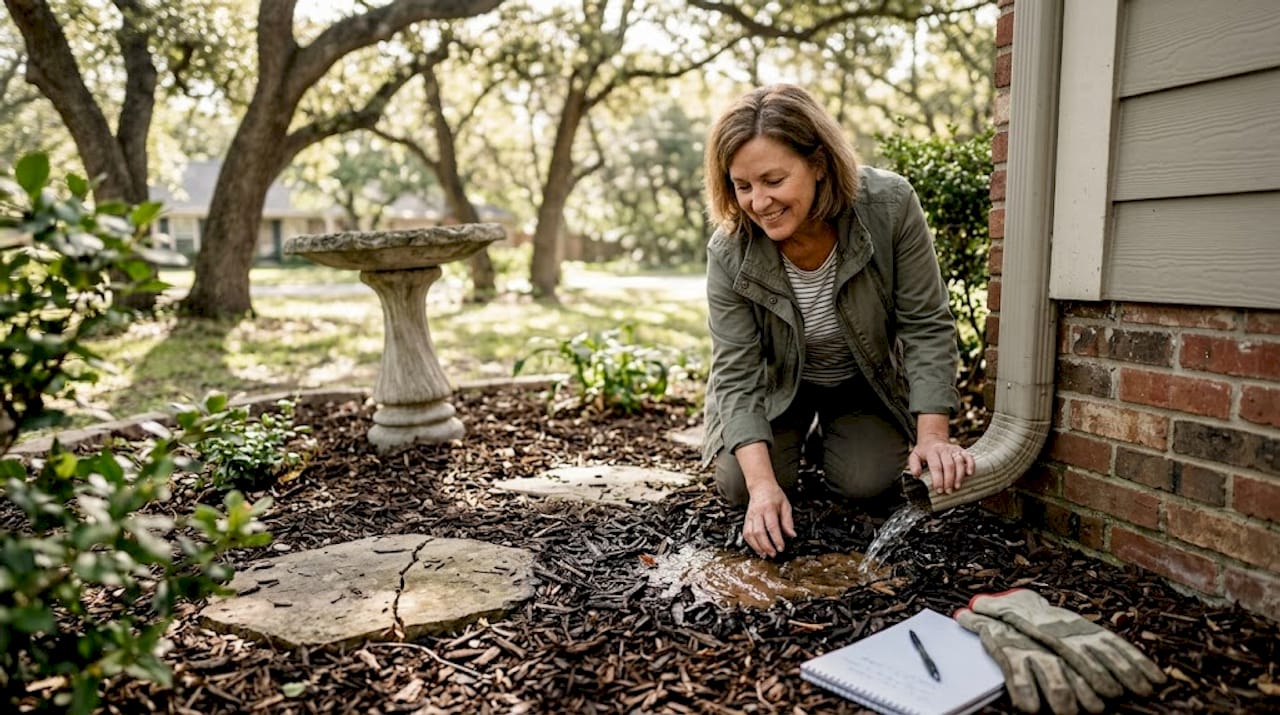
Downspouts carry water from the gutter down to the ground, where extensions or buried drains move it at least six feet from your foundation. This distance is critical. Water deposited too close to your home saturates the soil and wicks back toward your foundation walls, exactly where mold sets up first. Gutters prevent mold by directing water away from these vulnerable areas, breaking the moisture chain before mold ever gets started.
| Area at risk | How gutters help | Failure sign to watch for |
|---|---|---|
| Roof deck | Carries water off the edge cleanly | Sagging, water stains on fascia |
| Siding | Prevents sheet flow down walls | Streaks, peeling paint |
| Foundation | Moves water six or more feet away | Pooling soil near home base |
| Crawl space | Keeps perimeter dry | Musty smell, visible mold |
Understanding how gutters prevent water damage in Florida’s heavy rain cycles gives you a clearer picture of where your system might be letting water slip through.
Here is a numbered checklist of key areas to inspect on your home at least twice a year:
- Check every gutter section for sag or separation from the fascia
- Confirm downspouts are securely attached and not leaking at joints
- Test the slope by running a garden hose and watching water flow direction
- Inspect downspout extensions to confirm they direct water at least six feet away
- Look for staining, streaking, or peeling paint on siding near gutters
- Check the soil at your foundation for soft, constantly wet areas
- Look inside your attic for water stains that might signal a roof edge backup
Pro Tip: After any storm that drops more than an inch of rain, walk your home’s perimeter and look for mud splash patterns under the gutters. These splash marks tell you exactly where your gutters are overflowing or misdirecting water.
Staying current with gutter maintenance tips specific to Central Florida gives you a practical schedule to follow rather than guessing when to act.
Gutter guards: Added protection or maintenance trap in Florida?
Gutter guards sound like the perfect solution for busy homeowners. Install them once, skip the ladder, and never worry about clogs again. The reality in Central Florida is more complicated, and knowing the difference between guard types can save you from a costly mistake.
Gutter guards work by covering the gutter channel and allowing only water to pass through while blocking debris. The three most common types you will encounter are micro-mesh, foam inserts, and reverse-curve guards. Each has a different performance profile in Florida’s unique conditions.
| Guard type | Debris blocked | Mold risk | Maintenance frequency |
|---|---|---|---|
| Micro-mesh | Very high | Low to moderate | Once yearly |
| Foam insert | Moderate | High | Twice yearly or more |
| Reverse-curve | Moderate | Low to moderate | Once to twice yearly |
Micro-mesh guards block up to 95% of debris but can still create maintenance problems if they are ignored for multiple seasons. In Florida’s humidity, even a thin layer of pollen and organic dust on the mesh surface becomes a feeding ground for biofilm, which is a slimy layer of bacteria and mold spores. Once biofilm forms, it reduces water flow through the mesh and can eventually push water over the gutter edge.
Foam guards are the biggest risk in Florida specifically. Their porous structure traps moisture and organic matter inside the foam itself, creating an ideal mold habitat right inside your gutter. Many homeowners install foam guards as a budget option and end up with a mold colony growing in the one place that was supposed to protect them.
Selecting the right gutter materials for Florida and pairing them with the correct guard type is where many homeowners benefit from a local expert’s input.
Here is what to keep in mind about guards in Florida:
- Micro-mesh is the most effective option, but it still requires annual cleaning
- Avoid foam inserts entirely in humid climates
- Biofilm growth on any guard surface is a mold warning sign
- Guards do not replace maintenance, they reduce its frequency
- Custom gutter features like oversized downspouts paired with guards improve overall performance
Pro Tip: Rinse micro-mesh guards with a garden hose every spring before the rainy season begins. A two-minute flush removes pollen buildup before it bakes into biofilm over the summer.
Gutter failures and mistakes that invite mold into your home
Even a properly installed gutter system can become a mold risk if the wrong choices are made during installation or if maintenance is skipped. In Central Florida, where storms test your gutters hard and humidity keeps surfaces wet long after the rain stops, the margin for error is smaller than elsewhere.
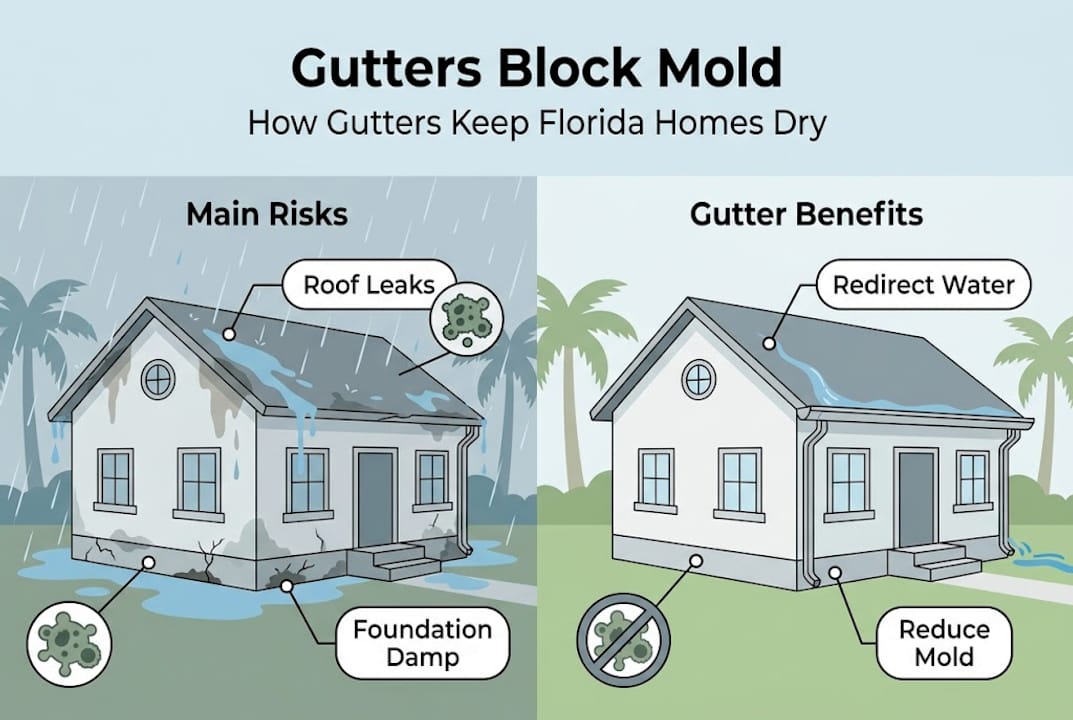
Sagging, undersized, or corroded gutters with poor slope inevitably lead to pooling water and mold. These are not rare edge cases. They are the most common gutter failures we see on homes across the region.
The most critical mistakes that lead directly to mold problems:
- Undersized gutters: Standard 5-inch gutters cannot handle Florida’s intense downpours. Six-inch gutters are the right choice for most Central Florida homes
- Poor or reversed slope: Water sits in low spots and never reaches the downspout, creating a standing-water breeding ground
- Loose or sagging sections: Gaps between the gutter and fascia allow water to run behind the gutter and directly into the wall
- Corroded or aging metal: Rust holes and cracks release water onto siding and foundation before it reaches the downspout
- Skipping post-storm inspections: Hurricanes and tropical storms shift gutters, knock out downspout extensions, and fill gutters with debris overnight
The financial stakes are real. Mold remediation can cost up to $30,000 in severe cases, while a full gutter replacement or professional maintenance runs a fraction of that amount. Prevention is always the smarter investment.
Understanding gutter failures in heavy rain specific to Florida storms gives you a clear picture of what to look for after any major weather event.
“Seamless 6-inch aluminum is your best defense against local conditions. It handles the volume, resists corrosion, and eliminates the leak points that seamed gutters develop over time.”
Proper drainage solutions for Florida homes go beyond just the gutter itself. Downspout placement, underground drain connections, and grading around the foundation all work together to keep moisture away.
A local expert’s take: What most guides miss about mold and gutters
Most national guides treat gutters as a universal solution and stop there. In Central Florida, that is only half the story. After seeing hundreds of homes across Orange, Seminole, and Osceola counties, the pattern is clear. It is not just neglect that causes mold. It is the assumption that a new gutter system is a one-and-done fix.
Biofilm, pollen, and storm debris create a buildup cycle that is faster and more aggressive here than anywhere else in the country. Gutters that look clean from the ground can be holding a damp layer of compacted organic matter that turns into a mold source within weeks of a summer storm.
The detail that most guides skip entirely is this: your gutters need a care schedule built around Florida’s seasons, not a generic national calendar. That means cleaning before the May-to-September rainy season, inspecting after every named storm, and watching for biofilm on any guard surface year-round.
Investing in proper maintenance also protects your home’s resale value. Buyers and inspectors notice mold, and they trace it back to the gutters faster than most sellers expect. See how gutters and home value connect directly to what your property is worth.
Protect your home: Next steps for gutter solutions in Central Florida
Now that you understand how gutters control moisture and block mold, the next step is making sure your system is up to the job. Many homeowners discover after reading this that their current gutters are undersized, improperly sloped, or overdue for cleaning.

At Larry’s Gutters, we specialize in seamless gutter installation, repair, and maintenance designed specifically for Central Florida homes. Whether you are asking if seamless gutters are worth it for your property or want to understand the gutter guard installation process before committing, we can walk you through every option. We also cover the details of proper downspout installation so water leaves your property cleanly. Contact us today for a free quote and let’s get your home protected before the next storm season.
Frequently asked questions
How often should I clean my gutters to prevent mold in Florida?
Clean gutters at least twice a year, in April and October, to keep water flowing and block mold growth. Florida’s heavy pollen and storm seasons make this schedule more critical here than in most states.
Do gutter guards eliminate the need to clean gutters?
No. Even with gutter guards, inspect and clean your gutters at least once yearly since fine debris and biofilm still build up on the guard surface over time.
Which gutter material is best for Florida’s humid, salty air?
Seamless 6-inch aluminum handles Florida’s heavy storms, resists corrosion from humidity and salt air, and eliminates the seam joints where leaks typically start.
Can clogged gutters actually cause mold inside my house?
Yes. Clogs trap moisture at the foundation, walls, and roof edge, and clogged gutters create indoor mold conditions within 24 to 48 hours of a rain event in Florida’s warm climate.
