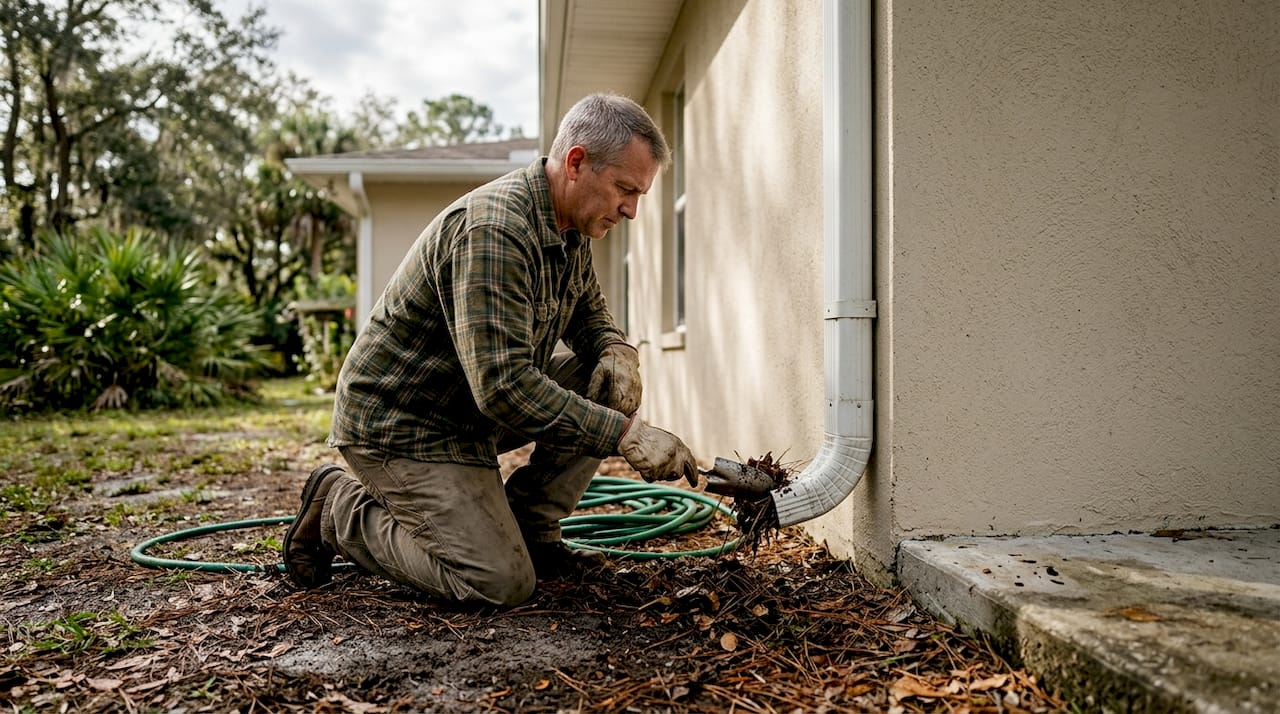
You might assume your gutters alone keep rainwater away from your home, but the truth is that downspouts are the critical link that actually prevents costly water damage. In Central Florida’s Lake, Marion, and Sumter counties, heavy rainfall and sandy soils create unique challenges that make proper downspout function essential. Without correctly placed and maintained downspouts, you risk foundation erosion, basement flooding, and landscape damage. This guide walks you through how downspouts work, common problems specific to our region, expert drainage solutions, and practical maintenance steps to protect your investment.
Table of Contents
- Key takeaways
- How downspouts work and why they matter
- Common downspout problems and their impact on Central Florida homes
- Expert strategies: integrating downspouts with drainage solutions for effective water management
- Maintaining downspouts for lasting protection and peak performance
- Professional downspout and gutter solutions for Central Florida homeowners
- FAQ
Key Takeaways
| Point | Details |
|---|---|
| Directs water away | Downspouts safely move rainwater from the roof to the ground and away from the foundation to help prevent erosion, basement flooding, and structural damage. |
| Adequate downspout size | In Central Florida, 3×4 inch downspouts are recommended to handle heavy rainfall and prevent overflow. |
| Proper placement matters | Avoid outlets that discharge water near the foundation and aim for at least six feet away to prevent soil saturation and foundation compromise. |
| Drainage system integration | Experts recommend integrating downspouts with French drains or pop-up emitters to efficiently move water away from structures. |
| Regular maintenance essential | Regular cleaning and inspection prevent clogs and ensure gutters and downspouts perform optimally. |
How downspouts work and why they matter
Downspouts are vertical pipes attached to your gutters that safely channel rainwater from your roof to the ground, directing it away from your home’s foundation. Downspouts are vital to channeling water away to prevent foundation damage, making them an essential component of any gutter system. When they fail, water pools around your foundation, causing erosion, basement flooding, and structural issues that cost thousands to repair.
Most residential downspouts are made from aluminum, vinyl, or galvanized steel, each offering different durability and cost benefits. The size and position of your downspouts directly affect how efficiently water flows away from your home. A standard 2×3 inch downspout handles moderate rainfall, but Central Florida’s intense storms often require 3×4 inch downspouts to manage volume effectively.
Pro Tip: For homes in Lake, Marion, and Sumter counties, choose downspouts at least 3 inches wide to handle our region’s heavy rainfall events. Undersized downspouts overflow during storms, defeating the entire gutter system’s purpose.
The consequences of failed downspouts extend beyond visible water pooling. Over time, concentrated water flow erodes soil around your foundation, creating voids that allow settling and cracking. In sandy Florida soils, this erosion happens faster than in clay-based regions. Understanding gutter downspout installation steps helps you recognize whether your current system meets regional demands.
Common materials and their benefits include:
- Aluminum downspouts resist rust and handle Florida’s humidity well
- Vinyl options offer affordability but may crack under intense sun exposure
- Galvanized steel provides maximum durability for high-volume water flow
- Copper downspouts add aesthetic value while lasting decades
Now that we understand their basic role, we can examine problems commonly found with downspouts in Central Florida homes.
Common downspout problems and their impact on Central Florida homes
The most frequent issue homeowners face is incorrect downspout outlets that dump water too close to the foundation. Improper downspout placement increases erosion risk and may damage foundations in sandy Florida soils, creating problems that worsen with every rainstorm. Water needs to discharge at least six feet from your home’s base to prevent soil saturation and foundation compromise.
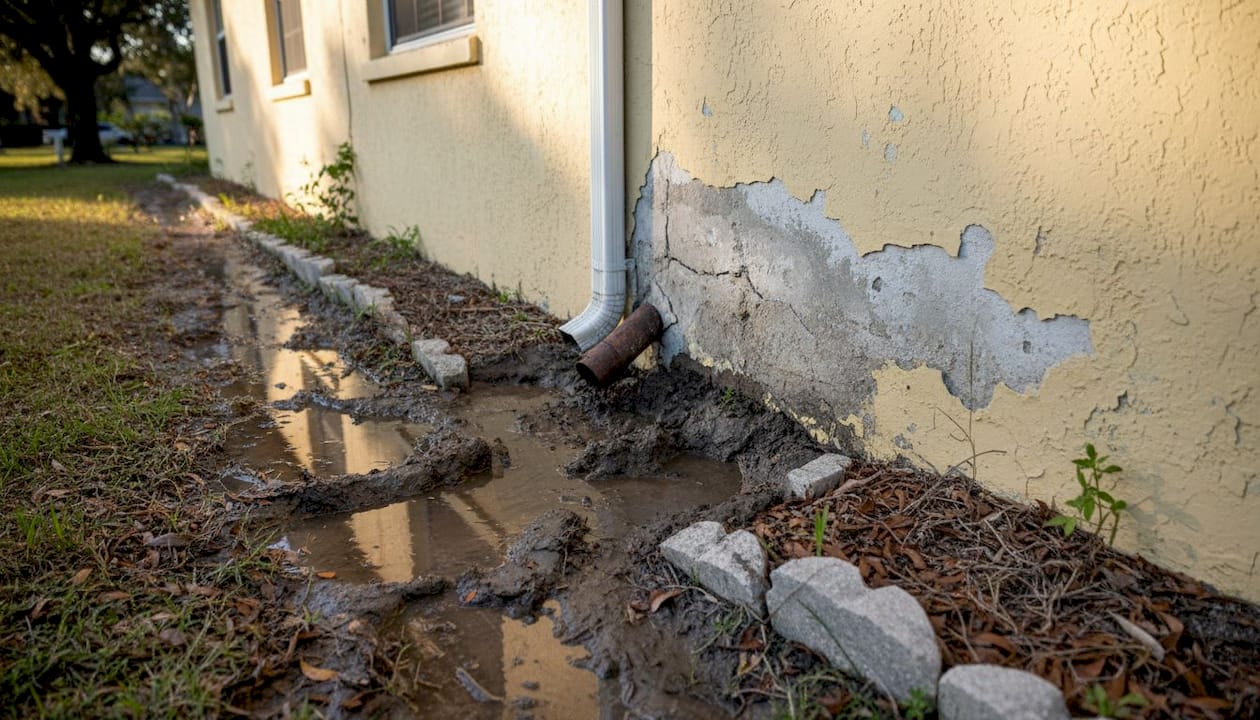
Clogged or damaged downspouts cause overflow that defeats your entire gutter system. Leaves, pine needles, and debris accumulate inside vertical pipes, blocking water flow and forcing it over gutter edges. This overflow concentrates near your foundation rather than dispersing safely away. During Florida’s summer thunderstorms, a clogged downspout can dump hundreds of gallons directly against your home.
Insufficient downspout quantity or size creates another critical problem specific to Central Florida’s frequent heavy rain. Many older homes have too few downspouts for the roof area they serve, or pipes too narrow to handle intense rainfall volumes. The standard recommendation is one downspout for every 30 to 40 feet of gutter, but properties with large roof areas or complex designs may need more.
Avoid dumping water near your house foundation to prevent erosion. In flat sandy soils common throughout Central Florida, concentrated water flow creates channels that undermine structural stability faster than most homeowners realize.
The risk of soil erosion from concentrated water flow on sandy soils cannot be overstated. Unlike clay soils that resist erosion, the sandy composition throughout Lake, Marion, and Sumter counties washes away easily. A single improperly positioned downspout can create a depression or channel within months, leading to foundation settling and structural cracks.
These problems accelerate foundation damage and landscaping issues in several ways:
- Water pooling saturates soil and increases hydrostatic pressure against foundation walls
- Erosion channels direct water under your home rather than away from it
- Concentrated flow kills grass and plants, creating unsightly bare patches
- Repeated wetting and drying cycles cause foundation movement and cracking
Understanding gutter downspout placement to reduce soil erosion helps you identify whether your current setup protects your home adequately. Understanding these challenges highlights why proper downspout strategies are essential, so let’s explore expert recommendations.
Expert strategies: integrating downspouts with drainage solutions for effective water management
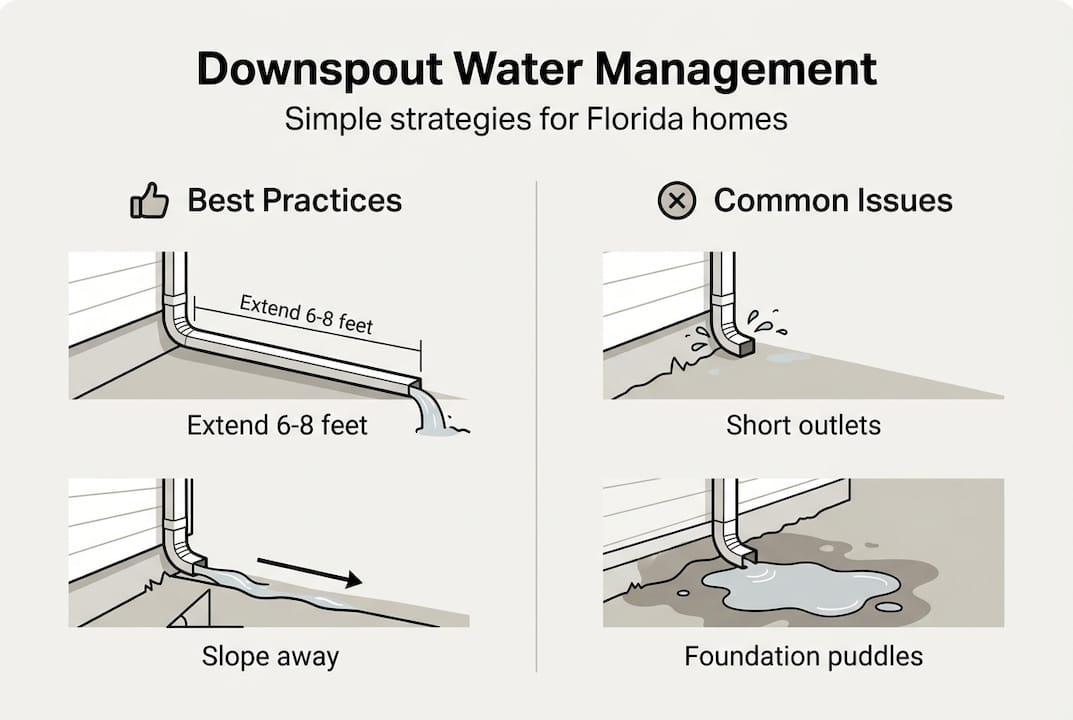
Best downspout placement starts with positioning outlets at least six to eight feet from your foundation, with discharge points sloped away from the home. In flat sandy soils, combine downspouts with French drains or pop-up emitters to protect foundations and control runoff, ensuring water disperses rather than pooling. This integration prevents the erosion and saturation problems common in Central Florida.
Choosing between French drains and pop-up emitters depends on your property’s specific conditions:
| Solution | Best For | Installation Complexity | Maintenance Needs |
|---|---|---|---|
| French drains | Properties with moderate slope, larger water volumes | Moderate to high, requires trenching | Low, occasional flushing |
| Pop-up emitters | Flat yards, smaller discharge areas | Low to moderate, simpler installation | Medium, check for clogs |
| Splash blocks | Temporary solution, minimal budget | Very low, just placement | High, repositioning needed |
| Underground piping | Permanent, aesthetic solution | High, professional recommended | Low once installed |
Follow these installation tips for integrating drainage solutions with downspouts:
- Measure the distance from your downspout outlet to the desired discharge point, ensuring at least six feet clearance from the foundation.
- Dig a trench sloping away from your home at a minimum grade of one inch per eight feet of length.
- Install solid PVC pipe from the downspout outlet to the discharge point, using proper connectors and sealant.
- Add a French drain or pop-up emitter at the end to disperse water across a wider area.
- Backfill the trench and test the system during the next rainfall to confirm proper flow.
- Mark discharge points to avoid damaging them during landscaping or yard work.
Pro Tip: Select your drainage method based on property slope and soil type. Properties with natural slope work well with simple underground piping to a discharge point, while flat yards benefit most from French drains that distribute water through gravel beds.
Ensuring drainage discharge points prevent soil erosion and water buildup requires strategic placement. Direct water toward areas with established vegetation that can absorb moisture, or create a gravel bed that disperses flow. Avoid discharging onto paved surfaces where water runs back toward your home or into your neighbor’s yard.
Exploring downspout placement tips for Central Florida and gutter upgrade ideas gives you additional strategies tailored to regional conditions. Combining downspout management with regular gutter maintenance creates a comprehensive water management system that protects your home year-round. These expert techniques set the stage for practical home maintenance actions you’ll want to adopt next.
Maintaining downspouts for lasting protection and peak performance
Regular downspout maintenance prevents the failures that lead to water damage and costly repairs. Regular cleaning and inspection extend downspout lifespan and prevent water damage, making these tasks essential for Central Florida homeowners. Dedicating time to maintenance now saves thousands in foundation and landscaping repairs later.
Common downspout maintenance tasks include:
- Clearing debris from downspout openings and internal passages using a plumber’s snake or water pressure
- Checking joints and connections for leaks, especially after storms with high winds
- Ensuring outlet extensions remain properly positioned away from the foundation
- Inspecting mounting brackets and straps for rust or loosening
- Verifying that underground drainage pipes remain clear and functional
Follow this seasonal maintenance schedule tailored for Central Florida rainfall patterns:
- Spring (March to May): Inspect for winter debris accumulation and ensure all connections are secure before summer storm season begins.
- Summer (June to August): Check weekly during peak storm season for clogs and overflow, clearing any blockages immediately.
- Fall (September to November): Remove fallen leaves and pine needles that accumulate during drier months before winter rains arrive.
- Winter (December to February): Perform a thorough inspection and address any damage from the previous year’s storms.
Warning signs of downspout failure include water stains on exterior walls below gutter lines, soil erosion or channels near downspout outlets, and visible separation between downspout sections. You might also notice water pooling around your foundation after rain, moss or algae growth on downspout exteriors, or sagging gutters caused by water weight from clogs.
Pro Tip: Inspect downspouts safely from ground level using binoculars to check upper sections, then use a ladder only when necessary for hands-on maintenance. This approach minimizes fall risks while still catching problems early.
Professional inspections provide value by identifying issues before they cause damage. Experts spot subtle problems like improper pitch, undersized components for your roof area, and drainage solutions that need upgrading. They also assess whether your system meets current best practices for Central Florida’s unique conditions.
Reviewing the gutter maintenance checklist for 2026 in Central Florida and DIY gutter cleaning tips for Florida helps you develop a comprehensive maintenance routine. With maintenance covered, let’s wrap up by showing how these insights empower you to protect your home effectively.
Professional downspout and gutter solutions for Central Florida homeowners
Protecting your home from water damage requires more than understanding downspouts; it demands expert installation and maintenance tailored to our region’s challenges. Larry’s Gutters provides specialized downspout installation services designed specifically for Lake, Marion, and Sumter counties, ensuring your system handles Florida’s heavy rainfall and sandy soil conditions.

Their comprehensive approach includes gutter guard installation that reduces maintenance needs while boosting system performance during intense storms. With local expertise spanning decades, they understand the unique drainage requirements of Central Florida properties and design solutions that prevent the erosion and foundation issues common in our area. Explore their detailed maintenance checklist for Florida to keep your system performing optimally year-round.
FAQ
How do downspouts prevent foundation damage?
Downspouts channel rainwater safely away from your foundation, preventing water accumulation that causes erosion and flooding at the base of your home. Proper positioning ensures discharge occurs at least six feet from the foundation, minimizing soil saturation. In Central Florida’s sandy soils, this distance is critical because erosion happens faster than in other regions.
What maintenance do downspouts require in Central Florida?
Regular debris clearing prevents clogs from leaves and pine needles that accumulate during our storm seasons. Inspect joints for leaks after major weather events, as high winds can loosen connections. Ensure outlets remain clear to avoid water pooling that causes erosion or foundation damage, checking weekly during summer’s peak rainfall months.
Can I install drainage solutions like French drains myself?
Minor installations are possible with proper research, tools, and physical ability to dig trenches and work with piping. However, professional installation is recommended for best results and to avoid water damage risks from improper slope or positioning. This is especially important in the flat sandy soils common throughout Lake, Marion, and Sumter counties, where drainage mistakes create problems quickly.
How many downspouts does my home need?
Most homes require one downspout for every 30 to 40 feet of gutter, though Central Florida’s heavy rainfall may demand more. Properties with large roof areas, multiple levels, or complex designs benefit from additional downspouts to handle volume. A professional assessment considers your specific roof size, pitch, and regional rainfall intensity to determine the optimal number.
What size downspouts work best for Central Florida homes?
Downspouts measuring 3×4 inches handle our region’s intense rainfall better than standard 2×3 inch options. Larger downspouts move water faster, reducing overflow risk during summer thunderstorms that dump several inches per hour. Matching downspout size to your roof area and local rainfall patterns ensures your system performs when you need it most.
