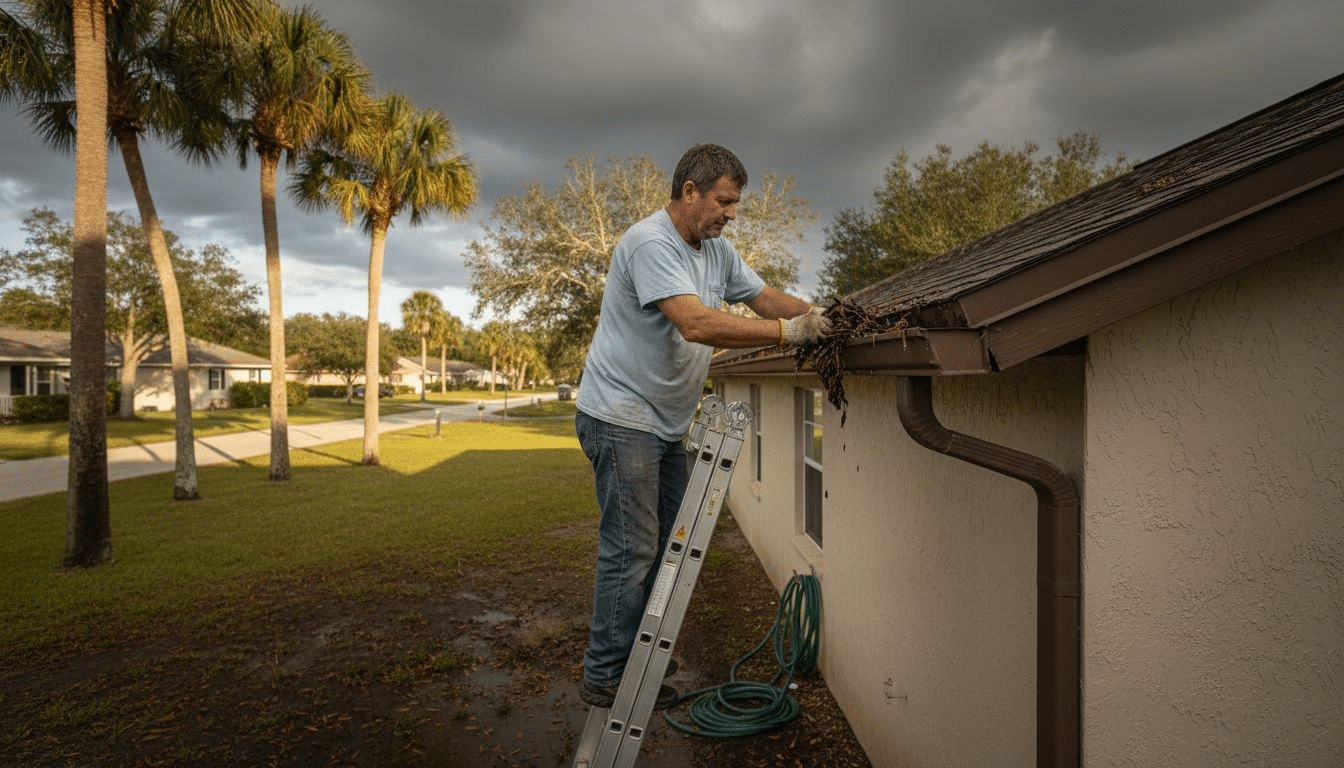
Many homeowners wait until gutters overflow to schedule cleaning, but this reactive approach puts your home at serious risk. Central Florida’s rainy season dumps over 7 inches monthly from June through September, and clogged gutters can’t handle that volume. This guide explains why pre-season gutter maintenance is essential to prevent foundation damage, indoor moisture problems, and costly structural repairs during Florida’s wettest months.
Table of Contents
- Understanding Central Florida Rainfall Patterns
- How Gutters Protect Your Home Structure
- Consequences Of Neglecting Gutter Cleaning Before Rainy Season
- Common Misconceptions About Gutter Maintenance
- Best Practices For Gutter Cleaning And Maintenance
- Gutter Cleaning’s Role In Preventing Local Flooding And Structural Damage
- Protect Your Home With Professional Gutter Services
- Frequently Asked Questions
Key takeaways
| Point | Details |
|---|---|
| Timing matters | Cleaning gutters before late May prevents overflow damage during Central Florida’s intense rainy season. |
| Foundation protection | Properly maintained gutters channel thousands of gallons away from your foundation, preventing cracks and erosion. |
| Hidden damage risks | Small debris buildup causes water backup and structural damage well before visible clogging appears. |
| Guards help but aren’t magic | Gutter guards reduce debris but still require regular inspection and cleaning to stay effective. |
| Professional edge | Twice-yearly professional maintenance catches slope issues and damage that DIY cleaning misses. |
Understanding Central Florida rainfall patterns
Central Florida experiences a rainy season from late May through mid-October, with monthly rainfall exceeding 7 inches during peak months. That’s more than double the dry season average. These aren’t gentle showers either. Afternoon thunderstorms arrive with intense downpours that can dump an inch of rain in 30 minutes.
Your roof collects massive water volumes during these storms. A 2,000 square foot roof generates over 1,200 gallons of runoff from just one inch of rain. Multiply that by the frequent storms hitting Central Florida homes, and you understand why gutters face such demanding conditions.
The rainy season characteristics that challenge gutter systems include:
- Heavy rainfall intensity creating rapid water volume surges
- High storm frequency requiring consistent gutter performance
- Extended season duration from late spring through mid-fall
- Unpredictable storm timing making reactive maintenance risky
This weather pattern explains why waiting until problems appear creates vulnerability. Your gutters need to work flawlessly from day one of rainy season, not after the first overflow damages your foundation.
How gutters protect your home structure
Gutters serve one critical purpose: channeling rainwater away from your foundation and walls to prevent water damage. Without them, thousands of gallons would cascade directly off your roof, pooling around your home’s base. That pooling causes foundation cracks, basement leaks, and exterior moisture damage.
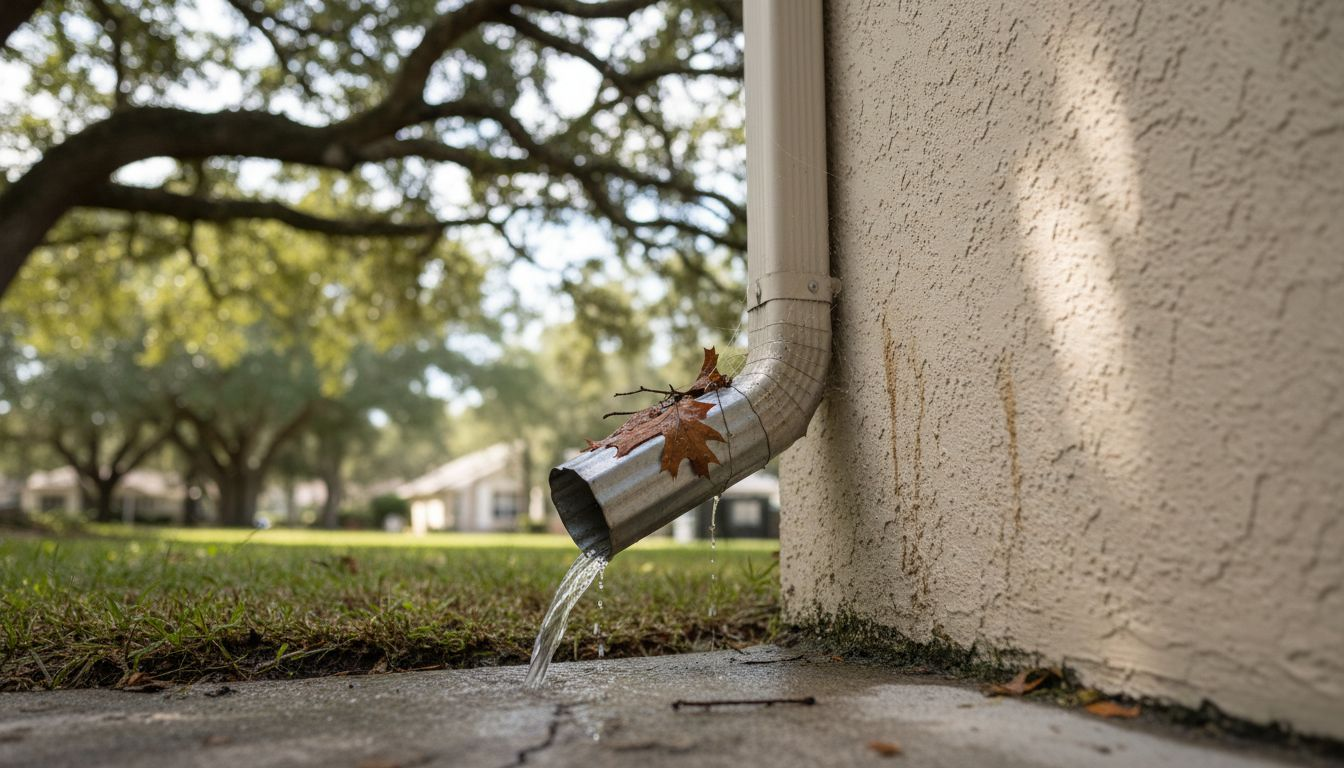
Proper gutter function requires correct installation. Gutters need a slope of 1/16 inch per foot toward downspouts to ensure water flows efficiently without pooling. Even small deviations from this slope create standing water that breeds mosquitoes and accelerates rust in metal gutters.
Downspout placement matters just as much as gutter slope. Water must discharge at least 5 feet from your foundation, not right next to it. Extensions or splash blocks direct water safely away, preventing the soil erosion and foundation settling that lead to structural cracks.
Key protective functions gutters provide:
- Preventing foundation erosion by controlling water flow
- Protecting exterior walls from moisture and rot
- Reducing basement and crawl space flooding risks
- Preserving landscaping near your home’s perimeter
Pro Tip: Walk around your home during a heavy rain to observe where water exits your downspouts. If it’s pooling near the foundation or flowing back toward the house, you need downspout extensions immediately.
Understanding proper gutter installation helps you recognize when your system isn’t performing correctly. Regular inspections catch slope problems and downspout issues before they cause damage.
Consequences of neglecting gutter cleaning before rainy season
Clogged gutters transform from protective systems into damage creators. When leaves, twigs, and debris block water flow, gutters overflow during storms. That overflow cascades down walls and pools around your foundation, exactly what gutters are designed to prevent.
Overflowing gutters cause water damage including mold growth, wood rot, and fascia deterioration. The moisture seeps behind siding, saturates wood trim, and creates perfect conditions for fungi and algae. This exterior damage costs thousands to repair and reduces your home’s curb appeal.
Foundation problems emerge quickly when gutters fail. Water pooling near your home erodes soil, creating voids under the foundation. The foundation settles unevenly, causing cracks that let water into basements and crawl spaces. These structural repairs often exceed $10,000.
Indoor moisture levels increase when overflowing gutters allow water into basements and crawl spaces, encouraging mold growth and degrading air quality. Family members with allergies or asthma suffer more symptoms. Mold remediation adds another expensive repair to your list.
Visible damage from neglected gutters includes:
- Stained siding and exterior walls from water runoff
- Rotted fascia boards and soffit damage
- Cracked or settling foundation sections
- Eroded landscaping and exposed foundation edges
- Algae and moss growth on exterior surfaces
Homeowners who neglect pre-season gutter cleaning often face repair costs 10 times higher than regular maintenance expenses. Foundation repairs, mold remediation, and structural wood replacement quickly reach five figures.
The gutter troubleshooting process becomes more complex once damage occurs. Prevention through regular cleaning costs a fraction of repair expenses.
Common misconceptions about gutter maintenance
The “wait until they’re clogged” approach ranks as the most dangerous misconception. Small debris accumulation causes water backup and damage well before visible overflow appears. By the time you see water spilling over, hidden damage may already exist behind your siding or near your foundation.
Many homeowners believe gutter guards eliminate cleaning needs entirely. Gutter guards reduce debris accumulation but require proper maintenance to remain effective. Pine needles, roof grit, and small debris still accumulate. Guards need inspection and occasional cleaning to prevent buildup that blocks water flow.
Another misconception treats gutter cleaning as cosmetic rather than structural maintenance. This mindset delays necessary service until visible problems force action. By then, water damage may have compromised your foundation or created indoor moisture issues requiring expensive remediation.
Common beliefs that delay proper maintenance:
- Gutters only need cleaning when leaves pile up visibly
- Gutter guards provide complete protection without maintenance
- Cleaning can wait until after the rainy season starts
- Small amounts of debris don’t affect gutter performance
- Professional cleaning costs more than potential damage repairs
The reality contradicts these assumptions. Regular maintenance prevents the cascade of problems that create major repair bills. Seasonal gutter cleaning aligned with Florida’s weather patterns protects your investment year-round.
Some homeowners also underestimate how quickly gutters fill with debris. Florida’s oak trees, pine trees, and frequent storms deposit constant material. What looks clean in April may be severely clogged by late May when heavy rains arrive.
Best practices for gutter cleaning and maintenance
Timing your gutter maintenance correctly prevents most water damage issues. Clean gutters at least twice yearly, especially before and after heavy weather events, to significantly reduce overflow risks. For Central Florida homes, late April or early May cleaning prepares gutters for rainy season, while November cleaning handles fall debris.
Follow this maintenance schedule for optimal protection:
- Schedule pre-rainy season cleaning in late April or early May
- Inspect gutters after major storms during June through September
- Perform post-rainy season cleaning in November
- Check downspout extensions and splash blocks quarterly
- Test gutter slope by running water through the system
Inspection during cleaning catches problems before they worsen. Look for sagging sections indicating improper slope or weak hangers. Check for rust spots, holes, or separated seams in metal gutters. Verify downspouts discharge at least 5 feet from the foundation.
Pro Tip: Use a garden hose to flush gutters after removing debris. This tests water flow and reveals any remaining clogs or slope problems. Water should flow smoothly toward downspouts without pooling anywhere along the gutter run.
Gutter guards offer benefits when properly installed and maintained. They reduce cleaning frequency but don’t eliminate it. Understanding different gutter guard types helps you choose the right protection for Florida’s conditions. Mesh guards work well for leaf protection while allowing pine needles and small debris to wash through.
Professional cleaning frequency depends on your property’s tree coverage and local conditions. Homes surrounded by oaks or pines benefit from three cleanings yearly, while homes with minimal tree coverage may only need the standard twice-yearly service.
Maintenance extends beyond cleaning. Check these items during inspections:
- Gutter hangers for secure attachment to fascia
- Proper slope maintained along entire gutter run
- Downspout connections sealed and secure
- Extension pipes directing water away from foundation
- No rust, holes, or separated seams visible
Central Florida homeowners should review gutter cleaning tips specific to local conditions. Our heavy rains and intense storms create unique maintenance needs compared to drier climates.
Gutter cleaning’s role in preventing local flooding and structural damage
Your home’s gutter maintenance affects more than just your property. Clogged gutters contribute to neighborhood flooding by preventing proper water channeling, overwhelming storm drains, and increasing water pooling near multiple homes. When entire neighborhoods neglect gutter maintenance, local flooding worsens during heavy storms.
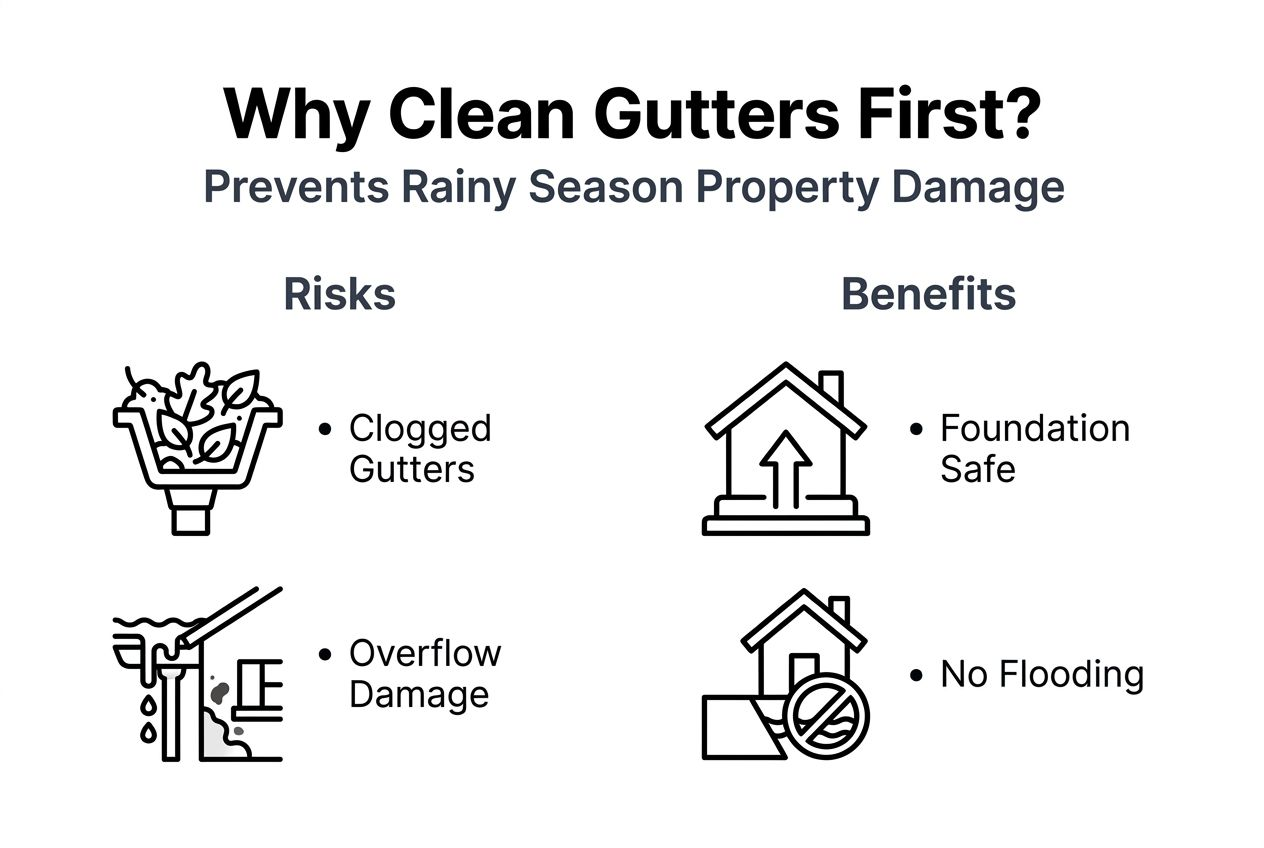
Properly maintained gutters reduce soil erosion around your home’s perimeter. This protects your foundation and preserves landscaping while preventing sediment from washing into storm drains. That sediment carries fertilizers and chemicals into local waterways, harming ecosystems.
The financial impact of neglected gutters compounds over time. Foundation repairs from water damage average $4,000 to $12,000. Mold remediation costs $1,500 to $3,500 for small areas and much more for extensive contamination. Wood rot repairs on fascia and soffits run $600 to $6,000 depending on damage extent.
| Gutter State | Flooding Risk | Foundation Risk | Maintenance Cost |
|---|---|---|---|
| Well-maintained | Low | Minimal | $200-400/year |
| Partially clogged | Moderate | Developing | $500-1,000 repairs |
| Severely neglected | High | Severe | $5,000-15,000+ repairs |
| No gutters | Very high | Critical | $10,000-30,000+ damage |
Community benefits extend beyond individual homes. Proper gutter maintenance reduces strain on municipal storm water systems during heavy rains. This helps prevent the street flooding that makes roads impassable and damages vehicles.
Environmental protection comes from keeping polluted runoff out of local water bodies. Gutters that channel water to appropriate drainage points prevent fertilizer-laden water from flowing directly into lakes and streams. This protects Central Florida’s sensitive aquatic ecosystems.
Addressing gutter performance issues promptly protects both your investment and your community. The small effort of regular maintenance prevents the cascade of problems affecting entire neighborhoods during Florida’s intense rainy season.
Protect your home with professional gutter services
Preparing for Central Florida’s rainy season requires more than good intentions. Professional gutter services ensure your home’s protection system works flawlessly when storms arrive.

Professional cleaning removes all debris that DIY efforts miss, including the packed material deep in downspouts. Technicians also identify slope problems, damaged hangers, and developing leaks during service. Seamless gutters provide superior protection with fewer leak points than sectional systems, handling Florida’s heavy rainfall more effectively.
Gutter guard installation reduces maintenance needs while maintaining optimal water flow. Professional installation ensures guards fit properly without creating new problems. Combined with regular maintenance schedules, guards extend your gutter system’s lifespan and reduce annual upkeep costs. Taking action before rainy season provides peace of mind knowing your home is protected.
Frequently asked questions
How often should I clean my gutters in Central Florida?
Clean your gutters at least twice yearly, with critical timing before rainy season starts in late May and after it ends in October. Homes surrounded by oak or pine trees benefit from three annual cleanings. Following a consistent cleaning schedule prevents the debris buildup that causes overflow during storms.
Can gutter guards eliminate the need for cleaning?
Gutter guards significantly reduce debris accumulation but don’t eliminate cleaning entirely. They still require annual inspection and occasional maintenance to remove fine debris that bypasses guard openings. Proper installation and material selection for Florida conditions maximize their effectiveness and reduce cleaning frequency.
What risks does ignoring gutter cleaning pose to my home’s foundation?
Clogged gutters cause water pooling that erodes soil around your foundation, creating voids that lead to settling and cracks. These cracks allow water into basements and crawl spaces, causing moisture damage and mold growth. Foundation repairs from neglected gutters often cost $4,000 to $12,000, making prevention through regular maintenance essential. Review common foundation issues caused by gutter failures.
When is the best time to schedule gutter cleaning in relation to the rainy season?
Schedule gutter cleaning in late April or early May, just before Central Florida’s rainy season begins. This timing ensures gutters work properly when heavy rains start in late May. Plan a second cleaning in November after rainy season ends to remove accumulated debris. Following this seasonal approach provides year-round protection against water damage.
