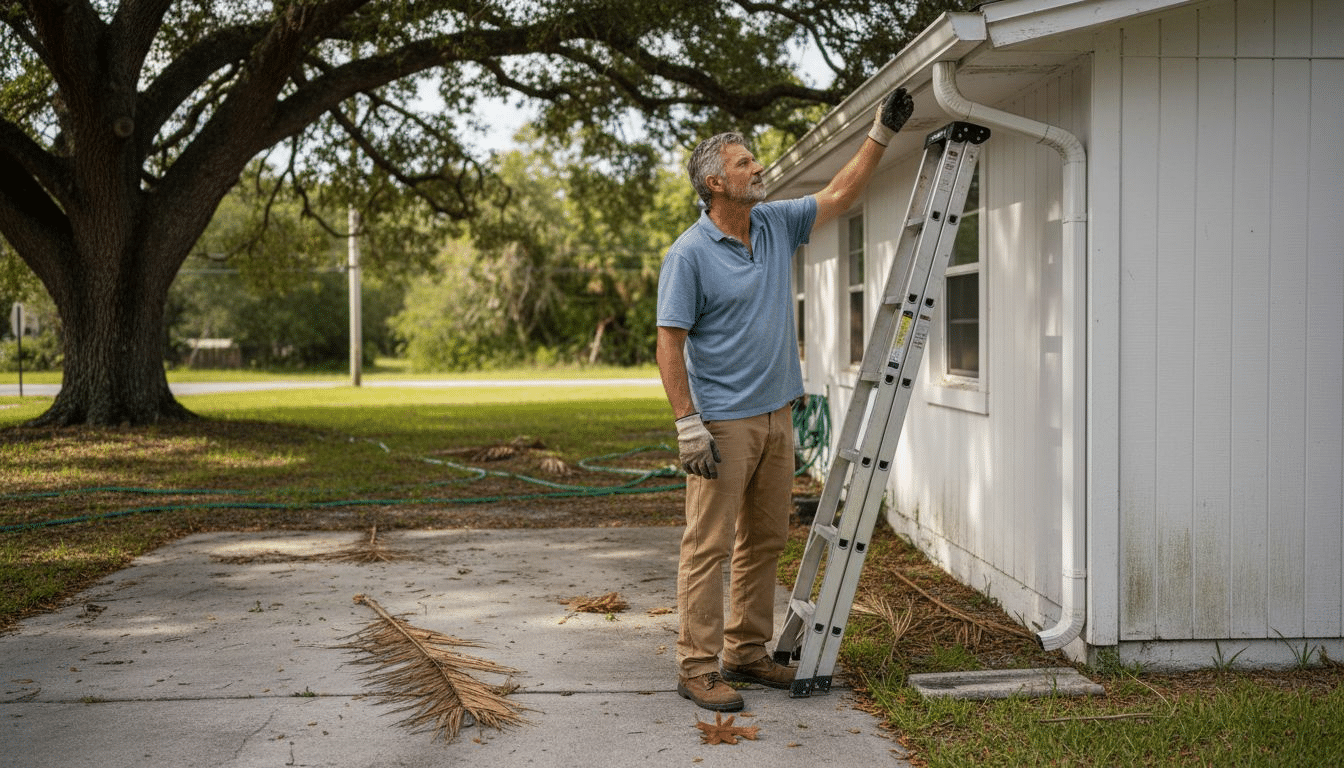
Rainy Florida afternoons often leave homeowners in Lake, Marion, and Sumter counties scrambling to address stubborn gutter blockages. Overlooked debris can lead to foundation trouble, unexpected leaks, and costly repairs. By focusing on a thorough cleaning routine and trusting safety guidelines like those from the Occupational Safety and Health Administration, you can enjoy better protection from water damage and maintain a safer, more resilient home.
Table of Contents
- Step 1: Prepare Safety Gear And Workspace
- Step 2: Remove Leaves And Debris From Gutters
- Step 3: Flush Gutters And Downspouts With Water
- Step 4: Inspect Gutter System For Damage
- Step 5: Restore Clean Area And Verify Proper Flow
Quick Summary
| Key Point | Explanation |
|---|---|
| 1. Prepare Safety Gear | Always wear safety glasses, gloves, and non-slip shoes to protect yourself from debris and falls while cleaning gutters. |
| 2. Clear Leaves First | Start by removing leaves and debris from downspouts to ensure proper water drainage and prevent blockages. |
| 3. Flush with Water | Use a garden hose to flush gutters and downspouts, checking for smooth drainage and hidden blockages after manual cleaning. |
| 4. Inspect for Damage | After cleaning, look for rust, leaks, or misalignments in the gutter system to catch problems early and avoid costly repairs. |
| 5. Clean Up Thoroughly | Collect debris and tools, and verify that water flows properly to ensure effective gutter performance and prevent damage. |
Step 1: Prepare safety gear and workspace
Preparing your workspace and gathering the right safety equipment are critical first steps in protecting yourself during gutter cleaning. This section will help you set up a secure environment and outfit yourself with appropriate protective gear.
Start by surveying your workspace and identifying potential hazards. Look for uneven ground, overhead power lines, tree branches, or obstacles near your work area. Workplace safety guidelines recommend clearing a wide perimeter around your ladder placement to prevent accidental trips or falls.
Your safety gear checklist should include essential protective equipment:
- Safety glasses to protect your eyes from debris
- Heavy-duty work gloves for hand protection
- Non-slip shoes with good traction
- Long pants to shield legs from scratches
- Hard hat for overhead protection
Before climbing any ladder, perform a thorough equipment inspection. Check that your ladder is in good condition, free from rust or structural damage, and rated for the appropriate weight capacity. Position the ladder on firm, level ground – never on wet grass or unstable surfaces.
Here’s a quick comparison of common gutter cleaning hazards and how to mitigate each risk:
| Hazard | Impact on Safety | Mitigation Strategy |
|---|---|---|
| Uneven ground | Increases risk of falls | Level and clear workspace |
| Overhead power lines | Electrical shock danger | Stay clear, keep ladders away |
| Wet ladder surfaces | Slip and injury risk | Always dry ladder, check for stability |
| Sharp debris | Causes cuts, infections | Wear gloves, use proper tools |
Safety begins with preparation: a few extra minutes checking your gear can prevent serious injuries.
Pro Tip: Always have a spotter or partner nearby who can assist you and call for help if an emergency occurs.
Step 2: Remove leaves and debris from gutters
Removing leaves and debris from gutters is crucial for preventing water damage and maintaining your Florida home’s structural integrity. This step requires careful technique and systematic approach to ensure thorough cleaning and protection.
Begin by focusing on the downspouts, as residential gutter inspectors recommend clearing these first to guarantee proper water drainage. Use a garden trowel or specialized gutter scoop to systematically remove accumulated debris, working from one end of the gutter to the other.
Your debris removal strategy should include:
- Wearing protective gloves to prevent cuts and handle wet materials
- Using a plastic scoop for efficient debris removal
- Placing debris in a bucket or tarp for easy cleanup
- Working methodically from one gutter section to another
- Checking for potential blockages near downspout connections
Pay special attention to areas with significant leaf accumulation. In Central Florida, pine needles and oak leaves can quickly clog gutters, creating potential water flow issues. Be thorough but gentle to avoid damaging the gutter system.
Consistent debris removal prevents water damage and reduces the risk of expensive home repairs.
Pro Tip: Consider using a garden hose to flush remaining small debris and check water flow after manual cleaning.
Step 3: Flush gutters and downspouts with water
After manually removing debris, flushing your gutters and downspouts with water is the critical final step in ensuring a fully functional drainage system. This process helps verify that water flows smoothly and identifies any potential hidden blockages or structural issues.
Maintaining gutters involves water flushing to verify clear flow and prevent potential water damage to your home. Use a garden hose with a spray nozzle attachment, starting at the end opposite the downspout and working your way toward it to simulate natural water flow.
Your water flushing technique should include:
- Starting with low water pressure to prevent potential gutter damage
- Watching for smooth water drainage through downspouts
- Checking for leaks or misalignments during the process
- Observing water exit points near your home’s foundation
- Listening for any unusual gurgling sounds that might indicate blockages
Pay close attention to how water moves through the system. In Central Florida’s humid climate, pine needles and organic debris can create surprising blockages that aren’t immediately visible during manual cleaning.
Proper water flushing reveals hidden gutter problems before they become expensive repairs.
Pro Tip: Perform this water test on a clear day when you can easily spot any drainage irregularities and potential issues.
Step 4: Inspect gutter system for damage
After cleaning your gutters, a thorough inspection is crucial to identify potential structural issues that could compromise your home’s water management system. This comprehensive examination helps you catch and address minor problems before they escalate into costly repairs.
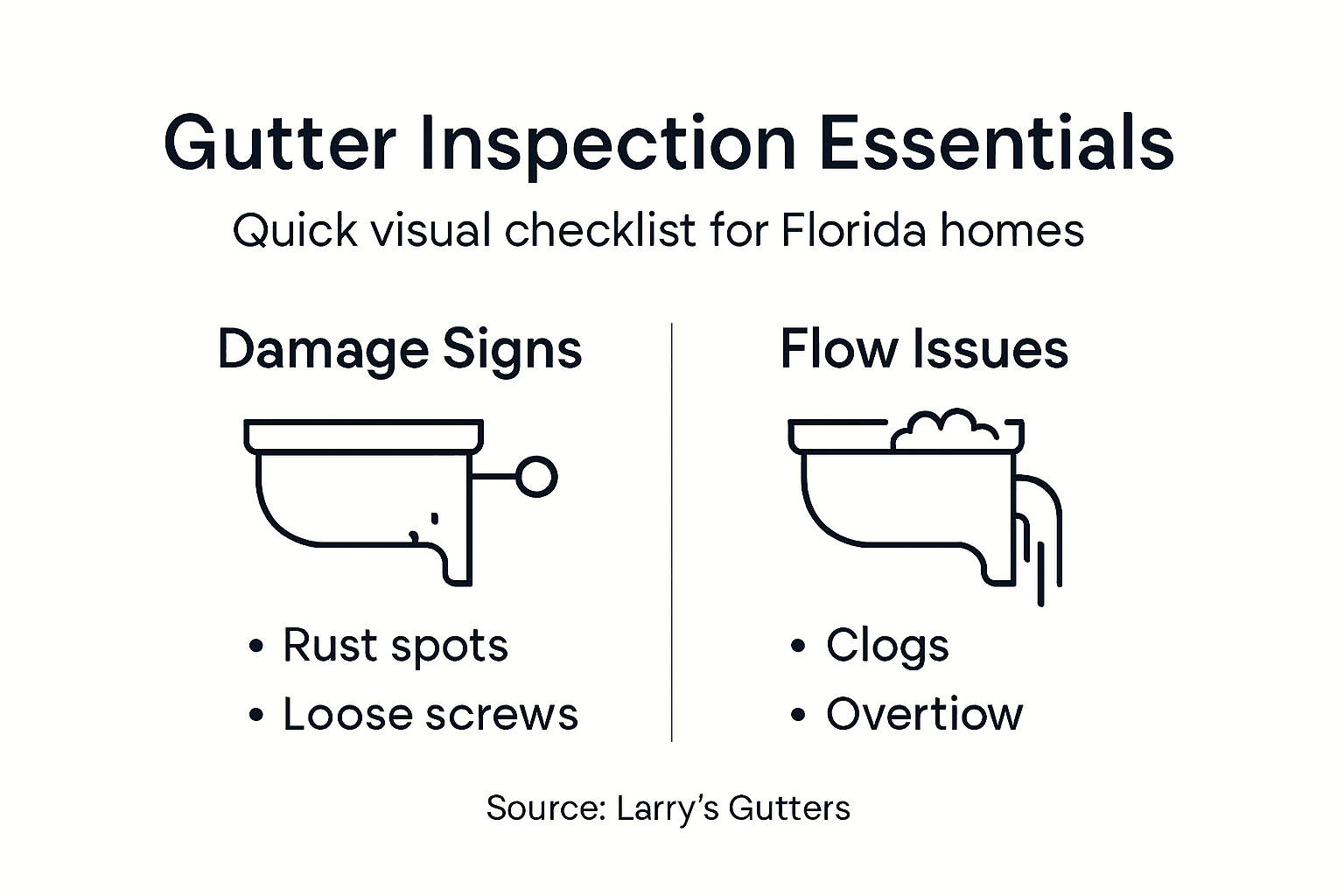
Gutter inspection requires checking for structural integrity and potential damage points that can affect your drainage system’s performance. Focus on key areas that are most vulnerable to wear and tear in Central Florida’s challenging climate.
Your systematic inspection should cover:
- Checking for rust or corrosion along gutter surfaces
- Examining fastener and bracket connections for secure attachment
- Looking for cracks or holes in gutter sections
- Verifying proper gutter slope for optimal water flow
- Inspecting downspout connections for tight seals
Pay special attention to areas where water might pool or where gutters show signs of stress. In Florida’s humid environment, metal components are particularly susceptible to corrosion and structural weakening.
Small issues today can prevent significant water damage tomorrow.
Pro Tip: Use daylight and a bright flashlight to help you spot subtle signs of damage that might be missed during a casual glance.
Step 5: Restore clean area and verify proper flow
The final stage of your gutter cleaning process involves cleaning up your workspace and confirming that your drainage system functions correctly. This step ensures your hard work translates into effective water management for your home.
Cleaning procedures require proper waste disposal and systematic verification of your gutter system’s performance. Collect all debris, tools, and equipment, then conduct a final water flow test to validate your cleaning efforts.
Your area restoration and verification checklist should include:
- Collecting all fallen debris in heavy-duty trash bags
- Cleaning and storing your tools in their designated areas
- Sweeping surrounding ground areas to remove leftover dirt or leaves
- Checking ladder placement and returning it to storage
- Washing any dirty work surfaces around your cleaning zone
Pay attention to subtle signs of proper water flow during your final test. In Central Florida’s variable climate, even minor drainage issues can lead to significant water damage if left unchecked.
Below is a summary of minimal gutter flow issues and possible long-term damage for Central Florida homes:
| Issue Identified | Immediate Concern | Potential Damage if Ignored |
|---|---|---|
| Pine needle clog | Water backs up quickly | Foundation cracks, mold growth |
| Blocked downspout | Poor drainage | Fascia board rot, wall stains |
| Metal gutter corrosion | Small leaks | Structural failure, costly repair |
| Pooling water | Gutter sagging | Pest attraction, gutter collapse |
A thorough cleanup and verification process protects your home as much as the gutter cleaning itself.
Pro Tip: Take a few smartphone photos of your cleaned gutters and drainage points for future reference and comparative maintenance.
Protect Your Florida Home with Professional Gutter Solutions from Larry’s Gutters
Cleaning gutters to keep your Florida home safe from water damage can be a tough and risky task. From handling sharp debris and slippery ladders to ensuring proper water flow and inspecting for damage, the process demands careful attention and experience. If you want to avoid these hazards and guarantee long-lasting protection, it is vital to partner with experts who understand the specific challenges Central Florida homes face.

Larry’s Gutters specializes in seamless gutter installation, gutter guard installation, and professional gutter cleaning and repair designed to withstand Florida’s heavy rains and unpredictable weather. Don’t let clogged or damaged gutters jeopardize your home’s foundation or cause costly repairs. Visit Larry’s Gutters to request a free quote today and secure reliable, custom-fit solutions crafted for your property’s needs. Take action now and experience peace of mind knowing your gutters are prepared to protect your home for years to come.
Frequently Asked Questions
How can I ensure a safe workspace while cleaning gutters?
To ensure a safe workspace while cleaning gutters, first survey the area for potential hazards like uneven ground and overhead power lines. Clear a wide perimeter around your ladder placement to prevent trips or falls.
What safety gear do I need for gutter cleaning?
Essential safety gear for gutter cleaning includes safety glasses, heavy-duty work gloves, non-slip shoes, long pants, and a hard hat. Always wear protective gear to shield yourself from debris and potential injuries.
How should I remove leaves and debris from my gutters?
Begin debris removal by focusing on the downspouts and using a plastic scoop or garden trowel. Work methodically from one end of the gutter to the other, placing debris in a bucket for easy cleanup.
Why is it important to flush gutters and downspouts with water?
Flushing gutters and downspouts with water is crucial to verify proper drainage and identify hidden blockages. Use a garden hose to observe the water flow and ensure there are no issues in the system.
What should I look for during a gutter system inspection?
During a gutter system inspection, check for rust or corrosion, secure fastener connections, cracks in gutter sections, proper slope, and tight downspout connections. Addressing any issues promptly can prevent costly repairs in the future.
How should I clean up after gutter cleaning and verify drainage?
After cleaning gutters, collect all debris, clean your tools, and sweep the surrounding area. Conduct a final water flow test to ensure proper drainage, checking for any remaining issues that need attention.
Recommended
- 7 Gutter Cleaning Tips Every Central Florida Homeowner Needs
- What Is Gutter Cleaning? Protecting Florida Homes
- Why Florida Homes Need Gutters for Protection
- Gutter Cleaning Frequency – Protecting Florida Homes
- States At Highest Risk Of Property Damage Loss – Public Adjusters USA
- Gutter Services Gainesville FL
- Gutter Services The Villages FL
