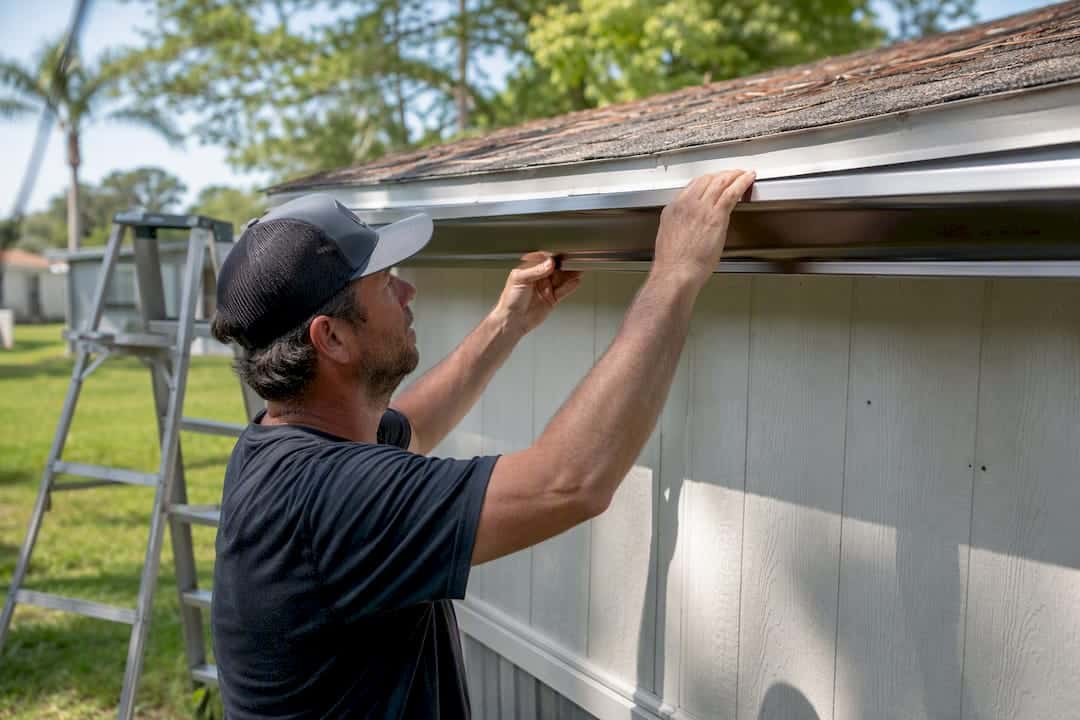
Yes, most mobile homes need gutters, and lightweight seamless or sectional aluminum is the practical choice for nearly every setup. The right system uses a 1/4 inch drop per 10 feet of run, hangers every 24 to 36 inches, and downspout extensions that push water at least 3 feet from the skirting. Start by measuring your roofline, or get a professional estimate before you buy anything.
TL;DR:
- Aluminum gutters are the most practical choice for mobile homes, with 5-inch K-style and 6-inch options recommended for heavy storms.
- Proper slope (about 1/4 inch per 10 feet), hangers every 24 to 36 inches, and downspout extensions at least 3 feet from the skirting are essential for effective drainage.
- Installing gutters yourself is feasible on short, straight rooflines, but complex or steep roofs warrant professional help to ensure proper installation and safety.
- Maintenance involves twice-yearly cleaning, with additional checks after storms to identify sagging hangers, overflowing water, or damaged sections needing repairs.
- Most mobile homes require a downspout every 35 to 40 feet due to fast metal roof runoff, and proper gutter slope and hanger spacing are more important than brand or finish.
Table of Contents
- Which Mobile Home Gutters Actually Work Best?
- What Slope and Spacing Does Gutter Installation Require?
- Should You Install Gutters Yourself or Hire a Pro?
- How Often Should You Clean and Inspect Mobile Home Gutters?
- What If Traditional Gutters Don’t Fit Your Setup?
- Why Trust Larrysgutters’ Gutter Guidance?
- Do You Need a Permit to Install Gutters on a Mobile Home?
- How Do You Measure a Mobile Home for Gutters?
- How Should You Prep Mobile Home Gutters for Each Season?
- What Most Guides Get Wrong About Mobile Home Gutters
- How Larrysgutters Handles Your Gutter Installation or Repair
- Where to Verify These Installation Specs
- Sources
Which Mobile Home Gutters Actually Work Best?
Five-inch K-style or seamless aluminum gutters handle the job for the vast majority of manufactured homes. If you’re in a region with heavy seasonal downpours, sizing up to 6-inch gutters gives you more capacity before water starts sheeting over the edge during a real storm.
Material matters more on a mobile home than on a stick-built house, mostly because of weight limits on the fascia and roof edge. Here’s how the main options stack up:
- Aluminum: Light enough for mobile-home fascia, resists rust, and comes in colors that match trim without a repaint. This is what most installers, including Larrysgutters, reach for first.
- Vinyl: Cheapest upfront, but it gets brittle in direct sun and cracks in cold snaps. Fine for a shed roof, risky for a primary drainage system.
- Steel: Stronger against impact and ladder bumps, but heavier and prone to rust unless it’s got a factory coating. Not ideal on lighter mobile-home framing.
- Copper: Looks great, lasts decades, and costs far more than most manufactured-home budgets justify.
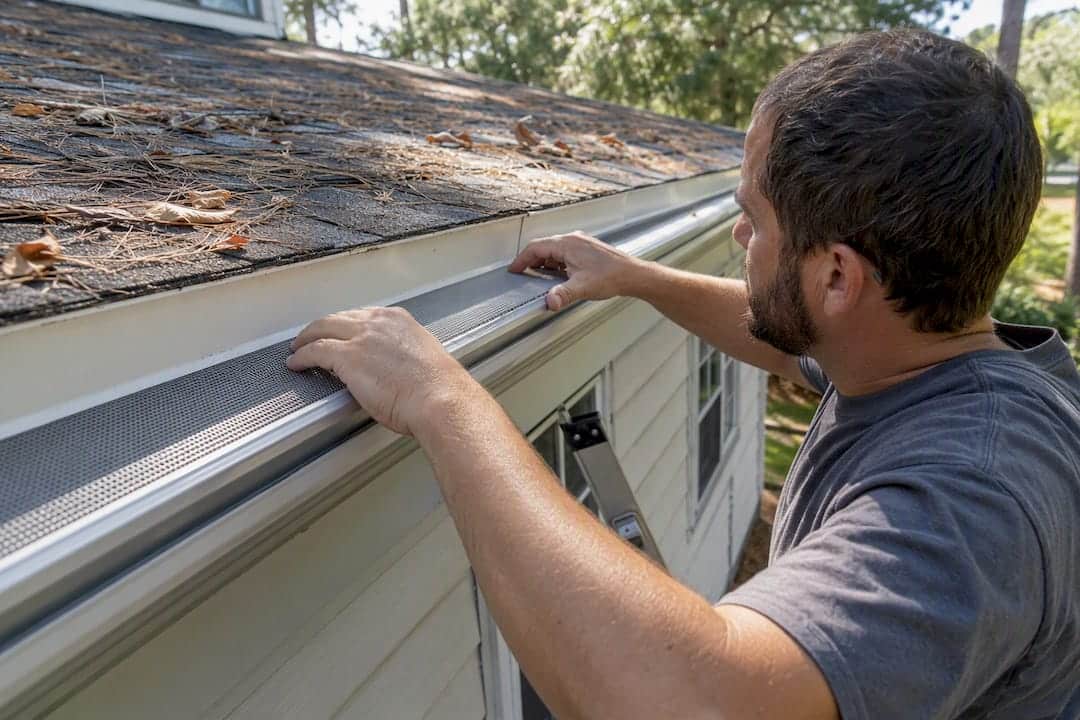
For singlewide and smaller units, retailers also sell pre-cut mini gutters sized to common roofline lengths, which cuts down on custom fabrication costs. Gutter guards, especially micro-mesh styles, are worth the add-on if your lot has overhanging oaks or pines. They won’t eliminate cleaning, but they stretch the interval between them considerably.
Pro Tip: If your mobile home sits under trees that drop needles or small debris year round, spend the extra on micro-mesh guards now. It’s cheaper than repeat cleanings and cheaper than a clogged downspout backing water into your skirting.
What Slope and Spacing Does Gutter Installation Require?
Getting the specs right is what separates a gutter system that protects your home from one that just moves the water problem six inches closer to your foundation. Here’s the sequence that works.
- Measure the full roofline and mark where each downspout will land. On metal roofs, plan for a downspout roughly every 35 to 40 feet, since metal sheds water fast enough to overwhelm a long run during a heavy storm.
- Snap a chalk line for pitch. You’re aiming for about 1/4 inch of drop for every 10 feet of gutter, sloping toward each downspout. Eyeballing this step is the single most common reason gutters pool water instead of draining it.
- Set hangers every 24 to 36 inches, and tighten that spacing near seams, corners, and anywhere the gutter changes direction. Skimping here is why gutters sag within a year or two.
- Attach downspouts at the low end of each run, usually at an end cap or an inside corner where the fascia gives you a clean mounting surface.
- Add extensions or splash blocks so discharged water travels at least 3 feet from the home before it hits the ground. On a sloped lot, push that distance further so runoff doesn’t track back toward the skirting.
- Seal every seam with a flexible, weather-rated sealant, then run a garden hose through the full length before you call the job done. A hose test in the first hour catches leaks that would otherwise show up as a stain on your skirting six months later.
The downspout-every-35-to-40-feet rule matters more on a mobile home than it does on a conventional house, because metal roofing is common on manufactured homes and it dumps water into the gutter far faster than shingles do. A single downspout trying to handle 60 feet of metal roof runoff during a downpour will overflow at the seams before it ever reaches the ground.
A downspout extension is one of the cheapest upgrades in this entire project, and it’s the piece most DIYers skip. Skirting damage almost always traces back to water that dumped six inches from the foundation instead of six feet.
Should You Install Gutters Yourself or Hire a Pro?
The honest answer depends on the condition of your fascia and the length of your roofline, not just your comfort with a ladder. A short, straight run on a singlewide with solid fascia is a reasonable weekend DIY project. A doublewide with damaged trim, steep pitch, or a need for a custom color match is a different situation entirely.
Cost is the first variable. Professional installation typically runs between $629 and $1,735 for a full project, with per-linear-foot pricing landing anywhere from $4 to $40 depending on material and region. Sectional aluminum kits sit at the low end of that range; custom seamless runs with color-matched aluminum push toward the higher end, but they eliminate the seams that cause most leaks.
Hire a professional when any of these apply:
- Fascia boards are soft, rotted, or pulling away from the frame.
- Your roofline runs longer than a single ladder setup can safely cover.
- You want seamless gutters, which require a portable roll-forming machine most homeowners don’t own.
- The roof is steep, wet, or otherwise unsafe to walk without fall protection.
- Your community or county requires a permit or inspection for exterior modifications.
DIY makes sense for short runs, sectional kits under about 30 feet, and homeowners who have a second person to help hold ladders and gutter sections steady. Budget a full afternoon for a singlewide; a doublewide with multiple downspouts can eat an entire weekend. A professional crew, by contrast, usually finishes the same job in three to five hours because they’re not stopping to figure out hanger spacing as they go.
Pro Tip: When you request a quote, ask the installer whether they’re pricing sectional or seamless gutters, and get the linear footage in writing. Vague quotes are where “gutter installation” turns into a much bigger invoice once they’re already on your roof.
How Often Should You Clean and Inspect Mobile Home Gutters?
Twice a year is the standard maintenance rhythm, once in spring after pollen and seed pods drop, and once in fall after leaves come down. If your lot has mature trees overhead, add a mid-season check in early summer. Mobile homes tend to need more frequent attention than two-story houses simply because the roofline sits lower and closer to whatever debris is falling nearby.
After any major storm, walk the perimeter and look for these warning signs:
- Sagging sections between hangers, which usually means a fastener has pulled loose.
- Water overflowing at a specific point rather than draining through the downspout.
- Dark streaks or discoloration on the skirting below a gutter seam.
- Eroded or washed-out soil where a downspout discharges.
Most of what you find is fixable without replacing anything. Tighten or swap out loose hangers, clear blocked downspouts with a plumber’s snake or a garden hose on full pressure, and reseal any seam that’s showing a hairline gap. If a section has bent, cracked, or pulled away from the fascia entirely, that’s usually a sign it’s time to replace that run rather than patch it.
Preventive steps that pay off later include micro-mesh guards near tree cover, extra hangers at seams and corners where stress concentrates, and downspout extensions that keep water routed well clear of the skirting. Larrysgutters walks Central Florida homeowners through a full gutter cleaning checklist that covers exactly what to look for on each pass.
Pro Tip: Keep a phone photo log of your gutters after each cleaning. Comparing photos season to season makes it obvious when a hanger is starting to sag before it becomes a full repair.
What If Traditional Gutters Don’t Fit Your Setup?
Not every mobile home is a good candidate for a standard gutter system, and a few solid alternatives exist for owners who want something different.
- Rain chains replace a downspout with a decorative chain that guides water down in a visible, controlled stream. They’re lighter and easier to mount than traditional downspouts, and they handle water more gently, though they work best for moderate flow rather than a torrential downpour off a large roof section.
- Ground gutters route water through a shallow surface channel instead of hanging hardware off the fascia, a good fit for homes where mobility or transport plans make permanent gutters impractical.
- French drains move water below grade entirely, useful on lots where surface routing alone won’t keep water away from the foundation.
Accessories worth pairing with any of these: micro-mesh guards to cut debris, telescoping cleaning tools for low-height roofs, and downspout extensions or splash blocks to finish the job of moving water where it belongs.
Why Trust Larrysgutters’ Gutter Guidance?
Larrysgutters has spent years installing seamless gutters, gutter guards, and repair work specifically for Central Florida homes, where heavy seasonal rain and fast-moving storms put real stress on any drainage system. That experience covers manufactured and mobile homes alongside traditional construction, which means the installation specs in this guide reflect what actually holds up through a Florida summer, not just a manufacturer’s spec sheet.
Complex rooflines, long runs that need seamless fabrication, or a fascia that needs repair before gutters go up are the cases where calling a professional crew like Larrysgutters saves you from redoing the job in a year.
Do You Need a Permit to Install Gutters on a Mobile Home?
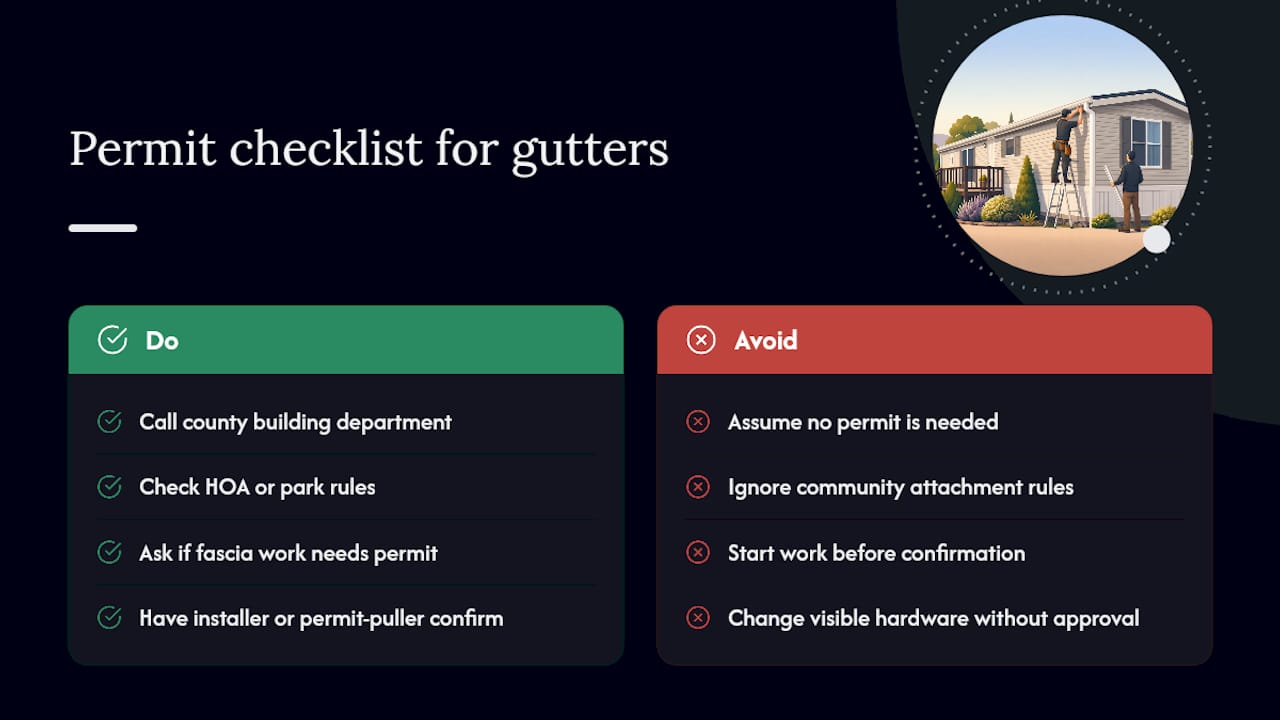
Most counties don’t require a permit for a straightforward gutter replacement or addition on a mobile home, since gutters generally count as a minor exterior modification rather than a structural change. That said, rules vary enough by jurisdiction that it’s worth a quick call to your local building department before you start, especially if your home sits in a manufactured-home community with its own architectural guidelines.
Communities with a homeowners’ association or park management often have separate rules about color, style, or attachment methods, independent of any county permit requirement. Some parks restrict visible hardware changes to preserve a uniform look across the property. Check both layers, the county and the community, rather than assuming one covers the other.
If your project involves fascia repair or replacement alongside the gutters, that’s more likely to trigger a permit requirement than the gutters themselves, since it touches the structure of the home. When in doubt, ask whoever pulls the permit on your behalf, whether that’s you or your installer, to confirm before work starts. A five-minute phone call beats a stop-work order halfway through the job.
How Do You Measure a Mobile Home for Gutters?
Start at one corner of the roofline and run a tape measure along the full eave length on each side of the home, recording every straight section separately. Mobile homes often have simpler rooflines than site-built houses, but corners, porch overhangs, and carport attachments all need their own measurements.
Note the roof pitch and material while you’re up there. Metal roofing sheds water faster than shingle, which affects how many downspouts you’ll need and how tight your hanger spacing should be. Measure the height from the ground to the eave as well, since that determines what ladder setup and safety gear the job requires.
Write down where existing downspouts sit, or where you’d want new ones, before you calculate total linear footage. Add roughly 5 to 10 percent to your raw measurement to account for end caps, corner pieces, and any cutting waste during installation. If you’re requesting quotes from multiple installers, give them the same measurements so the estimates are actually comparable instead of quoting different footage.
How Should You Prep Mobile Home Gutters for Each Season?
Fall preparation matters most for mobile homes because falling leaves and pine needles clog systems faster on a lower roofline than on a two-story house. Clear every downspout and check that hangers are still tight before the first cold front moves through.
In regions that see freezing temperatures, disconnect any hose attachments and make sure downspout extensions aren’t holding standing water that could freeze and crack the plastic or aluminum. A cracked extension in January often goes unnoticed until spring runoff has already eroded the soil beneath it.
Spring brings pollen and seed pods, which pack into corners and downspout openings differently than fall leaves do. A quick clearing pass in early spring, on top of your regular twice-yearly cleaning, catches this before the first heavy spring storm tests the system. Summer, especially in storm-prone regions, is the season to double-check every hanger and seam before hurricane season peaks. Preparing your gutters ahead of storm season is a lot less stressful than dealing with a failure mid-storm.
What Most Guides Get Wrong About Mobile Home Gutters
Most advice treats mobile home gutters like a scaled-down version of a house system, and that’s where it goes wrong. The weight tolerance on mobile-home fascia is the real constraint, not aesthetics, and it should drive the material choice before color or price does. Steel and copper look fine in a catalog, but they’re overkill for framing that wasn’t built to carry that load long term.
The other blind spot is downspout count. Homeowners default to one downspout per side because that’s what a typical house gets, but metal roofing, which covers a huge share of manufactured homes, moves water fast enough to need one every 35 to 40 feet. Skip that math and you’ll get overflow at the seams during the first real storm, not a slow leak you can catch early.
Prioritize the slope and hanger spacing over the brand or finish. A correctly pitched sectional aluminum system will outperform a poorly installed premium one every time.
— Results
How Larrysgutters Handles Your Gutter Installation or Repair
If your mobile home needs a seamless system built to your exact roofline instead of a generic sectional kit, that’s the gap Larrysgutters closes for Central Florida homeowners. A general contractor can hang standard gutters; a seamless installation cut on-site to your measurements means no leak-prone joints along the run, which matters more on a mobile home where every seam is a potential entry point for water against the skirting.

A free estimate from Larrysgutters includes a full roofline measurement, a walk of your fascia condition, and a recommendation on material and downspout count based on your roof type and local rainfall patterns. Most installations for a typical mobile home wrap up in a single visit. If you’re ready to stop guessing at hanger spacing and get a system sized correctly the first time, start with the seamless gutter installation process and request your estimate today.
Where to Verify These Installation Specs
- How to Install and Maintain Mobile Home Gutters covers slope, hanger spacing, and downspout placement.
- Mobile Home Gutters – Installation, Cleaning, Repair details metal-roof downspout spacing and cleaning frequency.
- How much does gutter replacement cost? breaks down material and labor cost ranges.
- Rain chain factsheet from Clemson University’s Home & Garden Information Center explains rain chain use cases.
Sources
- How to Install and Maintain Mobile Home Gutters – Mobile Home Parts Store
- Rain chain (Clemson University HGIC factsheet)
- How much does gutter replacement cost? (Angi)
- Mobile Home Gutters – Installation, Cleaning, Repair – Costs & Best Materials (GutterGuys)
