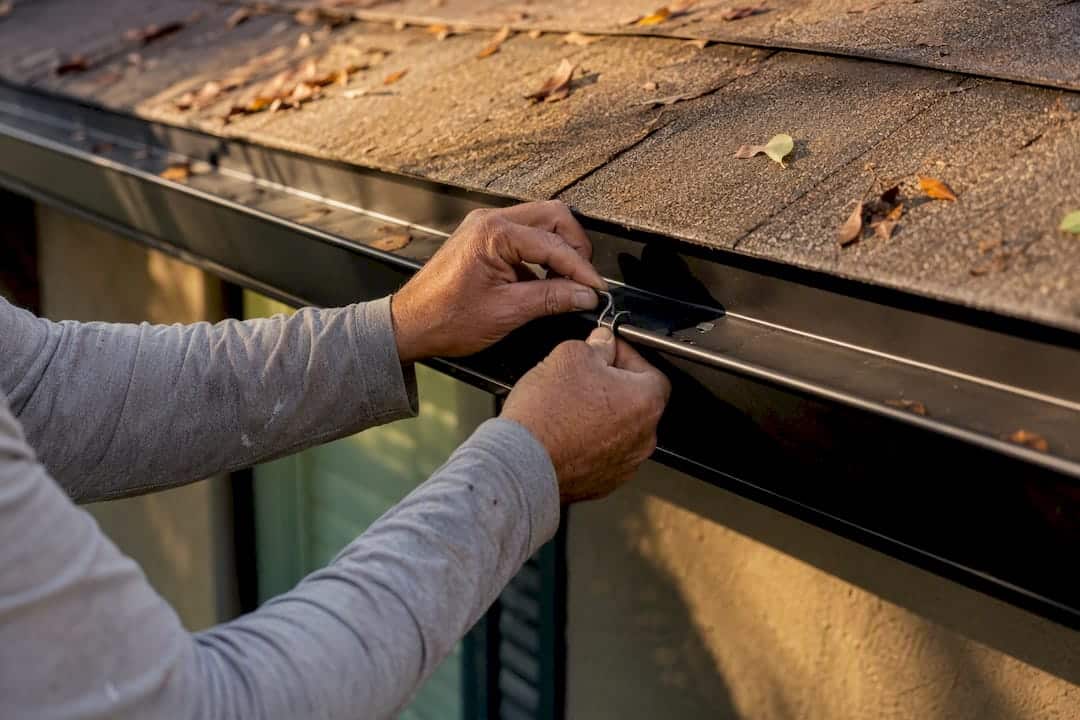
If your roofline has no fascia board, you’ve got two solid mounting paths: roof-mounted strap hangers (also called T-bar hangers) that suspend the gutter from the roof deck, or rafter-mounted hidden hangers screwed straight into exposed rafter tails. Add fascia only when rafters are damaged, uneven, or you’re planning other exterior work anyway.
- Roof straps/T-bar hangers: best when rafter tails aren’t accessible or you don’t want to disturb shingles.
- Rafter-mounted hidden hangers: best when rafter tails are exposed and solid, giving a stronger, cleaner load path.
- Fascia retrofit: best when rafters are rotted, uneven, or you want long-term structural backing and easier future servicing.
Whichever method you pick, seal every roof penetration. A gutter hanger that leaks water into the roof deck causes more damage than the gutter was ever meant to prevent.
TL;DR:
- Rafter condition largely determines the best mounting method; use strap hangers for inaccessible rafters and hidden hangers for solid, exposed rafters.
- Heavier gauge aluminum, at least 0.032 inch, is necessary with hidden hangers to prevent sagging and maintain structural integrity.
- Every roof penetration must be sealed with flashing and caulk to prevent leaks that can cause roof deck damage over time.
- Retrofit fascia only if rafters are rotted, uneven, or when planning other exterior work like reroofing, to ensure long-term stability.
- A professional installation is recommended for complex roof features or damaged rafters, and free site estimates are advisable for fascia-free gutter setups.
Table of Contents
- Comparing Mounting Methods for Gutters Without Fascia
- What You Need to Buy for a Fascia-Free Gutter Install
- How Do You Install Gutters Without a Fascia Board?
- Fascia-Free Gutters vs. Adding Fascia: Which Makes Sense?
- Testing and Maintaining a Fascia-Free Gutter System
- When Fascia-Free Gutter Work Calls for a Professional
- The Honest Trade-Off Nobody Talks About
- Get a Fascia-Free Gutter Install Done Right the First Time
- Key Takeaways
- Sources
Comparing Mounting Methods for Gutters Without Fascia
Every fascia-free installation comes down to one question: where does the gutter’s weight actually transfer? That answer shapes durability more than the gutter material itself.
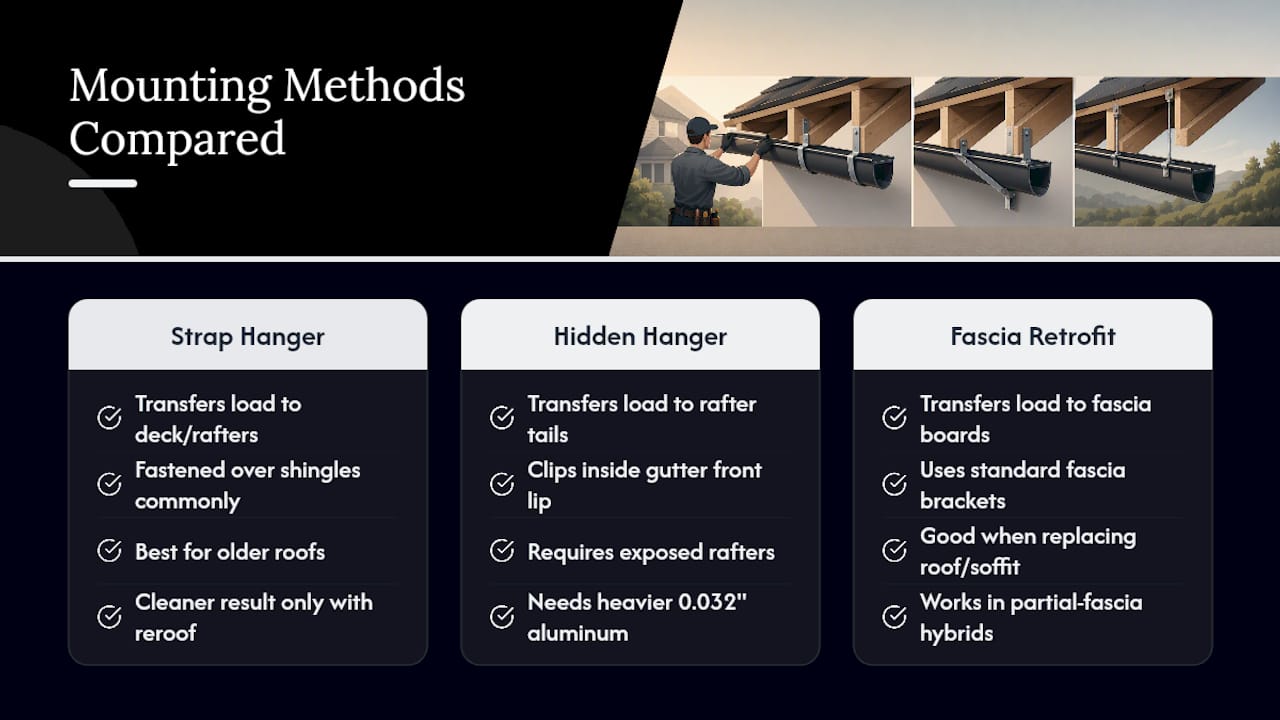
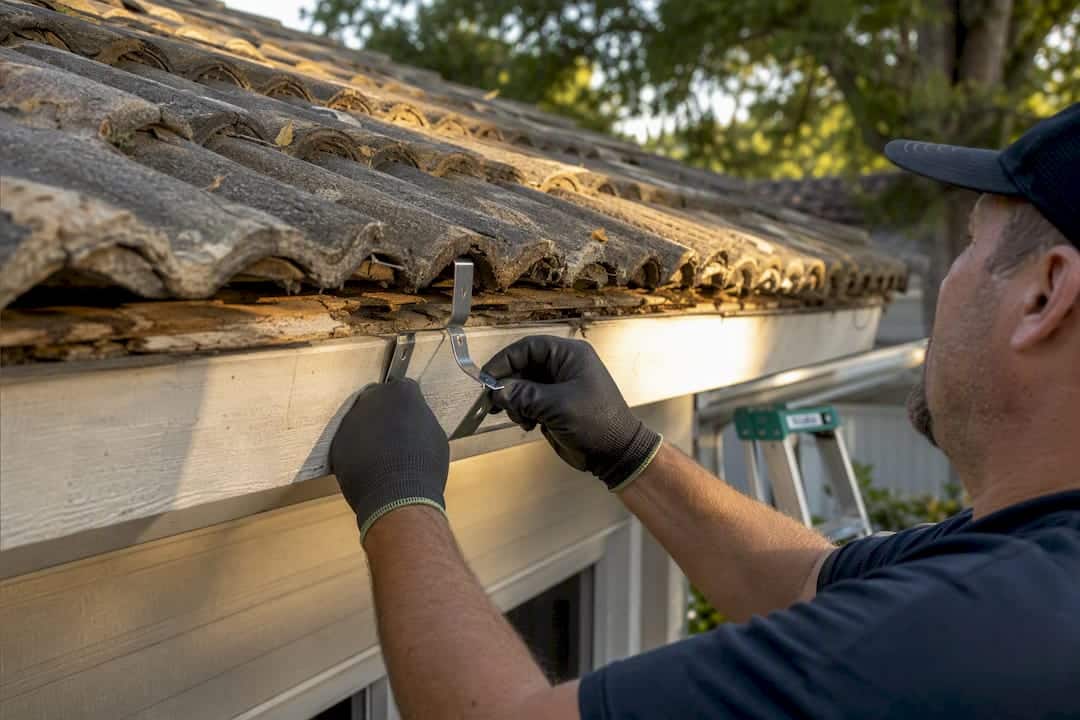
Roof-mounted strap hangers run up and over the roof edge and fasten to the deck or rafters above the roofline. Installers often place these straps over existing shingles when a reroof isn’t planned, since pulling up multiple courses of shingles to fasten underneath creates more risk than it solves. Mounting under shingles gives a cleaner, more weathertight result, but it only makes sense during a reroof or new construction.
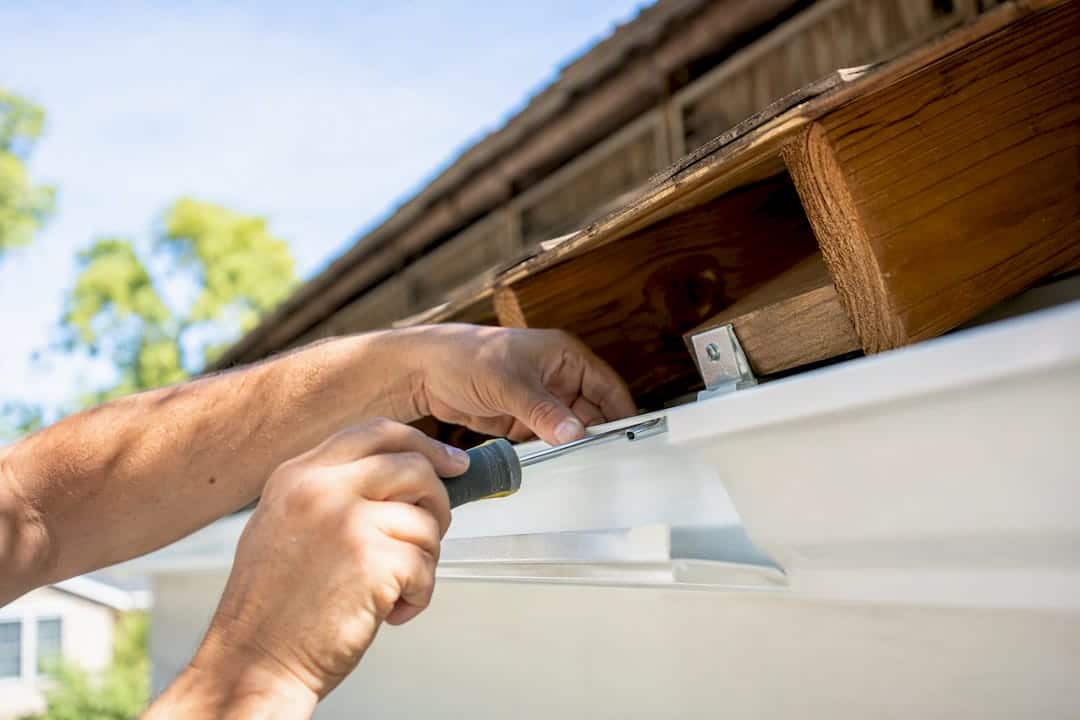
Hidden hangers and side-mount shanks clip inside the gutter’s front lip and screw directly into rafter tails. This is the preferred setup with K-style aluminum gutters, but it demands heavier-gauge stock, typically 0.032 inch, because thinner aluminum flexes and pulls away from the hanger over time. Fastening into solid rafter framing rather than end-grain or trim boards gives a meaningfully stronger load path, which matters once the gutter fills with water, leaves, and the occasional ladder resting against it.
Where a house has partial fascia, some sections can use standard fascia brackets while others transition to straps or hidden hangers. This hybrid approach is common on additions or homes with mismatched roof edges.
Pro Tip: Before choosing a method, walk your roofline and check whether rafter tails are exposed or boxed in. That single detail decides which system you can even install.
Rules of thumb: pick strap hangers on older roofs where you’re avoiding shingle disturbance, pick hidden hangers when rafters are sound and exposed, and lean toward a fascia retrofit anywhere you’re already replacing roofing or soffit material.
What You Need to Buy for a Fascia-Free Gutter Install
Seamless aluminum gutters of a heavier gauge are the standard choice for hidden-hanger setups, since thinner stock can sag and twist under load without a fascia board backing it. Half-round gutters need adjustable shanks rather than clip-style hidden hangers, given their curved profile.
- Roof straps or T-bar hangers, spaced according to your climate and roof pitch.
- Hidden hangers or #1/#10 shanks for rafter-tail mounting.
- Tie-back straps for extra support on long runs or heavy-rain regions.
- Stainless steel or brass fasteners, since exposed hardware corrodes fast in coated steel or zinc.
- Neoprene or EPDM gasketed screws for any fastener that penetrates the roof deck.
- Siliconized caulk, flashing, pop rivets, and downspout outlets, elbows, and hardware.
- Tools: laser level or chalk line, a shank bender, and a pop rivet gun.
Corrosion is the quiet killer here. Every metal you use outdoors, especially on strap hangers exposed to sun and rain, should be stainless or factory-coated. For more on bracket selection, gutter brackets play a bigger role in long-term performance than most homeowners assume.
How Do You Install Gutters Without a Fascia Board?
- Mark the gutter path and set your slope. Snap a chalk line or use a laser level to establish a drop of about 1/16 to 1/8 inch per 10 feet toward the downspout. Without a flat fascia to eyeball, line control becomes critical, since there’s no continuous plane to reference.
- Locate structural backing. Find rafter tails or solid roof framing and mark hanger positions at regular intervals, tightening spacing as appropriate in heavy-rain or high-wind regions.
- Mount your hangers. Fasten straps or shanks with stainless screws, and use gasketed fasteners anywhere metal penetrates the roof deck. Flash and seal every penetration with siliconized caulk before the next shingle course goes down, following the same bracket-to-rafter fastening approach professionals use on standard installs.
- Assemble and hang the gutter sections. Join runs with rivets or screws, seal seams with quality caulk, and set the gutter into the hangers. If rafters have settled unevenly, shim individual hangers to keep the pitch consistent rather than forcing the gutter to bend.
- Install downspout outlets and downspouts, then check that every fastener is snug and every seam sealed.
- Run a hose test from the far end of the run down to the outlet before calling the job finished.
Pro Tip: A two-person lift is not optional on runs longer than about 10 feet. One person holding a 20-foot gutter section on a ladder while trying to align hangers is how falls happen.
Ladder positioning matters as much as the hardware. Keep the base a quarter of the working height away from the wall, and if the roof geometry involves multiple stories, steep pitches, or valleys, that’s a job for a roofer, not a solo homeowner project. Full-length instructions with photos are in our gutter installation guide if you want a visual walkthrough alongside these steps.
Fascia-Free Gutters vs. Adding Fascia: Which Makes Sense?
Fascia-free mounts cost less upfront, install faster, and avoid tearing into shingles or trim, which is why they’re the default fix on older homes that never had fascia to begin with. The downside is real: strap-hung gutters carry more torsion stress, support ladder loads less predictably, and can look slightly bulkier where straps cross the roof edge.
Adding fascia costs more and takes longer, but it delivers:
- A continuous, flat mounting surface that spreads load evenly across the run.
- Easier servicing down the road, since standard brackets snap on and off without touching the roof.
- Better options for soffit venting and a finished look along the roofline.
Choose based on rafter condition, roof age, and whether you already have exterior work planned. If rafters are solid and you’re not touching the roof otherwise, fascia-free mounting is the practical call. If you’re reroofing or rafters show rot, retrofit fascia while everything’s already open.
Testing and Maintaining a Fascia-Free Gutter System
- Run the hose test starting at the far end from the downspout, watching for drips at strap penetrations, gaps at seams, and water backing up instead of flowing to the outlet.
- Inspect twice a year, spring and fall, checking that hangers haven’t loosened, fasteners haven’t corroded, and caulk hasn’t cracked at roof penetrations.
- Clear debris regularly, since clogged gutters add weight that stresses strap and shank connections far more than a clean run.
- Re-tighten or replace fasteners as soon as you spot rust streaks or movement, and reseal any joint that shows a water trail.
If you find soft rafter wood, a sagging section that won’t pull back into pitch, or repeated leaks at the same penetration, that’s a structural issue, not a maintenance one, and it needs a professional look before it gets worse. A properly sized downspout extension also matters here, since water dumped too close to the foundation undermines everything the gutter run was built to prevent.
When Fascia-Free Gutter Work Calls for a Professional
Complex roof geometry, multiple roof planes, or exposed historic rafter-tail architecture (craftsman and half-timber styles especially) all make precision hanger alignment harder to get right without specialized shanks and experience reading rafter spacing by eye.
Larry’s Gutters has installed seamless gutter systems across Central Florida homes for years, working around the region’s heavy summer downpours and the mix of older homes with no fascia at all. A pro is worth calling when:
- Your roof has valleys, dormers, or multiple pitches feeding one gutter run.
- Rafters show rot, insect damage, or uneven spacing from settling.
- Roofing warranty terms restrict who can penetrate the deck.
If any of that sounds like your house, a site visit beats guessing.
The Honest Trade-Off Nobody Talks About
Most gutter guides treat “no fascia” as a technical inconvenience to route around. It’s actually a decision point that deserves more weight than it gets. Strap hangers and hidden hangers both work, but they shift risk in different directions: straps put stress on your roofing material, hidden hangers put stress on your rafters. Neither is free.
The conventional advice tends to oversell fascia-free mounting as a permanent fix rather than what it often is: a reasonable solution for a roof in good shape, and a stopgap for one that isn’t. Homeowners who skip the rafter inspection step and jump straight to hanging gutters are the ones who end up with sagging runs two years later.
Prioritize this: check your rafter condition before you buy a single hanger. That fact alone should decide your method more than price or looks ever should.
— Results
Get a Fascia-Free Gutter Install Done Right the First Time
Reading through hanger types and rafter-tail spacing is useful, but matching the right method to your actual roof takes an eye that’s seen hundreds of rooflines. Larry’s Gutters installs seamless aluminum gutters on homes across Central Florida, including plenty with no fascia at all, and every quote starts with a free on-site estimate rather than a guess from a photo.

We handle both routes: strap and hidden-hanger installs on sound rafters, and full fascia retrofits when a roof edge needs it. If you’re not sure which fits your house, our team walks the roofline with you and explains the reasoning, not just the price. Explore the seamless gutter installation process to see how we handle fabrication and fit, or check gutter replacement steps if your current system is due for an upgrade. Ready to find out which mounting method fits your home? Request your free estimate and we’ll schedule a site visit this week.
Key Takeaways
The strongest gutter system without fascia matches the mounting method to actual rafter condition, not convenience, and seals every roof penetration without exception.
| Point | Details |
|---|---|
| Choose method by rafter access | Use strap hangers when rafters aren’t exposed; use hidden hangers when they are and solid. |
| Use heavier gauge gutters | Pair hidden hangers with 0.032-inch aluminum to prevent sag and torsion at the front lip. |
| Seal every roof penetration | Flash and caulk strap fasteners to prevent leaks into the roof deck. |
| Know when to add fascia | Retrofit fascia when rafters are damaged, uneven, or you’re already reroofing. |
| Call Larry’s Gutters for complex roofs | Larry’s Gutters offers free on-site estimates for fascia-free installs and fascia retrofits across Central Florida. |
Sources
- Gutter hangers — Fine Home Building
- Gutter hangers and attachments — InspectApedia
- Installing gutters with no fascia board — Gutterworks
- How to install rain gutters — This Old House
