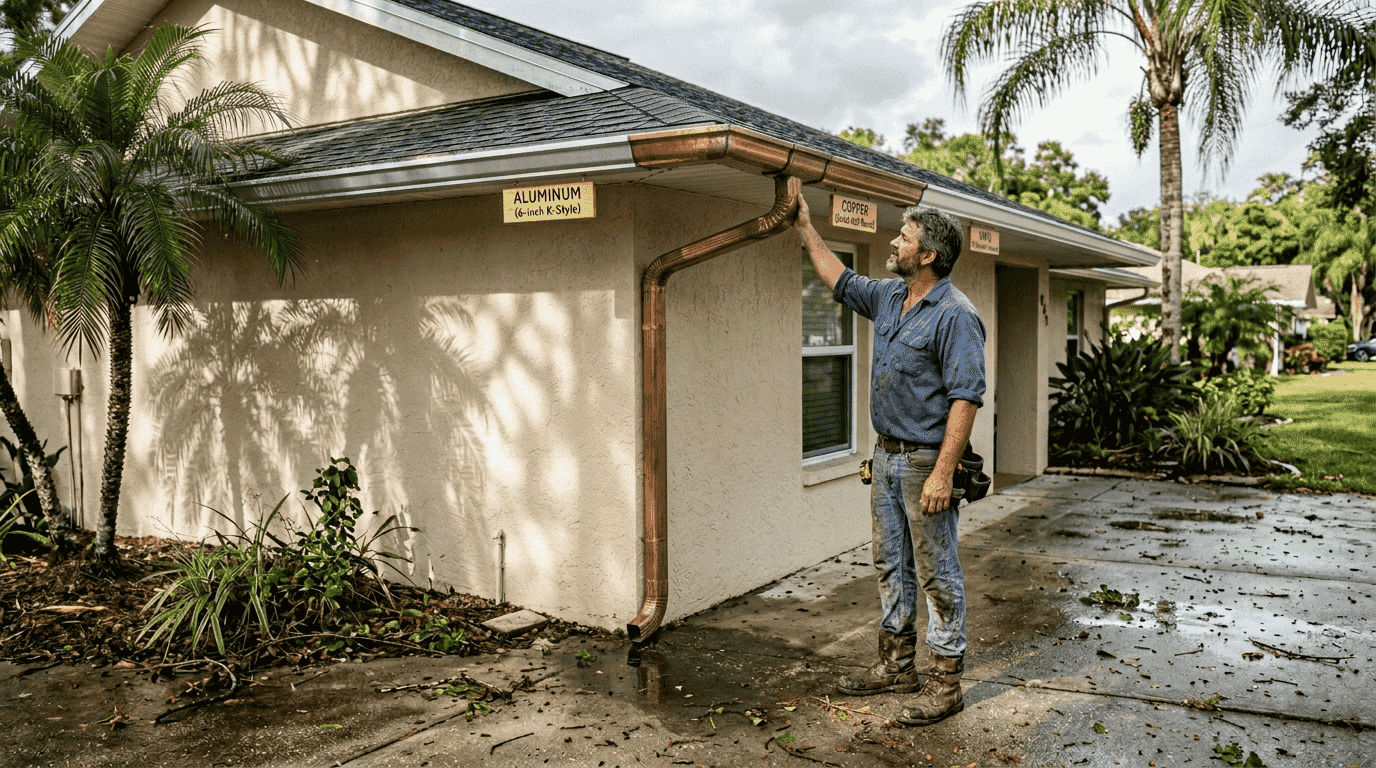
Choosing the right gutter material for your Central Florida home can feel overwhelming when you’re facing intense summer storms and year-round humidity. The wrong choice leads to rust, leaks, and costly repairs down the line. Understanding how different materials perform under Florida’s unique climate conditions helps you make a smart investment that protects your home for decades. This guide walks you through essential criteria and compares top gutter materials so you can select the best option for your specific needs and budget.
Table of Contents
- Criteria For Choosing Gutter Materials In Central Florida
- Top Types Of Gutter Materials For Florida Homes
- Comparing Gutter Materials: Performance And Cost
- Choosing The Right Gutter Material For Your Home
- Explore Seamless Gutter Solutions From Larry’s Gutters
Key takeaways
| Point | Details |
|---|---|
| Climate demands durability | Central Florida’s heavy rainfall and humidity require corrosion-resistant gutter materials |
| Five main material options | Aluminum, steel, copper, vinyl, and zinc each offer distinct performance characteristics |
| Cost varies significantly | Material prices range from budget-friendly vinyl to premium copper with different lifespans |
| Aluminum leads in popularity | Lightweight, corrosion-resistant aluminum balances performance and affordability for Florida homes |
| Professional installation matters | Proper setup maximizes material performance regardless of which type you choose |
Criteria for choosing gutter materials in Central Florida
Selecting gutter materials for Central Florida homes requires evaluating several critical factors that directly impact long-term performance. The region’s climate presents unique challenges that not every material handles equally well.
Durability and corrosion resistance top the list of selection criteria. Florida’s salty coastal air, high humidity, and frequent rain create conditions where rust and deterioration happen quickly on vulnerable materials. Your gutters need to withstand these elements without degrading.
Capacity to handle heavy rainfall matters tremendously. Central Florida receives intense downpours that can overwhelm undersized or poorly designed gutter systems. The material you choose must support adequate water flow during peak storm events while resisting damage from debris carried by strong winds.
Consider these essential criteria when evaluating options:
- Resistance to UV damage from intense Florida sunshine
- Weight and structural requirements for your home’s fascia
- Expansion and contraction behavior in temperature fluctuations
- Compatibility with gutter guards and protective accessories
- Availability of professional installers experienced with the material
Maintenance requirements directly affect your total cost of ownership. Some materials demand regular treatments or inspections, while others perform well with minimal attention. Factor in your willingness to climb ladders or hire professionals for upkeep.
Cost analysis should include both initial investment and projected lifespan. A cheaper material that fails in five years costs more than a premium option lasting thirty years. Calculate the true value by dividing total cost by expected years of service.
Pro Tip: Match your material choice to your home’s architectural style for better curb appeal and resale value, but never sacrifice performance for aesthetics in Florida’s demanding climate.
Top types of gutter materials for Florida homes
Five primary gutter materials dominate the Central Florida market, each bringing distinct advantages and limitations to residential installations.
Aluminum gutters lead in popularity among Florida homeowners for good reason. This lightweight yet corrosion-resistant material handles salt air and humidity without rusting. Aluminum comes in various thicknesses, with heavier gauges offering superior durability. The material accepts paint well, allowing customization to match your home’s exterior. Aluminum gutters typically cost less than premium options while delivering reliable performance for 20 to 25 years.
Steel gutters provide exceptional strength and can handle significant weight from debris or standing water. Galvanized steel resists rust through a protective zinc coating, though this layer eventually wears away in harsh coastal conditions. Stainless steel offers superior corrosion resistance but comes with a higher price tag. Steel works well for homes in areas with large trees where falling branches pose a risk. The material’s weight requires sturdy fascia boards and professional installation.
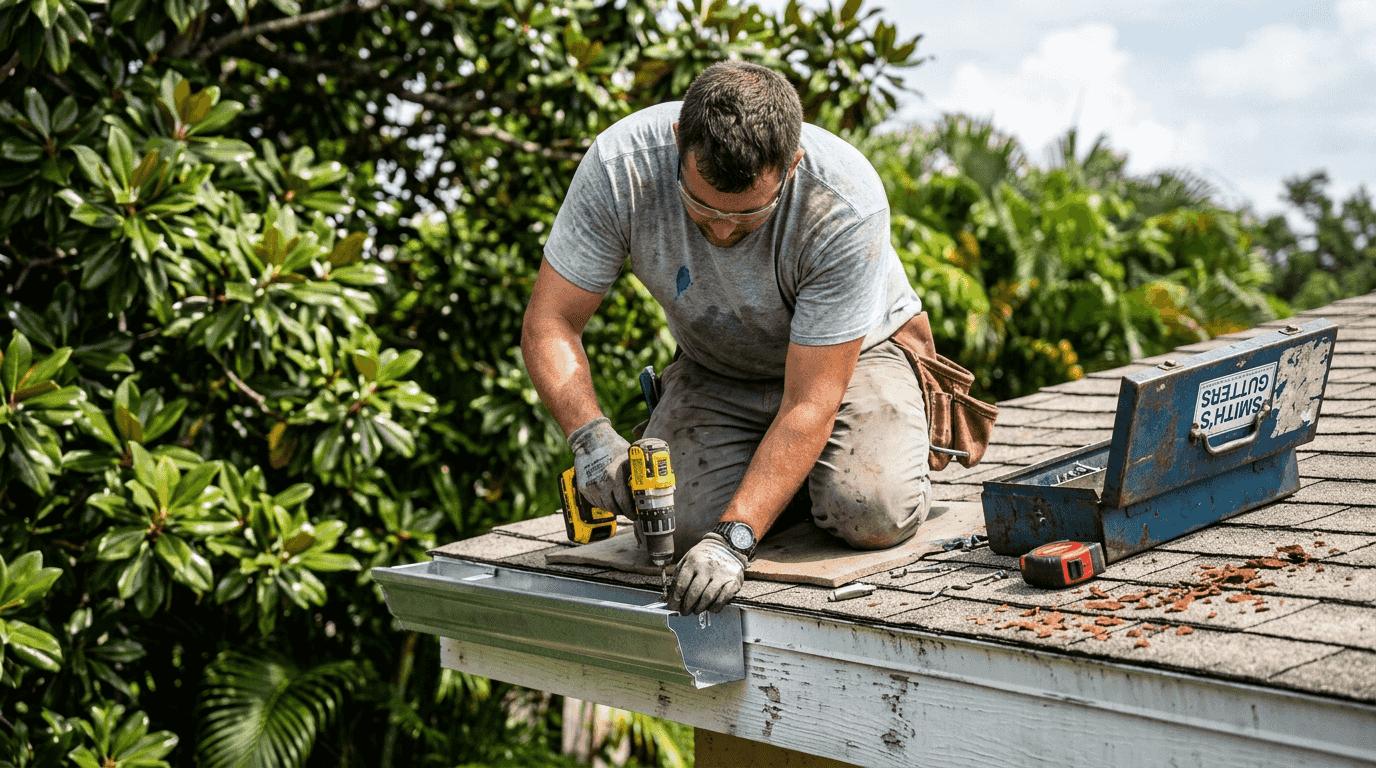
Copper gutters deliver premium aesthetics with natural patina development over time. This material resists corrosion naturally and can last 50 years or more with proper care. Copper’s distinctive appearance complements historic and upscale homes beautifully. The downside includes high initial costs and the need for specialized installation skills. Copper also requires compatible fasteners to prevent galvanic corrosion when different metals contact each other.
Vinyl gutters appeal to budget-conscious homeowners seeking easy DIY installation. The plastic material never rusts and requires no painting. Vinyl works adequately in moderate climates but struggles with Florida’s intense UV exposure and temperature swings. The material becomes brittle over time, cracking during storms or when debris accumulates. Vinyl gutters typically last 10 to 15 years before requiring replacement.
Zinc gutters represent a premium choice with self-healing properties. When scratched, zinc develops a protective patina that seals minor damage naturally. This European-favored material lasts 80 years or more and requires virtually no maintenance. Zinc’s chalky gray appearance develops character as it ages. The significant upfront investment and limited installer availability make zinc less common in Florida markets.
Comparing gutter materials: performance and cost
Understanding how materials stack up against each other helps narrow your decision based on priorities and constraints.
| Material | Lifespan (Years) | Corrosion Resistance | Maintenance Level | Cost Range |
|---|---|---|---|---|
| Aluminum | 20-25 | Excellent | Low | $$ |
| Steel | 15-20 | Good (with coating) | Moderate | $$ |
| Copper | 50+ | Excellent | Low | $$$$ |
| Vinyl | 10-15 | N/A (doesn’t corrode) | Very Low | $ |
| Zinc | 80+ | Excellent | Very Low | $$$$ |
Aluminum offers balanced performance for most Central Florida applications. The material handles coastal conditions without special treatments and costs significantly less than copper or zinc. Homeowners appreciate aluminum’s versatility in color options and compatibility with various architectural styles.
Durability under Florida conditions separates materials quickly. Vinyl’s susceptibility to UV damage and thermal expansion makes it risky for year-round exposure to intense sunshine. Steel performs well initially but requires vigilant inspection for rust spots, especially where protective coatings chip or scratch.
Maintenance demands vary considerably. Copper and zinc develop protective patinas that eliminate painting needs, though copper may stain siding if runoff isn’t managed. Aluminum requires occasional inspection but rarely needs intervention beyond standard cleaning. Steel demands the most attention, with periodic coating touch-ups necessary to prevent rust.
Cost analysis reveals interesting patterns:
- Initial installation: Vinyl costs least, zinc costs most
- Cost per year of service: Premium materials often win
- Replacement frequency: Budget materials need earlier replacement
- Repair expenses: Durable materials reduce unexpected costs
Pro Tip: Calculate total cost over 30 years rather than focusing solely on installation price to identify the true value leader for your situation and budget.
Choosing the right gutter material for your home
Applying material knowledge to your specific circumstances requires honest assessment of priorities and constraints.
- Evaluate your budget realistically, including both immediate funds and long-term financial planning for home maintenance
- Assess your maintenance willingness and physical ability to perform regular inspections and cleaning tasks
- Consider your home’s location relative to the coast, as salt air accelerates corrosion on vulnerable materials
- Match material weight to your fascia board strength, ensuring structural support handles the gutter system safely
- Factor in aesthetic preferences while prioritizing performance, since beautiful gutters that fail serve no purpose
- Research local installer expertise with your preferred material, as proper installation determines system longevity
Homeowners planning to stay in their current residence for decades benefit most from premium materials like copper or zinc. The higher initial investment pays dividends through extended service life and minimal maintenance. Those expecting to relocate within ten years might choose aluminum for its excellent performance-to-cost ratio.
Debris levels in your area influence material selection significantly. Homes surrounded by oak trees or pines accumulate more organic matter, requiring gutters that resist clogging and handle frequent cleaning. Heavier gauge aluminum or steel withstands the physical stress of regular maintenance better than thin materials.
Climate severity within Central Florida varies by location. Coastal properties face harsher salt exposure than inland homes. Areas prone to hurricanes need gutters that resist wind damage and flying debris. Match your material choice to your microclimate’s specific challenges.
Professional installation makes any material perform better. Expert installers ensure proper pitch for drainage, secure all fasteners correctly, and seal joints to prevent leaks. Even premium materials fail when installed improperly, while budget options exceed expectations with skilled setup.
Explore seamless gutter solutions from Larry’s Gutters
Now that you understand gutter material options and selection criteria, consider how seamless construction enhances performance regardless of material choice. Seamless gutters eliminate joints where leaks typically develop, reducing maintenance needs and extending system life.

Professional seamless gutter installation ensures your chosen material performs optimally in Central Florida’s demanding climate. Custom-fitted systems handle heavy rainfall more effectively than sectional gutters while presenting a cleaner appearance. Pairing quality materials with seamless construction and gutter guard installation creates a comprehensive solution that protects your home with minimal ongoing attention. Larry’s Gutters specializes in helping Central Florida homeowners select and install the ideal gutter system for their specific needs and budget.
FAQ
What is the most durable gutter material for Florida?
Copper and aluminum rank as top durable options for Florida homes due to superior corrosion resistance. Copper lasts 50 years or more but requires significant investment. Aluminum provides excellent durability for 20 to 25 years at a fraction of copper’s cost, making it the practical choice for most homeowners.
How often should gutters be maintained in Central Florida?
Cleaning gutters twice yearly prevents clogging and water damage in Florida’s climate. Schedule maintenance in spring and fall to remove accumulated debris. Inspect gutters after major storms for damage or blockages that need immediate attention.
Are seamless gutters better for heavy rainfall?
Seamless gutters reduce leak points and blockages compared to sectional systems. The continuous construction handles Florida’s intense rainfall more effectively by eliminating joints where debris accumulates and water escapes. Seamless installation improves performance with any material choice.
Can I install gutters myself or should I hire professionals?
DIY installation works for sectional vinyl gutters if you have construction experience and proper tools. Seamless gutters require professional equipment to form continuous sections on-site. Professional installation ensures correct pitch, secure mounting, and proper sealing regardless of material, protecting your investment through optimal performance.
Do gutter guards work well with all materials?
Gutter guards install successfully on aluminum, steel, copper, and zinc gutters with proper mounting hardware. Quality guards reduce cleaning frequency and prevent clogs from pine needles and oak leaves common in Central Florida. Match guard type to your gutter material and local debris patterns for best results.
