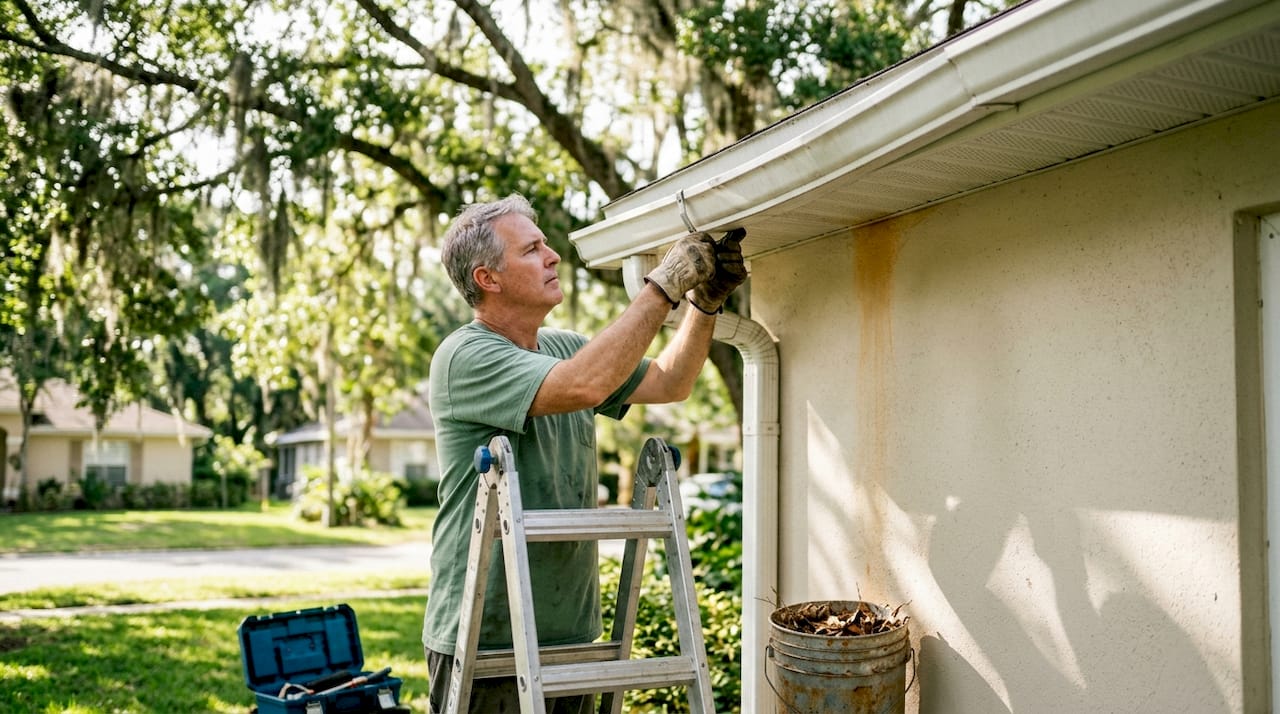
TL;DR:
- Gutter sagging often leads to water overflow and serious home damage in Florida.
- Regular maintenance, including cleaning and quick repairs, prevents costly structural issues.
- Florida’s climate accelerates gutter wear, requiring proactive, frequent inspections and upgrades.
Most homeowners treat gutters like smoke detectors — set them up and never think about them again. That mindset works fine in dryer climates, but in Central Florida, it can cost you thousands. Gutter sagging is one of the most overlooked warning signs on a home, quietly getting worse through every rainstorm until it causes rot, mold, or a cracked foundation. This guide breaks down exactly what gutter sagging is, why it happens faster here than almost anywhere else, and what you can do right now to stop it. With annual maintenance saving $10,000 or more in potential damage, the math on prevention is obvious.
Table of Contents
- What is gutter sagging?
- Why gutter sagging is dangerous for your home
- Common causes of gutter sagging
- How to prevent and fix gutter sagging
- Our perspective: Why most gutter sagging advice isn’t enough for Central Florida
- Take the next step: Get expert gutter help
- Frequently asked questions
Key Takeaways
| Point | Details |
|---|---|
| Spot sagging early | Detect gutter sagging before it leads to serious water and foundation damage. |
| Prevention is cost-effective | Routine maintenance saves thousands on expensive home repairs. |
| Act quickly | Address gutter issues promptly to protect your Central Florida home. |
| Professional help available | Some repairs need expert attention for lasting results and safety. |
What is gutter sagging?
Gutter sagging happens when your gutters start to droop, pull away from the house, or visibly curve downward instead of running level or at a slight angle toward the downspout. It sounds minor. It is not. Sagging gutters occur when they pull away from the fascia or droop under the weight of debris or water, and once that process starts, it tends to speed up fast.
In Central Florida, the risk is especially high. The combination of intense afternoon thunderstorms, year-round humidity, and seasonal hurricane activity puts gutters under serious stress. A gutter system that might last 25 years in the Pacific Northwest could show signs of trouble in under 10 years here without proper care.
“Gutters in Florida face heat expansion, heavy rainfall events, and organic debris from tropical trees all year long — conditions that accelerate wear far beyond what most manufacturers anticipate.”
Here are the key signs you should check for on your own home:
- Visible drooping or bowing along gutter sections, especially between hangers
- Gaps between the gutter and fascia board, where the gutter has pulled away
- Standing water inside the gutter after rain has stopped
- Water marks or staining on the siding below the gutter line
- Soil erosion or pooling directly beneath sagging sections
- Paint peeling on the fascia or soffit near the gutter
Each of those signs tells you something important about gutters’ impact on your foundation and overall home health. If you notice two or more of them at once, you are past the early warning stage. The signs your gutters need replacing can overlap with sagging symptoms, so a full inspection is the only way to know what you are actually dealing with.
Sagging is not just a cosmetic issue. It is a functional failure. When your gutter droops, water no longer flows toward the downspout. Instead, it pools inside the channel, adds more weight, and accelerates the sagging cycle. Left alone, the whole section can eventually collapse or detach entirely.
Why gutter sagging is dangerous for your home
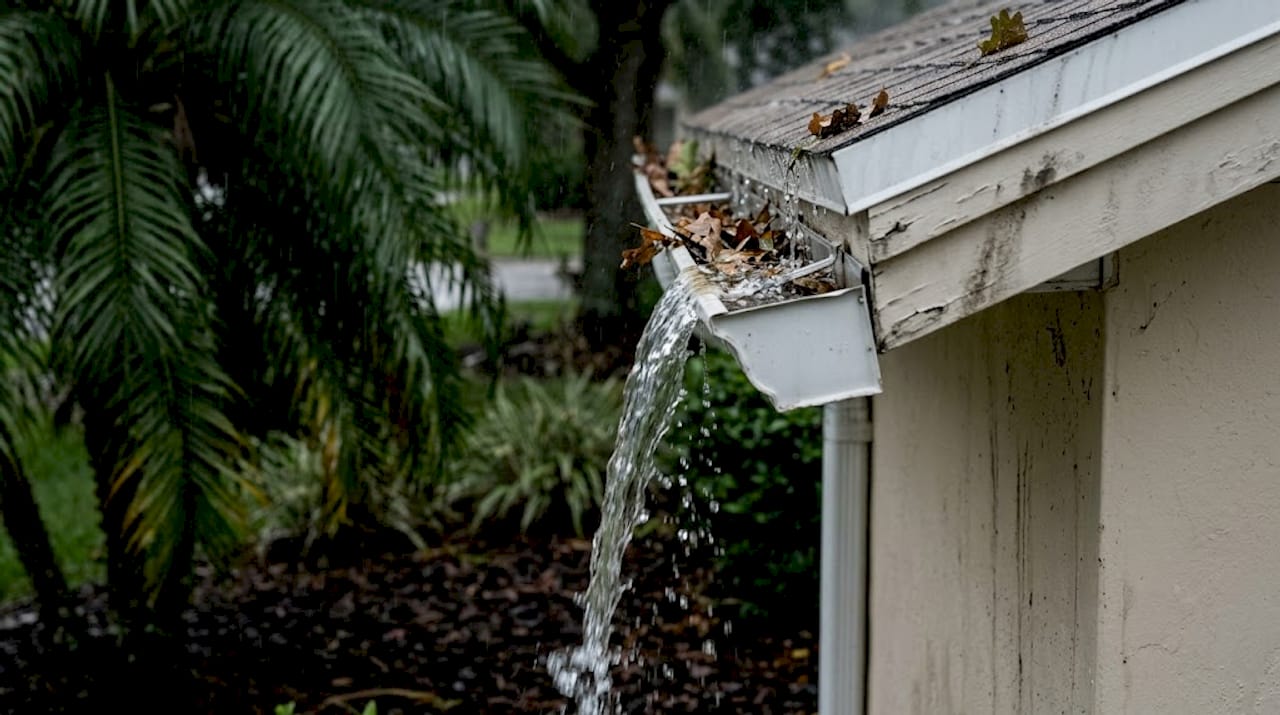
A drooping gutter is more than an eyesore. When water cannot move through the gutter correctly, it overflows — and that overflow lands right next to your foundation, your siding, and your landscaping. Over time, that moisture causes real structural damage.
Central Florida gets an average of 54 inches of rain per year, most of it falling in intense, concentrated bursts during the summer months. Your gutters are the only thing standing between all that water and the soil around your home’s foundation. When they fail, the consequences are serious.
| Risk Area | What Happens | Estimated Repair Cost |
|---|---|---|
| Foundation | Soil erosion, cracking, settling | $5,000 to $15,000+ |
| Fascia and soffit | Rot and structural decay | $500 to $2,500 |
| Siding | Moisture intrusion, mold | $1,000 to $8,000 |
| Landscaping | Erosion, plant loss | $300 to $3,000 |
| Interior (mold) | Health hazard, remediation | $2,000 to $10,000 |
Foundation repairs from water damage can exceed $10,000 if gutters are neglected. That number is not an exaggeration. Florida’s clay-heavy soils absorb and release water dramatically, which means repeated soaking and drying cycles from poor drainage literally move the ground under your home.
Pro Tip: Walk around your home during or right after a heavy rain and watch where the water goes. If you see it spilling over the gutter edge or pooling close to the foundation, those are the two biggest red flags for sagging-related damage.
Knowing how gutters prevent foundation damage is the first step toward taking the problem seriously. Most homeowners do not realize the connection between a drooping gutter and a cracked slab until they get the repair estimate. For more detail on spotting the full range of problems early, the guide on troubleshooting gutter issues in Florida is worth bookmarking.
Mold is another major concern. When moisture consistently sits against your siding or gets behind your fascia, mold develops quickly in Florida’s warm, humid air. Black mold remediation alone can run thousands of dollars, and some infestations require partial wall removal to fully clear.
Common causes of gutter sagging
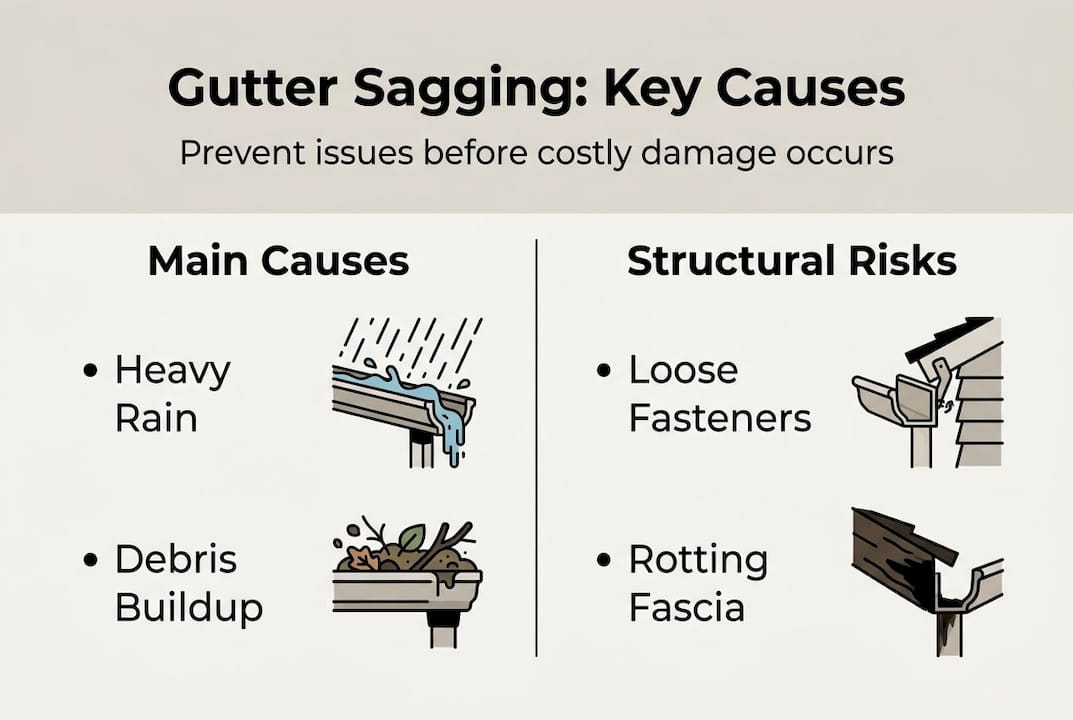
Gutter sagging does not happen overnight. It builds up from several compounding factors, and Florida’s climate makes almost every one of them worse than they would be elsewhere.
Here are the most common causes, ranked by how often we see them in Central Florida:
- Debris overload. Pine needles, oak leaves, and Spanish moss from Florida’s trees clog gutters fast. A full gutter can hold dozens of pounds of wet debris, and that weight pulls fasteners loose over time.
- Loose or missing hanger brackets. Hangers hold the gutter to the fascia. Florida’s heat causes metal expansion and contraction, which gradually works the screws loose.
- Poor original installation. Gutters set at the wrong pitch, attached with too few hangers, or fastened into rotted wood will sag much sooner than they should.
- Age and material fatigue. Older aluminum gutters lose their rigidity over time, especially after years of UV exposure and temperature swings.
- Storm impact. A single severe storm can knock gutters out of alignment, especially if tree branches fall on or near the roofline.
- Salt air and humidity. Homes within 30 miles of the coast deal with salt-accelerated corrosion on metal fasteners and gutter seams.
“Small problems left alone always become big problems. A loose bracket ignored during spring becomes a detached gutter section by hurricane season.”
Debris is the most controllable factor on that list. Installing micro-mesh guards can reduce gutter cleaning frequency by 50%, which directly reduces the weight load that causes hangers to fail. Staying on top of your gutter maintenance checklist is the single most effective habit you can build as a Florida homeowner.
One overlooked detail: the fascia board itself. If water has been sitting in the gutter for a long time, it eventually rots the wood the gutter is attached to. At that point, even new hangers will not hold because there is no solid backing to screw into. Learning to maintain seamless gutters properly can add a decade to your system’s life and keep the fascia dry and solid.
How to prevent and fix gutter sagging
The good news is that gutter sagging is almost entirely preventable. The strategies are not complicated, but they do require consistency — something Florida’s fast and aggressive weather patterns demand.
Prevention strategies that actually work:
- Clean gutters at least twice a year, and after every major storm
- Install micro-mesh gutter guards to limit debris accumulation
- Check and tighten hanger screws annually, replacing any that are stripped
- Inspect the fascia for soft spots or rot each time you clean
- Make sure downspouts extend at least 4 feet away from your foundation
Annual maintenance costing $300 to $600 is far cheaper than the structural repairs sagging gutters eventually cause. That is not a marketing claim — it is simple math when you compare prevention costs against the repair table from the previous section.
Pro Tip: Use stainless steel gutter screws instead of standard nails when re-securing hangers. Screws hold far longer than spikes in Florida’s expanding and contracting conditions, and they are easy to tighten if they start to back out.
| Fix Type | DIY Possible? | Avg. Cost | Best For |
|---|---|---|---|
| Tighten existing hangers | Yes | $0 to $50 | Minor sagging |
| Replace hanger brackets | Yes (some skill) | $50 to $200 | Moderate sagging |
| Fascia board repair | Rarely | $300 to $800 | Rotted backing |
| Full section re-hang | Sometimes | $200 to $600 | Detached sections |
| Full gutter replacement | No | $1,000 to $4,000 | End-of-life systems |
For smaller issues like a single loose bracket or a slightly tilted section, a confident DIYer can absolutely handle the repair on a single-story home. But once the fascia is rotted or multiple sections are affected, calling a professional is the smarter call. Knowing how to fix gutter leaks alongside sagging repairs often saves a second trip and a second bill. Detailed gutter repair tips specific to Florida homes can help you figure out exactly what your situation calls for.
Our perspective: Why most gutter sagging advice isn’t enough for Central Florida
Most gutter guides are written for a generic American homeowner somewhere with mild weather and modest rainfall. That advice is not wrong — it is just incomplete for Central Florida. When we talk to homeowners here who followed standard maintenance schedules and still ended up with sagging or water damage, the pattern is always the same: they were not accounting for how extreme the local conditions actually are.
The real issue is frequency and specificity. Cleaning gutters once a year is the standard recommendation. In Central Florida, that is not enough. With oak trees dropping leaves in fall and spring, plus summer storms dropping inches of rain in minutes, your gutters are working harder than almost anywhere else in the country.
Micro-mesh guards matter more here. Custom fastener spacing matters more here. Fascia material selection matters more here. These are not details you will find in a national home improvement article. Understanding why repair gutters in Florida is a unique challenge helps you make better decisions about materials, schedules, and when to bring in a professional rather than guessing. Proactive maintenance is not optional in this climate. It is the baseline.
Take the next step: Get expert gutter help
If this article made you think twice about the gutters on your home, that is a good thing. Catching sagging early is the difference between a simple repair and a major renovation.

At Larry’s Gutters, we specialize in residential gutter solutions built for Central Florida’s specific demands. Whether you need seamless gutter installation for a new system, help understanding the gutter guard installation workflow to protect what you have, or want to review your gutter repair options before committing to a full replacement, we can walk you through it. Request a free quote today and get a clear picture of what your home actually needs.
Frequently asked questions
What causes gutter sagging most often in Florida?
In Florida, heavy rain and debris overload and loose fasteners are the main causes of gutter sagging. The combination of year-round organic debris and intense storms makes Florida gutters especially vulnerable to this type of failure.
Can gutter sagging cause foundation problems?
Yes, sagging gutters allow water to pool near the foundation, which leads to soil erosion and eventually structural cracking. Foundation repairs from this kind of water damage can exceed $10,000 if the problem is left unaddressed.
Is gutter sagging a DIY fix?
Minor sagging caused by a single loose or missing hanger bracket is often a manageable DIY repair on a one-story home. However, if the fascia board is rotted or multiple sections are involved, a professional inspection is the safer and more cost-effective choice.
How often should I check my gutters for sagging?
Gutters should be inspected at least twice a year and after any significant storm event. In Central Florida, where storms are frequent and debris accumulates fast, a quick visual check after each major rainfall can catch problems before they escalate.
