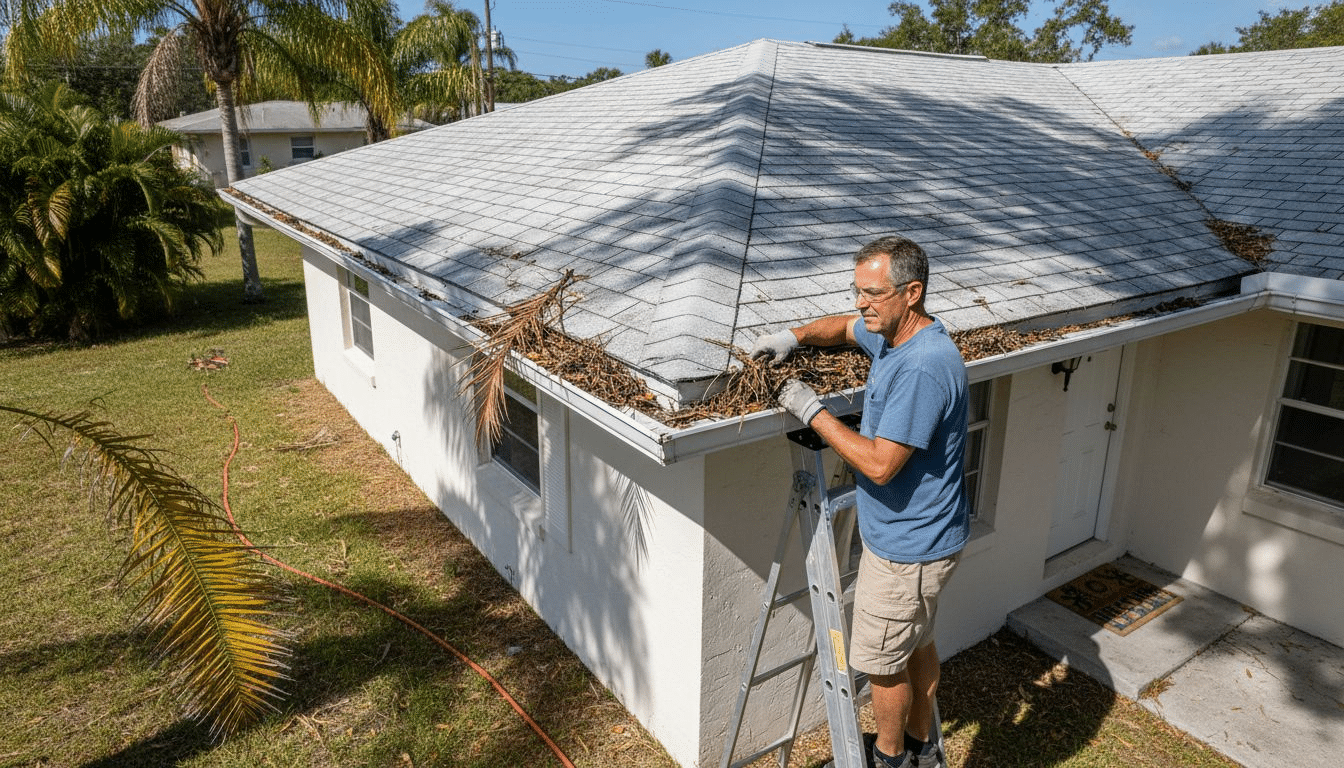
Clogged gutters after a Florida rainstorm can turn a peaceful afternoon into a costly headache. For homeowners in Lake, Marion, and Sumter counties, keeping gutters clear means protecting your home from foundation erosion, indoor mold, and expensive repairs. Regular gutter maintenance is your home’s first defense against water damage, especially during Central Florida’s intense rainy season. Discover how seasonal care and the right gutter solutions keep your investment safe year-round.
Table of Contents
- What Gutter Maintenance Means for Homes
- Types of Gutters and Maintenance Needs
- How Florida Rain Impacts Gutters
- Risks of Neglected Gutter Maintenance
- Cost Considerations and Prevention Tips
Key Takeaways
| Point | Details |
|---|---|
| Importance of Gutter Maintenance | Regular gutter maintenance prevents water damage, foundation problems, and costly repairs by keeping gutters clear and functioning properly. |
| Material and Design Impact | Gutter material and design influence maintenance needs and durability; choose materials that withstand Florida’s climate for optimal performance. |
| Cost vs. Prevention | Investing in routine gutter maintenance is significantly cheaper than the expenses associated with neglect, such as extensive repairs or mold remediation. |
| Seasonal Cleaning Recommendations | Schedule gutter cleaning at least twice a year, ideally in April and October, to prevent blockages and maintain efficient water flow. |
What Gutter Maintenance Means for Homes
Gutter maintenance is about keeping water moving away from your home exactly as it should. When gutters work properly, they channel rain and runoff safely from your roof down through downspouts and away from your foundation. Without regular upkeep, gutters become clogged with leaves, debris, and sediment. This blockage forces water to pool on your roof or overflow down your home’s exterior walls, creating serious problems.
The real impact of neglected gutters hits your home’s foundation and structure hard. When water pools instead of flowing away, it saturates soil around your foundation, causing erosion and potentially allowing moisture to infiltrate your crawlspace or basement. Inside your home, this moisture creates conditions for mold and mildew growth, which damages indoor air quality and poses health risks to your family. Wood framing, siding, and fascia boards absorb this water and begin rotting from the inside out. A single season of neglected gutters can cost thousands in structural repairs that would have been preventable.
Proper maintenance also protects against less obvious threats. Clogged gutters become breeding grounds for insects like mosquitoes and carpenter ants. Standing water in gutters attracts pests, and those pests can make their way into your attic or walls. In Central Florida’s humid climate, where we experience heavy seasonal rainfall, this risk multiplies. Seasonal gutter maintenance prevents home damage by keeping gutters clear and water flowing freely. This simple act of keeping debris out and ensuring proper water flow is your home’s first line of defense against water damage, foundation problems, and the costly repairs that follow.
Think of your gutters as your home’s drainage system. They’re working constantly to protect your investment. When you maintain them regularly, you’re not just cleaning out leaves. You’re preventing foundation erosion, protecting your roof structure, maintaining healthy indoor air quality, and avoiding pest infestations. That’s what gutter maintenance means.
Pro tip: Schedule gutter cleaning at least twice a year in Central Florida, especially after fall and before the summer rainy season, to prevent blockages before they cause water damage.
Types of Gutters and Maintenance Needs
Not all gutters are created equal, and understanding what you have on your home matters for maintenance planning. Central Florida homeowners typically encounter two main gutter styles: K-style and half-round gutters. K-style gutters have a flat bottom with a decorative front that resembles crown molding, while half-round gutters feature a rounded bottom that looks like a tube cut in half lengthwise. Both styles work well in Florida’s climate, but they require different cleaning approaches and have different vulnerability points. K-style gutters tend to accumulate more debris in their corners, while half-round gutters are easier to clean but may need more frequent inspections for sagging.
The material your gutters are made from drives maintenance needs more than anything else. Aluminum gutters dominate residential installations in Central Florida because they resist corrosion better than steel and won’t rot like older wood gutters. However, aluminum still requires regular cleaning to prevent blockages and leaf accumulation. Metal gutters need periodic maintenance to avoid corrosion, especially in Florida’s humid, salty air near coastal areas of Lake, Marion, and Sumter counties. Copper gutters, while beautiful and extremely durable, develop a natural patina over time and require specialized care if you want to maintain their original shine. Vinyl and PVC gutters cost less upfront but become brittle in Florida’s intense sun and don’t last as long as metal options.
Seamless gutters, which are custom-formed on site to fit your home exactly, have become increasingly popular because they eliminate the joints where traditional sectional gutters leak. These require the same debris clearing as any gutter, but their lack of seams means fewer places for water to escape and less maintenance headaches down the road. Regardless of your gutter type or material, the maintenance fundamentals stay consistent: clear debris every couple of months, check for proper water flow, inspect for leaks or damage, and ensure downspouts direct water at least 4 to 6 feet away from your foundation.
Here’s a quick comparison of common gutter materials and their maintenance demands:
| Gutter Material | Durability in Florida | Maintenance Challenges | Typical Lifespan |
|---|---|---|---|
| Aluminum | Resists corrosion well | Needs regular clearing to prevent rust | 20-30 years |
| Copper | Extremely durable | Requires special cleaning to retain finish | 50+ years |
| Vinyl/PVC | Sunlight causes brittleness | Needs frequent inspections for cracks | 10-15 years |
| Steel | Prone to rust in humidity | Needs protective coatings and frequent checks | 15-20 years |
Pro tip: If you have K-style gutters, pay extra attention to the corners where debris loves to hide. Use a gutter scoop or pressure washer to clear these problem areas before standing water causes rust or algae growth in Central Florida’s humid climate.
How Florida Rain Impacts Gutters
Central Florida’s rainfall is relentless, and your gutters bear the brunt of it. Unlike northern states with seasonal rain patterns, Florida experiences intense downpours year-round, with peak intensity during summer afternoons and hurricane season from June through November. A single thunderstorm can dump 2 to 3 inches of rain in less than an hour, forcing your gutters to handle massive water volumes rapidly. This constant assault wears on gutters differently than what homeowners in other regions experience. When gutters aren’t properly sized or maintained, they overflow or back up onto your roof, sending water straight into your fascia boards, siding, and eventually into your attic.
The combination of heavy rain and Florida’s humid, salty air creates a double threat. Frequent rain and high humidity require careful material selection to prevent corrosion and failure in your gutter system. Your gutters aren’t just fighting water damage. They’re also fighting corrosion from salt spray if you live anywhere near coastal areas of Lake, Marion, or Sumter counties. Aluminum gutters, while popular, can develop corrosion spots if not cleaned regularly. Debris trapped in gutters holds moisture against the metal, accelerating rust formation. Add Florida’s intense UV sun to the mix, and vinyl gutters become brittle and cracked within a few years. This is why material durability matters so much in our climate.
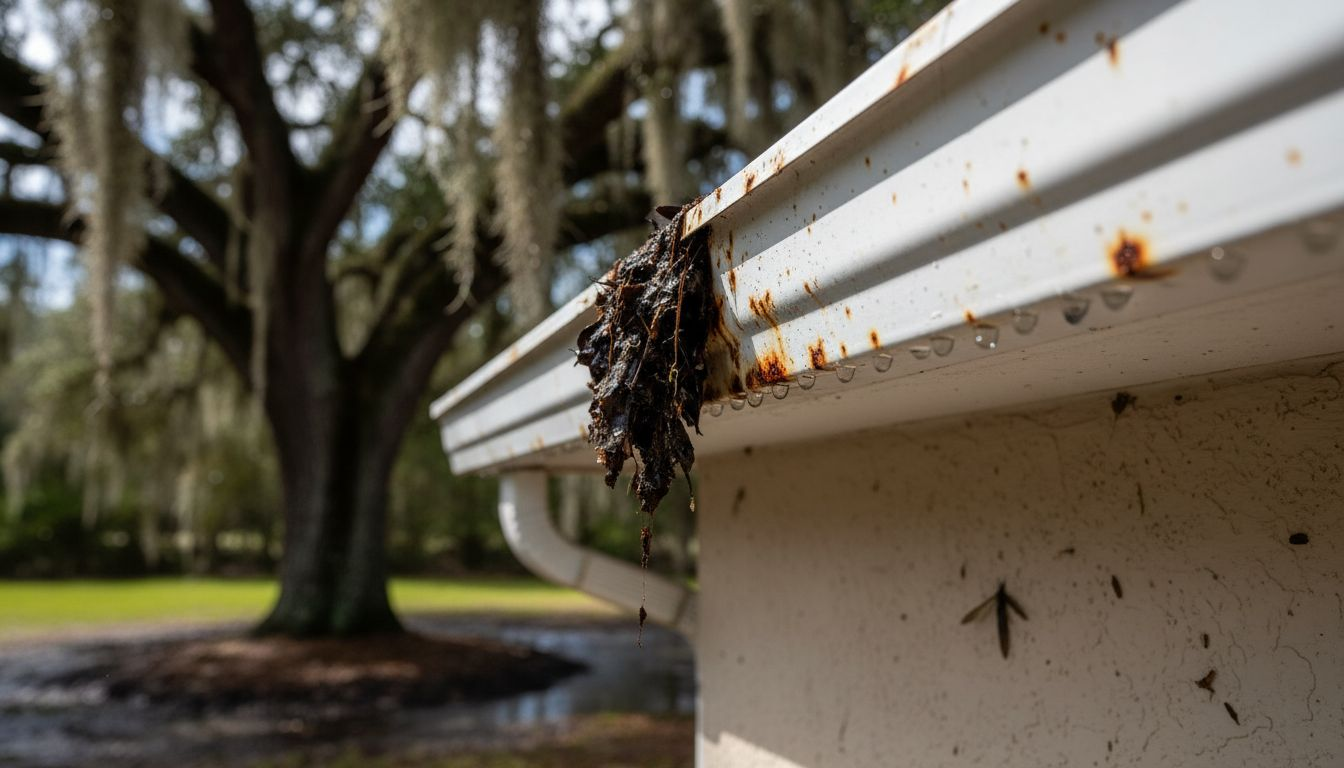
Proper gutter sizing and installation are critical in Florida. Gutters must handle rainfall intensity specific to the region to prevent overflow and water damage. Standard gutter sizes that work fine in Ohio or Pennsylvania may not be adequate for Central Florida’s heavy storms. Undersized gutters with insufficient slope will cause water to pool and back up onto your roof. When water sits in your gutters, it becomes a breeding ground for algae, mold, and mosquitoes. The stagnant water also accelerates corrosion of metal gutters. Your downspouts must also be properly sized and positioned to direct water at least 4 to 6 feet from your foundation, preventing the soil saturation that leads to foundation cracks and basement flooding.
Pro tip: After heavy Florida storms, check your gutters and downspouts within 48 hours for debris accumulation and water pooling, especially in low spots where gutters may have settled over time.
Risks of Neglected Gutter Maintenance
Skipping gutter maintenance might seem like a time-saver in the moment, but the consequences pile up fast. When gutters clog with leaves, pine needles, and debris, water can’t flow where it’s supposed to go. Instead of traveling safely down your downspouts and away from your home, water backs up on your roof, seeps into your fascia boards, and eventually finds its way into your attic and walls. This isn’t a minor inconvenience. Water intrusion creates conditions for mold and mildew that spread through your insulation and drywall, affecting your family’s health and forcing expensive remediation.
Your foundation faces direct assault from neglected gutters. When water pools near your home’s base instead of being directed away, it saturates the soil around your foundation, causing it to shift and settle unevenly. Water pooling near foundations causes soil erosion and basement leaks, which can cost $10,000 to $25,000 to repair in severe cases. The moisture that seeps into your crawlspace or basement creates an ideal environment for wood rot, foundation cracks, and structural damage that compromises your entire home’s stability. In Central Florida’s humid climate, basement flooding from foundation saturation isn’t rare. It’s a preventable disaster waiting to happen if gutters aren’t maintained.
Pests see clogged gutters as a welcome home. Standing water and accumulated debris attract mosquitoes, carpenter ants, and other insects that establish colonies in your gutters and eventually work their way into your attic and walls. Rodents nest in the accumulated debris, using it as a launching point to access your home. Blocked water flow and accumulated debris attract pests and accelerate deterioration of your exterior and interior structures. The longer you ignore gutter maintenance, the more expensive the problems become. A $200 gutter cleaning today prevents a $15,000 foundation repair, mold remediation, and pest control bill tomorrow. The math is simple, but homeowners often don’t see the connection until damage appears inside their homes.
This table summarizes the main risks and financial impacts of gutter neglect:
| Risk Area | Consequence | Estimated Repair Cost |
|---|---|---|
| Foundation | Soil erosion, cracks | $10,000 – $25,000 |
| Interior Mold | Air quality issues | $2,000 – $6,000 |
| Water Damage | Siding, attic leaks | $3,000 – $8,000 |
| Pest Infestation | Insects, rodents | $500 – $2,000 pest control, rising if damage spreads |
Pro tip: Document your gutter condition with photos every six months as part of your maintenance record, making it easier to spot changes and catch problems before they require expensive repairs.
Cost Considerations and Prevention Tips
Gutter maintenance costs seem high until you compare them to the price of ignoring them. A professional gutter cleaning in Central Florida typically runs between $150 and $300 depending on your home’s size and how badly clogged the gutters are. Twice yearly cleanings cost around $300 to $600 annually. That’s pocket change compared to a foundation repair ($10,000 to $25,000), mold remediation ($2,000 to $6,000), or water damage restoration ($3,000 to $8,000). Regular gutter maintenance is a cost-effective strategy to prevent expensive home repairs. When you look at the math, spending a few hundred dollars on prevention saves you tens of thousands in damage repair.
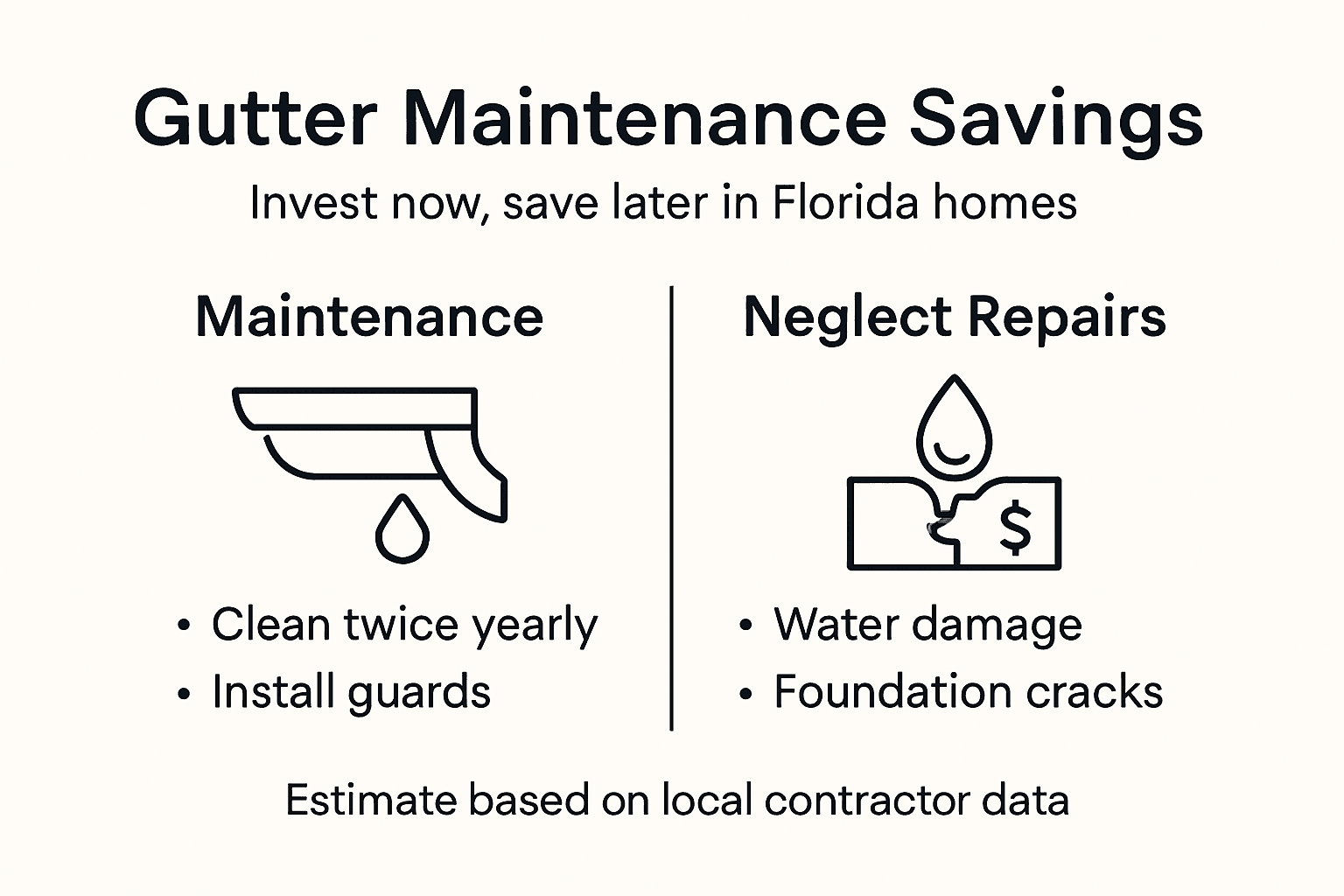
Gutter guards significantly reduce maintenance frequency and costs. These protective screens or covers prevent leaves and large debris from entering your gutters while still allowing water to flow through. With guards installed, you might only need professional cleaning once a year instead of twice, cutting your annual maintenance cost in half. The upfront investment in gutter guards runs $1,000 to $2,500 for most homes, but that pays for itself within a few years in reduced cleaning costs and prevention of water damage. Choose guards designed for Florida’s intense rainfall and debris load, not cheaper options that clog or fail under heavy downpours.
Material choice impacts both your initial investment and long-term maintenance expenses. Copper gutters offer low maintenance due to corrosion resistance, though they cost more upfront than aluminum. Seamless aluminum gutters eliminate the joint leaks that plague sectional gutters, reducing future repairs. Vinyl gutters are cheapest initially but deteriorate quickly in Florida’s intense sun. For Central Florida homeowners, the prevention strategy is clear. Invest in proper sizing and installation when you install or replace gutters. Add gutter guards. Schedule cleanings twice yearly before the rainy season and after fall. Budget $300 to $600 annually for maintenance. This approach protects your home’s foundation, structure, and interior from water damage that would cost exponentially more to repair.
Pro tip: Set calendar reminders for gutter cleaning in April and October each year, then budget $50 to $100 per cleaning for DIY supplies or hire professionals for around $150 to $300 per visit for guaranteed thorough results.
Protect Your Central Florida Home with Expert Gutter Solutions
Neglected gutter maintenance can lead to costly foundation damage, mold growth, and pest infestations as highlighted in the article. If you want to avoid soil erosion, water pooling, and structural repairs in your home, taking proactive steps is essential. The harsh Florida climate demands seamless, durable gutters and regular care to keep water flowing away from your foundation and safeguard your investment.
Larry’s Gutters specializes in custom-fit seamless gutters designed specifically for Central Florida’s intense rainfall and humidity. We also offer professional gutter cleaning, repair services, and high-quality gutter guard installations that reduce debris buildup and extend gutter life. By choosing our expert solutions, you prevent water damage before it starts and keep your home safe throughout every storm season.

Don’t wait until gutter problems threaten your home’s stability. Visit Larry’s Gutters now to request a free quote and discover how our tailored services protect your foundation and improve your home’s resilience. Learn more about our seamless gutter installation and gutter guard options today and secure your Central Florida home against water damage before the next heavy rain arrives.
Frequently Asked Questions
Why is gutter maintenance important for my home?
Gutter maintenance is crucial because it ensures that rainwater is channeled away from your roof and foundation, preventing water damage, mold growth, and structural issues.
How often should I clean my gutters in Central Florida?
You should schedule gutter cleaning at least twice a year, especially after fall and before the summer rainy season, to prevent clogging and subsequent water damage.
What types of gutters are common in Central Florida and how do they differ in maintenance needs?
The common types of gutters are K-style and half-round gutters. K-style gutters accumulate more debris in corners, while half-round gutters are easier to clean but may need more frequent inspections for sagging.
What are the risks of neglected gutter maintenance?
Neglected gutters can cause serious risks including foundation erosion, mold growth inside your home, water damage to siding and attics, and infestations by pests like mosquitoes and rodents.
Recommended
- Gutter Cleaning Frequency – Protecting Florida Homes
- Why Gutters Matter for Central Florida Homes
- 7 Gutter Cleaning Tips Every Central Florida Homeowner Needs
- What Is Gutter Maintenance and Why Florida Homes Need It
- The Essential Guide to Exterior Pest Maintenance
- Gutter Services Gainesville FL
- Gutter Services The Villages FL
