
Heavy rainfall in Central Florida can quickly put homes at risk for costly water damage, especially in Lake, Marion, and Sumter counties. Choosing the right gutter drainage system is crucial for protecting your property’s foundation and walls from flooding and erosion. This guide breaks down the essential parts, types, and best strategies for effective gutter installation and maintenance, so you can make smart decisions for your home’s long-term safety.
Table of Contents
- What Makes A Gutter Drainage System
- Key Types Of Gutter Systems In Florida
- How Gutter Drainage Works And Essential Parts
- Sizing And Placement Strategies For Rainfall
- Risks, Costs, And Common Mistakes To Avoid
Key Takeaways
| Point | Details |
|---|---|
| Importance of Gutter Systems | Gutter drainage systems are essential for protecting homes from water damage by efficiently channeling rainfall away from critical areas. |
| Specialization for Florida Climate | Florida’s unique weather requires specialized gutter systems designed to withstand heavy rainfall, high humidity, and hurricane conditions. |
| Professional Installation and Maintenance | Proper installation and regular maintenance can significantly reduce water-related damage risks and repair costs for homeowners. |
| Material Selection | Choosing the right materials for gutters is crucial in addressing corrosion and performance, especially in coastal regions. |
What Makes A Gutter Drainage System
A gutter drainage system is a critical infrastructure designed to protect homes from water damage by efficiently channeling rainfall away from roofing and foundational areas. These systems are far more complex than simple metal channels – they represent an engineered solution for managing water flow and preventing potential structural damage.
At its core, a gutter drainage system consists of several key components working together seamlessly. These include:
- Gutters: The primary collection channels installed along roof edges
- Downspouts: Vertical pipes that direct water from gutters to ground level
- End caps: Sealed sections preventing water leakage at gutter terminals
- Elbows: Angled connections allowing water to change directional flow
- Fasteners: Hardware securing gutters to the home’s exterior
The fundamental purpose of these systems is protecting your home’s structural integrity. Rain gutters channel water away from critical building zones, preventing potential foundation erosion, basement flooding, and wall water damage.
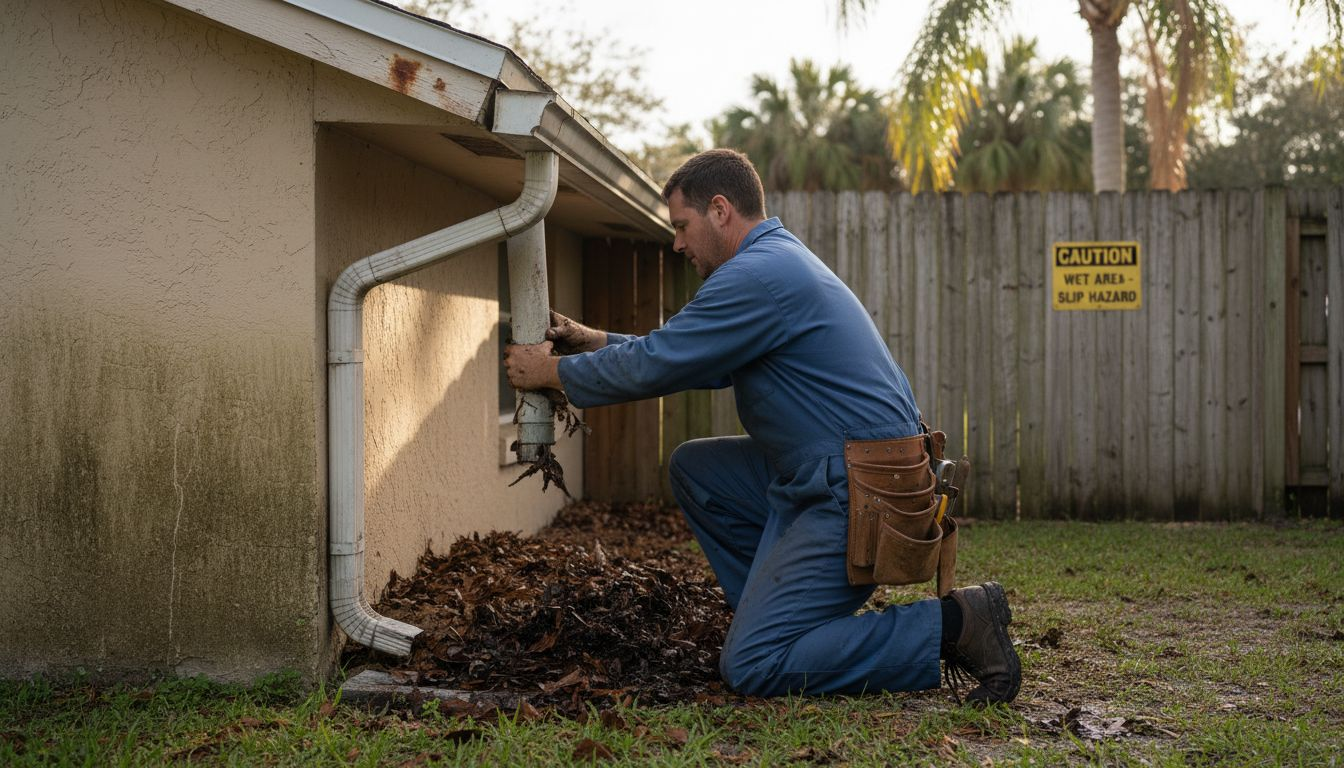
In Central Florida, where rainfall can be intense and frequent, these drainage systems become even more crucial. Homes without proper gutter systems risk significant water-related damages that can compromise structural stability and lead to expensive repairs.
Proper gutter drainage involves strategic placement and precise angling to ensure water moves efficiently away from your home. Professional installation considers factors like roof pitch, rainfall intensity, and property landscaping to create an optimal water management solution.
Pro tip: Regular gutter maintenance and professional inspections can prevent up to 85% of potential water-related home damages in Florida’s challenging climate.
Key Types Of Gutter Systems In Florida
Florida’s unique climate demands specialized gutter systems that can withstand intense rainfall, high humidity, and potential hurricane conditions. Various gutter types are specifically designed to address the challenging environmental conditions prevalent in the region.
The primary gutter systems used in Florida homes include:
- Hung Gutters: Mounted externally along roof edges
- Built-in Gutters: Integrated directly into the roof structure
- K-Style Gutters: Most common residential design with decorative front edge
- Half-Round Gutters: Traditional circular design with smooth water flow
- Seamless Gutters: Custom-fitted to minimize leakage points
Material selection plays a crucial role in gutter system performance. In coastal and humid Florida environments, homeowners typically choose materials that resist corrosion and withstand extreme weather. These materials include:
- Aluminum (lightweight and rust-resistant)
- Copper (durable and aesthetically pleasing)
- Vinyl (cost-effective and easy to install)
- Stainless Steel (extremely strong and long-lasting)
The choice of gutter system depends on multiple factors including roof pitch, home architectural style, local rainfall intensity, and budget considerations. Coastal regions might require more corrosion-resistant materials, while inland areas could prioritize cost-effectiveness.
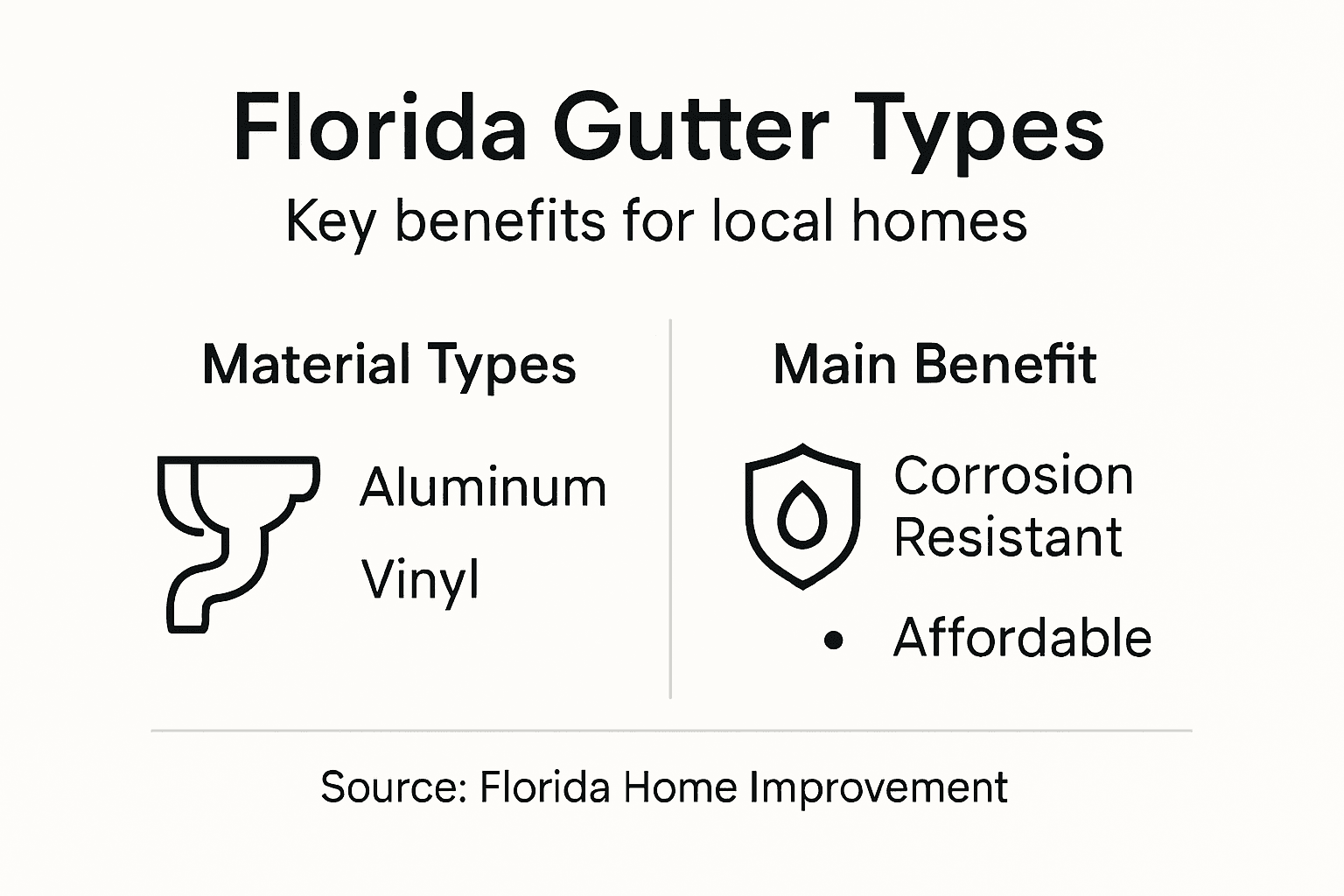
Here is a comparison of gutter materials commonly used in Florida and their unique advantages:
| Material | Main Benefit | Ideal For |
|---|---|---|
| Aluminum | Lightweight, rust-resistant | Most homes, coastal areas |
| Copper | Long-lasting, aesthetic | High-end or historic homes |
| Vinyl | Low cost, easy install | Budget projects, DIY installs |
| Stainless Steel | Maximum strength, durable | Hurricane-prone zones |
Pro tip: Consult a local professional who understands Florida’s specific climate challenges to determine the most suitable gutter system for your specific home and location.
How Gutter Drainage Works And Essential Parts
Gutter drainage systems are precision-engineered solutions designed to protect homes from water damage by efficiently channeling rainfall away from critical structural areas. These systems operate through a carefully coordinated process that moves water from the roof to a safe distance from the home’s foundation.
The essential components of a gutter drainage system include:
- Gutters: Horizontal channels collecting roof runoff
- Downspouts: Vertical pipes directing water groundward
- Elbows: Angled connectors changing water flow direction
- End Caps: Sealed sections preventing water leakage
- Fasteners: Hardware securing system components
- Drip Edges: Guides ensuring water moves away from roof structure
The drainage process follows a systematic sequence. Rainwater first hits the roof, then flows along its pitched surface toward the gutter system. Gutters collect this water and channel it horizontally, using gravity and precise angling to direct flow toward downspouts. Downspouts then vertically transport water away from the building’s walls and foundation, preventing potential water damage.
In Florida’s challenging climate, proper gutter drainage is critical. The system must handle intense rainfall, potential hurricane conditions, and high humidity while resisting corrosion and maintaining structural integrity. Material selection and precise installation become paramount in ensuring effective water management.
Effective gutter drainage can prevent up to 90% of potential water-related structural damage to homes.
Pro tip: Schedule professional gutter inspections twice annually to ensure your drainage system remains clean, aligned, and fully functional during Florida’s demanding weather conditions.
Sizing And Placement Strategies For Rainfall
Designing an effective gutter drainage system for Florida homes requires precise calculations involving roof area and rainfall intensity. The unique climate demands a strategic approach that goes beyond simple measurements, considering the region’s notorious heavy rainfall and potential hurricane conditions.
Key sizing and placement considerations include:
- Roof Area Measurement: Determines total water volume to be managed
- Rainfall Intensity Calculation: Defines maximum water flow capacity
- Downspout Spacing: Ensures uniform water distribution
- Gutter Slope: Facilitates efficient water movement
- Material Selection: Matches system to local environmental conditions
Professional gutter system design typically follows these critical parameters:
- Calculate total roof surface area
- Determine local rainfall intensity (inches per hour)
- Select appropriate gutter width and downspout diameter
- Plan downspout placement every 30-40 feet
- Ensure a minimum slope of 1.5 inches per 30 feet for proper drainage
In Central Florida, where sudden intense rainstorms are common, the margin for error is minimal. A miscalculation can lead to significant water damage, potentially compromising your home’s structural integrity. Homeowners should prioritize professional assessment to guarantee optimal gutter system performance.
Proper gutter sizing can prevent up to 95% of potential water-related structural damages in high-rainfall regions.
Pro tip: Consult a local gutter professional who understands Central Florida’s specific rainfall patterns to customize your drainage system’s exact specifications.
Risks, Costs, And Common Mistakes To Avoid
Homeowners in Central Florida face significant challenges when managing gutter systems, with potential risks ranging from minor maintenance issues to catastrophic water damage. Understanding these risks is crucial for protecting your home’s structural integrity and avoiding expensive repairs.
Common gutter system risks include:
- Debris Accumulation: Leads to water backup and potential roof damage
- Improper Sizing: Causes overflow during heavy rainfall
- Incorrect Installation: Creates potential water infiltration points
- Metal Incompatibility: Triggers accelerated corrosion
- Inadequate Slope: Prevents efficient water drainage
Cost considerations for gutter system maintenance and replacement can be substantial. Homeowners should anticipate:
- Basic gutter cleaning: $100-$250 per service
- Minor repairs: $150-$500
- Full gutter system replacement: $1,000-$7,000
- Water damage restoration: $2,000-$15,000
Preventing these expensive scenarios requires proactive maintenance and professional installation. Ignoring small issues can quickly escalate into significant structural problems, particularly in Florida’s challenging climate.
Below is a summary of common gutter issues and their typical impacts:
| Issue | Resulting Problem | Long-Term Risk |
|---|---|---|
| Debris Build-Up | Water overflow | Roof and fascia rot |
| Improper Sizing | Gutter overflow | Foundation erosion |
| Wrong Slope | Stagnant water | Mosquito breeding, leaks |
| Metal Incompatibility | Accelerated corrosion | Early system failure |
Routine maintenance can reduce potential repair costs by up to 70% and extend gutter system lifespan significantly.
Pro tip: Invest in annual professional gutter inspections to catch potential issues early and avoid costly long-term damage.
Protect Your Florida Home with Expert Gutter Drainage Solutions
Dealing with heavy rainstorms and unpredictable weather in Central Florida means your home’s gutter system must work flawlessly to prevent costly water damage. From proper sizing and seamless gutter installation to effective debris protection with gutter guards every detail matters to ensure your gutters handle intense rainfall without overflowing or clogging. Larry’s Gutters specializes in seamless gutter installation and maintenance tailored for the specific challenges of Florida’s climate, helping you avoid foundation erosion, basement flooding, and structural decay.

Don’t wait until the next storm causes damage. Visit Larry’s Gutters today to request a free quote or schedule a professional inspection. Protect your home with custom-fit, durable gutters designed to manage heavy rains and keep your property safe. Take action now and secure your investment with trusted local experts who understand Florida’s unique gutter requirements.
Frequently Asked Questions
What is the purpose of a gutter drainage system?
A gutter drainage system is designed to protect homes from water damage by channeling rainfall away from roofing and foundational areas, preventing issues like foundation erosion and water damage to walls.
What are the essential components of a gutter drainage system?
The essential components include gutters, downspouts, elbows, end caps, fasteners, and drip edges, all working together to efficiently manage water flow from the roof to the ground.
How can I maintain my gutter drainage system effectively?
Regular maintenance involves cleaning gutters of debris, checking for proper alignment and slope, and scheduling professional inspections at least twice a year to ensure functionality and prevent damage.
What are the common mistakes to avoid when installing gutters?
Common mistakes include improper sizing, incorrect installation angles, metal incompatibility, inadequate slope, and neglecting to address debris buildup, all of which can lead to significant water damage over time.
