
Most home water damage comes down to four things: knowing where your shutoffs are, keeping water moving away from your foundation, catching leaks before they spread, and maintaining the appliances most likely to fail. Do those four things consistently, and you eliminate the majority of risk.
Start here today:
- Locate your main water shutoff and test it. Valves can seize from mineral buildup over time, so annual operation keeps them working when you need them most.
- Check your home’s water pressure with a gauge (under $15 at any hardware store). The recommended range is 45–65 PSI. Above 65 PSI, you’re quietly stressing every pipe and fitting in the house, and you should install a pressure-reducing valve.
- Walk your gutters and downspouts. If water dumps within a few feet of your foundation, that’s a problem you can fix this weekend.
- Place at least one leak sensor under your water heater and one behind your washing machine. These devices cost $15–$40 and can alert you before a drip becomes a flood.
Flooding is involved in 90% of presidentially declared natural disasters in the U.S., yet standard homeowners insurance doesn’t cover it. The gap between what you think you’re protected against and what your policy actually covers is where most homeowners get hurt financially.
Table of Contents
- What to inspect inside your home: pipes, appliances, and fixtures
- How to protect your home’s exterior from water intrusion
- Your seasonal water damage prevention checklist
- Devices that detect and stop water damage before it spreads
- A maintenance schedule you can actually follow
- What to do the moment you discover a leak or flooding
- What common prevention measures actually cost
- Why gutters are your home’s first line of defense against water damage
- Key Takeaways
- The part most homeowners skip until it’s too late
- How Larrysgutters protects Central Florida homes from water damage
- Authoritative sources and further reading
What to inspect inside your home: pipes, appliances, and fixtures
Water damage prevention starts with knowing where your water comes from and where it can escape. A methodical indoor inspection takes less than an hour and covers the highest-risk spots.
1. Find and label every shutoff
Your main shutoff is typically near the water meter, in a utility room, or where the main line enters the house. Turn it off and back on once a year. While you’re at it, label it clearly and make sure every adult in the household can find and operate it in the dark. Individual appliance shutoffs (under sinks, behind toilets, at the water heater) deserve the same treatment.
2. Test your water pressure
Screw a pressure gauge onto an outdoor hose bib or laundry connection. Anything above 65 PSI means you need a pressure-reducing valve (PRV). A PRV costs $50–$150 installed and protects every pipe, hose, and appliance connection in the house from long-term stress. High pressure is one of those silent problems that shows up years later as a burst supply line.
3. Inspect appliance hoses and connections
Washing machines, dishwashers, ice makers, and water heaters are the most common sources of indoor leaks. For each one:
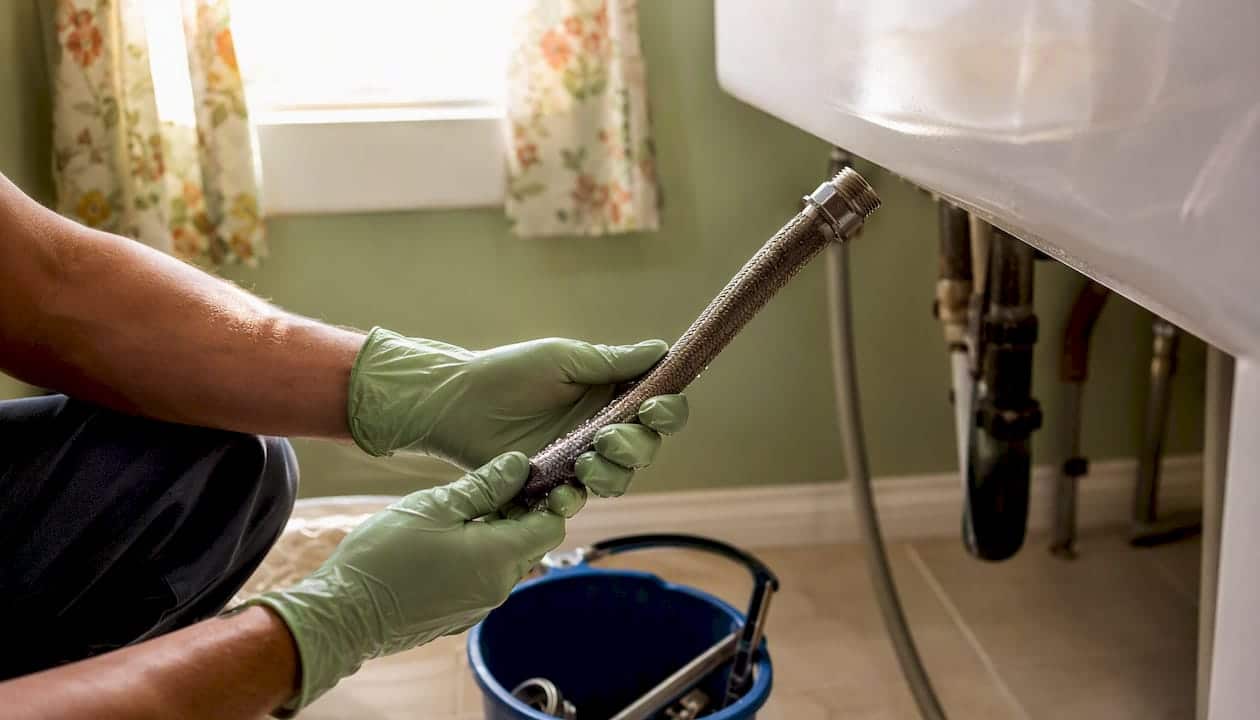
- Check rubber hoses for cracks, bulges, or stiffness. Replace them with braided stainless steel hoses, which last significantly longer.
- Note the age of your water heater. Most last 8–12 years. A unit past that range sitting on a finished floor is a real risk.
- Look at the base of the water heater for rust staining or mineral deposits, which signal a slow leak.
4. Spot the signs of hidden water damage
Musty smells, bubbled or peeling paint, soft spots in flooring, and discoloration on ceilings are all red flags. Check under every sink, around every toilet base, and along the bottom of exterior walls in finished basements. A moisture meter (around $20) can confirm what your nose suspects.
Pro Tip: Run your washing machine, dishwasher, and ice maker only when someone is home and awake. A small hose failure during an overnight cycle can go undetected for hours.
5. Know when to call a plumber
DIY is fine for tightening a supply line or replacing a toilet flapper. Call a plumber for corroded fittings, any leak at the water heater base, or a supply line that won’t stop weeping after you’ve tightened it. The cost of a service call is a fraction of what water damage restoration runs. For a deeper look at common sources of water leaks, a plumbing-focused overview can help you prioritize what to address first.
How to protect your home’s exterior from water intrusion
The outside of your home is where most water damage actually begins. Rain hits the roof, runs into gutters, and either moves safely away from your house or pools against your foundation. Getting this system right is the single highest-impact thing most homeowners can do.

Gutter maintenance cadence
Clean gutters at least quarterly, more often if you have overhanging trees. Clogged gutters overflow against fascia boards, saturate the soil at your foundation, and create the exact conditions for basement seepage and rot. For Florida homeowners dealing with year-round debris and heavy rain, a Florida-focused gutter maintenance checklist is worth bookmarking.
Downspout placement
This is where a lot of homeowners stop short. Clean gutters are not enough if your downspouts dump water two feet from your foundation wall. Extend every downspout at least six feet from the house, sloping away from the structure. Splash blocks help, but a rigid or flexible downspout extension is more reliable.
Roof and flashing inspection
Walk your roof line (or use binoculars from the ground) after any major storm. Look for:
- Missing or lifted shingles
- Damaged or separated flashing at chimneys, vents, and skylights
- Soft spots or discoloration in the attic directly below penetrations
Flashing failures are a leading cause of slow, hidden roof leaks that don’t show up inside until significant damage has already occurred.
Grading and landscaping
The ground around your foundation should slope away from the house at roughly a 6-inch drop over the first 10 feet. Flower beds built up against foundation walls, compacted clay soil, and low spots near the house all work against you. Mulch is fine, but keep it a few inches away from the siding and foundation.
| Exterior task | Frequency | Risk if skipped |
|---|---|---|
| Gutter cleaning | Quarterly (minimum) | Foundation erosion, fascia rot, basement seepage |
| Downspout extension check | Annually | Water pooling at foundation |
| Roof and flashing inspection | Annually + after storms | Hidden leaks, structural damage |
| Grading check | Every 2–3 years | Soil migration toward foundation |
| Window and door caulk | Every 2–3 years | Wind-driven rain intrusion |
Clean gutters alone won’t protect your foundation if the grading allows pooling or the downspouts discharge too close to the house. All three elements work together.
Your seasonal water damage prevention checklist
Timing matters. The highest-risk periods for water damage follow predictable patterns, and a seasonal routine keeps you ahead of them.
1. Winter prep (November through January)
- Insulate pipes in unheated spaces: crawl spaces, garages, and exterior walls.
- Shut off and drain exterior hose bibs before the first freeze.
- Drain and blow out irrigation systems.
- Keep indoor heat at 55°F or above even when the house is vacant. Insurers frequently deny claims for frozen pipe damage when the home was left unheated.
2. Spring storm prep (February through April)
- Clear gutters of winter debris before the rainy season starts.
- Test your sump pump by pouring water into the pit. Confirm the float triggers the pump.
- Check battery backups on sump pumps. A power outage during a storm is exactly when you need the backup to work.
- Walk the yard after the ground thaws and fill any low spots near the foundation.
3. Summer storm season (May through September)
- Inspect roof and flashing before hurricane season peaks. Schedule a professional roof inspection if you haven’t had one in two or more years.
- Prepare gutters for storms with the pre-storm gutter checklist before major weather events.
- Confirm downspout extensions are in place and not blocked.
4. Fall maintenance (October through November)
- Remove leaves from gutters before the wet season. A single heavy rain through a clogged gutter can send water directly behind your fascia.
- Consider installing gutter guards before leaf season peaks.
- Inspect the roof after summer storms while the weather is still workable.
Devices that detect and stop water damage before it spreads
The right devices give you a warning before a drip becomes a flood, and in some cases, they stop the water automatically.
Leak detectors
Basic leak sensors cost $15–$40 and sound an alarm when they detect moisture. Place them:
- Under the water heater
- Behind the washing machine
- Under the dishwasher
- Under every sink (especially kitchen)
- Near the sump pump pit
Wi-Fi-enabled sensors (brands like Moen Flo, Govee, or Honeywell Lyric) send alerts to your phone, which matters when you’re not home.
Automatic shutoff valves
Whole-house automatic shutoff valves connect to your main line and close it when sensors detect a leak or when flow patterns suggest a burst pipe. They run $200–$500 installed. For a home with a finished basement or high-value flooring, the math is straightforward.
Smart water controllers
Devices like the Moen Flo Smart Water Monitor analyze flow data continuously and can detect micro-leaks too small to trigger a sensor. Some insurers offer premium discounts for whole-house monitoring systems.
Sump pumps and battery backups
A sump pump handles groundwater intrusion in basements and crawl spaces. The battery backup is not optional in storm-prone areas. A power outage during a heavy rain is the exact scenario where your sump pump is working hardest, and the grid is most likely down.
Pressure-reducing valves
If your pressure test comes back above 65 PSI, a PRV is a high-return investment. It protects every fixture and appliance connection in the house and reduces the long-term risk of supply line failures.
Pros and cons at a glance:
- Basic leak sensors: Low cost, easy to place, no installation. Battery-dependent; won’t stop the water, only alert you.
- Automatic shutoff valves: Stop water flow automatically, insurance-discount eligible. Higher upfront cost, requires professional installation.
- Battery backup sump pumps: Protects during power outages. Batteries need annual testing and periodic replacement.
- Smart water monitors: Detect micro-leaks, remote alerts, usage data. Monthly subscription fees on some models.
A maintenance schedule you can actually follow
Consistency beats perfection. A simple recurring schedule, kept in a home maintenance log, also builds the documentation trail that helps with insurance claims.
| Task | Frequency | Who does it |
|---|---|---|
| Visual walk-through (under sinks, around appliances) | Monthly | Homeowner |
| Test smoke and CO detectors | Monthly | Homeowner |
| Gutter cleaning and downspout check | Quarterly | Homeowner or pro |
| Water pressure test | Annually | Homeowner |
| Test main shutoff and appliance shutoffs | Annually | Homeowner |
| Roof and flashing inspection | Annually | Pro recommended |
| Water heater inspection | Annually | Homeowner or plumber |
| Sump pump test | Annually (spring) | Homeowner |
| Full plumbing inspection | Every 2–3 years | Licensed plumber |
| Foundation grading check | Every 2–3 years | Homeowner or contractor |
Recordkeeping matters more than most homeowners realize. Insurers frequently deny claims when they determine the damage resulted from a condition the homeowner could have caught and fixed. Keep dated photos of inspections, receipts for repairs, and notes on anything you found and addressed. A simple folder on your phone works fine.
- Photograph gutters before and after cleaning.
- Save receipts for hose replacements, sensor purchases, and any contractor work.
- Note the date and result of every shutoff test.
What to do the moment you discover a leak or flooding
Speed is everything. One inch of water in a typical home can cause up to $25,000 in damage, and the gap between a manageable cleanup and a full restoration job is often measured in hours.
1. Shut off the water source immediately
If you know which appliance or fixture is leaking, close its shutoff valve. If you can’t isolate it, go straight to the main shutoff. This is why testing it annually matters.
2. Cut power to affected areas if it’s safe
Water and electricity are a serious hazard. If water is near outlets, panels, or appliances, turn off the breaker for that area before entering. If you’re unsure, stay out and call a professional.
3. Move valuables and contain the water
Get rugs, furniture, and electronics off wet floors. Use towels, mops, and wet-dry vacuums to remove standing water. The faster you remove moisture, the less likely mold becomes a secondary problem.
4. Document everything before you clean up
Take time-stamped photos and video of all affected areas before moving anything or starting cleanup. Capture the source, the spread, and any visible damage to walls, flooring, and belongings. This documentation is your insurance claim.
5. Contact your insurer promptly
Homeowners policies typically cover sudden and accidental leaks but exclude gradual damage and flooding. Report the incident quickly. Delayed reporting can complicate or void a claim.
6. Know when to call a restoration company
Call a pro when: water has been sitting for more than 24 hours, the source was a sewage line or backed-up drain (contaminated water requires professional remediation), or you see visible mold or structural softening. For a clean-water leak caught quickly, a homeowner can often manage cleanup with a wet-dry vac and fans. When in doubt, call.
Negligence is the most common reason insurers deny water damage claims. Failing to heat a vacant home, ignoring a known roof leak, or skipping routine maintenance all create grounds for denial. Proactive maintenance and documentation are your best protection.
What common prevention measures actually cost
Setting a realistic budget helps you prioritize. Here’s what typical prevention tasks run, roughly, for a single-family home.
- Gutter guard installation: — $600–$2,000+ depending on linear footage and guard type. Reduces cleaning frequency significantly.
- Downspout extensions: — $10–$30 per downspout for rigid extensions; a quick DIY fix.
Quick wins vs. scheduled work:
Quick wins you can do this week include leak sensors, downspout extensions, a pressure test, and a shutoff valve test. These cost under $100 total and take a few hours.
Scheduled contractor work includes gutter guard installation, PRV installation, and a professional roof inspection. Bundle tasks when you can. Having a contractor clean gutters while installing downspout extensions on the same visit cuts your per-visit cost.
Why gutters are your home’s first line of defense against water damage
Gutters do one job: move water off your roof and away from your foundation. When they fail, the consequences show up slowly and expensively, in the form of foundation erosion, basement seepage, fascia rot, and soffit damage.
Why the structural stakes are higher than most homeowners realize
A roof sheds thousands of gallons of water during a single heavy storm. Without a functioning gutter system, that water falls directly against your foundation, saturates the soil, and works its way into your basement or crawl space. Over time, this erodes the soil that supports your foundation and creates hydrostatic pressure against foundation walls. Correct downspout placement is as important as the gutters themselves.
Technical best practices
Seamless gutters have no seams along the run, which means no seam-leak failure points. They’re fabricated on-site to fit your roofline exactly. Hangers should be spaced no more than 24–36 inches apart to prevent sagging. Gutters need a slight pitch toward the downspout, typically about a quarter inch of drop per 10 feet, to drain completely. Downspouts should be sized to handle the roof area they drain. In high-rain climates, undersized downspouts back up during heavy storms even when the gutters are clean.
Common failure signs
- Sagging sections or gutters pulling away from the fascia
- Visible seam separations or rust spots
- Water marks on siding directly below the gutter line
- Pooling water or erosion at the base of downspouts
- Paint peeling on fascia boards
If you see any of these, gutter leak repairs may resolve the issue, but repeated problems after cleaning usually point to undersized gutters, inadequate hangers, or improper pitch.
Central Florida considerations
Florida’s rainfall intensity is among the highest in the country. Gutters here need to handle sudden, heavy downpours, not just steady rain. Aluminum gutters resist corrosion well in the Florida climate. Gutter guards reduce the frequency of cleaning, which matters when you’re dealing with year-round debris from live oaks and palms. A gutter guard installation designed for Florida conditions keeps gutters flowing during the storms that matter most.
When to hire a gutter professional
Call a pro when: you can’t safely access the roofline, gutters back up during storms despite recent cleaning, you see foundation pooling or erosion at the base of downspouts, or gutters are visibly pulling away from the fascia. A professional assessment covers pitch, hanger spacing, downspout sizing, and extension placement, and it takes the guesswork out of whether your system is actually working.
Pro Tip: After every significant storm, walk your property and look at the ground around your downspouts. Erosion channels or muddy splash zones tell you exactly where your drainage system is failing before the damage reaches your foundation.
Key Takeaways
Consistent maintenance of shutoffs, drainage, and appliances prevents the vast majority of residential water damage before it starts.
| Point | Details |
|---|---|
| Know your shutoffs | Test the main shutoff and all appliance shutoffs annually; label them so every household member can find them. |
| Control exterior drainage | Extend downspouts at least six feet from the foundation and clean gutters regularly to prevent foundation erosion. |
| Add sensors and monitor pressure | Place leak sensors near high-risk appliances and keep water pressure within 45–65 PSI to protect pipes and fittings. |
| Document all maintenance | Keep dated photos and receipts; insurers deny claims when they determine damage was preventable through routine upkeep. |
| Larrysgutters for exterior drainage | For Central Florida homeowners, Larrysgutters installs custom-fit seamless gutters and gutter guards that keep exterior drainage working through Florida’s heaviest storms. |
The part most homeowners skip until it’s too late
The conventional wisdom on water damage prevention focuses heavily on the dramatic stuff: burst pipes, flooded basements, roof collapses. Those events are real, but they’re not where most homeowners actually lose money. The bigger financial hits come from slow, preventable failures that were ignored for years.
A washing machine supply hose that’s been stiff and cracked for two seasons. Gutters that haven’t been cleaned since the previous owners lived there. A water heater that’s 14 years old sitting on a carpeted utility room floor. None of these look like emergencies until they are.
The most useful shift in thinking is to treat water damage prevention the way you treat car maintenance. You don’t wait for the engine to seize before changing the oil. The same logic applies here. A $30 braided hose replacement, a quarterly gutter cleaning, a $15 pressure gauge test. These are not exciting purchases. They are, however, the ones that keep a $25,000 restoration job from appearing on your calendar.
One thing worth saying plainly: exterior drainage is where most homeowners underinvest. Interior sensors and shutoffs are great, but if your gutters are dumping water against your foundation every time it rains, you’re fighting a slow structural battle you will eventually lose. Fix the outside first. The inside follows.
How Larrysgutters protects Central Florida homes from water damage
For homeowners in Central Florida, the exterior drainage system is the single highest-leverage place to invest in water damage mitigation. Florida’s rainfall is intense and frequent, and a gutter system that can’t keep up with a summer storm isn’t protecting your foundation, your fascia, or your basement.

Larry’s Gutters installs custom-fit seamless gutters fabricated on-site to match your roofline exactly, with no seams to leak and no generic sizing that leaves your downspouts undersized for Florida’s rain volume. The service includes correct pitch, properly spaced hangers, and downspout placement that actually moves water away from your foundation. Gutter guard installation is available for homeowners who want to reduce cleaning frequency and keep gutters flowing during the storms that matter most.
When you see foundation pooling, repeated backups despite cleaning, or gutters pulling away from the fascia, those are signals that your current system isn’t doing its job. A professional assessment from Larrysgutters covers everything: pitch, sizing, downspout placement, and guard options. Get a free estimate and find out exactly what your home needs.
Authoritative sources and further reading
These are the primary and government sources behind the guidance in this article. Each one is worth bookmarking.
- FloodSmart / NFIP (floodsmart.gov) — The National Flood Insurance Program’s consumer site. Use it to check your flood zone, understand what NFIP policies cover, and find an agent. Flooding is the most common and costly natural disaster in the U.S., and most homeowners insurance doesn’t cover it.
- FEMA Flood Insurance (fema.gov) — FEMA’s overview of the NFIP, including how to purchase coverage for buildings and contents. Useful if you’re evaluating whether a separate flood policy makes sense for your property.
- NFIP Claims Handbook — The official guide to filing a flood insurance claim. Covers documentation requirements, what’s covered and excluded, and how the claims process works. Essential reading before you ever need to file.
- Insurance Information Institute (iii.org) — Practical guidance on protecting your home from water damage, with clear explanations of what homeowners and renters insurance typically covers and where the gaps are.
