
Your water damage prevention workflow runs in seven steps: inspect → clean → repair → route downspouts and grade soil → install guards → test flow → schedule the next maintenance visit. Florida averages roughly 54 inches of rain per year, and every one of those inches has to go somewhere. If your gutters can’t handle it, that water goes into your fascia, your foundation, and eventually your ceiling.
Start here right now:
- Walk your roofline and look for sagging gutters, visible rust, or debris piled at downspout openings.
- Clear one downspout by hand or with a garden hose to confirm water exits freely.
- Take photos of anything that looks off. You’ll need them for your maintenance log and for any pro quote.
The Larrysgutters gutter maintenance checklist maps every one of these steps to a printable homeowner workflow.
Key Takeaways
A complete water damage prevention plan for Central Florida homes starts with the gutters and works outward to the roof, attic, yard, and foundation.
| Point | Details |
|---|---|
| Follow the seven-step workflow | Inspect, clean, repair, route downspouts, install guards, test flow, then schedule the next visit. |
| Size up for Florida rainfall | 6-inch gutters with 3×4-inch downspouts handle peak storm flow better than standard 5-inch setups. |
| Inspect three times a year | Check in early spring, before hurricane season in late May, and within a week after any named storm. |
| Call a pro when fascia feels soft | Soft fascia, ceiling stains, or separated joints mean water has already entered; don’t wait on those. |
| Larrysgutters free inspection | A 30–45 minute visit covers gutters, downspouts, fascia, and roof edges with photos and a written quote. |
Table of Contents
- How landscaping choices affect water intrusion around your home
- Why your attic and roof belong in every inspection
- What Central Florida homes actually need, from the field
- Larrysgutters offers free inspections for Central Florida homeowners
- Sources
How landscaping choices affect water intrusion around your home
Gutters move water off your roof. Your yard determines where it goes next. Slope the soil at least six inches over the first ten feet away from your foundation so runoff drains outward, not toward the house. Splash blocks under each downspout outlet redirect the initial surge and prevent soil erosion directly below the spout.
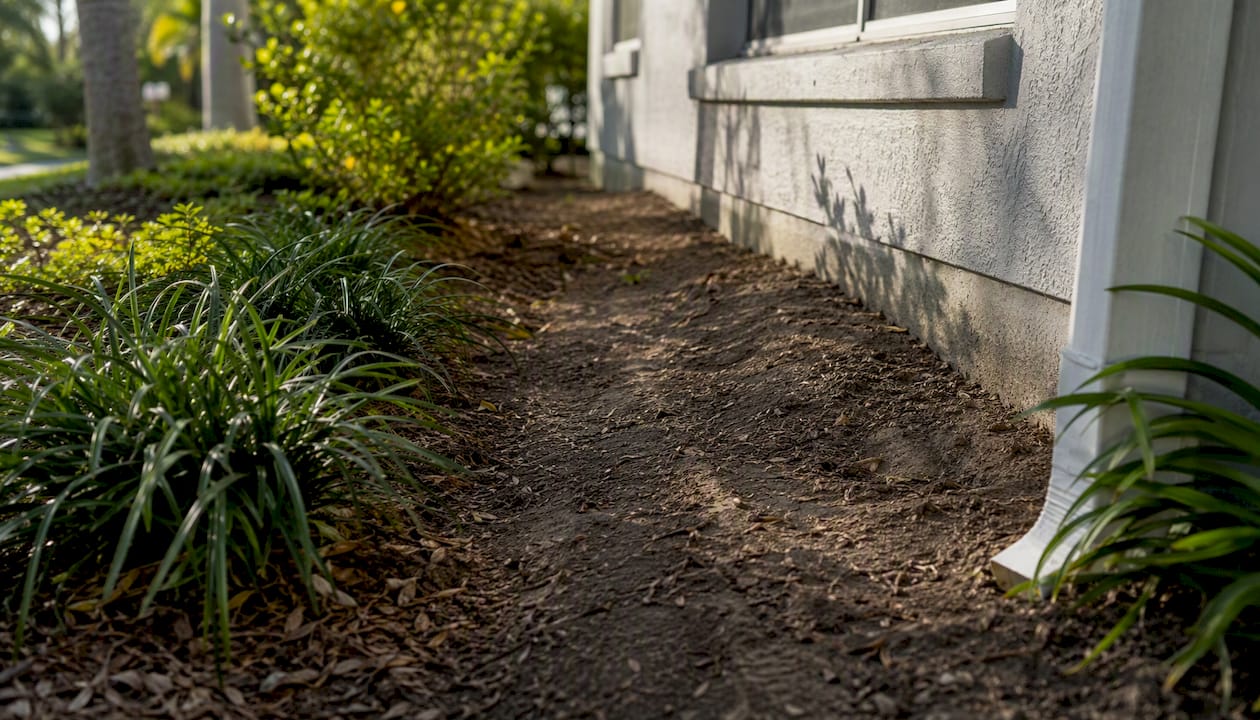
Dense ground cover like liriope or mondo grass slows sheet flow across bare soil and reduces the volume of water that reaches your foundation. Mulched beds absorb moderate rainfall, but avoid piling mulch against siding or the base of your walls. Wet mulch pressed against wood is one of the faster routes to rot.
The yard flooding prevention checklist covers grading, splash blocks, and downspout extensions in detail for homeowners who want to go further.
Why your attic and roof belong in every inspection
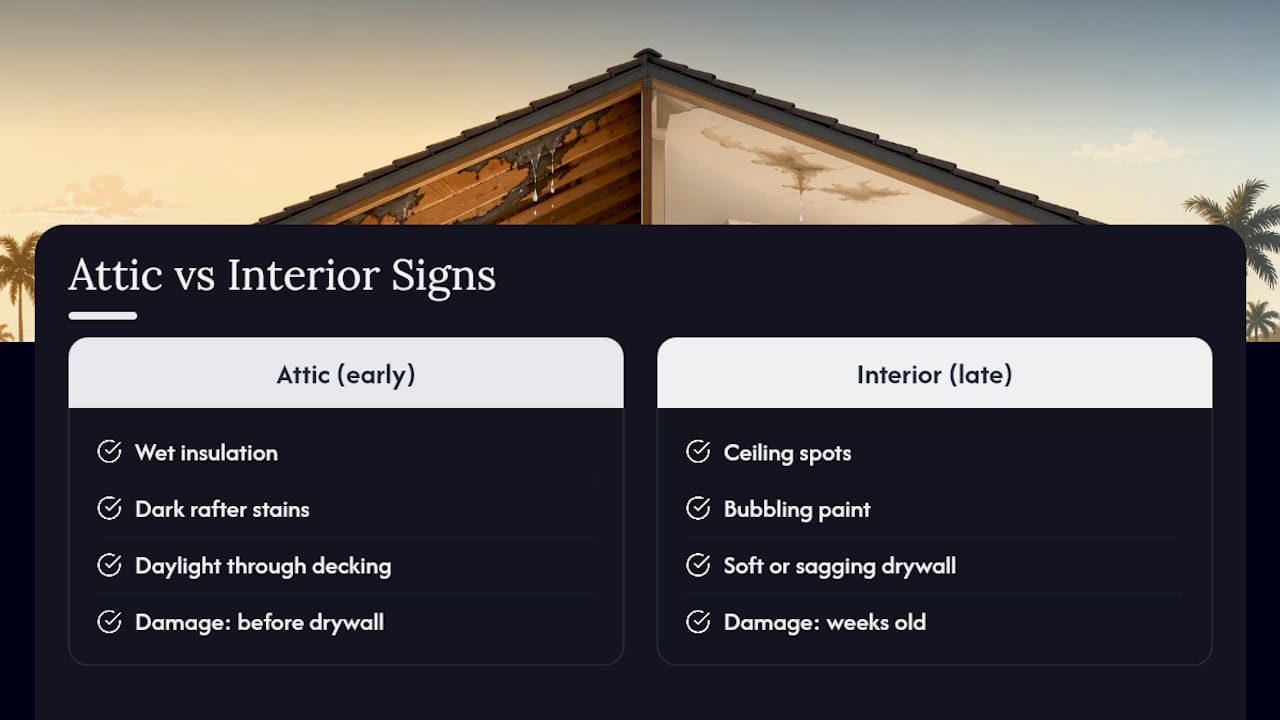
Gutters fail visibly. Roof and attic problems fail quietly, which makes them more expensive. Check your attic after any heavy storm for wet insulation, dark staining on rafters, or daylight showing through the decking. A single cracked ridge cap or missing shingle can send water straight past your gutters entirely.
Interior ceiling spots and bubbling paint or soft drywall are the clearest signs that water has already crossed the roof plane. By the time you see those, the damage is usually weeks old. Catching it at the attic stage, before it reaches drywall, cuts repair costs sharply. Pair your attic check with the roof water damage guide for a complete picture of what to look for above the gutter line.
What Central Florida homes actually need, from the field
The most common problems Larrysgutters technicians find on Central Florida roofs are clogged seams on older sectional gutters, undersized downspouts that can’t drain fast enough during a summer storm, and fascia boards already soft from years of slow overflow. Standard 5-inch gutters with 2×3-inch downspouts simply weren’t built for this climate. 6-inch gutters paired with 3×4-inch downspouts handle the peak flow that Central Florida storms produce.
Seasonal schedule: Inspect in early spring before the rainy season, again in late May before hurricane season opens, and within a week after any named storm passes.
Seamless gutters reduce seams to corners and downspout outlets only, cutting the number of leak points dramatically. Sectional systems need joint inspection every year and resealing every 2–3 years in Florida’s UV and heat. That maintenance burden adds up.
Gutter guards lower cleaning frequency but don’t eliminate it. Homes with pine trees nearby still need checks after every storm because pine needles compact and block flow faster than leaf debris.
Homeowner inspection checklist:
- Tools and PPE: Extension ladder, work gloves, safety glasses, garden hose, bucket, non-slip shoes.
- Time estimate: 45–60 minutes for a single-story home; 90 minutes for two stories.
- What to document: Sags, rust spots, separated joints, soft fascia, staining on siding below the gutter line, and any interior ceiling discoloration.
- Hidden damage signals: Soft or spongy fascia when pressed, white mineral streaks on brick or stucco below the gutter, and water stains on interior walls.
Pro Tip: Photograph the same four corners of your gutter system every inspection. Side-by-side photos from two seasons apart reveal slow sags and rust progression you’d never notice visit to visit.
Use a simple spreadsheet or even a notes app to log the date, what you found, and what you fixed. That record is exactly what a technician needs to prioritize repairs on a pro visit, and it’s what annual inspection steps recommend for trend monitoring.
For hidden leaks inside the home, check under sinks, around water heater connections, and along any wall adjacent to a roofline valley after heavy rain.
Larrysgutters offers free inspections for Central Florida homeowners
A Larry’s Gutters free inspection takes 30–45 minutes: a visual check of gutters, downspouts, fascia, and roof edges, photos of every problem area, a written quote, and a prioritized list of fixes so you know what’s urgent and what can wait.
Services tied directly to this workflow include seamless gutter installation, gutter guard installation, cleaning, repair, downspout rerouting, and grading advice. If your system is undersized for Florida rainfall, Larrysgutters can assess whether seamless gutters are worth the upgrade for your specific roof and lot. Request your free quote at Larrysgutters.
Sources
- Step-by-step leak detection: Find and fix water leaks
- Preventing Yard Flooding Checklist for Homeowners
- Water Damage Wall & Ceiling Repair in Pickering & GTA | Sigma Painting
