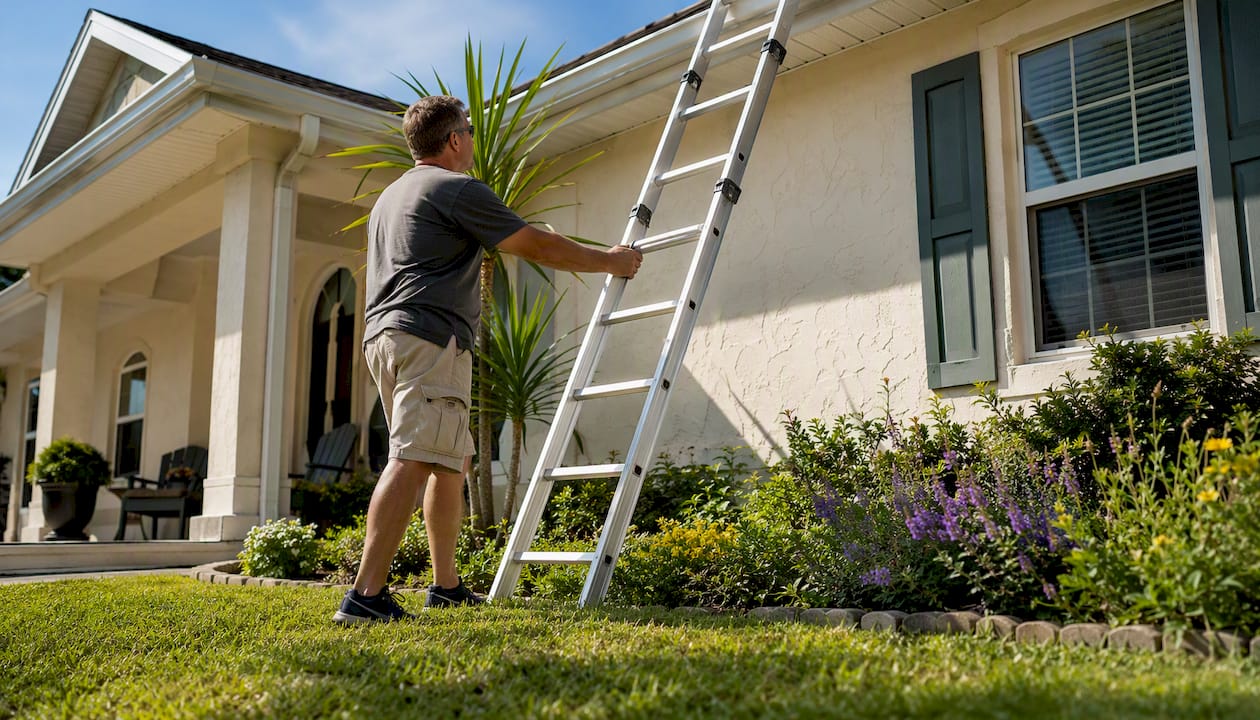
For most single-story homes, a fiberglass extension ladder rated for your weight plus gear is the right tool for safe ladder use for gutters. A key rule that helps prevent many falls is to extend the ladder above the gutter line sufficiently and maintain constant contact.
The American Ladder Institute estimates that ladder-related injuries treated annually in the U.S. range from roughly 150,000 to 500,000. Most of those accidents happen at home, and most are preventable with a few non-negotiable habits:
- Extend 3 ft above the landing. The top of the ladder must clear the gutter edge by at least 3 feet so you have a solid handhold when stepping on and off.
- Set the 1:4 angle. For every 4 feet of ladder height, the base sits 1 foot out from the wall.
- Match the duty rating. Your weight plus tools plus clothing must fall within the ladder’s rated load capacity.
- Three points of contact, always. Two hands and one foot, or two feet and one hand, on the ladder at all times.
If your roofline is above 20 feet, there are overhead power lines nearby, or the ground around your foundation is soft or sloped, stop. Hire a professional. The math on risk changes fast at height.
Key Takeaways
Safe ladder use for gutters comes down to three things: the right ladder for your roofline, a correct setup every single time, and knowing when the job belongs to a professional.
| Point | Details |
|---|---|
| Choose the right ladder | A fiberglass extension ladder rated Type I or higher covers most residential gutter work safely. |
| Set the 1:4 angle and 3-ft extension | Base one foot out for every four feet of height; top of ladder clears the gutter by at least 3 feet. |
| Three points of contact | Two hands and one foot, or two feet and one hand, on the ladder at all times while climbing. |
| Use a stabilizer | A standoff keeps rails off the gutter, prevents deformation, and reduces lateral movement. |
| Larrysgutters | Central Florida homeowners can skip the ladder entirely with professional cleaning and gutter guard installation from Larrysgutters. |
Table of Contents
- What’s the right ladder for gutter cleaning?
- Pre-use inspection and site prep before you place the ladder
- How to set up your ladder correctly for gutter work
- How to climb, work, and come down safely
- Gutter-specific tools and safer alternatives to ladder work
- Common mistakes and the red flags that mean stop
- When should you hire a professional gutter service?
- What professionals actually see on residential jobs
- Larrysgutters handles the hard part for Central Florida homeowners
- Sources
What’s the right ladder for gutter cleaning?
Not every ladder works for every house. Getting this choice right before you buy or borrow saves you from a setup that looks fine from the ground but wobbles the moment you reach the gutter.
Ladder types compared
Extension ladders are the standard choice for single-story and two-story homes. They lean against the structure, extend to the height you need, and give you the reach to work along the gutter without repositioning constantly. For most residential gutter work, a 24-foot extension ladder covers a standard single-story home; a 32-footer handles most two-story rooflines.
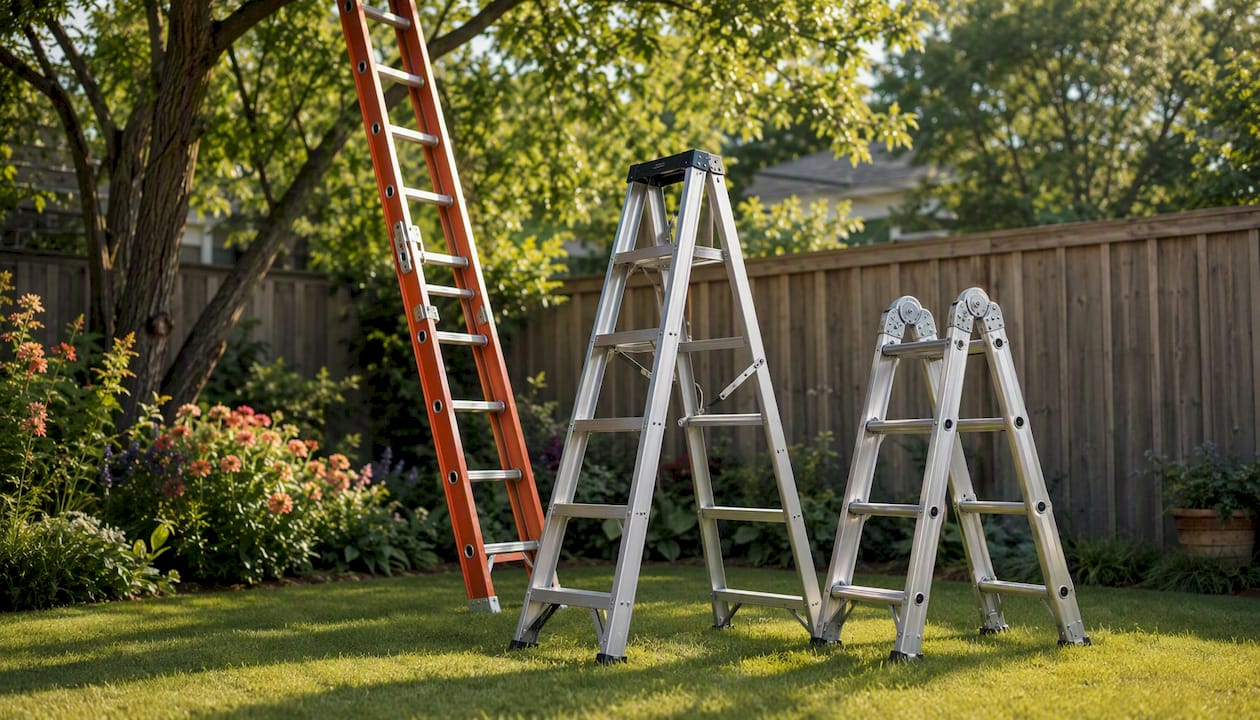
Stepladders and platform ladders work for low eaves, typically under 10 feet. A platform ladder with a built-in rail gives you a stable standing surface for extended work, which OSHA recommends for tasks requiring time at height. The limitation: you reposition more often.
Multi-position ladders fold into multiple configurations and can work as both a stepladder and an extension ladder. They are heavier and bulkier, but useful if you have limited storage or need both modes in one session.
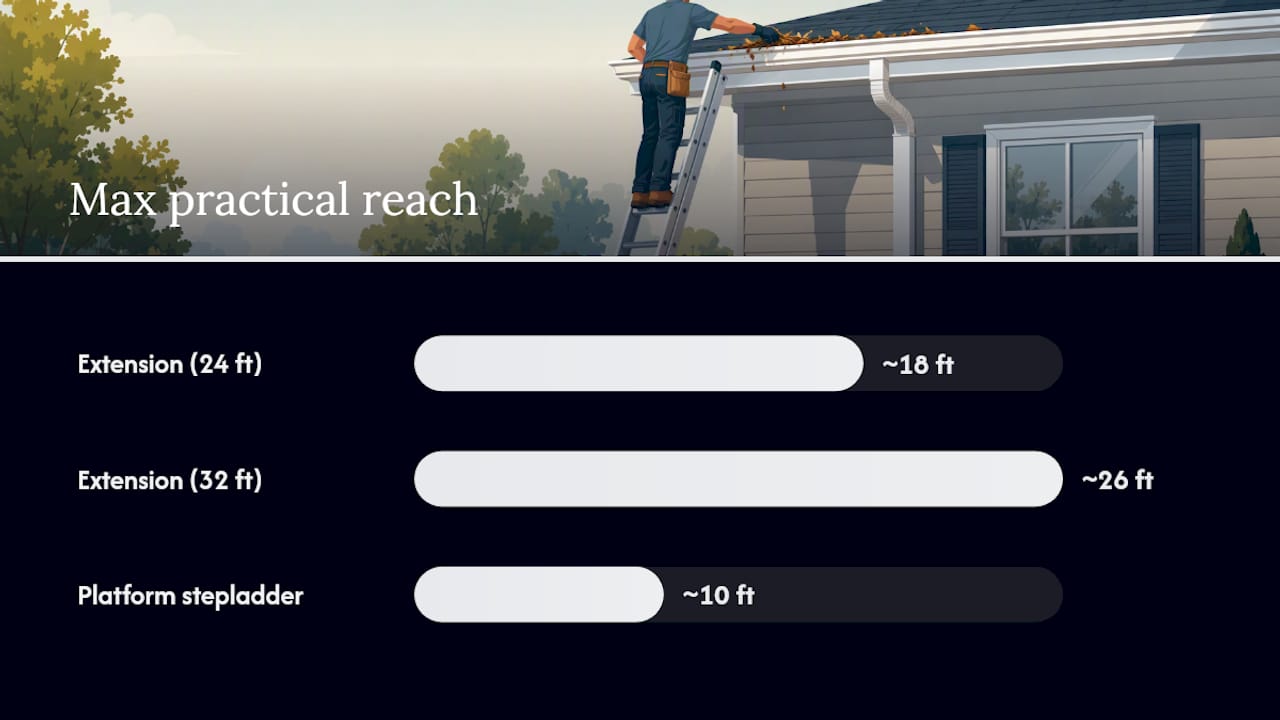
| Ladder type | Max practical reach | Best use case | Stability notes |
|---|---|---|---|
| Extension (24 ft) | ~18 ft working height | Single-story gutter runs | High; requires wall or stabilizer |
| Extension (32 ft) | ~26 ft working height | Two-story homes | High; base must be on firm ground |
| Platform stepladder | ~10 ft working height | Low eaves, short runs | Very high; self-supporting |
| Multi-position | Varies by config | Mixed tasks, tight storage | Moderate; check lock engagement |
Height math: advertised length vs. safe climbing height
The ANSI blog makes this clear: advertised ladder length is not your safe working height. A 24-foot ladder set at the correct 75-degree angle reaches roughly 20–21 feet at the top rung. Subtract the 3-foot extension above the landing, and your highest safe standing rung is around 17 to 18 feet. Plan for that gap when you shop.
Duty ratings: what ANSI types actually mean
OSHA Standard 1926.1053 requires portable ladders to support at least four times the maximum intended load. ANSI duty ratings translate that into weight limits you can read off the label:
- Type III (200 lb): Light household use. Too light for most gutter work once you add tools and a bucket.
- Type II (225 lb): Medium duty. Borderline for most adults with gear.
- Type I (250 lb): Light industrial. A solid floor for most homeowners.
- Type IA (300 lb): Industrial. Recommended if you carry a tool belt, bucket, and wear heavy work boots.
- Type IAA (375 lb): Extra heavy duty. Rarely needed for residential gutter work.
Add your body weight, clothing, footwear, tools, and any debris bucket. If that total approaches the rating, go one class higher.
Fiberglass vs. aluminum
Near overhead power lines, fiberglass is the only acceptable choice. Aluminum conducts electricity; fiberglass does not. Bob Vila’s testing confirms fiberglass as the professional preference for residential gutter work precisely because most homes have service lines running close to the roofline. Fiberglass is heavier, but that weight penalty is worth it.
Pro Tip: When renting or borrowing a ladder, check the label for the duty rating, look at the feet for worn rubber, and flex each rail slightly. Any visible bend, crack, or missing spreader lock is a reason to refuse it.
Pre-use inspection and site prep before you place the ladder
A 90-second check before you set the ladder up prevents the most common avoidable failures. Run through this every time, not just the first time.
What to inspect on the ladder
- Rails: no bends, cracks, or dents
- Rungs: no cracks, all parallel, skid-resistant surfaces intact
- Spreader locks (stepladders): fully engaged, not bent
- Feet: rubber pads present, not worn smooth or missing
- No oil, grease, mud, or wet leaves on any surface
Site and environmental checks
- Ground at the base: firm, level, free of loose gravel or wet grass
- No doorways or walkways directly behind the ladder base
- Mark the area with cones or a barrier if others use the space
- Check for overhead electrical service lines before raising the ladder
- Weather: OSHA’s ladder guidance specifies stable, level surfaces; wet or icy conditions make any surface unsafe. Wind above 25 mph is a hard stop.
For Florida homeowners specifically, afternoon thunderstorms can arrive fast. Check the forecast and plan morning sessions. More on cleaning gutters safely in Florida conditions is worth reading before your first session of the season.
PPE and tools to stage at ground level
Review the full essential gutter safety gear list before you start. At minimum, have these ready before you climb:
- Non-slip work boots (closed toe, rubber sole)
- Work gloves (puncture-resistant; gutter edges and nails are sharp)
- Safety glasses or goggles (debris, insects, and mold spores are real hazards)
- Tool belt or apron for small tools
- Rope-and-bucket or hoist for debris
Pre-use sequence (numbered)
- Inspect the ladder fully on the ground before raising it.
- Clear and mark the work zone.
- Check weather and overhead lines.
- Position and angle the ladder; verify the base is firm.
- Secure the top (tie-off or stabilizer) and lock spreaders.
- Put on PPE before the first step.
- Climb only after confirming all of the above.
How to set up your ladder correctly for gutter work
Setup is where most homeowners cut corners, and it’s where most falls begin.
The 1:4 angle rule
OSHA’s ladder eTool defines the correct angle as a 1:4 ratio: the horizontal distance from the wall to the ladder base equals one-quarter of the ladder’s working length. For a 20-foot working length, the base sits 5 feet out from the wall. At that angle, the ladder sits at roughly 75 degrees.
A quick field check: stand at the base with your toes touching the feet, arms extended straight forward. Your palms should rest comfortably on a rung at shoulder height. If you’re reaching or the ladder pushes back at you, adjust.
Extending above the gutter
OSHA’s fall safety publication is direct: extend the ladder at least 3 feet above the landing surface. For gutter work, that means the top two rungs clear the gutter edge. Never stand on those top rungs; they exist as a handhold for stepping on and off the roof or leaning over the gutter.
Stabilizers and standoffs: protect the gutter and yourself
Resting ladder rails directly on a gutter is one of the most common mistakes homeowners make. It deforms the gutter, can pull it away from the fascia, and creates a pivot point that increases lateral-fall risk. Professionals consistently recommend using a stabilizer or standoff that spreads contact to the wall or roofline on either side of the gutter, keeping the gutter clear entirely.
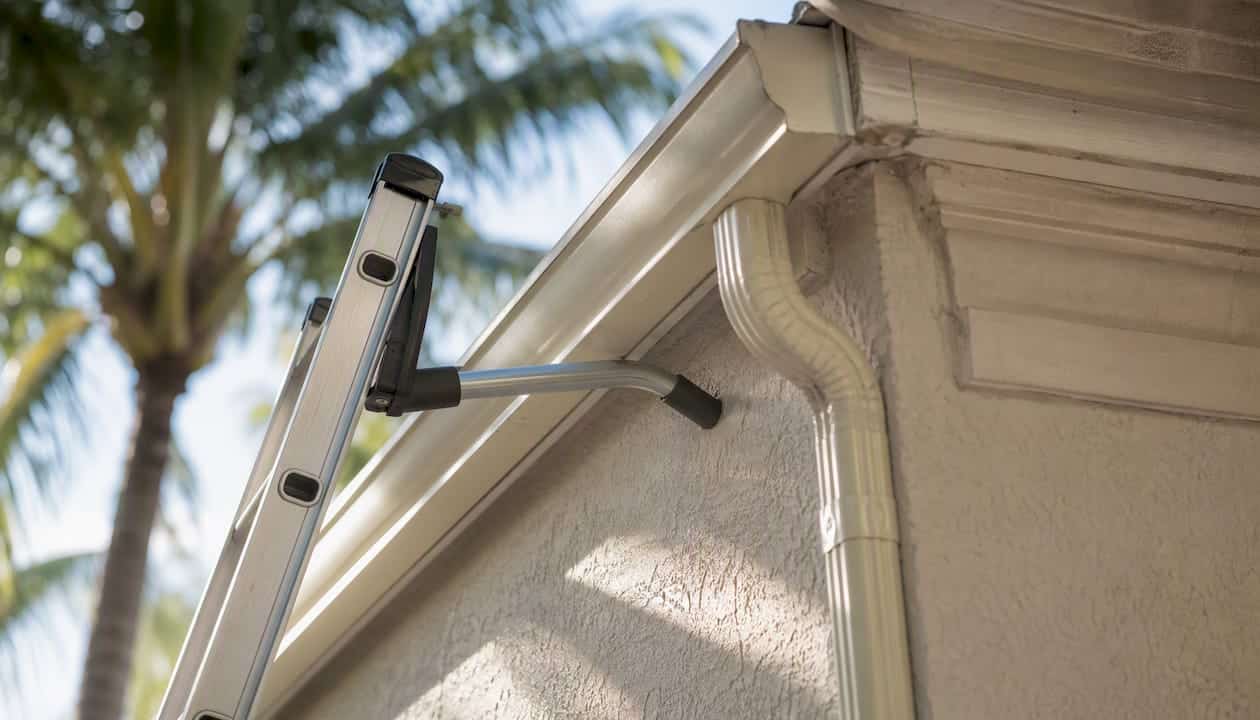
A standoff mounts to the top of the ladder and extends two padded arms outward, roughly 18–24 inches apart. The arms rest against the siding or fascia board, not the gutter. The result: the ladder is more stable laterally, the gutter is undamaged, and you have a clear view into the gutter channel as you work.
Leveling on uneven ground
Leg levelers that thread onto the ladder feet are the right solution for slightly uneven terrain. A flat board under one foot works in a pinch if the board is solid and wide. Rocks, bricks stacked loosely, or soft soil are not acceptable. If the ground is too uneven to level safely, reposition to a better spot or use a platform ladder with wider feet.
| Setup parameter | Recommended value | Source |
|---|---|---|
| Extension above landing | At least 3 ft | OSHA |
| Base-to-wall angle | 75° (1:4 ratio) | OSHA |
| Minimum load capacity margin | 4x intended load | OSHA/ANSI |
| Standoff arm spread | ~18–24 in from gutter | Industry practice |
Pro Tip: A stabilizer with rubber-tipped arms is the single best upgrade for gutter work. It costs under $40 at most hardware stores, takes 60 seconds to attach, and eliminates the two most common gutter-work hazards at once: gutter damage and lateral ladder movement.
How to climb, work, and come down safely
Three points of contact
The American Ladder Institute is unambiguous: maintain three points of contact at all times while climbing or descending. Two feet and one hand, or two hands and one foot. Keep your belt buckle between the side rails; the moment your hips shift outside the rails, your center of gravity is working against you.
Move one limb at a time. Slow is safe.
Where not to stand
Never stand on the top two rungs of an extension ladder or the top cap and top step of a stepladder. Those positions are not rated for standing load and put your center of gravity dangerously high. If the gutter feels out of reach from a safe rung, the ladder is too short. Come down and get the right one.
Handling tools and debris
Carry nothing in your hands while climbing. A tool belt keeps small tools accessible without breaking contact. For debris, a rope-and-bucket system works well: a 5-gallon bucket clipped to a rung with a carabiner, lowered and raised as needed. Carrying a full bucket of wet leaves down a ladder is how people get hurt.
- Wear gloves rated for puncture resistance; gutter edges, exposed nails, and old sheet metal are sharp.
- Safety glasses are non-negotiable. Debris, insects, and mold spores come out of gutters fast.
- Non-slip soles on closed-toe boots. Flip-flops and sneakers with worn soles are a hard no.
- Never reach beyond the side rails. Move the ladder instead, every time.
Pro Tip: Have a second person on the ground whenever possible, not necessarily holding the ladder, but watching, keeping others clear, and ready to call for help. If you work alone, at minimum block the area with cones and tell someone where you are.
Descending
Face the ladder coming down, just as you did going up. Lower one foot at a time, confirm the rung is solid, then move the next limb. Never jump from the last rung.
Gutter-specific tools and safer alternatives to ladder work
Attachments that reduce ladder contact with the gutter
A standoff or gutter protector keeps the ladder rails off the gutter channel entirely. Ladder saddles serve a similar purpose, cradling the ladder against the roof edge rather than the gutter. Both let you work directly over the gutter without pressing on it.
For tools, a gutter scoop with an extended handle lets you clear debris from a rung or two lower than you’d otherwise need to reach. A gutter maintenance tools list covers the full range of options worth having on hand.
Ground-based alternatives
Telescoping gutter cleaning wands attach to a standard garden hose or wet/dry vacuum and let you flush or vacuum gutters from the ground. They work well for light debris and flushing downspouts. Heavy, compacted debris, or gutters with standing water, typically require hands-on clearing from the ladder. Ground tools are a good supplement, not a full replacement for most homes.
When to choose a platform, lift, or professional
For rooflines above 20 feet, steep pitches, or homes with overhead service lines running close to the fascia, the risk profile of ladder work changes significantly. OSHA’s residential fall protection guidance recommends platforms and aerial lifts for extended high-risk tasks. Renting a lift for a one-time cleaning is a legitimate option. So is calling a pro.
If you clean gutters more than twice a year, gutter guards installed by a professional can reduce that frequency dramatically, cutting your ladder time over the long run. The gutter guard installation workflow from Larrysgutters explains what that process looks like for Florida homes.
Common mistakes and the red flags that mean stop
Most gutter-cleaning injuries trace back to one of a short list of avoidable errors. Recognize these before they become a problem.
Common mistakes:
- Leaning the ladder directly on the gutter instead of using a stabilizer
- Standing on the top cap or top two rungs to gain extra reach
- Setting the base on soft soil, mulch, or a slope without leveling
- Treating the advertised ladder length as the safe working height
- Overreaching to avoid moving the ladder
- Climbing in wet conditions or when wind is picking up
- Using a ladder with worn feet, bent rails, or a missing spreader lock
Red flags that mean stop immediately:
- The ladder shifts or rocks during setup or use. Lower and stop; do not re-climb until the base is corrected.
- You notice a bend, crack, or broken rung that wasn’t visible before. Take the ladder out of service.
- Wind increases noticeably while you’re on the ladder. Descend now.
- Gutter surface is wet or icy. Wet metal and wet rungs together are a serious fall risk.
- Overhead power lines are closer than you realized. Descend and reassess.
- You feel unsteady, fatigued, or dizzy at any point. Come down.
For a broader look at what to avoid during routine maintenance, the gutter care dos and don’ts resource covers the full picture.
When should you hire a professional gutter service?
Some situations simply aren’t suited to DIY ladder work, and recognizing them early is a judgment call worth making before you’re 20 feet up.
- Roofline above safe ladder reach. If your two-story home requires a ladder longer than 32 feet, or the working height exceeds 20 feet, professional access equipment is the safer path.
- Steep roof pitch. Steep pitches change how debris accumulates and make leaning-ladder work unstable.
- Overhead electrical hazards. Service lines running close to the fascia are a hard stop for DIY work.
- Frequent clogs. If you’re climbing three or four times a year, the cumulative risk adds up. A professional cleaning plus gutter guard installation often makes more financial sense.
- Physical limitations. Balance issues, recent injuries, or medications that affect coordination are legitimate reasons to hire out.
When you contact a professional, ask these questions before booking:
- Are you licensed and insured in Florida?
- What access method do you use (ladder, lift, platform)?
- Do you inspect the gutter and downspouts as part of the service?
- What does cleanup include?
- Do you offer minor repairs or gutter guard installation on the same visit?
A reputable contractor answers all five without hesitation. For gutter safety best practices specific to Florida homes, the local context matters: Florida’s afternoon storms, humidity, and roof moss growth create conditions that differ from a dry-climate home.
What professionals actually see on residential jobs
The homeowners who get hurt on ladders aren’t reckless. They’re careful people who made one small compromise: they leaned the ladder on the gutter instead of using a standoff, or they stood on the top rung to reach just a little farther, or they went up on a cloudy morning that turned windy by the time they were 18 feet up. The margin between fine and a serious fall is smaller than it looks from the ground. The one habit worth building before anything else: set the ladder up completely before you climb a single rung. Angle, extension, stabilizer, PPE. All of it. Every time.
Larrysgutters handles the hard part for Central Florida homeowners
Cleaning gutters safely means having the right equipment, the right setup, and the right conditions. When any of those three are missing, the risk goes up fast.

Larry’s Gutters serves residential homeowners across Central Florida with professional gutter cleaning, inspection, and maintenance, so you don’t have to manage the ladder math yourself. The service covers:
- Safe access using professional-grade equipment suited to your roofline
- Full gutter and downspout cleanout, including compacted debris
- Gutter and fascia inspection with a written summary of any issues found
- Minor repairs and gutter guard recommendations on the same visit
If your gutters need attention and the ladder setup feels like more than you want to manage, request a free quote from Larrysgutters and get a clear answer on what your home needs.
Sources
These are the primary references behind the guidance in this article:
- National Ladder Safety Month: Ladder Accidents in the Home Are Preventable – American Ladder Institute
- Ladder Safety Month: Operate safely at home – ANSI blog
- Residential fall protection guidance – OSHA
- The Best Ladders for Gutter Cleaning, Tested and Reviewed – Bob Vila
