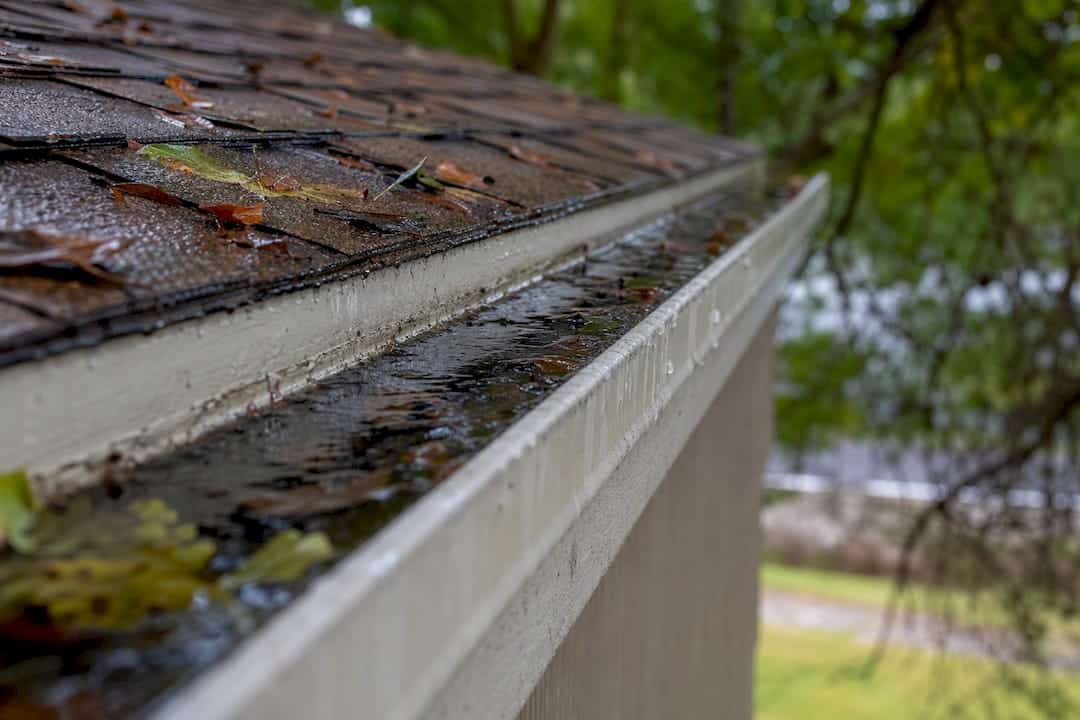
Water behind gutters almost always comes down to one culprit: capillary action pulling water sideways along a roof edge that’s missing a drip edge or has a gap between the shingles and the gutter. The fastest fix while you diagnose the real problem is to clear debris from the gutter, push it flush against the fascia, and slide a strip of flashing behind the drip edge as a stopgap. Tighten any loose hangers you can reach safely.
Some signs mean you shouldn’t wait for a dry weekend to deal with this:
- Water stains actively spreading on interior ceilings or walls
- Fascia board that’s soft, discolored, or visibly rotting
- A steady drip line forming during light rain, not just downpours
If you see any of those, treat it as urgent. Everything else below can wait for a calm, dry day.
Key Takeaways
Water behind gutters is a drip-edge and pitch problem far more often than it’s a rainfall problem, and fixing the sequencing stops the leak for good.
| Point | Details |
|---|---|
| Capillary action is the root cause | Water clings to short or missing drip edges and wicks backward toward the fascia. |
| Hose test diagnoses it fast | Run water from the far end of the gutter and watch where it actually goes. |
| Caulk is temporary | It seals gaps for months to a year, not permanently, so treat it as a stopgap only. |
| Insurance rarely covers it | Standard policies exclude maintenance-related gutter damage, only sudden perils qualify. |
| Larrysgutters handles the full fix | Inspects drip edge, fascia, and gutter attachment, then quotes the repair in one visit. |
Table of Contents
- Why Water Runs Behind Gutters in the First Place
- Fixing Water Behind Gutters Yourself: A Step-By-Step Approach
- When Water Behind Gutters Needs a Professional
- How to Stop It From Coming Back
- A Fast Checklist to Diagnose the Leak Today
- What We See on Roofs Across Central Florida
- Get a Straight Answer From a Local Gutter Crew
- Sources
Why Water Runs Behind Gutters in the First Place
Capillary action is the physical reason a stream of water clings to a metal edge instead of dropping straight down. Water molecules are attracted to surfaces more than they’re pulled by gravity over short distances, so a droplet running along the underside of a shingle or a short drip edge will trace that surface backward toward the fascia rather than falling into the gutter trough. It’s the same reason a drop of water crawls up the side of a straw. Inspectapedia’s research on backflowing gutters confirms this is usually a functional problem, not just heavy rain overwhelming the system.
Five installation faults create the conditions for it:
- Missing or undersized drip edge. A drip edge that’s too short lets water wick back under the shingle line instead of breaking off cleanly into the gutter.
- Wrong installation sequence. This Old House’s field testing shows a correctly sequenced drip edge directs water into the gutter; get the underlayment order wrong at the eave versus the rake and water finds a way around it.
- Gutters mounted too far from the fascia. Even a half-inch gap gives water room to bypass the trough entirely.
- Loose or improperly spaced hangers. When brackets pull away from the fascia, the gutter tilts back and water spills behind it instead of into it.
- Clogged downspouts and troughs. Standing water eventually finds the path of least resistance, which is often backward over the gutter’s rear lip.
Screw and bracket placement matters more than most homeowners realize. A hanger driven too high or too low changes the gutter’s angle just enough to open a channel behind it, and that channel widens every rainy season.
Fixing Water Behind Gutters Yourself: A Step-By-Step Approach
Before touching a ladder, run through a quick safety check: solid ground under the ladder’s feet, someone aware you’re up there, gloves for handling debris, and no working near overhead power lines. Skip this step and the gutter repair becomes the smaller problem.
- Clear the gutter and downspout completely. Scoop out leaves and grit, then run a garden hose from the far end and watch where the water goes. This hose test is the single best diagnostic tool you have.
- Watch for backflow during the test. If water climbs over the back lip instead of running toward the downspout, you’ve confirmed a capillary or pitch problem, not just a clog.
- Reseat and tighten loose hangers. Pull the gutter snug against the fascia and drive hanger screws into solid wood, not just the old screw holes, which often strip out over time.
- Install a flashing strip behind the drip edge. Homeowners in forums like r/HomeImprovement frequently land on this same fix when pulling the gutter isn’t practical: slide a narrow strip of flashing under the shingle edge and over the gutter’s back flange so water has nowhere to go but forward.
- Skip the caulk tube as a long-term answer. Caulk seals a gap for a few months to a year in most climates, then shrinks, cracks, and lets the same leak back in.
Pro Tip: Bend a slight downward kicker into the last inch of any flashing or drip edge you install. This Old House’s roofing crews use this small lip specifically to make water drop away from the edge rather than cling to it and crawl backward.
Adjusting gutter pitch is where DIY hits its ceiling. A proper slope runs about a quarter inch of drop for every 10 feet of gutter, and getting that wrong in the other direction creates standing water and new stress on the hangers. If your gutters run long, level, or already sag in the middle, that’s a pitch problem worth handing to a professional.
When Water Behind Gutters Needs a Professional
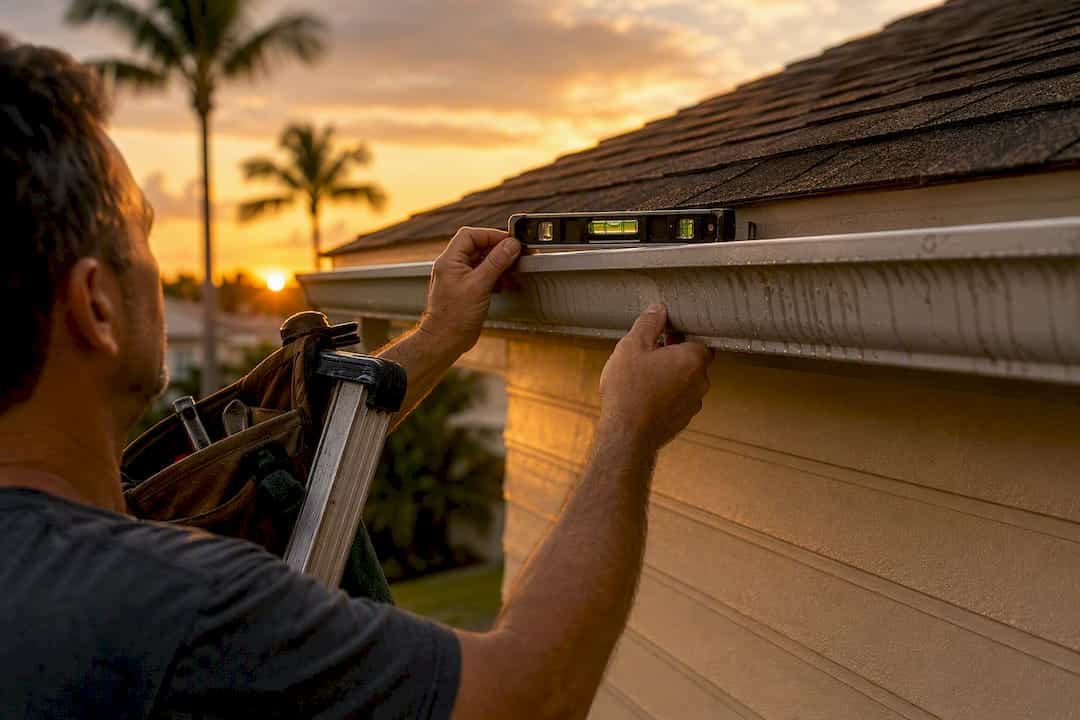
Two different trades handle this depending on the root cause. A roofer fixes drip-edge retrofits and shingle work at the eave and rake. A gutter installation specialist handles reseating, rehanging, or replacing the gutter system itself, including switching to seamless gutters or adding guards to cut down on future clogs.
Typical scopes and what they run:
- Reseat or re-hang existing gutters: a few hundred dollars in most cases, done in half a day
- Drip-edge retrofit: roughly $2 to $8 per linear foot installed, depending on profile and roof access
- Rotten fascia replacement: the most expensive line item, since it often means removing gutters and sometimes roof edge shingles to get at the damaged wood
- Full seamless gutter replacement: priced by linear foot and typically completed in a single day for most homes
Don’t count on your homeowners insurance to cover this. Progressive’s guidance on gutter coverage is blunt about it: standard policies treat clogged or neglected gutters as a maintenance failure, which is excluded. Coverage kicks in for sudden, covered perils, like wind damage or a falling tree limb, not gradual water intrusion from a drip-edge gap you’ve been ignoring.
How to Stop It From Coming Back
Prevention here is mostly a spec and a schedule, not a mystery. Coordinated roof-and-gutter planning at installation time solves most of this before it starts.
- Drip edge should extend at least a half inch past the fascia and sit under the shingle underlayment at the eave, over it at the rake, so wind-driven rain can’t sneak behind the gutter.
- Gutters should have a slight slope toward the downspout to ensure proper drainage, with hangers spaced every 24 to 36 inches for support.
- Clean gutters regularly throughout the year, especially in areas with heavy tree cover, and check every fastener while you’re up there.
- Gutter guards cut down on the debris that causes clogs and pitch problems in the first place, and downspout extensions carry water at least a few feet from the foundation.
Walk the roofline each spring and fall looking for anything that’s pulled loose, sagging, or stained. Small fixes caught early stay small.
A Fast Checklist to Diagnose the Leak Today
Run this sequence during the next rainstorm or with a hose:
- Watch where water actually goes. Does it fall into the trough or trace backward over the rear lip?
- Check the fascia and roof edge at the problem spot for gaps, exposed wood, or a gutter pulling away from the wall.
- Confirm the downspout is flowing freely and the gutter isn’t sagging between hangers.
- If it’s a clog or a loose hanger, handle it yourself. If it’s a drip-edge gap, pitch problem, or rotting fascia, that’s a call to a professional.
That four-step read tells you almost everything you need to know before you spend a dime.
What We See on Roofs Across Central Florida
The most common mistake we run into is a gutter crew installing over a drip edge that was never sequenced correctly by the roofer, so the leak gets blamed on the gutter when the roof edge caused it. Coordinating both trades at inspection time catches this before it becomes a fascia replacement.
— Results
Get a Straight Answer From a Local Gutter Crew
Reading about capillary action and drip-edge sequencing only gets you so far when you’re standing on a ladder trying to figure out why your fascia is stained. Larrysgutters sends a technician to your roof edge who can tell in minutes whether you’re looking at a drip-edge gap, a pitch problem, or gutters that were never properly seated against the fascia in the first place, something a DIY hose test can point to but not always fix for good.

A typical visit includes a full inspection of the drip edge, fascia condition, and gutter attachment, followed by a straightforward estimate covering exactly what needs fixing, whether that’s a drip-edge retrofit, reseating loose sections, or replacing gutters that have outlived their hangers. Most repairs are scoped and scheduled within the same visit. If your gutters have been leaking behind the fascia for more than one season, request a free quote and get it diagnosed properly instead of re-caulking it again this fall.
Sources
- Gutter defects and backflowing gutters — Inspectapedia
- Common drip edge installation mistakes and how to avoid them — This Old House
- Does homeowners insurance cover gutters? — Progressive
