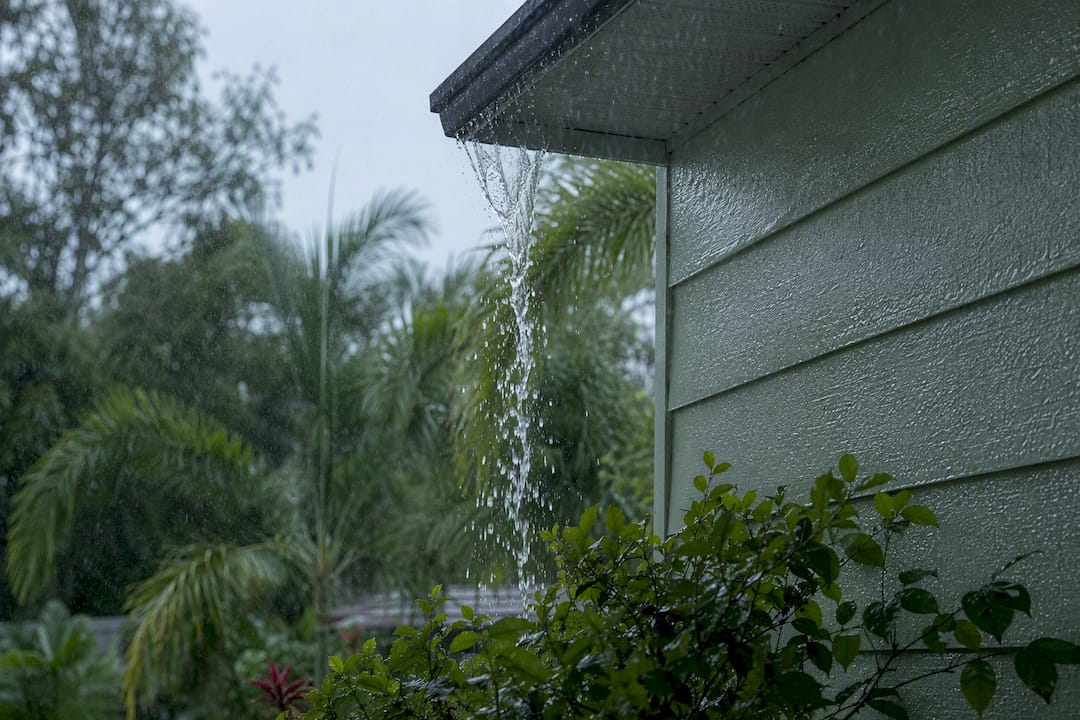
Do these high-impact things now: clean gutters and downspouts, change your AC filter, test your emergency kit. Walk your roofline for lifted shingles, trim dead limbs, and photograph your home’s condition room by room. Every one of these tips for Florida homeowners takes under an hour, and skipping them is how a $200 fix turns into a $20,000 claim.
- Clean gutters and confirm downspouts drain at least 3 feet from the foundation
- Swap or wash your HVAC filter and set the thermostat fan to AUTO
- Check that your emergency kit includes water, food, and medication to last the recommended duration for Florida emergencies
- Walk the roof edge for lifted flashing or missing granules
- Cut back branches hanging over the roof or power lines
- Test your sump pump and any portable dehumidifiers
- Photograph siding, roof, fencing, and major appliances for your insurance file
- Confirm your indoor humidity sits between 40% and 55% using a $15 hygrometer
Key Takeaways
Protecting a Florida home comes down to controlling water, whether it falls as rain, rises as humidity, or surges in a storm, and gutters are the cheapest first line of defense against all three.
| Point | Details |
|---|---|
| Keep humidity in check | Aim to maintain indoor relative humidity within a comfortable and healthy range, avoiding extended periods at higher levels. |
| Service HVAC twice yearly | Book tune-ups in spring and fall, and check filters monthly during summer. |
| Clean gutters regularly | Clear gutters and downspouts at least twice a year to prevent foundation and mold damage. |
| Stock a 7 day kit | Keep at least a week of water, food, and medication ready before hurricane season starts. |
| Document everything | Photograph your property each season and save repair receipts for faster insurance claims. |
| Upgrade your gutter system | Larrysgutters installs custom-fit seamless gutters and guards built for Florida’s rainfall and coastal conditions. |
Where to Learn More
- Florida Department of Health preparedness guidance
- UF/IFAS humidity guidance
- EPA mold prevention guidance
- Florida Division of Emergency Management
Table of Contents
- A Month-by-Month Maintenance Schedule for Florida Homes
- What Humidity Level Should You Keep Inside Your Florida Home?
- How Often Should You Service Your Air Conditioner in Florida?
- Why Gutters Are Your Home’s First Line of Defense
- Does Your Roof Really Need Replacing After 15 Years?
- What Should Be in a Florida Hurricane Emergency Kit?
- How Maintenance Records Help You File a Faster Insurance Claim
- What Do Common Home Maintenance Services Cost in Florida?
- Which Home Repairs Are Safe to DIY in Florida?
- Choosing Landscaping That Survives Florida Storms
- Keeping Termites and Mosquitoes Out of Your Florida Home
- Protecting Metal, Fasteners, and Outdoor Furniture From Salt Air
- Why Florida’s Soil Makes Foundation Drainage So Critical
- Why Florida Water Quality Affects Your Plumbing and Water Heater
- Sump Pumps, Flood Barriers, and Protecting Your Home Beyond Wind
- Frequently Asked Questions
- Sources
A Month-by-Month Maintenance Schedule for Florida Homes
Florida doesn’t have four seasons so much as two: wet and dry, storm and recovery. Building tasks around that rhythm beats a generic spring-cleaning list.
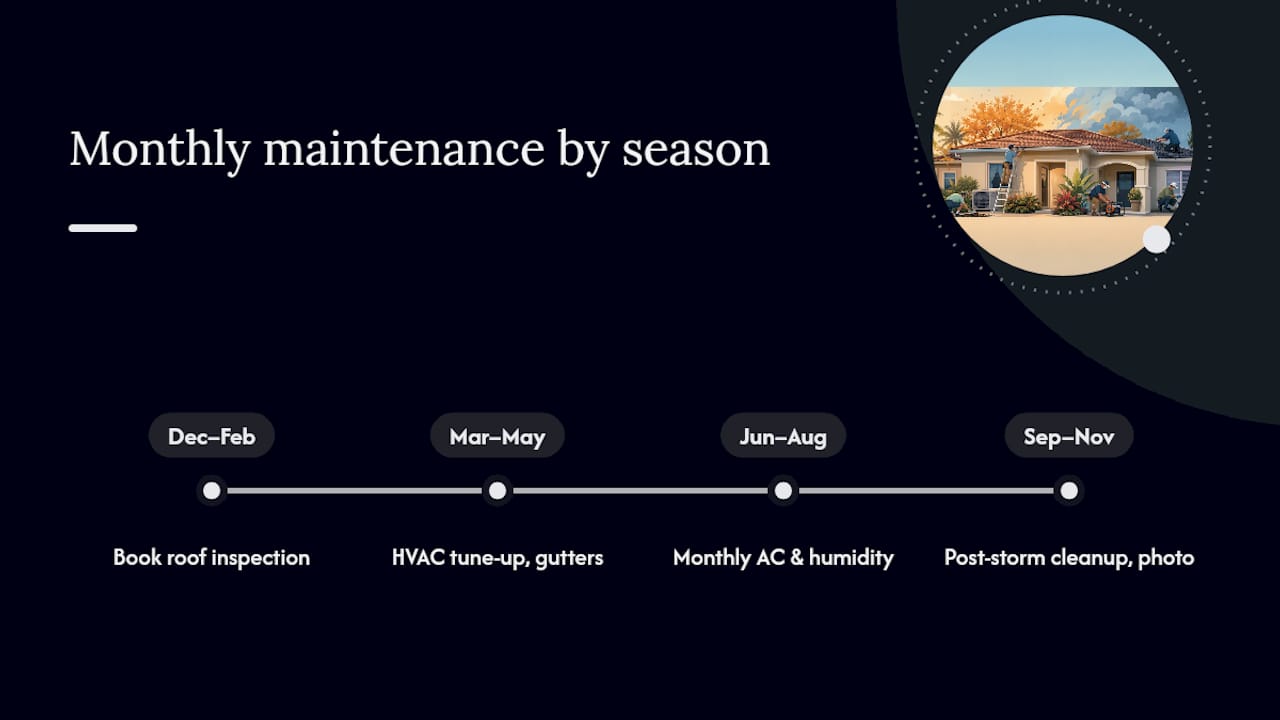
Winter (December through February): Book your annual roof inspection while contractors have open schedules, since demand spikes right before hurricane season. Check attic insulation and look for any signs of winter condensation.
Spring (March through May): Schedule your HVAC tune-up in March or April, before the summer heat backs up every technician in the state. Clean gutters after spring pollen drops, inspect caulking around windows, and test your shutters or impact protection before June 1.
Summer (June through August): This is peak humidity and hurricane season. Check your AC filter monthly, watch your energy bills for spikes that signal a failing system, and monitor weather advisories weekly.
Fall (September through November): Do a full post storm-season walkthrough. Reinspect the roof, clear storm debris from gutters, and re-photograph the property for your records before the next cycle starts.
What Humidity Level Should You Keep Inside Your Florida Home?
Keep indoor relative humidity between about 40% and 55%, and avoid sustained periods above 60% to reduce mold risk, according to guidance from UF/IFAS, which also notes that a properly functioning air conditioner can remove a significant amount of water from indoor air daily.
A $15 hygrometer from any hardware store tells you where you stand. If the number creeps past 55%, run bathroom and kitchen exhaust fans longer, clean your AC’s condensate line with a wet/dry vacuum, and consider a portable dehumidifier for the shoulder months of spring and fall, when UF/IFAS specialists say humidity often outpaces your AC’s ability to keep up.
- Measure humidity weekly with a hygrometer
- Set your thermostat fan to AUTO, not ON
- Run exhaust fans for 20 minutes after showers
- Clean condensate lines every quarter
- Add a dehumidifier during shoulder-season months
Pro Tip: Leaving your thermostat fan set to ON keeps air moving constantly, but it also re-evaporates the condensation sitting in your drain pan and blows it right back into your living space. AUTO lets the system drain between cycles, which is one of the simplest, free fixes for a sticky house.
How Often Should You Service Your Air Conditioner in Florida?
Book a professional AC tune-up twice a year, once in spring and once in fall, and check your filter monthly during the heaviest cooling months. A Florida AC unit runs nearly year-round, and that workload wears down coils, condensate lines, and refrigerant levels faster than in milder climates.
Right-sizing matters more here than almost anywhere else in the country. A unit sized off a rough guess instead of a proper Manual J load calculation short-cycles, which cools the air but skips the slower, steadier runtime needed to actually pull moisture out of it. Variable-speed systems generally outperform single-speed units on humidity control because they run longer at lower output instead of blasting cold air and shutting off.
- Schedule professional tune-ups every spring and fall
- Check filters monthly from May through September
- Clean coils and condensate lines annually
- Confirm your system was sized with a Manual J calculation, not a guess
Pro Tip: A basic fiberglass filter costs less but does little for air quality. A pleated MERV 8 to 11 filter captures far more dust and pollen, and homes with pets or nearby construction should replace it monthly instead of quarterly.
Why Gutters Are Your Home’s First Line of Defense
Clogged gutters are one of the fastest routes to a wet foundation, a rotted fascia board, and a mold problem you can’t see until it’s expensive. Water that should run 10 feet away from your house instead pools at the base of your foundation, and in Florida’s sandy, fast-draining soils that moisture doesn’t just sit there. It wicks upward into stucco, siding, and slab edges.
Clean gutters twice a year at minimum, more often if you’re under oak or pine canopy. Confirm every downspout discharges at least 3 feet from the foundation, and add extensions or splash blocks where water still pools close to the house. In coastal counties, check hangers, screws, and seams for corrosion, since salt-laden air eats through cheap fasteners faster than most homeowners expect. Gutter guards cut down on debris buildup significantly, which matters most under heavy tree cover. A gutter maintenance checklist built for Florida conditions is worth following room by room rather than relying on memory.
- Clean gutters at least twice a year
- Verify downspouts discharge 3+ feet from the foundation
- Add splash blocks or extensions where water still pools
- Inspect hangers and fasteners for corrosion near the coast
- Consider gutter guards under heavy tree canopy
Pro Tip: Time your cleanings around local leaf and pollen drop rather than a fixed calendar date. Oak pollen in spring and dropped leaves after fall storms clog gutters fastest, so check right after those events instead of waiting for your next scheduled cleaning. If you’re getting on a ladder yourself, review basic ladder safety guidance first.
Does Your Roof Really Need Replacing After 15 Years?
Not automatically, but plenty of insurers treat 15 years as the point where they want a professional inspection before renewing or writing a policy. That’s the source of the so-called “15-year roof rule” homeowners hear about at renewal time. It’s an insurance industry checkpoint, not a hard expiration date. A roof that’s been well maintained, ventilated properly, and spared major storm damage can often pass inspection well past that age.
What actually shortens roof life in Florida is UV exposure, algae and mold streaking, and wind uplift at the edges and flashing points. Walk your roofline twice a year and after every major storm, looking for lifted or missing shingles, cracked pipe boots, and dark streaking that signals algae growth.
- Do a visual roof inspection every spring and fall
- Check for lifted flashing and cracked pipe boots after storms
- Book a professional inspection at the 15-year mark for insurance purposes
- Photograph and date every inspection for your records
Is a 15-year-old roof automatically uninsurable? No. Most insurers want documentation of its condition, not automatic replacement. An authorized roof inspection with photos and a written report is usually enough to satisfy underwriting if the roof is sound.
What Should Be in a Florida Hurricane Emergency Kit?
Florida emergency guidance calls for at least 7 days of supplies per person, not the 3 days often recommended elsewhere, because the Florida Department of Health notes multiple storms can make landfall in quick succession during a single season. That means water, nonperishable food, medications, batteries, and pet supplies all need to last a full week without power or open stores.
Hurricane season runs June 1 through November 30. In the 72 hours before landfall, secure or bring in outdoor furniture and decor, test your shutters or impact panels, and top off your generator’s fuel. In the days before that window closes, trim any hazard limbs near the house, test your sump pump, and photograph valuables and current property condition for your insurance file. The Florida Division of Emergency Management also stresses knowing your evacuation zone and your home’s wind resistance well before a storm forms, not after.
- Stock enough supplies to last each individual in your home the recommended duration for emergency preparedness
- Secure or store outdoor furniture and décor
- Test shutters, impact panels, and your generator
- Trim hazard limbs before storm season starts
- Photograph and document your property’s pre-storm condition
A full week of supplies, not three days, is the state’s own benchmark for Florida households, precisely because a single season can bring back-to-back storms with little recovery time between them.
How Maintenance Records Help You File a Faster Insurance Claim
Insurers look for evidence that damage came from a covered storm event, not from years of deferred maintenance. A homeowner with dated photos and service records moves through a claim faster than one who can only describe what the house used to look like.
Keep dated photos of your roof, gutters, siding, and major systems every season. Save receipts for every inspection and repair, especially HVAC service and roof work, and keep a simple written inventory of valuables with approximate replacement values.
- Photograph the property every season, dated and labeled
- Save receipts for HVAC, roof, and gutter service
- Keep an inventory of valuables with estimated values
- File claims as soon as it’s safe to inspect the property after a storm
Pro Tip: Keep one copy of your records in a cloud folder and one printed set in a waterproof bag or safe. Cloud storage does you no good if you can’t access Wi-Fi after a storm knocks out power for a week.
What Do Common Home Maintenance Services Cost in Florida?
Budgeting a few hundred dollars a year for routine service almost always beats paying for storm or water damage later. Costs vary by region and home size, but the ranges below give a realistic starting point for planning.
- Budget replacements for major home systems based on typical lifespans; for example, roofs, water heaters, and AC units have variable service lives that homeowners should anticipate.
- Set aside a small monthly reserve rather than covering these costs in one lump sum
Which Home Repairs Are Safe to DIY in Florida?
Filter changes, gutter cleaning from stable ground-level equipment, caulking gaps around windows, and basic pool chemistry checks are all reasonable DIY tasks for most homeowners. Roof work, major electrical repairs, structural drainage changes, and complex HVAC repairs are not, no matter how confident the YouTube tutorial makes it look.
Some signs mean stop and call a licensed pro immediately: an active roof leak, a visibly sagging roofline, a drain that backs up repeatedly no matter how many times you clear it, or cracks that suggest foundation settlement. Attempting a fix on any of these usually costs more once a professional has to undo the damage first. If you’re unsure whether a gutter issue is DIY territory, a gutter repair guide built specifically for Florida conditions can help you tell the difference.
- Safe DIY: filter changes, ground-level gutter cleaning, caulking, pool chemistry
- Call a pro: roof work, major electrical, structural drainage, complex HVAC repairs
- Red flags: active leaks, sagging rooflines, repeated drain backups, foundation cracks
Pro Tip: Vet any contractor’s license and insurance before signing anything, and schedule non-urgent work in late winter when demand and prices both drop before hurricane season ramps back up.
Choosing Landscaping That Survives Florida Storms
Not every attractive plant belongs near a Florida house. Fast-growing trees with shallow root systems, like many non-native ficus or Australian pines, topple easily in sustained winds and take fences, roofs, and power lines down with them. Native and wind-tolerant species like live oak, sabal palm, and southern magnolia have deeper, more established root structures that hold up far better once gusts hit 60 miles per hour or more.
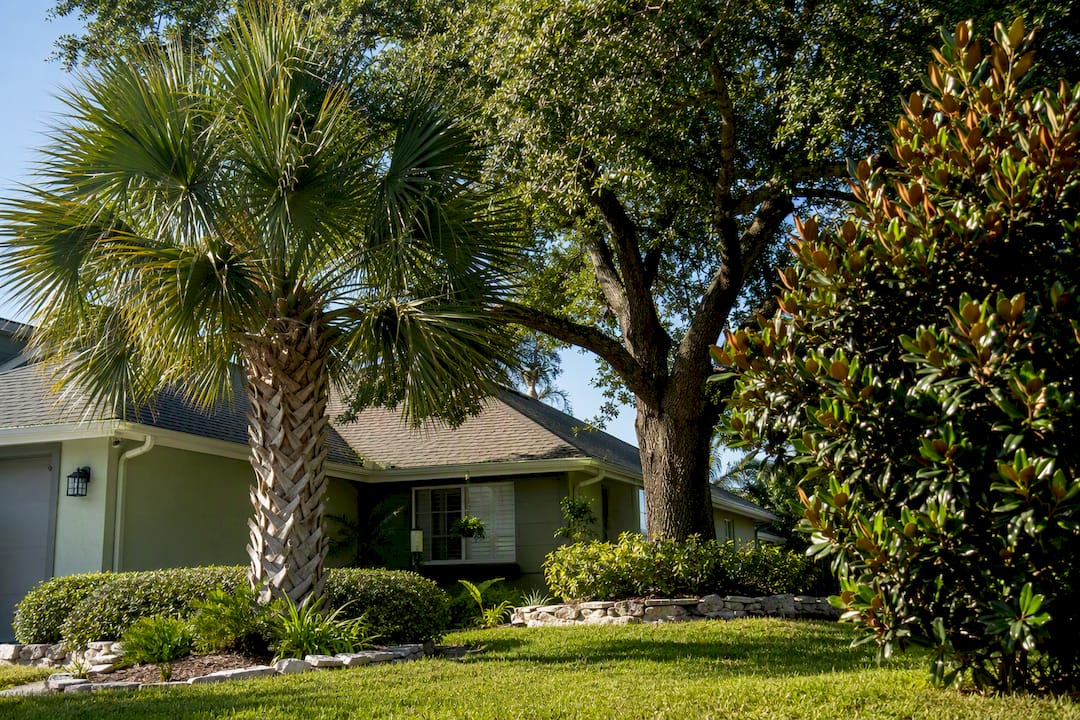
Tree trimming matters as much as tree selection. Deadwood and overextended branches act like projectiles in high wind, and a canopy that overhangs your roofline is one of the most common causes of shingle damage and gutter clogging after a storm. Trim back branches at least 10 feet from the roof and remove any dead or diseased limbs before June 1 each year, not after a storm warning goes out, when tree services are booked solid.
Mulch beds and loose landscaping rock can also become storm debris. Consider swapping loose gravel or mulch near the home’s perimeter for something heavier, like larger decorative stone, in the beds closest to windows and siding. Ground cover and low shrubs planted close to the foundation should still leave a few inches of clearance from the wall itself, both for drainage and to keep moisture from wicking into siding or stucco.
Irrigation matters too. Overwatering a lawn near the foundation adds to the same moisture problems gutters are meant to prevent, so a smart irrigation timer that adjusts for rainfall does double duty: it saves on your water bill and keeps soil around the slab from staying oversaturated.
Keeping Termites and Mosquitoes Out of Your Florida Home
Florida’s warm, humid climate is close to ideal for subterranean and drywood termites, and most homeowners don’t notice a colony until the damage is already structural. Schedule a termite inspection annually, and pay particular attention to any wood-to-soil contact around the foundation, since that’s the most common entry point. Mud tubes running up a foundation wall or hollow-sounding trim are the two clearest warning signs, and both call for an inspection right away rather than a wait-and-see approach.
Moisture control does double duty here. The same humidity management that protects against mold, keeping gutters clear, grading soil away from the foundation, and fixing plumbing leaks promptly, also removes the damp wood conditions termites need to thrive.
Mosquitoes are the more immediate, day-to-day nuisance, and standing water is almost always the root cause. Clogged gutters that hold water for more than a few days are a textbook mosquito breeding ground, right alongside birdbaths, clogged drainage ditches, and any container that collects rainwater. Empty standing water weekly, keep gutters flowing freely, and consider a mosquito misting system or larvicide dunks in any ornamental pond you can’t easily drain. A quarterly pest control contract that covers both termites and general perimeter pests typically runs in the same range as the general pest control cost shown earlier, and it’s one of the more cost-effective lines in a Florida maintenance budget given what a termite colony can do to framing left untreated for years.
Protecting Metal, Fasteners, and Outdoor Furniture From Salt Air
If you live within a few miles of the coast, salt-laden air is quietly attacking every exposed metal surface on your property, from gutter hangers to patio furniture frames. Corrosion here moves faster than most inland homeowners expect, and it’s often invisible until a fastener fails or a hinge seizes.
Rinse exterior metal fixtures, railings, and outdoor furniture with fresh water every few weeks to remove accumulated salt residue before it has a chance to pit the surface. Stainless steel and aluminum hold up better than standard galvanized steel in coastal zones, so when you’re replacing gutter hardware, screws, or outdoor light fixtures, spend the extra few dollars for marine-grade or stainless components. It pays for itself in avoided replacements.
Outdoor furniture with a powder-coated finish lasts noticeably longer than bare or painted metal, and covering cushions and frames during extended absences cuts down on both salt exposure and UV fading. Check gutter seams, hangers, and screws for early rust or pitting during your regular cleanings, since coastal corrosion tends to compromise fasteners well before the gutter material itself shows any wear. Catching a corroding hanger early is a five-minute fix; catching it after a section pulls away from the fascia during a storm is not.
Why Florida’s Soil Makes Foundation Drainage So Critical
Florida’s predominantly sandy soil drains fast, which sounds like an advantage until you realize it also means water finds the path of least resistance straight down along your foundation walls rather than spreading out and evaporating. Add a high water table in many parts of the state, and you get a foundation that’s under near-constant moisture pressure even without a hurricane in the forecast.
Grading is the first and cheapest defense. The ground around your home should slope away from the foundation at a gentle but consistent grade, roughly 6 inches of drop over the first 10 feet, according to construction guidance from Building A Safer Florida. If you notice water pooling near the slab after rain instead of running off, that’s a grading problem worth fixing before it becomes a foundation problem.
Watch for hairline cracks in the slab or exterior walls, doors and windows that suddenly stick, or uneven flooring, all of which can signal soil movement beneath the foundation. In Florida, this is sometimes linked to alternating wet and dry cycles that cause sandy or clay-heavy soil to shift seasonally. A foundation protection checklist built around Florida’s soil conditions covers grading, drainage, and gutter discharge together, since all three work as one system rather than separate problems.
Why Florida Water Quality Affects Your Plumbing and Water Heater
Much of Florida sits on limestone bedrock, and groundwater that passes through it picks up dissolved calcium and magnesium along the way. That hard water leaves mineral scale inside pipes, showerheads, and especially water heater tanks, where it settles at the bottom and insulates the heating element from the water it’s supposed to warm.
Flush your water heater tank annually to clear out sediment buildup, which extends the unit’s life and keeps energy costs from creeping up as the heater works harder to compensate. Most conventional tank water heaters in Florida last 8 to 12 years, often on the shorter end of that range in homes with especially hard water and no water softener installed.
Check exposed pipe joints and under-sink connections a few times a year for the telltale white or greenish mineral crust that signals a slow leak, since Florida’s hard water makes these deposits show up faster than they would elsewhere. A whole-house water softener or a scale-reducing filter isn’t mandatory, but it noticeably extends the life of both your water heater and your fixtures if your area’s water supply runs particularly hard. Check with your county utility for local water hardness reports before deciding whether the investment makes sense for your address.
Sump Pumps, Flood Barriers, and Protecting Your Home Beyond Wind
Hurricane prep covers wind and rain, but flooding from storm surge, heavy rainfall, or a rising water table is its own separate risk, and it doesn’t require a hurricane to happen. Low-lying yards and homes near canals, retention ponds, or flood zones need a plan that goes beyond boarding up windows.
A battery-backup sump pump is worth installing in any home with a history of water intrusion in a crawlspace, garage, or lower level, since standard sump pumps fail exactly when you need them most: during a power outage in a storm. Portable or permanent flood barriers, sandbags, or inflatable door dams for garage entries and low thresholds add another layer of protection for homes in flood-prone zones.
Check your flood insurance status separately from your standard homeowner’s policy, since standard policies typically exclude flood damage entirely. FEMA flood zone maps for your specific address are worth checking even if you’ve never flooded before, since zone boundaries get updated periodically as development and drainage patterns change. Clear storm drains and roadside ditches near your property before hurricane season starts, since a blocked municipal drain backing up onto your property is a common and preventable source of flood damage that has nothing to do with the storm itself.
A Note From the Field
Most of the water damage claims I’ve seen didn’t start with a dramatic storm. They started with a gutter nobody cleaned for two years, quietly overflowing onto the same corner of the foundation every time it rained, until the damage was already done.
How Larrysgutters Fits Into Your Maintenance Plan
Gutters do more than move rainwater off your roof. A properly installed, well-maintained system is one of the cheapest ways to protect your foundation, siding, and landscaping from the exact humidity and drainage problems covered throughout this guide.

If your current gutters are undersized, clogged more often than they should be, or showing corrosion from coastal air, Larry’s Gutters installs custom-fit seamless gutters designed around Central Florida’s rainfall patterns, not a generic national spec. We also handle gutter guard installation for homeowners tired of climbing a ladder every few months, along with routine cleaning and repair for systems that just need a tune-up rather than a full replacement. A downspout that discharges too close to your foundation is a simple fix, and our downspout installation guide walks through what proper routing looks like. If you’re not sure whether your current setup is doing its job, request a free inspection and quote, and we’ll tell you honestly whether you need a repair, an upgrade, or nothing at all.
Frequently Asked Questions
What are the most important tips for Florida homeowners heading into hurricane season?
Stock 7 days of supplies, trim hazard limbs, test shutters or impact protection, and photograph your property’s condition before storms threaten.
How often should Florida homeowners clean their gutters?
At least twice a year, and more often under heavy tree canopy or after major storms drop debris into the system.
What indoor humidity level should Florida homes maintain?
Does a 15-year-old roof need automatic replacement in Florida?
No. Insurers typically want a professional inspection at that age, not automatic replacement, and a well-maintained roof can pass.
Sources
- Florida Department of Health preparedness guidance
- To effectively manage Florida’s high humidity (UF/IFAS publication FY1044)
- Water Wednesday recap: Understanding Florida homes – UF/IFAS (2026)
- EPA: What are the main ways to control moisture in your home?
- Florida Division of Emergency Management plan & prepare guidance
