TL;DR:
- Seamless gutters eliminate leaks caused by joints, providing superior protection during Florida’s intense wet season. They are custom-formed on-site from durable aluminum, reducing maintenance and increasing lifespan compared to sectional systems. Regular inspections and proper downspout sizing are essential to maximize their performance in the region’s heavy rainfall.
The sky opens up with little warning in Lake, Marion, and Sumter counties. One minute it’s sunny, the next you’re watching sheets of rain pound your roof while water cascades over your gutters and pools against your foundation. If your current gutter system has even one failing seam or joint, that storm is not just an inconvenience. It’s actively damaging your home. Seamless gutters eliminate the most common failure points found in traditional sectional systems, giving Central Florida homeowners a smarter way to handle the region’s relentless wet season. This article walks through real-world examples, comparisons, and practical tips to help you protect your home the right way.
Table of Contents
- How seamless gutters protect homes in Florida’s wet season
- Common seamless gutter applications around the home
- Comparison: Seamless vs sectional gutters in real Florida conditions
- Maintenance made easy: Keeping your seamless gutters storm-ready
- Why local inspection and custom-fit matter more than brand or color
- Get expert seamless gutter solutions for your Central Florida home
- Frequently asked questions
Key Takeaways
| Point | Details |
|---|---|
| Leak prevention | Seamless gutters reduce leak risks by eliminating joints and seams found in sectional systems. |
| Custom application | Seamless gutters are made on-site for a perfect fit to any roof, porch, or walkway. |
| Easy maintenance | Seasonal inspections keep gutters working efficiently and ready for Florida storms. |
| Local expertise | Choosing local installers ensures gutters are tailored to handle Central Florida’s unique weather. |
How seamless gutters protect homes in Florida’s wet season
Let’s start by understanding exactly why seamless gutters outperform sectional systems, especially in Florida’s intense wet season.
Central Florida averages more than 50 inches of rainfall per year, and much of it falls in concentrated bursts during the June through September wet season. That kind of intensity demands a gutter system built to perform under pressure, not just sit there looking adequate. Traditional sectional gutters are assembled from prefabricated pieces joined together with sealant and hardware. Every one of those joints is a future leak waiting to happen.
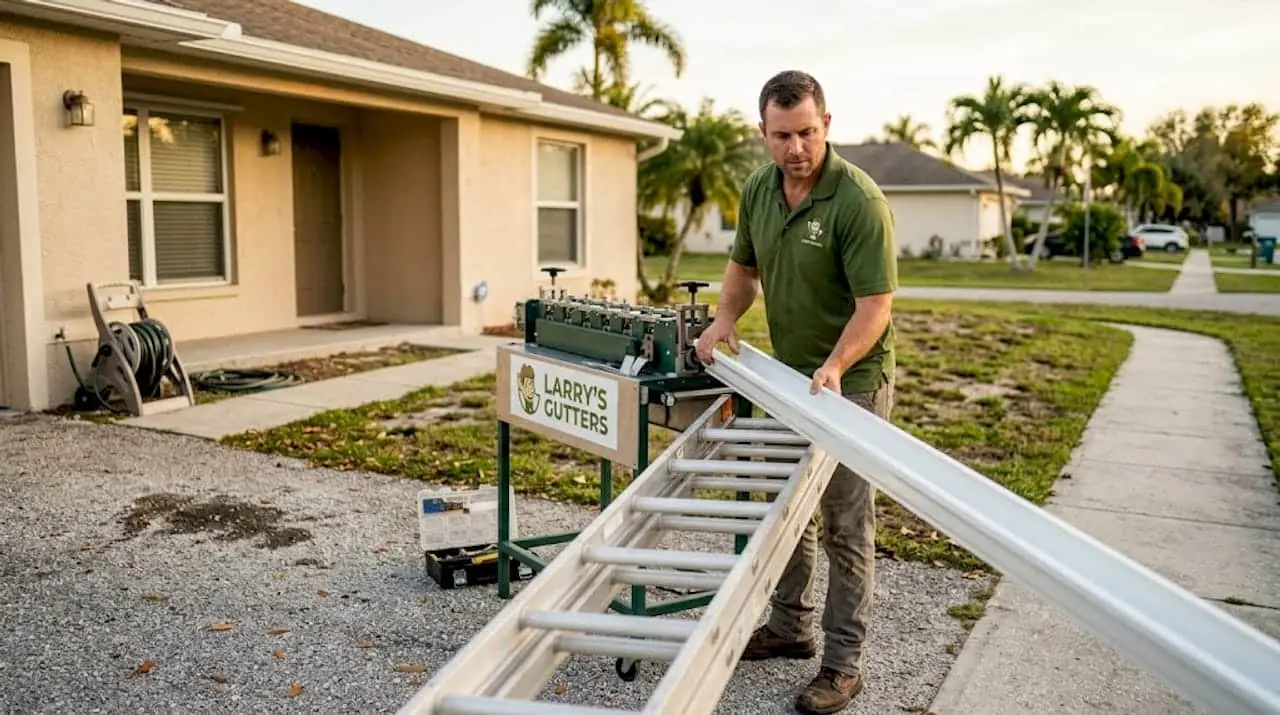
Seamless gutters work differently. They are manufactured on-site at your home using a portable forming machine, cut to the exact length of each roofline with no joints along the run. That means the only connection points are at the corners and downspout locations. The result is dramatically fewer places for water to escape.
Aluminum is the go-to material for Florida’s climate, and for good reason. It resists rust, handles the expansion and contraction that comes with Florida’s temperature swings, and holds up well against UV exposure. A properly installed aluminum system can last 20 years or more with minimal upkeep. When you’re evaluating gutters for Florida homes, aluminum seamless systems consistently rise to the top because of this durability.
Here’s what makes a seamless gutter system particularly effective in the Florida context:
- No mid-run joints mean no sealant to crack or peel over time
- Custom-fit lengths prevent gaps between sections caused by thermal expansion
- Heavier gauge aluminum options can handle the volume of water from tropical downpours
- Sealed end caps at corners are the only real vulnerable points, and they’re far fewer than sectional systems
- Consistent slope along each unbroken run ensures water drains to downspouts efficiently
“Seamless gutter systems manufactured on-site eliminate the joints and seams that lead to leaks in off-the-shelf sectional products, and a seasonal inspection program covering alignment and downspout drainage flow helps ensure they perform as intended.” — Larry’s Gutters Gainesville press release
A seasonal inspection is not just about confirming the gutters are physically present. It’s about verifying that water actually moves the way it should, with the correct pitch toward downspouts and no sag that traps standing water. That distinction matters enormously in Florida, where a poorly draining gutter can become a mosquito breeding ground and a source of fascia rot within a single wet season.
Understanding the difference between seamless vs sectional gutters helps you see why the upfront investment in seamless technology pays off quickly in reduced repair costs and better home protection.
Common seamless gutter applications around the home
After understanding the core benefits, let’s look at the most common and powerful ways seamless gutters are put to work on Florida homes.
Not every part of your home faces the same rain exposure or water runoff challenge. Seamless gutters are custom-fit on site for each section of the structure, including rooflines, porches, garages, and attached walkways. That flexibility is what makes them effective across so many different scenarios. Here’s a breakdown of the most impactful application areas for Central Florida homeowners.
Roof perimeters and main rooflines
The most obvious and critical application is around the full perimeter of your roof. This is where the largest volume of water needs to be captured and redirected. In a heavy Florida downpour, a standard roof can shed hundreds of gallons in minutes. Without properly sized and pitched gutters along every eave, that water hits the ground close to your foundation and begins the slow process of undermining it. Homes in Lake and Marion counties with sandy soil are especially vulnerable because water moves quickly through the ground toward the slab.
Front porches and screened lanais
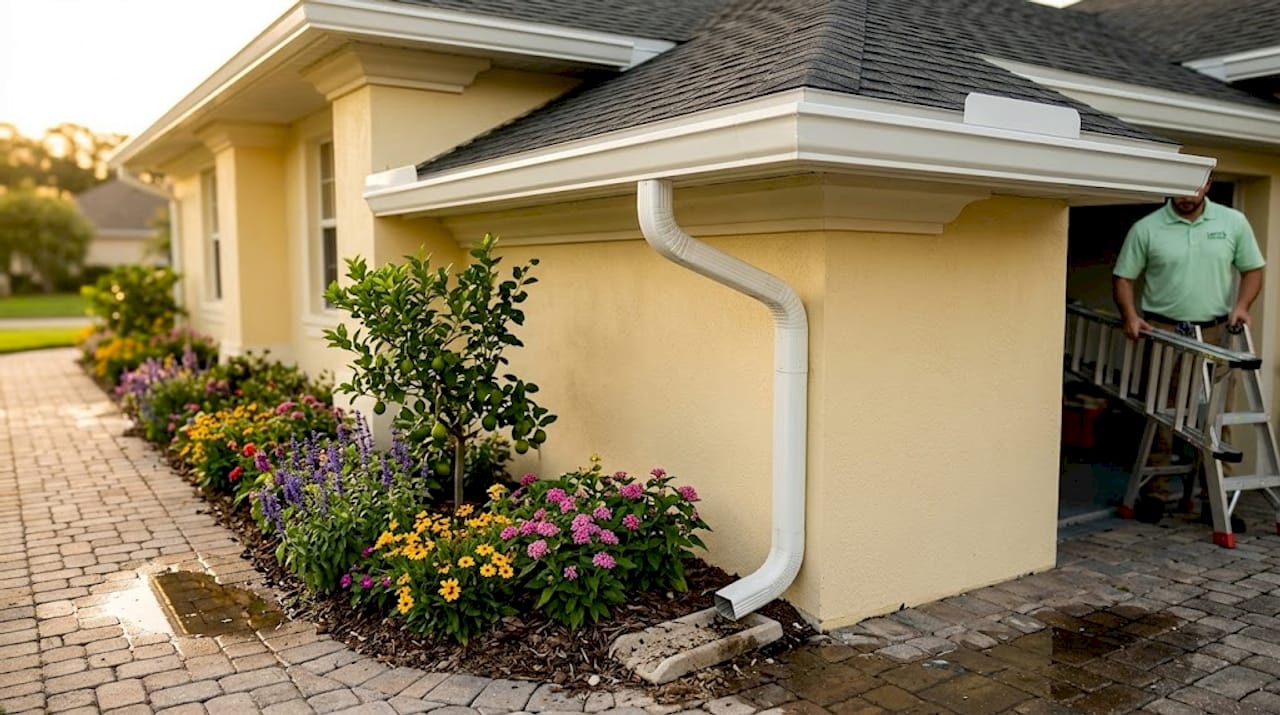
Florida homes without porch gutters often show it. The telltale signs are erosion channels in the landscaping directly below the roofline, water stains on the porch floor, and mud splatter along the base of exterior walls. Adding seamless gutters along porch rooflines channels that drip-line water to controlled downspout locations, keeping your outdoor living space usable even during a storm.
Garages and driveways
Garages present a unique challenge. The wide roof span means a significant surface area collecting rain, and many garage rooflines slope directly toward the driveway. Without gutters, that water washes across concrete, accelerates cracking, and can back-flow under the garage door during heavy events. Seamless gutters fitted along garage eaves redirect that volume cleanly.
Side entries and low-lying walking paths
Homes in Sumter County, particularly those in retirement and golf communities, often have covered side entries or connecting paths between structures. These low-lying areas collect water from multiple angles. Seamless gutters installed along these sections prevent pooling and protect both the walking surface and the adjacent sod or landscaping from washout.
The benefits of seamless gutters become most visible when you look at the full picture of your home’s exterior, not just the obvious spots. Every roofed surface that sheds rain toward a foundation, path, or living area is a candidate for seamless gutter protection.
Pro Tip: Walk your property during or immediately after a heavy rainstorm with a notepad. Mark every spot where you see water dripping from a roofline, pooling near a wall, or washing across a path. That list becomes your seamless gutter installation priority map. It’s far more useful than guessing from a dry inspection.
To learn more about your full range of options, reviewing the available types of rain gutters gives you context on why seamless aluminum is often the best-fit choice for most Florida property types.
Comparison: Seamless vs sectional gutters in real Florida conditions
Let’s see how seamless gutters compare directly to sectional options, with a focus on what really matters for Central Florida homeowners.
The choice between seamless and sectional gutters is not just a preference. In Florida’s climate, it has real financial and structural consequences. Seamless gutters made on-site eliminate joints, directly minimizing the leaks common in sectional systems. Here’s how the two approaches stack up in a side-by-side comparison.
| Feature | Seamless gutters | Sectional gutters |
|---|---|---|
| Leak risk | Very low (joints only at ends) | High (joint every 10 to 12 feet) |
| Installation method | Custom-formed on-site | Pre-cut sections assembled on-site |
| Maintenance frequency | Seasonal checks | More frequent joint inspections needed |
| Lifespan (aluminum) | 20 or more years | 10 to 15 years with good maintenance |
| Appearance | Clean, continuous lines | Visible seams along runs |
| Cost | Higher upfront | Lower upfront, higher long-term |
| Storm performance | Excellent in heavy rain | Degrades as joints fail |
The data tells a clear story. Homes with seamless systems report 80% fewer leaks compared to sectional counterparts, a significant difference when you factor in the cost of water damage remediation, fascia board replacement, and foundation repair.
Here are the key performance factors ranked in order of importance for Florida homeowners:
- Leak prevention because water intrusion is the number one cause of structural damage in humid climates
- Volume capacity since Florida storms can overwhelm undersized gutters regardless of the system type
- Maintenance requirements because a system that demands constant attention often gets neglected
- Longevity to ensure your investment survives multiple storm seasons without replacement
- Aesthetics because clean, continuous lines improve curb appeal and resale value
Sectional gutters start failing at the joints first. Once one joint goes, water finds adjacent seams faster, accelerating the overall system failure. In Florida’s wet season, that process can happen within a single summer.
The long-term cost comparison strongly favors seamless systems. Yes, the initial installation costs more. But when you factor in the cost of joint repair, sealant replacement, and the water damage repairs that result from gutter failures, sectional systems become the more expensive choice over a 10-year window.
Maintenance made easy: Keeping your seamless gutters storm-ready
Once installed, seamless gutters make ongoing care straightforward. Here’s how to keep them working at their best.
The lower maintenance demand of seamless gutters is one of their most underrated advantages. But “lower maintenance” does not mean “zero maintenance.” Florida’s combination of oak trees, pine needles, Spanish moss, and intense rain means gutters need regular attention to perform at peak capacity.
Here’s a practical seasonal maintenance schedule for Central Florida homeowners:
- Before wet season (April to May): Clear all debris from gutter channels and downspouts. Check for any low spots or sag that could cause standing water. Verify all downspout extensions direct water at least four feet from the foundation.
- Mid wet season (July to August): Quick visual check after any major storm. Look for overflow signs, which are water marks on fascia or erosion below the gutter line. Clear any new debris accumulation.
- After wet season (October to November): Full cleaning and inspection. Check end caps and corners for any separation. Flush downspouts with a hose to confirm clear flow.
- Winter check (January): Light inspection, particularly after any unusually cold or windy events that could shift gutter alignment.
Proper seamless gutter maintenance can add a decade or more to your system’s lifespan, turning a 20-year system into a 30-year one. That’s a significant return on your maintenance investment.
| Maintenance task | Frequency | Time required |
|---|---|---|
| Debris clearing | Every season | 1 to 2 hours |
| Downspout flushing | Twice yearly | 30 minutes |
| Alignment check | Twice yearly | 30 minutes |
| End cap inspection | Annually | 15 minutes |
| Full system flush | Annually | 1 hour |
Pro Tip: Install gutter guards on sections that run beneath oak trees or pine canopies. These areas collect the most debris in the shortest time and are the most likely to cause overflow blockages during storm events. Guards don’t eliminate cleaning entirely, but they reduce the frequency significantly.
The gutter drainage systems approach matters as much as the gutter itself. A seamless gutter draining into an undersized or poorly positioned downspout is still going to overflow. Make sure your downspout count and sizing match the roof area they’re serving. A general rule of thumb is one downspout for every 600 to 800 square feet of roof surface in Florida’s rainfall environment.
A practical maintenance inspection should always cover alignment and drainage capacity, not just confirm the gutters are still attached. Performance failure in Florida gutters is almost always tied to flow constraints, not structural collapse.
Why local inspection and custom-fit matter more than brand or color
Beyond product specs, let’s discuss what really ensures your gutters perform year after year.
Here’s something most homeowners don’t hear often enough: the brand name on your gutter material matters far less than the quality of the installation and the consistency of the inspection program. We see this play out repeatedly in Central Florida. A homeowner invests in a premium gutter product but hires an inexperienced crew. The pitch is slightly off, the downspouts are undersized, and within two wet seasons, the system is overflowing on the west side of the house. Meanwhile, a neighbor has a standard aluminum seamless system installed by a crew that knows Lake County’s roofline styles and drainage patterns. That system runs perfectly for 25 years.
Color choices and brand aesthetics have their place. Nobody wants ugly gutters dragging down the look of a well-maintained home. But when you’re comparing quotes and options, put the emphasis on local knowledge and inspection depth. A crew that understands how afternoon thunderstorms approach from the southwest in Sumter County, or how oaks in Marion County drop debris in two separate heavy cycles each year, is more valuable than any premium product label.
Seasonal inspection programs that go beyond basic visual checks, ensuring gutters perform under changing Florida weather conditions, are the real differentiator between a system that lasts and one that fails quietly over time. Basic visual checks miss the subtle pitch issues and partial downspout blockages that become full failures when a Category 1 rainband moves through.
Our honest advice: when evaluating any gutter company, ask specifically what their inspection process covers. If the answer is vague, that’s a red flag. A good inspection should include water flow testing, not just a walk-around. The right Florida gutter solutions are always built on local expertise first, product quality second.
Custom-fit matters for the same reason. A gutter formed on-site to your exact roofline, with the correct pitch calculated for your specific drainage needs, will outperform a generic system every single time. That’s not a marketing claim. It’s physics applied to your actual house.
Get expert seamless gutter solutions for your Central Florida home
Ready to apply these examples to your own house? Here’s where to find help and more information.
If walking through these applications and comparisons has you thinking about your own home’s vulnerabilities, the next step is straightforward. Start with the right information and the right team. Our seamless gutter installation guide walks you through the entire process from measurement to final inspection, so you know exactly what to expect before a single tool hits your property.

For homeowners who want to stay ahead of maintenance, the gutter maintenance checklist gives you a season-by-season action plan designed specifically for Florida’s rainfall cycles. It takes the guesswork out of knowing when and what to check. And if you want to understand the full picture of how gutters fit into your home’s defense against water damage, our guide to protecting your home from water damage covers downspouts, drainage, and everything in between. Larry’s Gutters serves homeowners across Lake, Marion, and Sumter counties. Reach out for a free quote and let a local team give your home the protection it deserves.
Frequently asked questions
How are seamless gutters made for each home?
Seamless gutters are manufactured on-site using a portable forming machine that creates a continuous run cut to the exact length of your roofline, eliminating mid-run joints that cause leaks.
How often should I inspect my seamless gutters in Central Florida?
Inspections should happen at least four times per year, covering alignment and drainage flow, with a thorough check before and after Florida’s wet season.
What is the main advantage of seamless gutters over sectional ones?
Seamless gutters eliminate joints and seams along the gutter run, removing the most common failure points that cause leaks and blockages in sectional systems.
Are seamless aluminum gutters suitable for all homes?
Yes. Because each system is custom-formed on-site, seamless aluminum gutters can be precisely fitted to virtually any roof shape, pitch, or size, making them a practical solution for the wide variety of home styles found across Central Florida.
