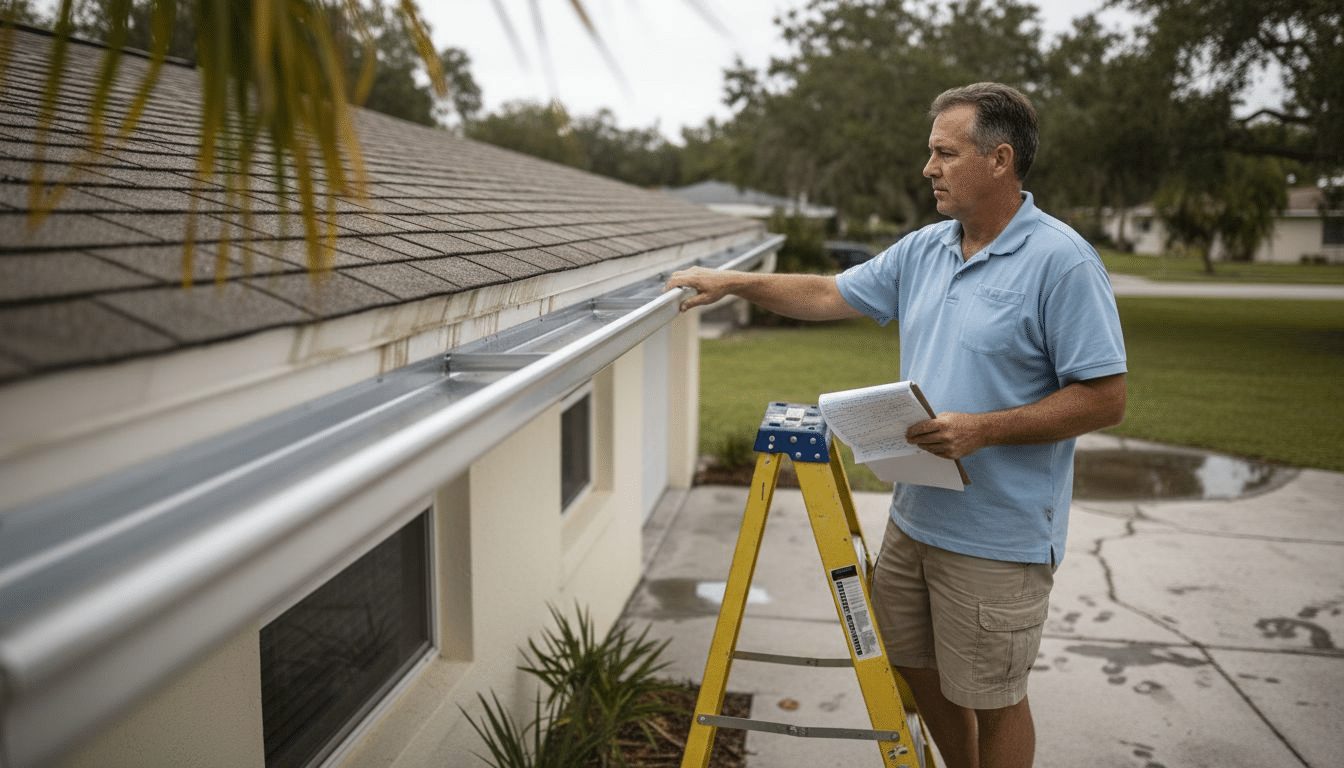
Heavy rainfall is a constant challenge for homeowners across Lake, Marion, and Sumter counties in Florida. Protecting your roof and foundation starts with the right gutter system, as water discharge systems are your home’s barrier against costly water damage and foundation erosion. Choosing between seamless and sectional gutter options matters, since each has unique benefits and drawbacks for Florida’s intense weather. This guide breaks down gutter basics and compares the best solutions for long-lasting home protection.
Table of Contents
- Gutter Basics And Common Types Explained
- How Seamless Gutters Are Made And Installed
- How Sectional Gutters Function And Join Together
- Maintenance Needs In Central Florida Weather
- Comparing Durability, Cost, And Curb Appeal
Key Takeaways
| Point | Details |
|---|---|
| Gutters Protect Homes | Gutters are essential for directing rainwater away from a home’s foundation, preventing water damage and mold growth. |
| Seamless vs. Sectional Gutters | Seamless gutters offer reduced maintenance and durability compared to sectional gutters, which have more potential leak points. |
| Climate Impact on Maintenance | Central Florida’s weather necessitates frequent gutter maintenance to prevent clogs and water damage, especially during heavy rain seasons. |
| Cost Considerations | While seamless gutters have a higher initial cost, they save money in the long run through lower maintenance and repair expenses. |
Gutter Basics and Common Types Explained
Rain gutters are the unsung heroes protecting your Lake, Marion, and Sumter County home from water damage. These water discharge systems channel rainwater away from your roof and foundation, preventing costly damage that could compromise your home’s structural integrity. Without gutters, water cascades directly onto your landscaping, erodes your foundation, and creates conditions perfect for mold and dampness inside your home. Think of gutters as your home’s first line of defense against Florida’s intense rainfall and frequent storms.
Gutters work by collecting water running off your roof’s edge and directing it toward downspouts and drainage systems. The water travels through sloped channels, flows through downspouts, and disperses safely away from your foundation. Rain gutters convey water from your roof to ground-level drainage systems, protecting everything underneath. Proper pitch and drainage design are critical—even a slight slope matters when you’re dealing with Florida’s heavy downpours that can dump several inches of rain in hours.
Types of Gutters Available
You’ll encounter two primary gutter categories when shopping for solutions: seamless and sectional (also called segmented). Understanding the differences helps you make the right choice for your specific situation and budget.
Sectional gutters come in pre-made segments, typically 10 feet long, connected together with seams and fasteners. These gutters are budget-friendly upfront and easier for DIY installation, but those seams become weak points. Water can leak at connection joints, debris collects around fasteners, and maintenance becomes more frequent. In Florida’s climate, where humidity and heavy rain stress every joint, sectional gutters require constant attention.
Seamless gutters are custom-fabricated on-site to fit your home’s exact roofline. They feature zero seams from corner to corner, dramatically reducing leak potential and maintenance requirements. The continuous design means water flows freely without pooling at joints. They’re more expensive initially but save money over time through durability and reduced repairs.
Common materials across both types include:
- Aluminum (most popular for Florida homes due to rust resistance)
- Galvanized steel (durable but heavier and more prone to rust in humid climates)
- Copper (premium option with excellent longevity and natural beauty)
- Vinyl or PVC (budget-friendly but less durable in intense Florida sun)
- Cast iron (traditional but requires regular maintenance)
Seamless gutters eliminate the seam problem entirely, which is why homeowners in Central Florida increasingly choose them for protection against moisture damage.
The shape and size you select depends on your home’s roof area and local rainfall volume. Florida homes experiencing 50+ inches of annual rain benefit from larger capacity gutters that can handle sudden downpours without overflow.
Pro tip: Have a professional evaluate your home’s specific needs based on roof square footage, slope, and your property’s drainage patterns rather than choosing gutters solely on cost—the right system prevents expensive foundation repairs down the line.
Here’s a concise comparison of seamless and sectional gutters for Central Florida homes:
| Aspect | Seamless Gutters | Sectional Gutters |
|---|---|---|
| Leak Potential | Minimal, due to fewer joints | High, joints are main weak points |
| Maintenance | Annual cleaning, low repair frequency | 2-3 cleanings yearly, frequent repairs |
| Longevity | 20-30 years with proper care | 10-15 years before replacement |
| Curb Appeal | Smooth, uninterrupted roofline | Visible seams every 10 feet |
| Upfront Cost | Higher initial investment | Lower initial expense |
| Total Ownership | Lower long-term costs | Higher with repairs and replacement |
How Seamless Gutters Are Made and Installed
Seamless gutters represent a major leap forward from older sectional designs. Unlike traditional gutters joined in separate pieces, seamless gutters are custom made from one continuous piece of metal tailored to your home’s exact roofline. This innovation, introduced in the 1960s, dramatically changed how homeowners in Lake, Marion, and Sumter counties protect their properties. A seamless gutter system eliminates the weak points where water used to leak through seams, making it the gold standard for Florida homes dealing with intense rainfall and humidity.
The Manufacturing Process
The magic happens before installation even begins. Seamless gutters start with raw aluminum coil stock that gets fed into specialized roll-forming equipment. The machinery shapes the metal into the precise profile needed for your home’s gutters, typically K-style or half-round designs depending on your preference. This custom fabrication occurs either on-site at your home or at a supplier’s facility, depending on the installation company’s setup.
The process works like this:
- Raw aluminum coil enters the roll-forming machine
- Metal gets progressively shaped into the gutter profile through a series of rollers
- The machine cuts the finished gutter to your home’s exact measured length
- A single, continuous piece emerges ready for installation
This fabrication approach means zero joints along the length of each run. Your gutters go from corner to corner with complete continuity. No seams means nowhere for debris to accumulate, no weak points for water to escape, and dramatically reduced maintenance compared to segmented gutters.
Installation on Your Home
Installation requires precision and expertise. A professional crew starts by measuring your roofline carefully, accounting for proper slope to ensure water flows toward downspouts rather than pooling. Professional installation involves measuring and securing gutters to the fascia board using brackets or hangers spaced appropriately for weight distribution and water flow.
The installation process includes:
- Measure your entire roofline to ensure accurate gutter length
- Fabricate the seamless gutter on-site or transport pre-made sections
- Attach mounting brackets to the fascia board at proper intervals
- Secure the gutter to brackets, ensuring adequate slope (typically 0.5 inches per 10 feet)
- Install downspouts at strategic locations to handle water volume
- Test the system to confirm water flows freely toward drainage points
Precise slope matters tremendously in Florida. Your gutters need enough pitch that water rushes toward downspouts during heavy rainfall, but not so much that they look noticeably tilted. A professional installer gets this balance right, which is why DIY installation often leads to problems later.
Seamless gutters require professional installation to ensure proper slope and bracket placement, which directly impacts how well your system handles Florida’s intense rainfall.
The fascia connection point is critical. Brackets must be spaced correctly to support the gutter’s weight plus water volume during storms. Florida homes sometimes face 50+ inches of annual rainfall, occasionally delivered in single downpour events. Your gutter system needs to handle that stress without sagging or separating from the fascia board.
Downspout placement deserves special attention too. They should discharge water at least 4-6 feet away from your foundation to prevent soil erosion and foundation damage. In Lake, Marion, and Sumter counties, where heavy clay soils absorb water slowly, proper downspout extension prevents standing water around your home’s perimeter.
Pro tip: Schedule your seamless gutter installation during dry weather and have the installer confirm proper water flow by running a hose along the roofline to verify slope and drainage before you pay in full.
How Sectional Gutters Function and Join Together
Sectional gutters take a different approach than their seamless counterparts. Instead of one continuous piece, they’re built from multiple smaller sections joined together using mechanical connections. Each section is typically 10 feet long, connected by end caps, connectors, or slip joints that hold everything in alignment. While this modular design offers some advantages, the joints themselves become the weak link in your gutter system, especially in Florida’s demanding climate.
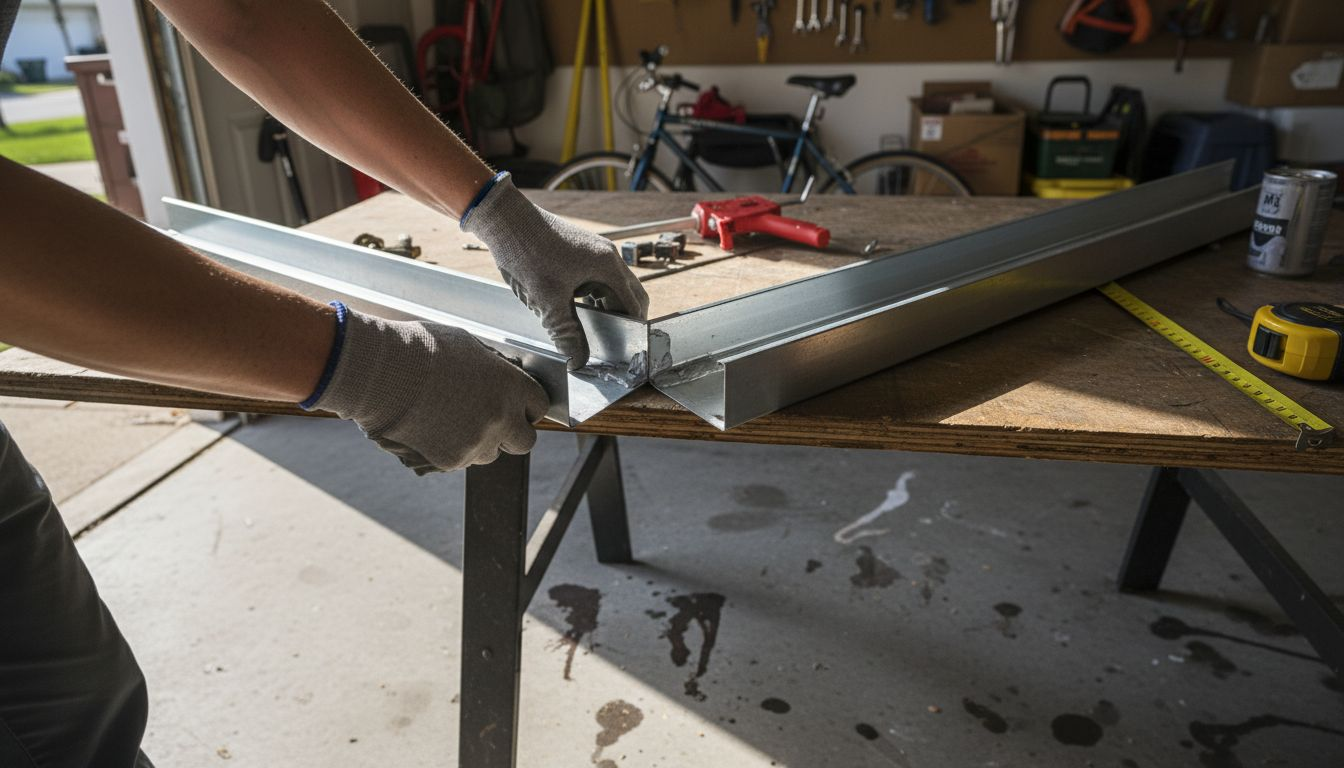
The way sectional gutters are joined together determines how well they perform during heavy rainfall. Common joining methods include seams, laps, and mechanical connectors that overlap or interlock the sections. These connection points require careful sealing to prevent leaks. Over time, Florida’s intense sun, heavy rainfall, and temperature swings stress these joints, causing them to separate, rust, or develop hairline cracks where water escapes.
How the Joints Work
Each sectional gutter section connects to the next through one of several joining methods:
- Seam joints overlap the ends of two sections and are secured with fasteners, then sealed with caulk or sealant
- Lap joints have one section slide partially inside the next, creating overlap for water flow
- Connector sleeves are separate pieces that bridge two sections, providing a mechanical joint point
- Slip joints allow some movement while maintaining connection, though they’re prone to separation
Once joined, these sections attach to your fascia board using brackets spaced along the length. Proper slope still matters—water needs to flow toward downspouts, not pool at the joints where it would eventually leak. The challenge is maintaining that slope and keeping sealant intact across multiple connection points.
Debris accumulation becomes a real problem at sectional joints. Leaves, twigs, and sediment collect at the connection points, creating blockages and standing water. That standing water accelerates deterioration and increases maintenance demands. In Lake, Marion, and Sumter counties, where tree coverage is common, sectional gutters require cleaning 2-3 times yearly compared to once yearly for seamless systems.
Installation and Maintenance Considerations
Sectional gutters offer one real advantage: individual sections can be replaced without replacing the entire system. If one damaged section develops a leak, you remove just that section and install a replacement. This modularity appeals to homeowners on tight budgets, but the long-term cost picture tells a different story.
Installation follows a straightforward process, making sectional gutters accessible for DIY projects. However, proper joining is essential to prevent leaks according to industry testing standards. Poor installation at joints creates immediate problems rather than long-term wear issues.
The maintenance reality hits homeowners hard. Each joint is a potential failure point requiring inspection and re-sealing every few years. Caulk degrades from Florida’s UV exposure, fasteners corrode, and connections loosen. What seemed economical initially becomes expensive when you factor in regular repairs, re-sealing, and eventual replacement.
Sectional gutters have more joints, which means more potential leak points and significantly higher maintenance demands than seamless alternatives in Florida’s climate.
Downsizing to one or two sections per side reduces joint count slightly, but most homes need at least 2-3 sections per side. That translates to 4-6 joints per side of your home—potentially 12-24 joints across all four sides. Each joint represents ongoing maintenance liability.
Pro tip: If you choose sectional gutters, use stainless steel or heavily coated fasteners at all joints and reapply waterproof sealant every 2-3 years to prevent leaks before they compromise your foundation.
Maintenance Needs in Central Florida Weather
Central Florida’s climate presents unique challenges for gutter systems. The combination of heavy rainfall, high humidity, tropical storms, and intense UV exposure creates a demanding environment that separates low-maintenance systems from maintenance nightmares. Lake, Marion, and Sumter counties experience 50+ inches of annual rainfall, often delivered in intense downpours during summer months. Add to that the region’s year-round humidity and occasional hurricanes, and your gutters face constant stress that requires vigilant upkeep.
Heavy rainfall and humidity impact maintenance needs significantly, making regular gutter cleaning non-negotiable. Gutters must be cleared of debris like leaves, pine needles, twigs, and dirt to maintain proper water flow and prevent clogs that lead to overflow and water damage. Florida’s abundant vegetation means debris accumulation happens faster here than in most states. What might require one annual cleaning in a temperate climate demands 2-3 cleanings yearly in Central Florida.
The Seasonal Maintenance Reality
Your maintenance schedule should align with Florida’s seasonal patterns:
- Summer (June-September) brings intense afternoon storms with heavy rainfall; post-storm inspection for debris and damage is critical
- Fall (October-November) dumps tree debris as deciduous trees drop leaves; cleaning becomes essential after windy days
- Winter (December-February) brings occasional freeze-thaw cycles that stress joints and fasteners; inspect for ice dam formation
- Spring (March-May) sees renewed tree growth and pollen accumulation; another major cleaning season before summer storms arrive
Seamless gutters reduce maintenance burden significantly because debris doesn’t collect at joint seams the way it does with sectional systems. However, even seamless gutters need regular attention in Central Florida’s climate. Sectional gutters become problematic quickly—their joints become catch points for pine needles and leaves, creating blockages that pool water and accelerate corrosion.
Material Durability Matters
Your choice of gutter material dramatically impacts maintenance frequency and long-term costs. Aluminum gutters handle Florida’s conditions reasonably well due to natural corrosion resistance, though salt spray near coastal areas (relevant for western Sumter County) can accelerate deterioration. Galvanized steel gutters rust faster in humidity and require more frequent protective coating reapplication. Copper gutters resist corrosion beautifully but cost significantly more upfront.
Corrosion resistance and UV durability are essential in Florida’s hot, humid, rainy conditions. The constant moisture means oxidation happens quickly on vulnerable materials. UV exposure from Florida’s intense sun breaks down sealants, caulk, and protective coatings, requiring periodic reapplication. Fasteners and brackets corrode from humidity even when the gutter material itself resists rust.
Here’s a quick reference guide to common gutter materials used in Florida:
| Material | Corrosion Resistance | UV Durability | Average Lifespan |
|---|---|---|---|
| Aluminum | Excellent | Very good | 20+ years |
| Galvanized Steel | Moderate | Good | 10-15 years |
| Copper | Outstanding | Excellent | 50+ years |
| Vinyl/PVC | Fair | Poor in strong sun | 10-12 years |
| Cast Iron | Low | Good | Needs frequent upkeep |
Seamless gutters significantly reduce maintenance needs compared to sectional systems in Central Florida because they eliminate the debris-trapping joint seams that require constant cleaning.
Common Maintenance Tasks
Regular gutter care prevents expensive repairs down the road:
- Debris removal (quarterly minimum, more often near trees)
- Downspout flushing to ensure water flows freely away from your foundation
- Sealant inspection for cracks or separation at any remaining joints
- Bracket tightening since vibration from heavy rain loosens fasteners
- Slope verification to confirm water still flows properly toward drainage points
- Rust monitoring for early signs of corrosion requiring treatment
- Post-storm inspection for damage from wind, debris impact, or fallen branches
Neglecting these tasks leads to expensive problems. Standing water in clogged gutters causes rot in fascia boards, provides breeding grounds for mosquitoes, and creates the moisture conditions perfect for mold growth inside your walls. Foundation damage from improper water drainage costs thousands to repair.
Pro tip: Schedule gutter cleaning in early June and September, right before the peak summer and hurricane seasons, when storms can reveal vulnerabilities you’ll want to address immediately.
Comparing Durability, Cost, and Curb Appeal
When deciding between seamless and sectional gutters for your Lake, Marion, or Sumter County home, three factors dominate the decision: how long they’ll last, what you’ll pay, and how they’ll look on your house. These three elements rarely align perfectly, forcing homeowners to prioritize based on their specific situation and values. Understanding the tradeoffs helps you make a choice you won’t regret five years down the road.
The Durability Picture
Seamless gutters typically offer superior durability due to fewer joints and leak points. A well-maintained seamless system can last 20-30 years in Florida’s climate, protecting your home decade after decade with minimal intervention. The continuous design eliminates the weak points where water escapes and debris accumulates. You’re essentially getting one long, unbroken channel that functions as intended regardless of weather stress.
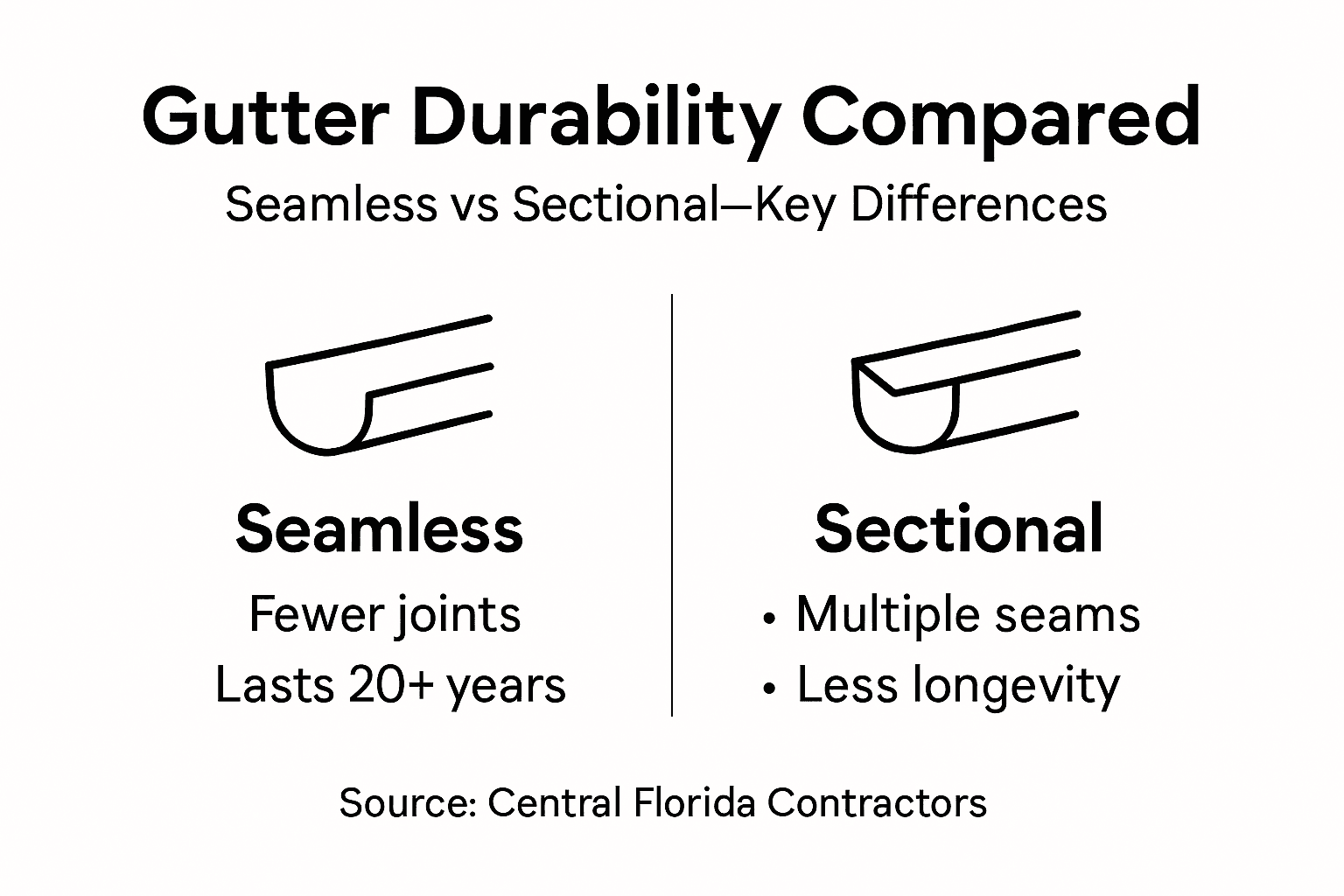
Sectional gutters, by contrast, struggle with longevity. The joints weaken over time from temperature cycling, humidity, and UV exposure. Most sectional systems require replacement or major repairs within 10-15 years in Central Florida. That doesn’t mean they fail catastrophically, but you’ll invest time and money in re-sealing, bracket replacement, and section repairs before finally replacing the entire system.
Material choice affects durability significantly. Aluminum seamless gutters balance affordability with lifespan, typically lasting 20+ years. Copper gutters can exceed 50 years but come with premium pricing. Vinyl or PVC gutters cost less but deteriorate faster in intense Florida sun, often requiring replacement within 10-12 years regardless of whether they’re seamless or sectional.
Initial and Long-Term Costs
Here’s where the math gets interesting. Seamless gutters cost more upfront—typically 30-50% more than sectional systems for material and professional installation. A typical Central Florida home might pay $2,500-$4,500 for seamless gutters versus $1,500-$2,500 for sectional.
But that upfront cost savings on sectional gutters gets erased quickly:
- Annual maintenance costs for sectional systems run $150-$300 annually for professional cleaning and minor repairs
- Re-sealing expenses appear every 3-5 years at $200-$500 per application
- Section replacement for one or two damaged pieces runs $300-$600
- Full replacement becomes necessary within 10-15 years, eliminating any initial savings
Seamless gutters cost less to maintain. Professional cleaning runs $100-$200 annually, and most systems require no re-sealing for 15+ years. Over a 20-year period, seamless gutters cost $300-$400 annually (amortized installation cost plus minimal maintenance) versus $500+ annually for sectional systems including repairs and eventual replacement.
The lower upfront cost of sectional gutters disappears within 5-7 years when you factor in maintenance, repairs, and eventual replacement costs.
Curb Appeal and Aesthetic Considerations
Aesthetic appeal of seamless gutters is usually higher because of their smooth, continuous appearance that enhances curb appeal. Seamless systems disappear visually—your roofline flows cleanly without the visual breaks that sectional gutters create at every joint. This clean look appeals to homeowners prioritizing aesthetics and adds subtle value to your property.
Sectional gutters create visible seams every 10 feet. These joints interrupt the eye’s journey along your roofline and can make your home appear less polished. However, sectional gutters in copper or premium finishes can offer distinct aesthetic appeal if you’re going for a particular architectural style.
Material finish matters too. Aluminum seamless gutters come in various colors (white, brown, bronze, black) matching most home exteriors. Copper gutters develop a striking patina over time, creating a premium appearance that appeals to homeowners with high-end properties.
The Real Choice
Consider your priorities:
- Budget-conscious and planning to stay 7+ years? Seamless gutters deliver better long-term value
- Tight upfront budget with plans to move within 5 years? Sectional systems minimize initial expense
- Aesthetics and curb appeal matter most? Seamless gutters win every time
- Historic home or specific architectural style? Sectional systems in premium materials might align better with your home’s character
Pro tip: Calculate the total 20-year cost of ownership for both options, including maintenance and replacement, rather than comparing only upfront installation prices—the true cost picture changes dramatically when you include maintenance and repair expenses.
Protect Your Florida Home with Expert Seamless Gutter Solutions
Choosing the right gutters can feel overwhelming, especially when balancing durability, maintenance, and budget for your Lake, Marion, or Sumter County home. This article highlights the critical challenges Florida homeowners face, like leaks from sectional gutter joints, frequent repairs, and damage caused by heavy rainfall and humidity. If you want to avoid costly foundation damage and reduce upkeep, seamless gutters offer a proven, long-lasting solution that delivers superior water flow with fewer vulnerable points.
Larry’s Gutters specializes in custom-fit seamless gutters designed for Florida’s intense weather. We understand the importance of professional installation that ensures proper slope and secure bracket placement to protect your home from water damage year-round. Beyond installation, our maintenance and gutter guard services help keep your system clog-free, reducing the stress and expense of constant cleaning.
Take the next step toward hassle-free protection by exploring how our seamless gutter installation can safeguard your home today.

Get your free quote now and discover why Central Florida homeowners trust Larry’s Gutters for reliable, durable gutter solutions. Don’t wait until water damage forces costly repairs—contact us to protect your home effectively with seamless gutters built to stand up to Florida’s toughest storms.
Frequently Asked Questions
What are the main differences between seamless and sectional gutters?
Seamless gutters are made from a single continuous piece of material, reducing leak potential and maintenance needs. Sectional gutters consist of multiple segments joined together, which can lead to more leaks and require more frequent upkeep.
How long do seamless gutters typically last compared to sectional gutters?
Seamless gutters can last 20-30 years with proper care, while sectional gutters usually need replacement within 10-15 years due to weaker joints and higher maintenance demands.
What maintenance do seamless gutters require compared to sectional gutters?
Seamless gutters generally require annual cleaning and less frequent repairs, while sectional gutters may need cleaning 2-3 times a year, along with regular inspections and resealing at the joints to prevent leaks.
Which type of gutter is more cost-effective in the long run?
While seamless gutters have a higher initial cost, they often prove more cost-effective over time due to lower maintenance and repair expenses, unlike sectional gutters, which may incur higher ongoing costs due to their joints and connections.
Recommended
- Why Seamless Gutters Matter for Florida Homes
- Why Choose Seamless Gutters for Florida Homes
- Why Seamless Gutters Matter for Florida Homes
- How Seamless Gutters Work to Protect Florida Homes
- Waterproof Window Shade: Durable Solutions for Humid Homes
- Gutter Services Gainesville FL
- Gutter Services The Villages FL
