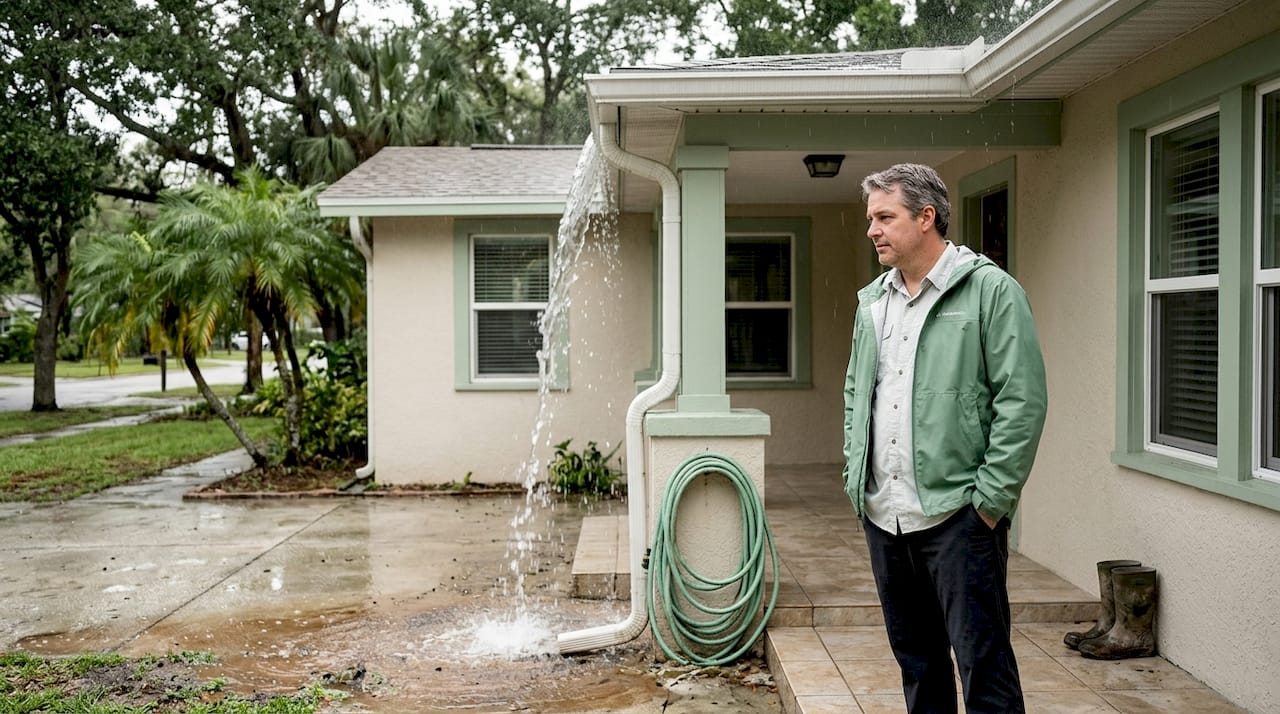
TL;DR:
- Regular gutter maintenance is essential in Central Florida due to intense storms and frequent debris shedding.
- Clogged gutters can cause severe damage including foundation cracks, roof rot, and pest infestations.
- Proactive inspections and timely cleanings are key to preventing costly home repairs in this storm-prone region.
Most homeowners assume cleaning their gutters once a year is plenty. In Central Florida, that assumption can quietly destroy a home from the outside in. Between Lake, Marion, and Sumter counties, the combination of intense summer storms, towering oak trees, and near year-round humidity creates the perfect conditions for gutters to clog fast and stay clogged. The costs that follow — rotting fascia boards, cracked foundations, mold inside walls — rarely announce themselves until the bill is already enormous. This guide walks you through exactly what’s at stake and what you can do about it before the damage is done.
Table of Contents
- Why clogged gutters are a serious problem in Central Florida
- What clogged gutters can do to your home: Top risks explained
- How to spot the early signs of gutter trouble before it’s too late
- Best practices to keep your gutters flowing and your home safe
- A fresh perspective: The costly myth of ‘out of sight, out of mind’ gutters
- Protect your home with expert gutter solutions
- Frequently asked questions
Key Takeaways
| Point | Details |
|---|---|
| Local climate increases risk | Central Florida’s weather and trees make clogged gutters a severe threat to your home. |
| Damages are costly | Foundation, roof, and siding problems from clogged gutters can cost thousands to repair. |
| Prevention is practical | Frequent cleaning, inspection, and optional gutter guards are the best ways to stay safe. |
| Warning signs matter | Spotting clogs early means less repair cost and fewer emergencies for Central Florida homeowners. |
Why clogged gutters are a serious problem in Central Florida
Central Florida sits in one of the most weather-aggressive regions in the entire country. Lake, Marion, and Sumter counties receive an average of 50 to 55 inches of rain annually, much of it arriving in short, violent bursts during the summer rainy season. When a thunderstorm dumps two inches of rain in 30 minutes, gutters that are even slightly clogged can overflow within seconds, sending water cascading directly down your siding, pooling at your foundation, and soaking the soil under your home.
The tree situation makes things significantly worse. Central Florida is covered with live oaks, cypress trees, pine trees, and palms. Each one sheds debris at different times of year, which means debris is falling into your gutters during virtually every season. Live oaks drop small leaves and catkins in the spring. Pines shed needles all year long. After tropical storms, large clumps of leaves, sticks, and shredded palm fronds can clog an entire gutter run in a matter of hours.
Standard maintenance advice suggests cleaning gutters twice yearly, but for Central Florida homes, especially those under a tree canopy, that just is not enough. Local guidance often recommends three to four cleanings per year because of the sheer volume of debris and the frequency of heavy rain events. Falling behind on that schedule is how minor debris problems become major water damage problems.
Here is what can happen when gutters stay clogged too long:
- Water overflows and soaks the fascia boards and soffit, causing rot
- Standing water in the gutter trough becomes a breeding ground for mosquitoes
- The extra weight of debris and trapped water pulls gutters away from the roofline
- Wet debris stays in contact with roofing material, accelerating deterioration
- Water pools at the foundation, potentially causing cracks or settlement
| Risk area | How quickly it develops | Rough repair cost |
|---|---|---|
| Fascia rot | 1 to 3 months | $500 to $2,000 |
| Foundation water damage | 6 to 18 months | $3,000 to $15,000+ |
| Roof decking deterioration | 3 to 12 months | $1,500 to $8,000 |
| Mold inside walls | 2 to 6 months | $1,000 to $6,000 |
| Pest infestation | 1 to 2 months | $200 to $800 |
The reality check: Gutter cleaning costs a fraction of what water damage repair costs. A professional cleaning typically runs $100 to $250. A single foundation repair in Florida can run $10,000 or more. The math is not complicated.
Understanding the gutter cleaning frequency your home actually needs is the first step toward avoiding these costs. And recognizing the importance of gutter maintenance goes beyond just removing leaves — it means actively protecting the structural integrity of your entire home.
What clogged gutters can do to your home: Top risks explained
Once gutters back up and water starts going where it shouldn’t, a chain reaction begins. Each problem often triggers another, and by the time most homeowners notice, several types of damage are already underway at once. Here are the top risks ranked by how likely they are to affect Central Florida homes, from most to least common.
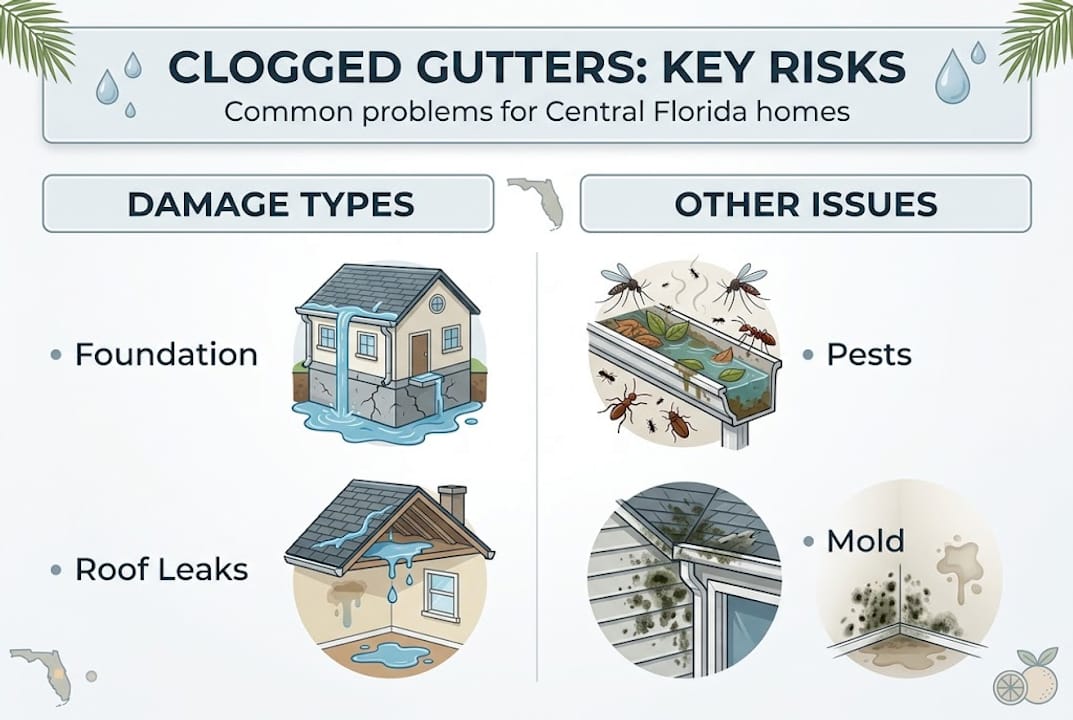
- Foundation damage. This is the big one. When gutters overflow, water saturates the soil directly beside your home’s foundation. Florida’s sandy and clay-heavy soils are particularly vulnerable to uneven saturation, which causes the ground to shift. Over time, this shift leads to cracks in the slab or block foundation. Water overflow from blocked gutters can directly harm the building’s foundation and yard. Foundation repairs are among the most expensive fixes a homeowner can face, often requiring permits, professional engineers, and weeks of work.
- Roof leaks. Standing water in a clogged gutter does not just sit there harmlessly. It wicks backward under the first course of shingles through capillary action, slowly soaking the roof decking. Once the decking gets wet repeatedly, it begins to rot. In Central Florida, where heat and humidity accelerate organic decay, this process moves faster than in drier climates. By the time you see a water stain on your ceiling, the damage has typically been building for months.
- Siding and paint damage. Overflowing water leaves streaks, stains, and moisture behind on your siding. Over time, this creates an environment where mold, mildew, and algae thrive. Wood siding and older fiber cement siding are especially susceptible. Paint peels, the underlying material softens, and eventually the siding itself needs to be replaced — a far more expensive repair than a gutter cleaning would have been.
- Pest infestations. Stagnant water in gutters is a top breeding location for mosquitoes in Central Florida, where mosquito pressure is already intense. Beyond mosquitoes, wet, decomposing debris in gutters attracts carpenter ants, termites, and even roof rats looking for nesting material. Once pests establish themselves near the roofline, they often find their way inside. Florida’s warm climate means these problems can develop even in the winter months.
- Landscape erosion. When water pours off a clogged gutter edge instead of flowing through a downspout, it hits the ground with force. Over time, this erodes mulch, strips away topsoil, creates trenches in flower beds, and exposes root systems of nearby plants. It also redirects surface water toward your home rather than away from it.
| Damage type | Severity | Average repair cost | Time before damage appears |
|---|---|---|---|
| Foundation cracks | Very high | $5,000 to $15,000+ | 6 to 18 months |
| Roof leaks | High | $1,500 to $8,000 | 3 to 12 months |
| Siding damage | Medium | $800 to $4,000 | 2 to 6 months |
| Pest infestations | Medium | $200 to $1,500 | 1 to 3 months |
| Landscape erosion | Low to medium | $200 to $2,000 | 1 to 6 months |
Pro Tip: Walk around your home during the next heavy rainstorm and watch where the water actually goes. If you see water spilling over the edge of your gutters rather than exiting cleanly through the downspouts, you have a clog somewhere in the system.
The foundation risks alone are reason enough to treat gutter maintenance as a non-negotiable part of homeownership in this region, not an optional seasonal task.
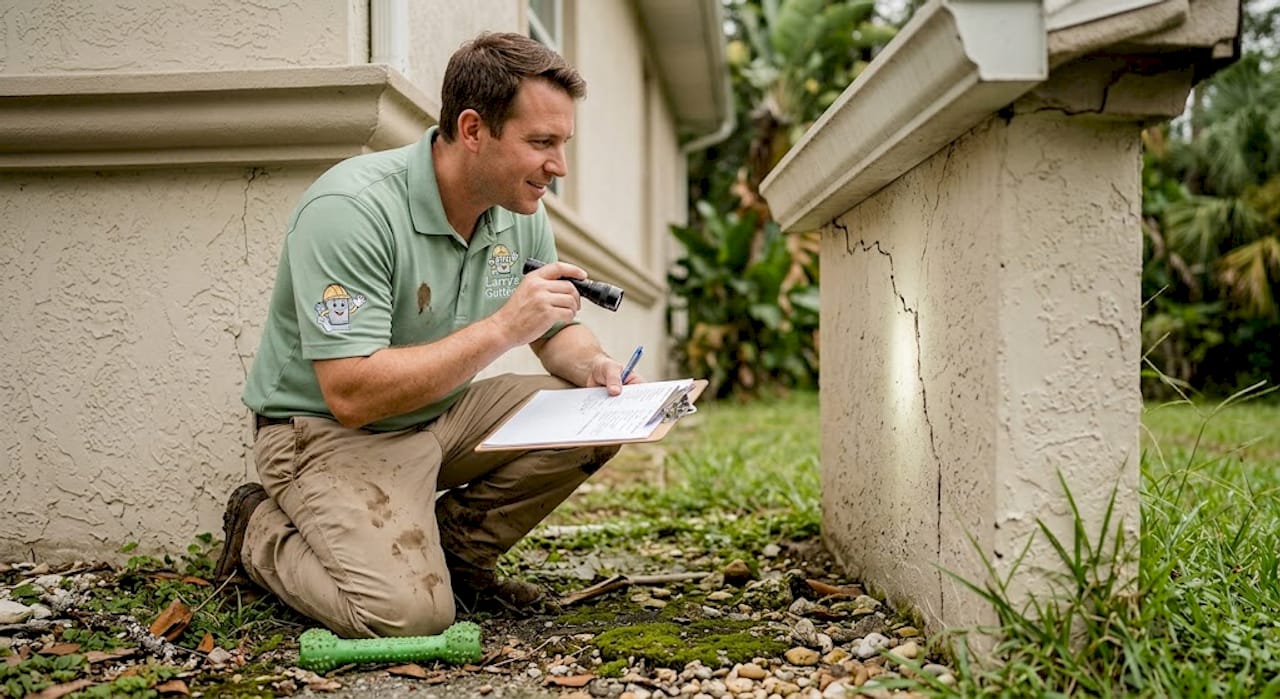
How to spot the early signs of gutter trouble before it’s too late
Most gutter problems give warning signs well before they turn into expensive repairs. The trick is knowing what to look for and making a habit of checking. The good news is that most of these warning signs are visible from the ground, so you don’t need to climb a ladder to do a basic assessment.
Overflow and visible debris are the most obvious signs that gutters need attention, but several quieter signals often show up first.
Here is a checklist of things to look for during a visual inspection:
- Staining on siding or fascia boards. Dark vertical streaks running down the side of your home indicate water is consistently overflowing the same spot.
- Sagging or pulling gutters. A gutter section that looks bowed downward or has visibly separated from the fascia is holding standing water or heavy debris.
- Plant growth in the gutter. If you can see grass, weeds, or even small seedlings growing out of your gutter trough, the clog has been there long enough to become a planter.
- Water pooling near the foundation. After rain, walk the perimeter of your home. Any spot where water collects within a few feet of the foundation points to a drainage problem.
- Peeling paint near the roofline. Repeated moisture exposure causes paint to bubble and peel faster than normal wear would explain.
- Loud splashing during rain. Normal gutters should direct water relatively quietly to the downspout. A loud rushing or splashing sound means water is overflowing somewhere it shouldn’t.
For homes in Lake, Marion, and Sumter counties where storms roll in fast and drop a lot of rain quickly, post-storm inspections are especially important. Use the essential gutter tips for Central Florida as a reference when you’re not sure what normal looks like versus what signals a problem.
Pro Tip: The single best time to inspect your gutters is within an hour after a heavy rainstorm ends. Problems that are invisible on a dry day become obvious when the system is under active load. Bring a flashlight if it’s getting dark and check every downspout for active water flow.
Before getting on a ladder to investigate up close, review gutter safety tips specific to Central Florida. Wet rooflines and slippery gutters after a storm make ladder work genuinely dangerous without proper precautions.
Best practices to keep your gutters flowing and your home safe
Catching problems early is valuable, but building a maintenance routine that prevents problems in the first place is even better. Here is a realistic, practical approach for homeowners in Central Florida.
Step 1: Set a local cleaning schedule. Forget the national average of twice a year. For Central Florida homes, especially those in wooded areas of Lake, Marion, and Sumter counties, cleaning at least twice yearly is the floor, not the standard. Aim for three to four times per year: once in spring after the live oaks shed, once before the summer rainy season begins, once after the peak of hurricane season in October, and once in late fall. Put these on your calendar like any other home maintenance task.
Step 2: Install gutter guards. Quality gutter guards do not make gutters maintenance-free, but they significantly reduce how often debris fully blocks the trough. Micro-mesh guards work especially well for Florida homes because they block the tiny pine needles and oak catkins that slide past cheaper covers. You’ll still want to inspect and occasionally rinse your gutters, but full clogs become far less common. Check out DIY gutter cleaning tips to understand what the job involves before deciding between DIY and professional service.
Step 3: Flush downspouts every cleaning. It’s easy to clear visible debris from the gutter trough and call it done, but downspouts are where many hidden clogs develop. Use a garden hose with strong pressure to flush from the top down. If water doesn’t exit freely at the bottom, the downspout has a blockage that needs to be cleared from below.
Step 4: Inspect fasteners and hangers. Gutters get heavy when full of debris and water. Over time, the screws or spikes holding the gutter to the fascia loosen. Walk the roofline and look for sections that have started to pull away. Tightening a loose hanger takes five minutes. Replacing a section of rotted fascia behind a fallen gutter takes days and several hundred dollars.
Step 5: Know when to call a professional. If your gutters are two stories up, or if you’ve found signs of rot, pest activity, or structural damage around the gutter system, call a professional. Safety matters, and recurring problems often point to a deeper issue that a cleaning alone won’t fix. A gutter maintenance checklist can help you document what you find and communicate it clearly to a contractor.
Pro Tip: Always wear rubber gloves when cleaning gutters by hand. Central Florida gutters frequently harbor mold, mosquito larvae, and occasionally small lizards, frogs, or wasps. Thick rubber gloves protect your hands and reduce the risk of transferring mold spores to your face.
A fresh perspective: The costly myth of ‘out of sight, out of mind’ gutters
Here is something we see constantly in Central Florida: homeowners who maintain every other part of their home with discipline but treat their gutters as an afterthought. They seal the driveway, repaint the trim, replace the HVAC filter on schedule — but they haven’t looked at their gutters in two years.
The logic is understandable. Gutters sit above eye level. They mostly work silently. And the damage they cause when they fail starts invisibly — inside walls, under slab, behind siding. By the time it’s visible, it’s already expensive.
What makes this especially risky in our region is that Central Florida’s weather doesn’t give gutters a slow, gentle test. The storms here are aggressive. A single hurricane-adjacent rain event can overwhelm a partially clogged gutter system and cause months of damage in one afternoon.
The homeowners who avoid costly surprises are the ones who treat gutter system maintenance the same way they treat oil changes: not glamorous, not complicated, but non-negotiable. The cost of routine upkeep is predictable and small. The cost of neglect is unpredictable and large. That trade-off should make the decision easy.
Protect your home with expert gutter solutions
If this guide has made one thing clear, it’s that gutter maintenance in Central Florida isn’t something you can put off and hope for the best. The climate, the trees, and the storm patterns here demand a proactive approach.

At Larry’s Gutters, we help homeowners across Lake, Marion, and Sumter counties stay ahead of exactly these problems. Whether you need a thorough cleaning before storm season, want to explore gutter guard installation to reduce maintenance frequency, or are wondering if seamless gutters might be the right long-term investment for your home, we’re ready to help. Contact us for a free quote and find out what your gutters actually need before the next big storm rolls in.
Frequently asked questions
How often should I clean my gutters in Central Florida?
You should clean your gutters at least twice per year, but three to four times per year is strongly recommended if your home is surrounded by trees or sits in a storm-heavy area like Lake, Marion, or Sumter county.
What is the most common damage from clogged gutters?
Foundation damage is one of the most serious consequences because overflow from blocked gutters saturates the soil around your slab and causes cracking or settling over time, but roof leaks and siding deterioration are also extremely common.
Can gutter guards eliminate cleaning forever?
Gutter guards significantly reduce how often full clogs develop, but they don’t replace maintenance entirely since debris can still accumulate on top of guards or inside downspouts over time.
What signs mean my gutters are clogged right now?
Overflowing water and visible debris are the most obvious signs, but sagging gutter sections, dark staining on your siding, plant growth inside the trough, or water pooling near your foundation all point to a blockage that needs immediate attention.