
Water damage from clogged gutters causes foundation problems and costly repairs for thousands of Central Florida homeowners every year. Your seamless rain gutters need regular maintenance to protect your home, but the cleaning process itself can be dangerous without proper safety precautions. This guide provides practical gutter safety tips and maintenance steps designed specifically for Florida’s challenging weather conditions, helping you maintain your gutters effectively while avoiding common injuries and mistakes.
Table of Contents
- Understanding The Importance Of Gutter Safety And Preparation
- Gathering Tools And Materials For Safe Gutter Maintenance
- Step-By-Step Guide To Safe Gutter Cleaning And Inspection
- Common Mistakes And Troubleshooting In Gutter Safety And Maintenance
- Explore Professional Seamless Gutter Solutions For Your Home
- Frequently Asked Questions
Key takeaways
| Point | Details |
|---|---|
| Regular cleaning prevents damage | Clean gutters at least twice yearly to avoid water damage and foundation issues in Florida’s heavy rainfall climate. |
| Safety equipment is essential | Proper ladder stability, gloves, eye protection, and non-slip footwear prevent the majority of gutter cleaning injuries. |
| Seamless gutters offer advantages | Seamless systems reduce foundation problems by 20-30% compared to sectional gutters due to fewer leak points. |
| Gutter guards help but aren’t perfect | Guards minimize debris accumulation but still require periodic inspection and cleaning for optimal performance. |
| Material choice matters in Florida | Aluminum and copper handle humidity and storms better than vinyl, lasting longer under Central Florida conditions. |
Understanding the importance of gutter safety and preparation
Clogged gutters cause water damage leading to expensive foundation repairs and dangerous mold growth throughout your home. In Central Florida’s climate, where afternoon thunderstorms deliver sudden heavy rainfall, functional gutters become even more critical for protecting your property investment. Without clear drainage paths, water pools around your foundation, seeps into walls, and creates the perfect environment for structural decay.
Safety risks during gutter maintenance send hundreds of homeowners to emergency rooms annually. Falls from ladders cause serious injuries, while debris in eyes or cuts from sharp metal edges create additional hazards. Before you climb that ladder, assess your equipment condition, check weather forecasts, and confirm you have proper safety gear ready.
Proper preparation separates successful gutter maintenance from dangerous accidents. You need stable footing, clear visibility, and the right tools within easy reach. Understanding gutter safety best practices helps you avoid the most common mistakes homeowners make when attempting DIY maintenance.
Pro Tip: Inspect your ladder thoroughly before each use, checking for bent rungs, loose bolts, or cracked feet. Wear shoes with deep treads and rubber soles to maximize grip on ladder steps.
“Most gutter-related injuries happen because homeowners skip basic safety steps they know they should take. Taking five extra minutes to prepare properly can prevent months of recovery from a preventable fall.”
Key preparation steps you must complete:
- Check weather conditions and avoid windy or wet days entirely
- Position your ladder on firm, level ground away from power lines
- Have someone nearby who can assist or call for help if needed
- Gather all tools before climbing to minimize trips up and down
- Wear long sleeves and pants to protect against insect nests and sharp edges
Gathering tools and materials for safe gutter maintenance
Successful gutter cleaning requires specific equipment designed for both effectiveness and safety. Your basic toolkit should include a sturdy extension ladder rated for your weight plus tools, thick rubber gloves that protect against cuts and insects, safety glasses or goggles, a plastic gutter scoop, a garden hose with spray nozzle, and a bucket or tarp for collecting debris.
Optional equipment enhances safety and efficiency significantly. A ladder stabilizer attaches to your ladder top and spans across your gutter, distributing weight more evenly and preventing gutter damage. Telescoping gutter cleaning tools let you reach sections from the ground, eliminating ladder repositioning. For ongoing protection, gutter guards reduce future cleaning frequency, though they require their own periodic maintenance.
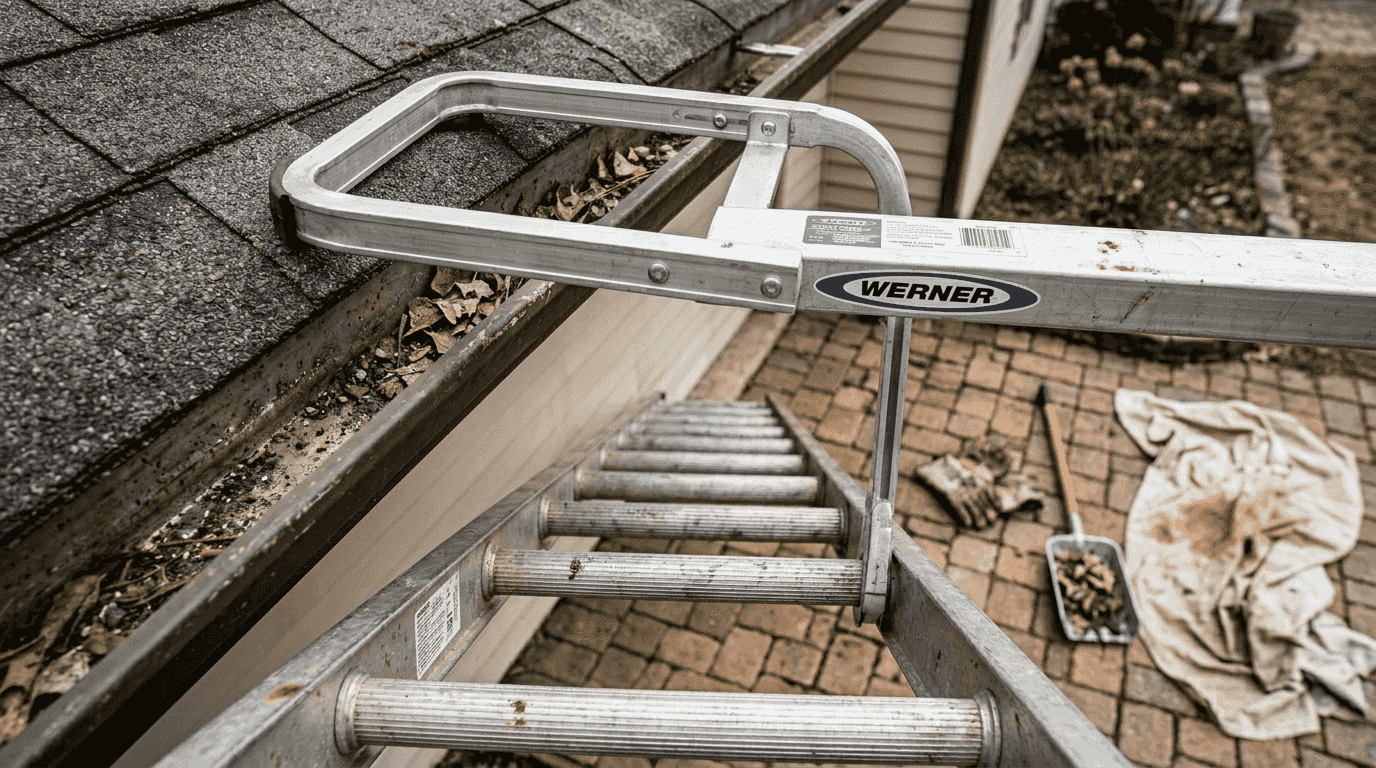
Pro Tip: A ladder stabilizer not only protects your gutters from dents but also provides much more stable footing on uneven terrain common around Florida homes with landscaping.
Cleaning gutters twice yearly, typically in spring and fall, prevents the majority of clogs and maintains proper water flow. Florida homeowners should consider adding a third cleaning after hurricane season when storms deposit extra debris. Understanding gutter cleaning frequency in Florida helps you develop a maintenance schedule matching local conditions.
| Tool/Material | Purpose | Safety Benefit |
|---|---|---|
| Extension ladder | Reach gutters safely | Proper height prevents overreaching |
| Ladder stabilizer | Distribute weight, protect gutters | Reduces ladder shift and fall risk |
| Rubber gloves | Protect hands from debris | Prevents cuts and insect bites |
| Safety glasses | Shield eyes from particles | Blocks flying debris during cleaning |
| Gutter scoop | Remove packed debris | Ergonomic design reduces hand strain |
| Garden hose | Flush remaining material | Tests water flow after cleaning |
Quality matters when selecting your equipment. A cheap ladder might save money initially but compromises your safety with every use. Invest in gear rated for your needs, and replace worn items before they fail. Check out these gutter cleaning tips for Central Florida homeowners for equipment recommendations specific to our region.
Step-by-step guide to safe gutter cleaning and inspection
Following a systematic approach keeps you safe while ensuring thorough cleaning. This proven method covers every critical step from setup through final inspection.
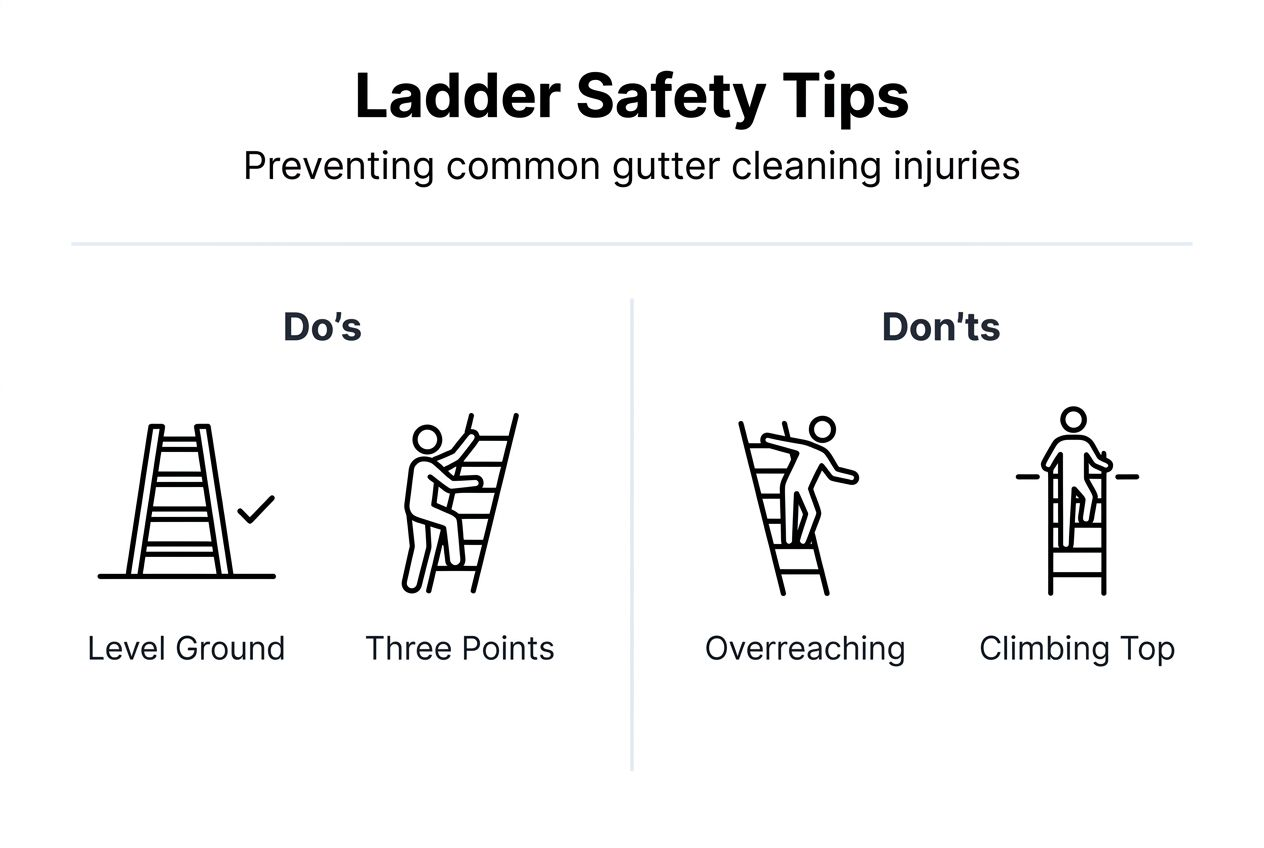
- Position your ladder on firm, level ground with feet secured and top extending at least three feet above the gutter line for safe mounting and dismounting.
- Climb carefully with three points of contact maintained at all times, keeping your belt buckle between the ladder rails to avoid dangerous overreaching.
- Remove large debris by hand first, placing it in your bucket rather than tossing it down where it creates ground cleanup or hits someone below.
- Scoop packed leaves, dirt, and granules from shingles using your gutter scoop, working in small sections and moving your ladder frequently rather than stretching.
- Flush each section with your garden hose, starting at the far end and working toward the downspout, watching for proper drainage and any leaks.
- Check downspouts by running water and observing flow at the bottom, using a plumber’s snake if blockages prevent proper drainage.
- Inspect gutter hangers, joints, and seams for damage, noting any sagging sections, rust spots, or gaps that need professional repair.
Pro Tip: Always clean gutters on a completely dry day. Wet leaves make gutters slippery, increasing your fall risk substantially, and damp ladder rungs reduce your grip.
Seamless gutters reduce foundation problems by 20% to 30% compared to sectional systems because fewer seams mean fewer potential leak points. This makes maintenance even more effective at protecting your home when you have seamless systems installed. The gutter maintenance guide Central Florida offers additional regional considerations for your specific climate challenges.
“Ignoring safety protocols during gutter cleaning might save you ten minutes today but could cost you months of recovery and thousands in medical bills. No time saving justifies that risk.”
Watch for warning signs during inspection. Gutters pulling away from fascia boards indicate hanger failure. Water stains on siding below gutters signal overflow problems. Peeling paint near gutters suggests chronic moisture exposure. Document these issues with photos for your records or to share with professionals if repairs exceed your DIY comfort level.
Common mistakes and troubleshooting in gutter safety and maintenance
Homeowners frequently make preventable errors that compromise both safety and effectiveness. Learning from these common mistakes helps you avoid unnecessary risks and maintenance failures.
The biggest misconception involves gutter guards. While guards reduce debris accumulation, they trap smaller particles and require periodic cleaning themselves. Homeowners who install guards and never check them again often discover overflowing gutters during heavy storms, defeating the protection purpose entirely.
Ladder safety violations cause the majority of gutter cleaning injuries. Homeowners lean too far sideways, climb too high on the ladder, skip stabilizer use, or position ladders on unstable ground. Each shortcut multiplies your fall risk exponentially.
Skipping regular maintenance creates a cascade of expensive problems. Infrequent cleaning allows debris to pack hard, making removal more difficult and time consuming. Trapped moisture accelerates rust and corrosion. Overflowing water damages fascia boards, soffits, and siding. Understanding why gutters need maintenance helps you prioritize this task appropriately.
| Approach | Safety Level | Effectiveness | Cost | Best For |
|---|---|---|---|---|
| DIY maintenance | Moderate (with proper equipment) | Good (if done correctly) | Low (equipment investment) | Single-story homes, able-bodied homeowners |
| Professional service | High (trained technicians) | Excellent (experience and tools) | Moderate to high | Multi-story homes, limited mobility, time constraints |
Pro Tip: Schedule gutter inspections immediately after hurricane season ends in November. Storm debris often hides damage that worsens rapidly if left unaddressed through winter.
Quick troubleshooting for common gutter problems:
- Water overflowing during rain indicates clogs in gutters or downspouts requiring immediate cleaning
- Sagging sections mean hanger failure or excessive debris weight stressing the system
- Leaking joints need caulking or professional sealing to prevent water damage
- Rust spots signal material degradation requiring section replacement before holes form
- Plants growing in gutters prove neglected maintenance allowing soil accumulation
Recognize when professional help makes sense. Two-story homes significantly increase fall risks for DIY maintenance. Physical limitations, from balance issues to arthritis, make ladder climbing dangerous. Time constraints might make professional service more cost effective than your hourly value. Complex repairs exceeding basic cleaning require specialized tools and expertise you likely don’t possess.
Explore professional seamless gutter solutions for your home
While DIY maintenance helps you protect your investment between professional services, permanently installed seamless gutters offer superior long-term protection and reduced maintenance needs. Professional installation ensures proper pitch, secure mounting, and optimal water flow that DIY fixes cannot match.

Seamless gutters custom-fit to your home eliminate the leak-prone seams of sectional systems. This design advantage means less frequent repairs and better foundation protection over decades of service. When you combine seamless gutters with professional gutter guard installation, you create a low-maintenance system that handles Florida’s challenging weather with minimal intervention. Explore whether seamless gutters are worth the investment for your specific home and budget.
Professional services bring expertise in material selection for Florida conditions, proper sizing for regional rainfall intensity, and warranty protection for both materials and workmanship. The gutter guard installation workflow shows how experts approach this upgrade systematically. Understanding the seamless gutter installation process helps you make informed decisions about protecting your most valuable asset.
Frequently asked questions
How often should I clean my seamless gutters in Central Florida?
Clean your gutters at least twice annually, preferably in spring and fall, to prevent debris buildup from seasonal leaf drops and storm activity. Central Florida’s frequent rainfall and afternoon thunderstorms make this minimum frequency essential for avoiding water damage. Consider adding a third cleaning after hurricane season if you have many trees near your home or experienced significant storm debris.
Are gutter guards a set-it-and-forget-it solution?
No, gutter guards still require maintenance despite reducing debris accumulation significantly. Small particles like roof granules, pine needles, and seed pods can slip through guard openings and create clogs over time. Guards also need periodic inspection to ensure they remain properly attached and haven’t developed gaps where debris enters. Plan to inspect guarded gutters annually and clean them every two to three years depending on your tree coverage.
What safety precautions should I take when cleaning gutters?
Always use a stable ladder positioned on level ground and inspect it thoroughly before climbing. Wear thick rubber gloves to protect against cuts and insects, plus safety glasses to shield your eyes from flying debris. Never clean gutters during wet or windy weather, as slippery surfaces dramatically increase fall risk. Avoid overreaching or climbing higher than the second rung from the ladder top. Following gutter safety best practices prevents the majority of maintenance injuries.
What materials work best for seamless gutters in Florida?
Aluminum seamless gutters offer the best combination of durability, affordability, and corrosion resistance for Florida’s humid, salty coastal environment. Aluminum won’t rust, handles temperature fluctuations well, and comes in numerous colors matching your home. Copper provides premium aesthetics and extreme longevity but costs significantly more. Avoid vinyl gutters in Florida, as intense UV exposure and heat cause brittleness and cracking within years.
When should I call professionals instead of doing it myself?
Call professionals for two-story homes where ladder work becomes significantly more dangerous, or if you have physical limitations affecting balance or strength. Complex repairs like replacing sections, fixing fascia damage, or addressing chronic leaking require specialized tools and expertise. If you discover extensive damage during inspection or feel uncomfortable at any point during maintenance, professional service provides safer, more effective solutions than attempting repairs beyond your skill level.
