TL;DR:
- Hail damages gutters through dents, cracks, holes, and loosening, risking leaks and structural failure.
- Seamless heavy-gauge aluminum gutters best resist Florida hail and humidity damage.
- Prompt inspection, proper repairs, and protected upgrades are key to long-term gutter resilience.
Hail damage to gutters explained: Solutions for Florida homeowners
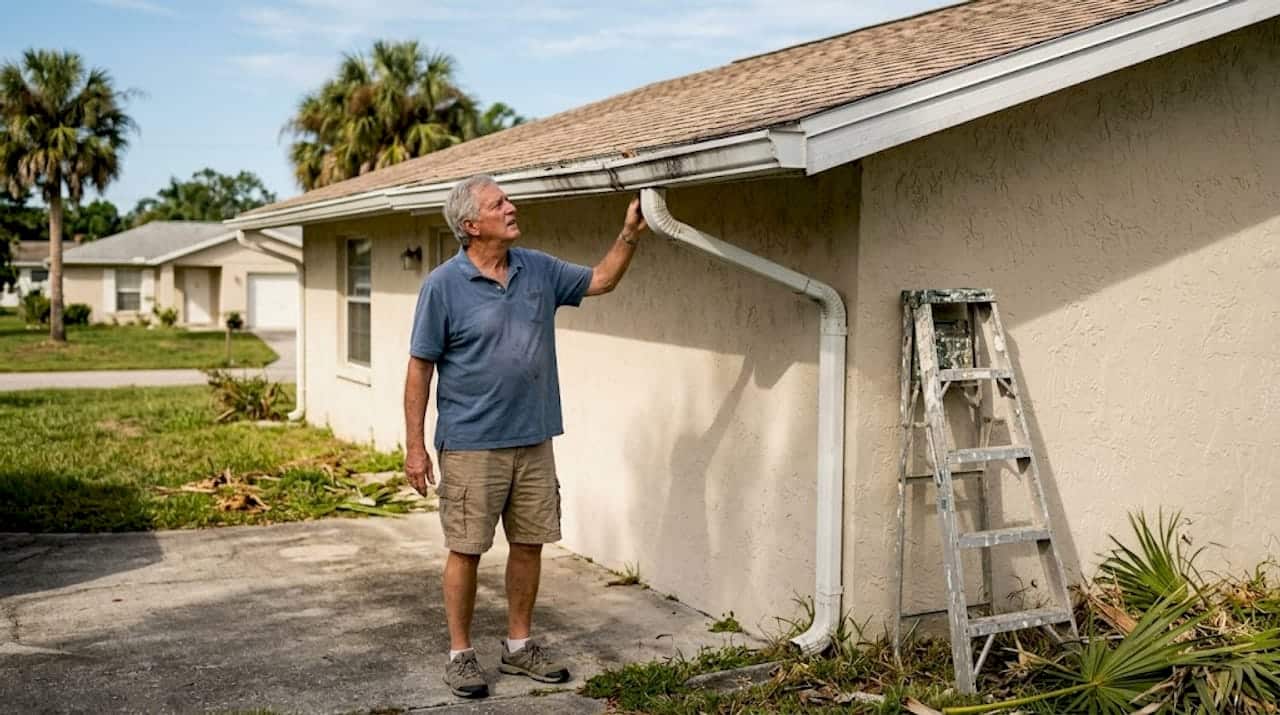
Most Central Florida homeowners look at dented gutters after a hailstorm and think, “That’s just cosmetic.” It isn’t. Hail damages gutters through dents, cracks, holes, bends, and loosening from impacts, and what looks like a minor ding on the outside can mean a leak, a clog, or a structural failure waiting to happen. Florida’s intense storm seasons make this problem especially common and especially costly. In this guide, you’ll learn exactly how to spot hail damage, which materials hold up best in our climate, what to do right after a storm, and how to protect your gutters long-term.
Table of Contents
- How hail damages gutters: The science and signs
- Gutter materials vs. Florida hail: What holds up best?
- Immediate steps after hail: Inspection and documentation
- Repair and prevention: Fixing damage and protecting your gutters long-term
- What most homeowners get wrong about gutter hail damage
- Protect your home: Professional gutter repair and upgrades
- Frequently asked questions
Key Takeaways
| Point | Details |
|---|---|
| Hail can cause serious gutter issues | Dents and cracks from hail can lead to leaks or even require a full replacement. |
| Material choice is critical | Seamless heavy-gauge aluminum gutters are best for Central Florida’s storms. |
| Document damage quickly | Prompt inspection and thorough documentation support successful insurance claims. |
| Gutter guards add resilience | Stainless mesh guards protect from both hail and debris, reducing future risk. |
| Professional repairs ensure safety | Partnering with specialists helps restore and future-proof your home’s gutter system. |
How hail damages gutters: The science and signs
Hail doesn’t hit your gutters the same way every time. The type of damage depends on hail size, speed, angle, and how many times the same spot gets struck. Understanding what you’re actually looking at helps you make a smarter repair decision instead of guessing.
The five main types of gutter damage from hail are dents, cracks, holes, bends, and loosening. Small hail, around pea or marble size, usually leaves shallow surface dents. These can disrupt water flow by creating low spots where water pools rather than drains. Marble to golf ball size hail hits harder and can crack aluminum seams or bend sections out of alignment. Golf ball size and larger can punch actual holes or shear a gutter section away from its fascia mount entirely.
Wind-driven hail worsens angled impacts and repeated strikes compound damage far beyond what a single stone would cause. A hailstone traveling at an angle hits a larger surface area of the gutter wall, creating tears and stress fractures that don’t always show up immediately. Central Florida storms often include high wind gusts alongside hail, which means your gutters face multiple forces at once, not just straight-down impact.
Knowing what hail damage looks like versus other damage matters a lot, especially for insurance purposes.
Common signs of gutter hail damage:
- Random, circular dents with no consistent pattern across the gutter run
- Cracks or splitting along seams or corners
- Sections pulling away from the fascia board
- Visible holes or punctures in thin sections
- Downspout dents near the top where hail angles in
- Paint chips or bare metal exposed in scattered spots
Not all dents come from hail. Ladder marks typically appear as two parallel indentations close together, while hail leaves a random scatter pattern with no consistent spacing.
| Damage type | Visual pattern | Likely cause |
|---|---|---|
| Random circular dents | Scattered, inconsistent spacing | Hail impact |
| Two parallel marks | Consistent spacing, aligned | Ladder contact |
| Long linear scratch | Single continuous line | Tree branch or debris |
| Uniform sagging | Consistent along entire run | Age or heavy water load |
| Corner splits | Located at seam joints | Thermal expansion or age |
Wind-driven hail is particularly destructive because it compounds each impact. A stone hitting at a 45-degree angle transfers more energy into the gutter wall than a direct hit, creating internal stress fractures that may not be visible until water seeps through weeks later.
Once you notice these signs, your next step is figuring out what material is actually protecting your home and whether it’s up to the job. For a broader look at when problems go beyond storm damage, check the signs gutters need replacing to know when you’re past the repair stage.
Gutter materials vs. Florida hail: What holds up best?
Understanding the source of damage leads to the next question: which gutter materials can actually withstand Central Florida’s infamous hailstorms?
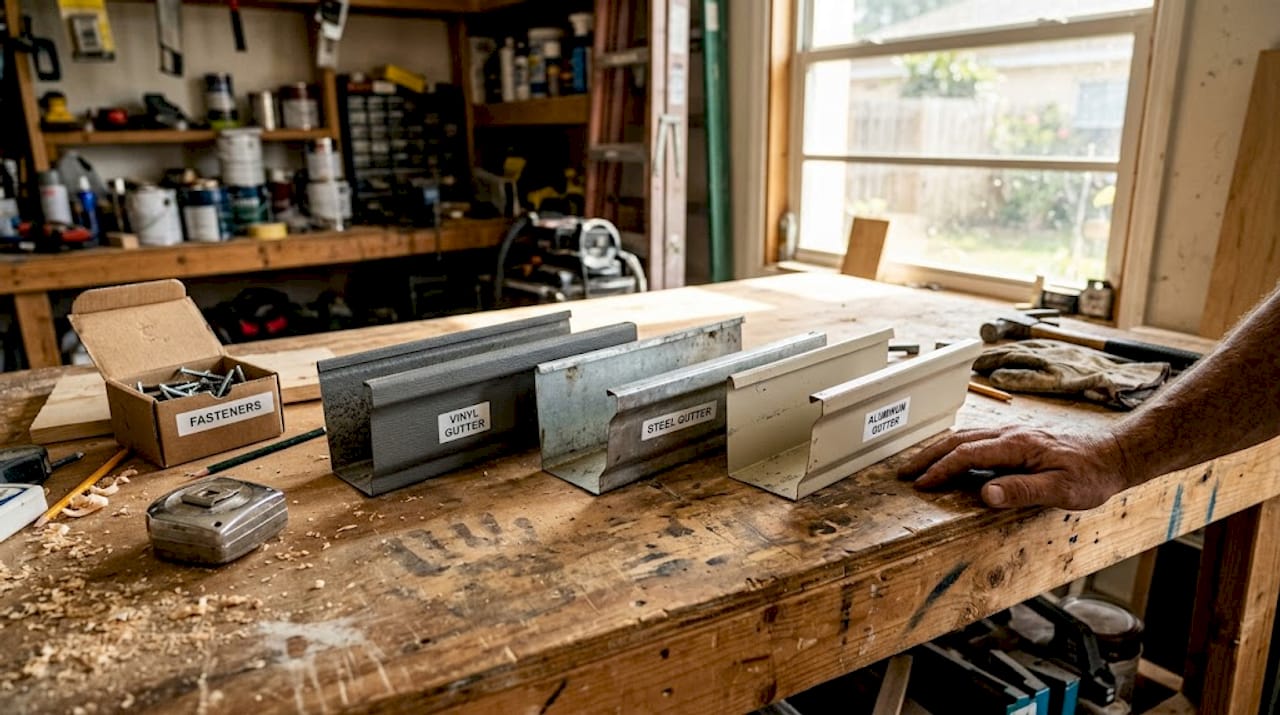
Not all gutters are equal when the sky starts throwing ice. The material your gutters are made of directly determines how much punishment they can absorb before cracking, splitting, or failing entirely.
Aluminum gutters are the most common choice in Florida and for good reason. They are lightweight, resist rust, and handle humidity well. Heavy-gauge aluminum (0.032 inch or thicker) holds up against small to medium hail without permanent deformation. The main weakness is that thinner gauges (0.019 to 0.027 inch) dent more easily and may need full replacement after a significant storm.
Steel gutters are denser and more impact-resistant than aluminum, but they are heavier and significantly more vulnerable to Florida’s humidity and salt air. Galvanized steel can start rusting within a few years in coastal Central Florida environments, which makes long-term maintenance costs higher.
Vinyl gutters are the most affordable option upfront but perform the worst in hail situations. Vinyl becomes brittle in heat and can crack or shatter on impact, especially after years of Florida sun exposure. Aluminum and steel outperform vinyl against hail impacts, and vinyl is generally not recommended for homes in storm-prone regions.
Pros and cons by material in hail situations:
- Aluminum: Lightweight, rust-resistant, widely available in heavy gauges; can dent under large hail but holds up better than vinyl
- Steel: Highest impact resistance of the three; heavy, expensive, rusts faster in Florida humidity
- Vinyl: Cheapest upfront; brittle in heat and UV exposure, cracks easily from hail or thermal shock
For aluminum gutters in Florida, the seamless design is especially important. Seamless gutters have no joints along the run except at corners and downspouts, which means far fewer weak points for hail to exploit. Traditional sectional gutters have seams every 10 to 12 feet, and each seam is a potential crack or leak point after a storm.
Florida homeowners should prioritize seamless aluminum for humidity resistance and rust prevention, with gutter guards as an essential add-on for debris and pollen management.
| Material | Hail resistance | Rust risk in Florida | Recommended gauge | Overall Florida rating |
|---|---|---|---|---|
| Aluminum (seamless) | Good to excellent | Very low | 0.032 inch or higher | Best choice |
| Steel | Excellent | High without coating | 26 gauge or heavier | Conditional |
| Vinyl | Poor | None | N/A | Not recommended |
Pro Tip: If you are replacing gutters after a hailstorm, go heavier than the minimum. Upgrading from 0.027 to 0.032 inch aluminum adds a small cost at installation but makes a measurable difference in how your gutters handle the next storm. For a deeper look at how the right system protects your property, see our guide on protecting Central Florida homes.
Immediate steps after hail: Inspection and documentation
Once you know which gutters are toughest, it’s crucial to act fast when hail does hit. Here’s how to respond step by step.
The first 48 to 72 hours after a hailstorm are the most important. Acting quickly protects both your home and your insurance claim. Many homeowners wait too long, and by then, secondary damage like wood rot from a leaking gutter or mold in the soffit can make the repair far more expensive.
Post-storm inspection is critical in Florida, where combined wind and hail events are common after thunderstorms and hurricane-season squalls.
Step-by-step gutter inspection after hail:
- Wait for conditions to clear. Never inspect during a storm or on wet, slippery surfaces. Wait until the ground is dry and safe.
- Walk the perimeter from the ground first. Look for obvious sagging, detached sections, or visible holes before getting on a ladder.
- Check the downspouts. Run water through and watch for leaks at connection points or reduced flow, which signals a dent or blockage inside.
- Inspect the fascia and soffit. Water backing up from a damaged gutter can rot the wood behind it quickly in Florida’s humidity.
- Get on a ladder carefully. Look closely at the inner channel for cracks, rust spots, and accumulated debris that hail may have knocked loose.
- Check all gutter hangers and screws. Hail vibration and impact can loosen the fasteners that hold the gutter to the house.
- Photograph everything. Wide shots showing the whole run and close-ups showing individual dents, cracks, or separations.
Documentation is critical for your insurance claim. File promptly within 30 to 90 days, document thoroughly with dated photos, and consider having a professional assessment done to support your claim. Hail claims are among the most common and are often covered comprehensively when properly filed.
Pro Tip: Don’t focus only on the gutters themselves. Check downspouts at every bend and at the ground outlet. Hail can travel down from the roof, bounce off the gutter opening, and dent the top section of a downspout in ways that restrict flow without being obviously visible from the street.
For Florida-specific repair guidance after you complete your inspection, see these gutter repair tips for Florida homeowners.
Repair and prevention: Fixing damage and protecting your gutters long-term
Inspection is only half the battle. Let’s look at how to actually fix hail damage and keep it from happening again.
Not every hail hit means a full replacement. The decision between repair and replacement comes down to the number of damaged sections, the severity of the damage, and the age and material of your current gutters.
Repair and replacement options, from basic to full:
- Sealant patching for small cracks. Minor hairline cracks at seams can be sealed with gutter sealant from the inside. This works as a short-term fix but is not a permanent solution on older gutters.
- Dent reshaping. Shallow dents in aluminum can sometimes be gently pushed back to shape from the inside using a rubber mallet, but this is only practical on accessible, lightly damaged sections.
- Section replacement. For sectional gutters, a badly dented or cracked section can be cut out and replaced. This is cost-effective when damage is isolated to one or two runs.
- Full seamless gutter replacement. When damage is widespread, the gutters are older than 15 to 20 years, or the material is vinyl or thin aluminum, full replacement is the smarter long-term investment.
- Downspout replacement. Often overlooked, downspouts dented or crushed by hail restrict flow and can cause water to back up into the gutter channel, defeating even a perfect repair job on the gutter itself.
Beyond repairs, the most effective thing you can do is upgrade the system so the next storm causes less damage.
Must-have upgrades for Florida gutters:
- Stainless steel micro-mesh gutter guards. Micro-mesh stainless steel guards retain 95% of leaves and debris and maintain 98% water flow per ASTM testing. They also add a protective layer over the gutter opening, reducing the direct impact surface exposed to hail.
- Seamless heavy-gauge aluminum gutters. Fewer seams mean fewer weak points. Going with 0.032 inch or heavier gauge aluminum gives you meaningful hail resistance without a dramatic cost increase.
- Reinforced downspout brackets. Adding extra brackets along downspout runs keeps them from pulling away from the house during storm-force wind and hail.
- Gutter helmet or cover systems. These top gutter protection systems not only keep debris out but can provide physical protection against smaller hailstones.
For Florida homeowners, guards are essential not just for hail but for the constant pollen, oak leaves, and Spanish moss that clog unprotected gutters after every storm. A clogged gutter fails faster after hail because standing water accelerates corrosion at any crack point. If you’re considering a full system upgrade, review the complete gutter replacement steps before calling for quotes.
What most homeowners get wrong about gutter hail damage
Here’s something we see constantly: a homeowner gets new gutters after a bad storm, pays for the replacement, and within two seasons, they’re back dealing with the same problems. Why? Because they replaced like for like. Same thin gauge aluminum. Same sectional installation. No gutter guards. No upgraded hangers.
The standard advice is “replace what’s broken.” The real answer is “replace with something better.” Cosmetic fixes and simple swaps don’t address the actual vulnerability. Thin aluminum dents again. Sectional gutters develop new leaks at old seam locations. Unguarded gutters fill with debris and put extra weight on already-stressed hangers.
We’ve also seen homeowners skip professional installation to save money, only to end up with gutters pitched at the wrong slope. A poorly pitched gutter holds standing water, which corrodes any crack point faster than Florida’s humidity alone. The Florida gutter solutions that actually work long-term combine the right material, proper slope, professional installation, and regular maintenance every season. Proactive choices cost less than reactive repairs. That’s not theory, it’s what the repair bills show.
Protect your home: Professional gutter repair and upgrades
After a hailstorm in Central Florida, the difference between a quick fix and lasting protection comes down to the decisions you make in the first few days. Choosing the right material, the right installation method, and the right protective upgrades means you’re not starting over after every storm season.

At Larry’s Gutters, we specialize in exactly this kind of work for Central Florida homeowners. Whether you need a post-hail assessment, a section repaired, or a full upgrade to seamless aluminum with micro-mesh guards, we can walk you through every step. Explore the gutter replacement in Florida process, learn about our gutter guard installation workflow, or see how our seamless gutter installation process works from measurement to final inspection. Contact us today for a free quote and get ahead of the next storm.
Frequently asked questions
How do I know if my gutters need replacing after hail?
Look for dents, cracks, and loosening across multiple sections, and compare the impact pattern to rule out ladder marks or other causes. If damage is widespread or the gutters are already aging, replacement beats repair.
Are hail-damaged gutters always covered by homeowners insurance?
Hail claims are often covered comprehensively when filed promptly and backed with thorough photo documentation. Review your specific policy for exclusions or deductible limits before filing.
What gutter material is best for Florida’s hail and humidity?
Seamless aluminum is the top choice for Central Florida because it resists rust, handles humidity well, and in heavy gauges, holds up against hail impact better than vinyl or thin sectional materials.
Should I repair or replace gutters after hail damage?
Minor surface dents can sometimes be patched or reshaped, but golf ball size hail often requires replacement because the structural integrity of the gutter is compromised beyond what a patch can fix.
How do gutter guards help against hail damage?
Micro-mesh stainless steel guards retain 95% of debris and add a protective layer over the gutter opening that absorbs some hail impact energy, reducing direct damage to the gutter channel below.
