
TL;DR:
- Regular downspout maintenance prevents costly water damage in Central Florida’s heavy rain season.
- Safety and proper tools are essential for effective DIY gutter and downspout cleaning.
- Professional services offer thorough inspection, cleared blockages, and system upgrades for high-risk homes.
Central Florida’s rainy season doesn’t forgive neglected gutters. When downspouts clog, water backs up fast, and the damage that follows, soaked siding, eroded landscaping, and flooded foundations, can cost thousands of dollars to fix. This guide walks you through a practical, step-by-step downspout cleaning workflow built specifically for Florida conditions. You’ll learn what tools to gather, how to clean safely and thoroughly, how to verify your work, and when it makes more sense to call in a professional rather than climbing a ladder yourself.
Table of Contents
- Why downspout cleaning matters in Central Florida
- Prepare: Tools and safety essentials for downspout cleaning
- Step-by-step downspout cleaning workflow
- How to verify, troubleshoot, and optimize your downspout cleaning
- What most guides miss about downspout cleaning in Florida
- Looking for expert help or advanced solutions?
- Frequently asked questions
Key Takeaways
| Point | Details |
|---|---|
| Routine cleaning prevents damage | Consistent downspout cleaning safeguards your home from costly water damage after heavy rains. |
| Preparation matters | Using the right tools and safety gear makes the workflow easier and reduces risks. |
| Follow a systematic workflow | Step-by-step cleaning ensures thorough debris removal and proper drainage. |
| Post-storm checks are crucial | Florida storms can clog downspouts rapidly, so timely inspections and cleanings protect your home. |
| Know when to call pros | Professional cleaners are best for multi-story houses or if you face persistent issues. |
Why downspout cleaning matters in Central Florida
Florida isn’t like most states when it comes to rain. Central Florida receives an average of 50 to 55 inches of rainfall per year, with the majority falling in intense, concentrated bursts between June and September. A single afternoon storm can dump two inches of rain in under an hour. When your downspouts are clear, that water flows away from your home exactly as designed. When they’re clogged, you’ve got a serious problem on your hands.
Blocked downspouts force water to overflow gutters and pour against your home’s exterior. Over time, this causes wood rot in fascia boards, mold growth behind siding, cracked or settled foundations, and soil erosion around your landscaping. These aren’t just cosmetic issues. Foundation damage alone can run anywhere from $2,000 to over $10,000 depending on severity. Routine downspout cleaning is one of the most cost-effective ways to prevent water damage before it starts.
Here are the most common problems caused by clogged downspouts in Central Florida homes:
- Foundation damage from water pooling directly against the house
- Siding rot and mold from water cascading over clogged gutters
- Landscaping erosion from uncontrolled water discharge at ground level
- Basement and crawlspace flooding in homes where grading channels water inward
- Pest infestations since standing water in gutters attracts mosquitoes and other insects
One issue specific to Central Florida is the sheer volume of organic debris. Spanish moss, palm fronds, pine needles, and oak leaves are notorious for compressing into dense, wet plugs inside downspout elbows. These plugs don’t wash away on their own. They harden over time and become nearly impossible to remove without active cleaning.
Important: Cleaning once a year is not enough in Florida. Post-storm inspections are just as critical as scheduled cleanings. A tropical storm can pack months worth of debris into your downspouts overnight.
For most single-story homes, a motivated homeowner with the right tools can handle downspout cleaning safely. However, DIY is risky on multi-story setups, and professionals typically complete a full job in one to three hours using specialized tools that go well beyond what most homeowners keep in the garage. If your home has steep rooflines, tall gutters, or you’re cleaning up after a major storm, professional service is the smarter call. Knowing how to protect against water damage starts with understanding the full picture of what your downspout system does and what breaks it.
Understanding downspout drainage basics helps you recognize warning signs faster and respond before minor clogs turn into expensive repairs.
Now that you know what’s at stake, let’s walk through what you’ll need before starting the cleaning process.
Prepare: Tools and safety essentials for downspout cleaning
Showing up to clean gutters without the right gear is how people get hurt or end up doing a half-finished job. Before you touch a ladder, take inventory of what you need. The table below compares what DIY homeowners typically use versus what professional crews bring to the job.
| Item | DIY setup | Professional setup |
|---|---|---|
| Ladder | 6 to 8 ft step ladder | Multi-section extension ladder |
| Debris removal | Hand scoop, trowel | Wet/dry vacuum, powered auger |
| Flushing tool | Garden hose with spray nozzle | High-pressure washer |
| Safety gear | Work gloves, safety glasses | Harness, non-slip footwear, PPE |
| Inspection | Visual check | Camera inspection tools |
| Downspout clearing | Plumber’s snake | Powered snake, compressed air rig |
For a basic DIY clean on a single-story home, you’ll need:
- A sturdy ladder rated for your weight plus tool weight
- Heavy-duty work gloves to protect against sharp debris and rusty metal edges
- Safety glasses because debris and water spray toward your face when flushing
- A garden hose with a high-pressure nozzle attachment
- A hand scoop or small trowel for clearing packed debris from gutters
- A plumber’s snake or flexible rod to break up blockages inside downspout pipes
- A bucket or tarp to collect debris and keep your yard clean
Before you climb a single rung, do a ground-level visual inspection. Look for any obvious storm damage: bent gutters, separated joints, missing downspout sections, or sections that have pulled away from the fascia. You can find a full breakdown of useful gutter cleaning tools on our site to make sure your kit is complete.
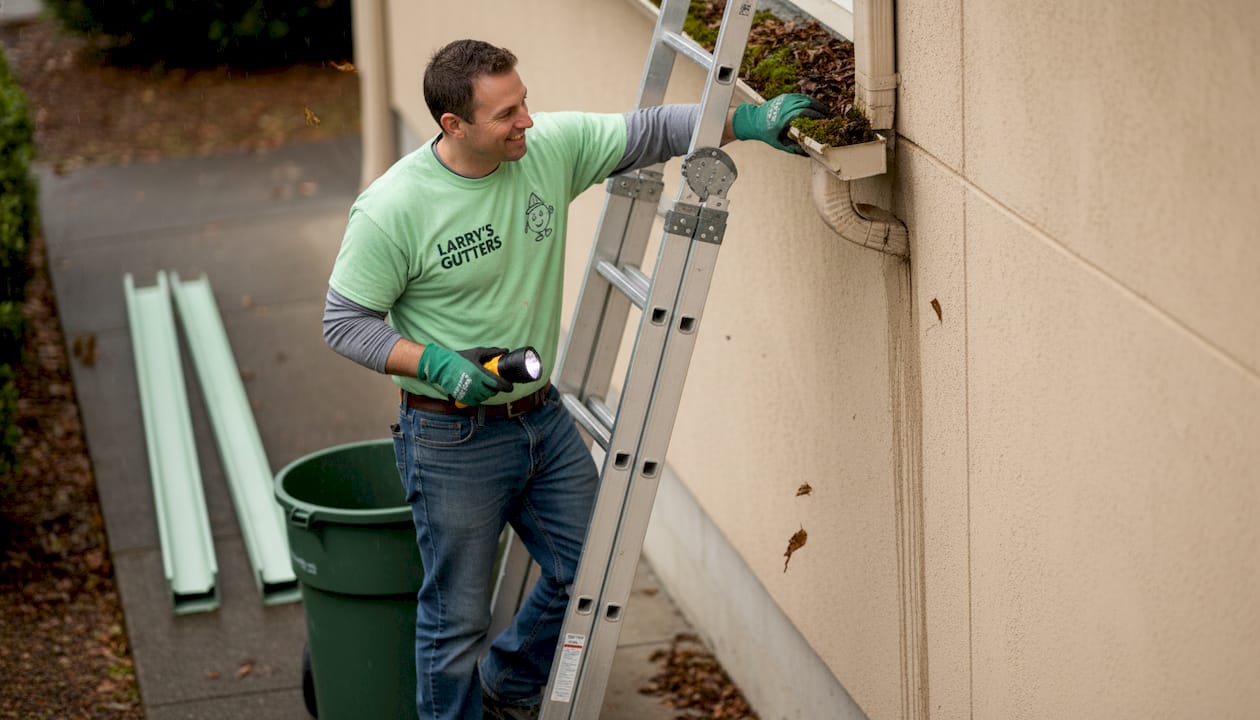
Pro Tip: Never start a cleaning job right after a rainstorm. Wet ladders on wet ground dramatically increase fall risk. Wait for surfaces to dry, and always have someone nearby when you’re working at height.
If you’ve never done this before, reviewing DIY cleaning tips specific to Florida homes will help you avoid the most common beginner mistakes before you start. Safety isn’t optional, it’s the foundation of the whole workflow.
According to gutter cleaning duration data, professionals equipped with specialized tools can handle jobs in one to three hours that might take a homeowner most of a Saturday. Factor that time into your planning.
With your supplies assembled, you’re ready to move step-by-step through the actual cleaning workflow.
Step-by-step downspout cleaning workflow
This workflow is designed for single-story homes. If you have a multi-story house or large gutters, strongly consider hiring a professional for both safety and thoroughness. Here’s how to clean downspouts the right way.
- Do a ground-level inspection first. Walk the perimeter of your home and look at every downspout. Check for visible debris at the opening, separated joints, sagging, or signs of previous overflow staining on the siding or foundation below.
- Clear the gutters before touching the downspouts. Use your hand scoop to remove leaves, sticks, and packed debris from the gutter channel. Work from the far end toward the downspout opening. Pile debris onto a tarp for easy cleanup.
- Flush the gutter channel. Run your garden hose from the far end toward the downspout. Watch how water flows. Slow movement or standing water tells you there’s still debris or a slope problem.
- Check the downspout opening. Remove any visible debris blocking the top of the downspout by hand. Wear gloves. Compressed, wet debris can be surprisingly dense.
- Snake the downspout if needed. Feed a plumber’s snake into the downspout from the top. Twist as you push to break up packed blockages. This step is especially important for the elbow sections at the bottom where debris settles and compresses.
- Flush the downspout from the top. Insert your hose directly into the downspout opening and run water at full pressure. Watch the bottom discharge point for steady, clear flow. If water backs up, the clog is still there.
- Check all elbows and extensions. Many homeowners miss the angled elbow sections at the bottom of each downspout. These are prime clog locations. Safe gutter cleaning methods always include a specific check of every joint and elbow.
- Final flush and check. Run water from your roof downward one more time. The water should exit smoothly at the discharge point and flow away from your foundation without pooling.
Safety reminder: Never lean a ladder against a gutter channel. It can bend or detach. Use ladder stabilizers and always position the base at a safe angle. Keep both hands free while climbing by using a tool belt or bucket hook.
| Factor | DIY | Professional |
|---|---|---|
| Completion time | 2 to 5 hours | 1 to 3 hours |
| Thoroughness | Moderate (visible areas) | High (cameras, powered tools) |
| Cost | Tool investment only | Service fee |
| Post-storm safety | Risky | Recommended |
Pro Tip: A leaf blower with a gutter attachment is a fast way to clear dry debris from gutter channels before you start flushing. It cuts your cleaning time significantly and reduces the mess you’ll need to scoop by hand.
For a full breakdown of downspout cleaning steps and how each component connects, you’ll find detailed visual guidance on our site.
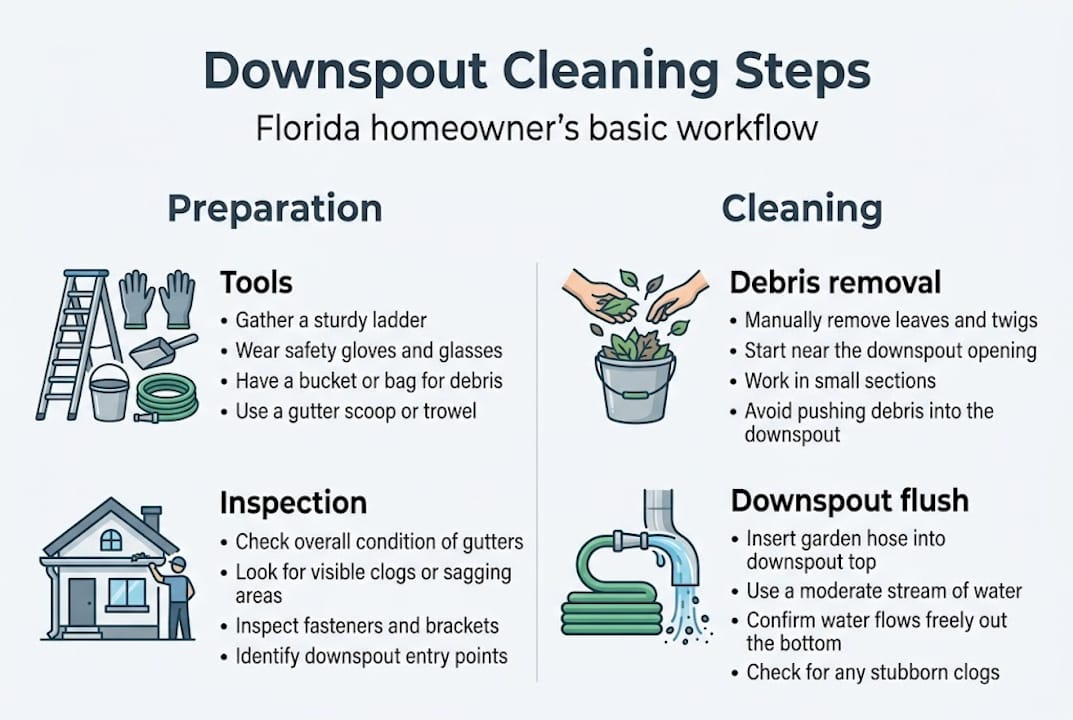
After following these steps, verifying your results ensures your gutters are truly ready for Florida’s next rainstorm.
How to verify, troubleshoot, and optimize your downspout cleaning
Finishing the cleaning steps doesn’t mean the job is done. Verification is what separates a thorough clean from a job that will fail the next time it rains hard. Here’s how to confirm your work actually worked.
Verification checklist:
- Run your garden hose at full volume from the roofline or the gutter’s high end. Time how quickly water exits at the downspout discharge point. A clear system drains fast and consistently.
- Walk around the discharge points and look for pooling water. If water collects within two feet of the foundation, your downspout placement may need to be extended or repositioned.
- Check all joints and seams for drips or leaks during the flush. Small leaks often signal separated joints that need resealing.
- Look at the ground directly below the gutters. Fresh soil erosion channels or debris deposits tell you water overflowed during previous storms.
Troubleshooting common problems:
- Slow draining after flushing: There’s still a partial clog somewhere in the downspout or an elbow section. Run the snake again and focus on the lower elbows.
- Water spills over the front of the gutter: The gutter channel may be pitched incorrectly, or the downspout opening is still partially blocked.
- Leak at a joint during flush: Reseal the joint with gutter sealant. In older gutters, the sealant dries out and cracks over time.
- Visible debris packed at the discharge point: Clear it manually and flush again. Debris at the exit is a sign the inside of the downspout still needs work.
Understanding the importance of downspouts in Florida’s water management system helps you take this verification step seriously rather than skipping it.
Optimizing your cleaning schedule:
Florida’s storm season demands more than one annual cleaning. Here’s a realistic schedule for Central Florida homeowners:
- Clean fully in late spring before the rainy season begins (May)
- Inspect after every named storm or any event with heavy wind and rainfall
- Clean again in late fall after seasonal debris peaks (November)
- Do a quick visual check monthly during June through September
Pro Tip: Set a recurring calendar reminder after every Florida storm warning. A five-minute ground-level inspection after a storm takes almost no time but catches new blockages before they become expensive problems.
With the workflow completed and your downspouts checked, it’s time for some honest advice few guides offer.
What most guides miss about downspout cleaning in Florida
Most online guides treat downspout cleaning like a once-a-year chore you can knock out on a quiet Saturday. That approach works in states where rainfall is predictable and moderate. In Central Florida, it’s a shortcut to water damage.
Here’s the honest truth: the biggest risk isn’t skipping an annual cleaning. It’s the 48 hours after a major storm when debris is freshly packed into your downspouts and another storm is already forming in the Gulf. That window, when your gutters are compromised and rain is coming again, is when the real damage happens.
DIY cleaning has real limits. Most homeowners can do a decent job on accessible single-story gutters. But thoroughness matters enormously, and the tools professionals use, powered augers, camera inspections, high-pressure rigs, reach blockages that a garden hose simply cannot. The benefits of professional cleaning aren’t just about convenience. They’re about catching problems you can’t see from ground level.
Multi-story homes and properties surrounded by mature oak trees or Spanish moss are in a different category entirely. The debris load is heavier, the risk of ladder falls is real, and the cost of getting it wrong is high. Know your limits, and don’t let pride turn a $150 service call into a $5,000 foundation repair.
Looking for expert help or advanced solutions?
You now have a clear, actionable workflow for keeping your downspouts clean and your home protected through Florida’s toughest storms. But sometimes a guide isn’t enough, especially when you’re dealing with a multi-story home, significant storm damage, or gutters that just aren’t performing the way they should.

At Larry’s Gutters, we handle everything from routine cleaning to full downspout installation and system upgrades built specifically for Central Florida conditions. If you’re ready to stop worrying every time a storm rolls in, let us help you protect your home with a system that works. We also offer professional gutter cleaning for homeowners who want thorough, fast results without the ladder risk. Contact us for a free quote today.
Frequently asked questions
How often should downspouts be cleaned in Central Florida?
Downspouts should be checked after every major storm and cleaned fully at least twice per year in Central Florida, ideally once in late spring and once in late fall. Florida’s heavy storm season means post-storm checks are just as important as scheduled cleanings.
Is gutter cleaning safe to do on your own?
DIY cleaning is safest on single-story homes with accessible gutters. Ladders and heights create serious fall risks for multi-story houses, and professionals complete the job faster and more thoroughly using specialized tools.
What are signs my downspout is clogged?
Overflow during rain, slow drainage after a storm, visible debris packed at the downspout opening, and soil erosion directly below the discharge point are all clear signs of a blockage that needs attention.
Should I clean gutters and downspouts after a storm?
Yes, post-storm cleaning is strongly recommended because major storms in Central Florida can pack months worth of debris into your downspouts in a single event, leaving your system compromised right before the next round of rain arrives.
