TL;DR:
- Regular gutter inspections prevent water damage, mold, and foundation issues in Central Florida.
- Use safety gear, proper tools, and thorough steps whether inspecting yourself or hiring professionals.
- Gutter guards reduce maintenance but still require biannual inspections to ensure effectiveness.
Clogged gutters are the top cause of water damage in homes across the country, and Central Florida homeowners face a version of this problem that is especially demanding. Between afternoon downpours, pine needle showers, and the kind of humidity that turns a small moisture problem into a mold situation fast, gutters here take a serious beating. The good news is that a simple, routine inspection can catch issues before they spiral into foundation repairs or interior flooding. This guide walks you through exactly what to look for, how to stay safe doing it, and when to call in a professional.
Table of Contents
- Why gutter inspection matters in Central Florida
- Tools, safety, and preparation: What you need before inspecting
- Step-by-step: How to inspect your gutters effectively
- Troubleshooting: Common gutter issues and signs to watch for
- Verification: How to confirm your gutters are protecting your home
- Expert perspective: Why thoroughness beats shortcuts in gutter inspection
- Get professional help to keep your gutters working
- Frequently asked questions
Key Takeaways
| Point | Details |
|---|---|
| Inspection prevents major damage | Routine gutter checks help avoid costly water damage and foundation repairs. |
| Safety and tools matter | Using the right equipment and safety precautions makes home inspections easier and safer. |
| Gutter guards not foolproof | Even with gutter guards, small debris can get through, requiring regular maintenance. |
| DIY works for most homes | With preparation, homeowners can inspect their own gutters unless the property has complex layouts. |
| Professional help prevents problems | Hiring pros for tricky situations guarantees thorough inspection and peace of mind. |
Why gutter inspection matters in Central Florida
Central Florida is not an average rain market. The region receives around 50 to 60 inches of rainfall each year, with intense storm activity concentrated between June and September. That volume of water falling in short, heavy bursts puts enormous pressure on your gutter system. If gutters are even partially clogged, water backs up under the roofline, seeps behind fascia boards, and eventually finds its way into your walls or foundation.
The local tree situation makes things worse. Slash pine, live oak, and palm trees are everywhere in Central Florida neighborhoods, and they all shed debris constantly. Pine needles are particularly problematic because they slip through many gutter guards and mat together into dense plugs inside the channel. Leaves from oaks can fill a gutter in a single windy afternoon during fall. This means the debris accumulation rate here is faster than in most parts of the country.
Humidity is the third factor working against you. When water sits in a clogged gutter for days, the warm, moist Florida air creates ideal conditions for mold and mildew to grow inside the trough and on the siding nearby. Over time, prolonged moisture exposure causes wood rot in the fascia, which can cost several thousand dollars to repair even before you factor in any structural issues.
The financial stakes are real. Clogged gutters drive the majority of preventable home water damage claims, and foundation repair costs routinely run from $10,000 to over $25,000. A good Florida gutter maintenance checklist can help you stay ahead of these risks without spending a fortune.
“The leading cause of foundation problems in residential homes is water intrusion from poorly managed drainage systems, including gutters.”
Here is a quick summary of what is at stake when inspections are skipped:
- Fascia and soffit rot from standing water overflow
- Foundation cracking and settling from soil erosion around the home
- Interior mold from water entering through the roofline or walls
- Pest infestations in clogged gutters holding wet debris
- Landscape erosion along flower beds and walkways
Understanding these gutter tips for Central Florida is the first step toward protecting your home. With these risks in mind, preparing for a thorough inspection is your best defense.
Tools, safety, and preparation: What you need before inspecting
Before you climb a ladder or touch your gutters, spend five minutes gathering the right tools and thinking through safety. A rushed inspection on an unstable ladder is more dangerous than a clogged gutter.
Tools you need:
- Work gloves (thick rubber or leather to protect against sharp metal edges)
- A sturdy extension ladder rated for your weight plus gear
- A plastic trowel or gutter scoop for removing debris
- A garden hose with a spray nozzle
- A bucket or tarp to collect debris
- A flashlight for checking shadowed sections
- A tape measure for checking gutter slope
Refer to a dedicated gutter maintenance tools resource if you want more detail on what each item does during inspection.
Safety rules that are non-negotiable:
- Never place a ladder on wet or soft ground. Use a ladder leveler if your yard is uneven.
- Always have someone with you to hold the base of the ladder.
- Wear slip-resistant shoes. Roof surfaces and ladder rungs get slick fast in Florida’s humidity.
- Do not lean the ladder against the gutter itself. It can bend or detach from the fascia.
“For multi-story homes, steep slopes, or suspected hidden leaks, professional inspections are strongly preferred for both safety and accuracy.” (This Old House)
| DIY inspection | Professional inspection |
|---|---|
| Best for single-story homes | Recommended for 2+ stories |
| Works for visible, accessible gutters | Needed for hidden seams and joints |
| Low cost, immediate | Moderate cost, thorough |
| Requires basic tools and time | Uses cameras and slope meters |
| Good for routine checks | Best after major storms |
Pro Tip: Do your inspection on a dry day, but run your garden hose through the gutters so you can watch exactly where water backs up or drips. Dry gutters can hide leaks that only appear under water pressure.
Review the gutter safety tips before your first inspection if you have any doubt about your ladder setup or roof pitch. Once you are prepared, it is time to follow the practical inspection steps.
Step-by-step: How to inspect your gutters effectively
A thorough inspection takes most homeowners about 30 to 45 minutes on a single-story home. Work systematically from one end of the gutter run to the other so nothing gets missed.
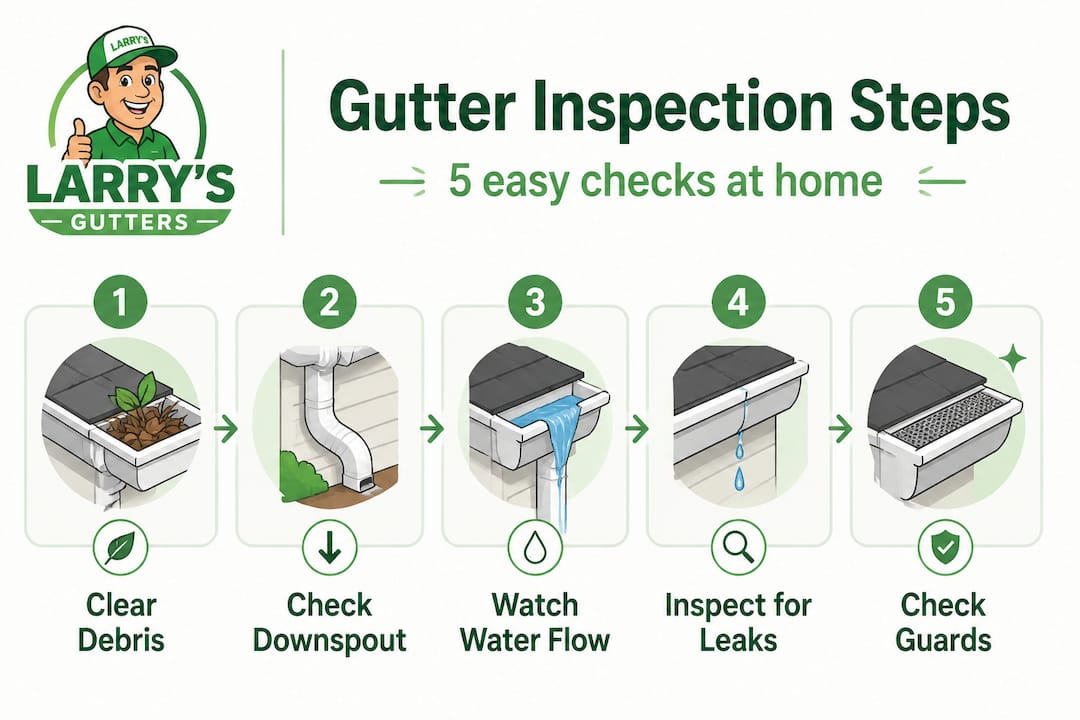
- Start with a ground-level visual check. Walk the perimeter of your home and look up at the gutters. Are any sections visibly sagging or pulling away from the fascia? Are there gaps where sections meet? Can you see debris piled up and spilling over the edge? These are red flags visible from 20 feet away.
- Check the fascia boards behind the gutters. Staining, soft wood, or peeling paint on the fascia indicates water has been running behind the gutter channel, which means the gutter is either clogged or improperly pitched.
- Climb up and inspect the channel interior. Look for standing water, debris buildup, rust spots, or areas where the gutter seam has separated. Even a small gap at a seam can send a steady stream of water straight down your foundation wall.
- Measure the slope. Gutters need a slope of 0.25 inches per 10 feet of run to drain water toward the downspout effectively. Use your tape measure to check this. If the gutter runs flat or pitches away from the downspout, water will pool and the system becomes useless in heavy rain.
- Inspect gutter guards if installed. Lift any removable guard sections and look underneath. Micro-mesh guards require cleaning one to two times per year in Florida because pine needles and fine debris accumulate on the mesh surface and block water entry. Check the gutter guard maintenance tips page for specifics on each guard type.
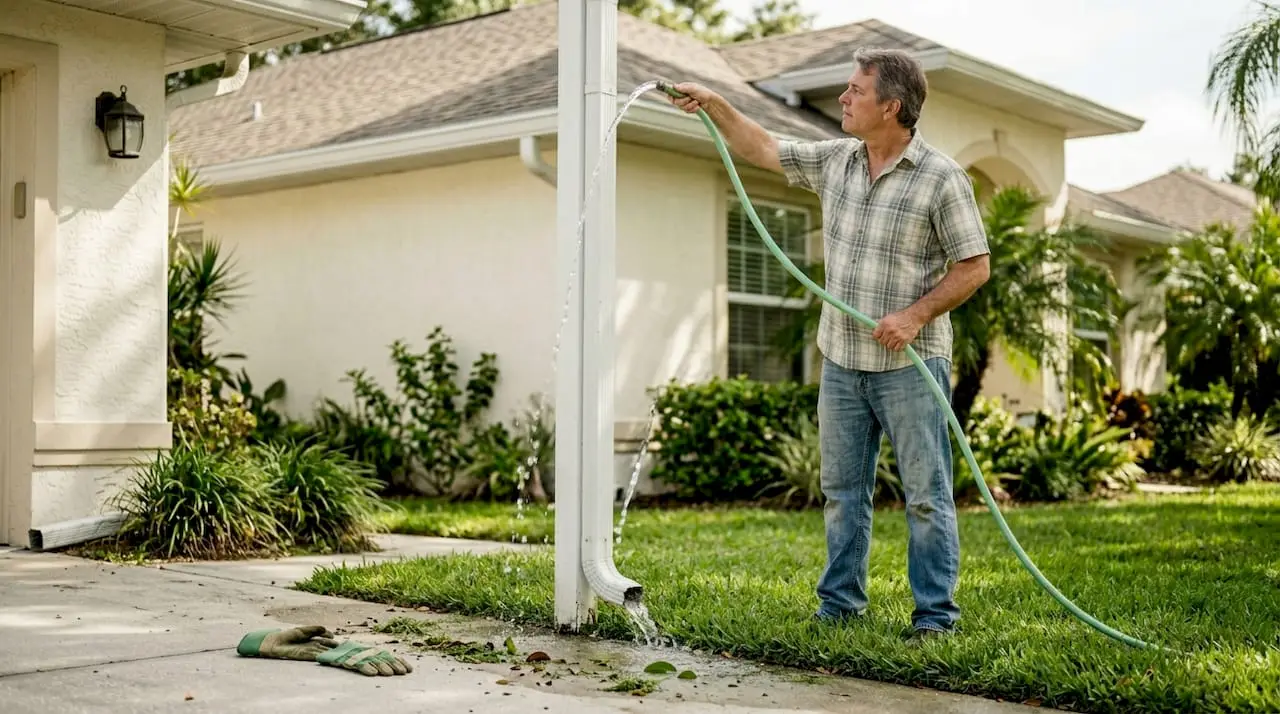
- Flush with a hose and watch the flow. Run water from the far end of the gutter toward the downspout. Water should move briskly and exit at the bottom of the downspout without backing up or overflowing at any point along the channel.
- Check downspouts for blockages. Insert the hose directly into the downspout and run water at full pressure. If it backs up, there is a clog inside the pipe. A plumber’s snake or a specialized downspout cleaning attachment can often clear it.
- Record what you find. Write down any sections that need cleaning, rehanging, re-caulking, or replacement. Dated records help you spot patterns and plan service calls efficiently.
| Issue | Severity | Typical fix |
|---|---|---|
| Surface debris on guards | Low | Rinse with hose |
| Clogged downspout | Medium | Snake or pressure flush |
| Sagging gutter section | Medium | Rehang with new spike |
| Separated seam | High | Recaulk or reseal |
| Fascia rot behind gutter | High | Repair fascia, rehang gutter |
| Standing water, wrong slope | High | Re-pitch or full replacement |
Check out the full gutter system tips resource for a deeper look at specific repair methods after your inspection. After completing the inspection, it is important to understand common problems and how to address them.
Troubleshooting: Common gutter issues and signs to watch for
Even with a careful inspection, some problems are easy to misread. Here is how to recognize the most common gutter issues Central Florida homeowners run into.
Clogs:
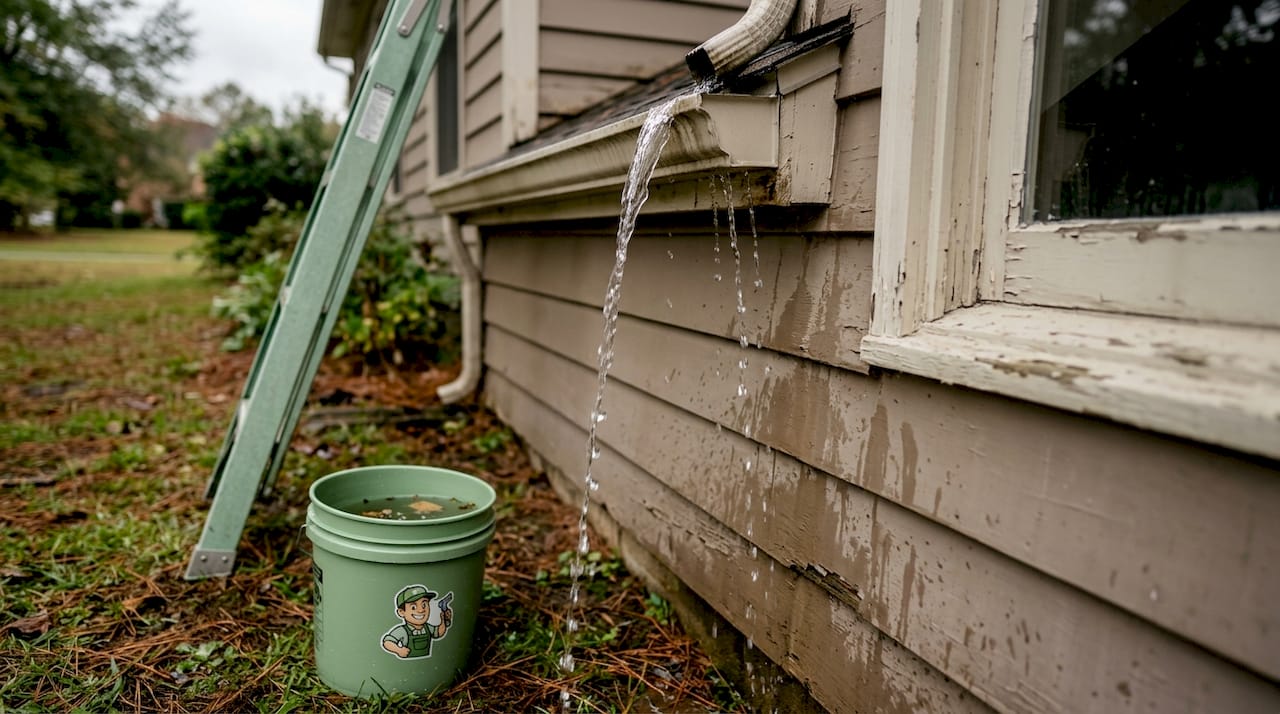
The most obvious sign is water overflowing the front edge of the gutter during rain. But clogs do not always make a dramatic entrance. Sometimes water seeps out a side seam quietly, or sits in a low section of gutter and slowly rots the wood behind it. Always feel the fascia board after rain. Soft or spongy wood is a strong indicator of a hidden moisture problem.
Leaks and rust:
Small orange or brown streaks running down the outside of the gutter indicate rust, which eventually eats through the metal and creates pinhole leaks. These are repairable with gutter sealant if caught early, but corroded sections eventually need replacement.
Guard limitations:
No gutter guard is maintenance-free. Even the best micro-mesh systems allow fine debris to collect on the surface and eventually limit water flow. Pine needles are the particular nemesis of Florida homeowners because their narrow profile lets them slide into gaps that are supposed to stop them. Inspect guards every six months without exception.
Pro Tip: After a major storm, do a quick ground-level check the following morning. If you see debris floating in puddles directly below your gutters, that is a sign water overflowed, and you should get on the ladder as soon as conditions are safe.
When to stop DIYing and call a professional:
- The gutter is on a second story or higher
- You find signs of rot in the fascia or soffit
- Multiple sections are pulling away from the roofline
- You suspect the downspout connects to an underground drainage pipe that is clogged
Use the Central Florida gutter maintenance guide and the 2026 gutter maintenance checklist to stay organized through the year. With this troubleshooting knowledge, you can verify your gutter system’s effectiveness and safeguard your property.
Verification: How to confirm your gutters are protecting your home
Once the inspection and any cleaning or repairs are done, the final step is verification. This is how you confirm the system is actually working.
- Run a full hose test. Start at the far end of the gutter run and let the water flow for two to three minutes. Watch every joint, seam, and downspout while it runs. Mark any drip points with chalk or tape so you can address them immediately.
- Observe the next heavy rain in real time. Stand outside during a significant rainfall (safely, from your porch or driveway) and watch the downspout exits. Water should flow steadily and consistently without surging or backing up.
- Check the downspout discharge zones. Water should be directed at least four to six feet away from the foundation. If the downspout discharges directly against the house, add a splash block or flexible extender.
- Keep an inspection log. Note the date, what you found, and what you did. Over two to three years, patterns emerge that tell you whether your system is declining or holding steady.
Pro Tip: Schedule your two annual inspections around Florida’s weather calendar: once in May before hurricane season starts, and once in November after the storms have passed and leaf debris has settled.
The cost of cleaning typically runs between $150 and $300, a fraction of what foundation repairs cost. Staying on top of verification after each inspection makes sure that money is well spent. Review gutter maintenance for safety to understand how gutter health connects directly to your home’s structural safety.
Expert perspective: Why thoroughness beats shortcuts in gutter inspection
Here is something we see constantly in Central Florida: a homeowner installs gutter guards, checks them once, and then assumes the problem is solved. Two years later, they call us with fascia rot and standing water in their gutters. The guards looked fine from the ground.
The marketing around gutter guards can create a false sense of security. Yes, good guards reduce cleaning frequency significantly. But the idea that they eliminate the need for inspection is simply not true. Even guarded systems require regular inspection, and professionals have the tools and the trained eye to spot things that are easy to miss on a DIY walk-around. Hidden slope issues, separated inside corners, and slow leaks at end caps are problems that are invisible from the ground and easy to overlook from the top of a ladder if you do not know exactly what you are looking for.
We are also direct about this: DIY inspection is completely reasonable for a single-story home with accessible gutters. We respect homeowners who want to stay hands-on with their property. But when gutters run along a second story, when there are valleys in the roofline, or when someone has a gutter guard installation workflow with multiple guard types on the same home, a professional inspection is genuinely worth the cost. The peace of mind is real, and the problems we find during professional inspections routinely save homeowners thousands of dollars.
The bottom line: thoroughness is not optional in Central Florida. The weather is too aggressive, the debris load is too high, and the consequences of missed issues are too expensive. Whether you do it yourself or bring in a professional, the only bad inspection is the one that does not happen.
Get professional help to keep your gutters working
If this guide has shown you anything, it is that consistent gutter inspection is one of the highest-value maintenance habits a Central Florida homeowner can build. When you are ready to move beyond the checklist and get expert eyes on your system, we are here to help.

At Larry’s Gutters, we serve homeowners across multiple Central Florida counties with seamless gutter installation, gutter guard installation, and thorough cleaning and repair services. Whether you need a professional inspection after a major storm or want a complete system upgrade, our team is trained to catch exactly the kinds of issues this guide describes. Start with our Central Florida gutter maintenance guide to deepen your knowledge, or use our Florida gutter maintenance checklist to track your home’s needs season by season. Request a free quote and let’s make sure your gutters are ready for whatever Central Florida throws at them.
Frequently asked questions
How often should I inspect gutters in Central Florida?
Inspect your gutters at least twice a year, ideally in May and November, to account for storm season debris and post-hurricane damage. Homes near heavy tree cover may need quarterly checks, since micro-mesh guards need cleaning one to two times per year even in lower-debris environments.
Is it worth using gutter guards, or do they still need maintenance?
Gutter guards are worth installing because they significantly reduce cleaning frequency, but they are not maintenance-free. Pine needles and fine debris can pass through or accumulate on the surface, so no guard eliminates the need for periodic inspection and cleaning.
What are signs that my gutters need immediate attention?
Overflowing water during rain, visible debris piling over the edge, sagging sections, or dark stains on the fascia are all urgent warning signs. Clogged gutters remain the primary driver of preventable home water damage, so these signals should not wait.
When should I call a professional for gutter inspection?
Call a professional when your gutters are on a multi-story home, when the roofline has complex angles, or when you suspect hidden leaks or slope problems. Pros handle multi-story and hidden leak situations with specialized tools that make the inspection far more accurate than what a ladder and flashlight can achieve.
How much does gutter cleaning cost compared to repairs?
Professional gutter cleaning typically costs between $150 and $300 per visit. Compare that to foundation repairs running $10,000 to $25,000 or more, and routine maintenance becomes one of the smartest investments you can make as a homeowner.
