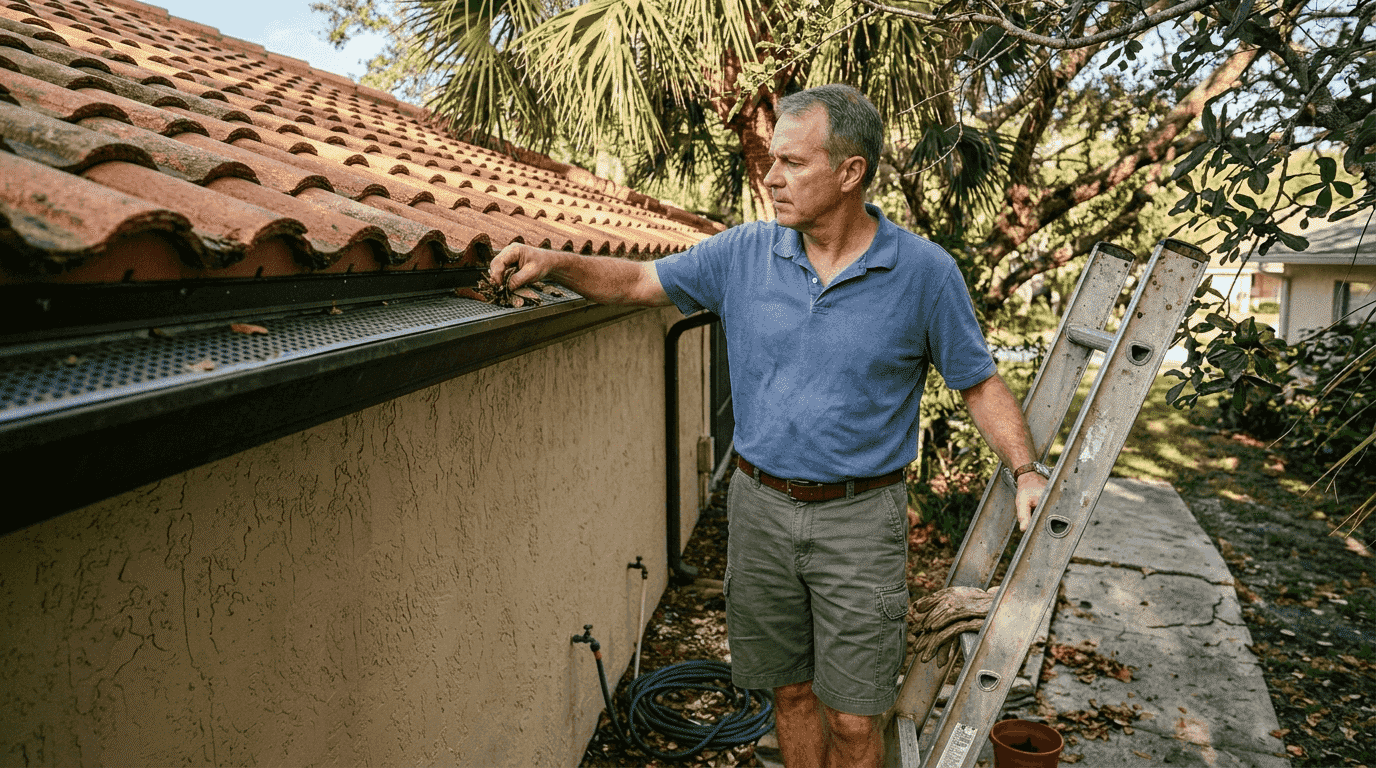
You installed gutter guards to protect your Central Florida home from water damage, but heavy rain still overflows your gutters. Debris accumulates in valleys, and you notice pooling water near your foundation after storms. The truth is gutter guards alone don’t guarantee protection without proper maintenance. Florida’s intense rainfall, tropical storms, and constant tree debris create unique challenges that demand regular upkeep. This guide shows you exactly how to maintain your gutter guard system to prevent clogs, extend its lifespan, and protect your home from costly water damage throughout 2026 and beyond.
Table of Contents
- Understanding Your Gutter Guard System And Maintenance Needs
- Step-By-Step Gutter Guard Maintenance Process
- Common Gutter Guard Maintenance Challenges And Solutions
- Verifying Gutter Guard Maintenance Success And Scheduling Follow-Ups
- Protect Your Central Florida Home With Expert Gutter Guard Services
- Frequently Asked Questions
Key takeaways
| Point | Details |
|---|---|
| Regular inspections prevent damage | Check gutter guards twice yearly and after storms to catch issues early and avoid expensive repairs |
| Installation quality matters | Proper professional installation reduces maintenance needs and prevents common overflow problems |
| Guard types need different care | Micro-mesh requires periodic cleaning while foam guards need more frequent replacement |
| Florida climate increases needs | Heavy rainfall and foliage demand more frequent maintenance than other regions |
| Professional help extends lifespan | Expert installation and maintenance maximize effectiveness and durability |
Understanding your gutter guard system and maintenance needs
Central Florida homeowners typically encounter three main gutter guard types, each with distinct maintenance requirements. Micro-mesh guards use fine stainless steel or aluminum screens that block debris while allowing water through. Screen guards feature larger holes that catch bigger debris but may let smaller particles pass. Foam gutter guards have the shortest lifespan, typically lasting between two and five years, and sit inside gutters to block debris while absorbing water.
Your guard type directly affects how often you’ll need to perform maintenance. Micro-mesh gutter guards reduce debris accumulation by up to 90% but need cleaning every 6 to 12 months in heavy foliage areas. Screen guards require more frequent attention, often every three to six months, because pine needles and small leaves slip through larger openings. Foam inserts demand the most frequent care, needing inspection every two to three months since they can harbor mold and break down faster in Florida’s humid climate.
Florida’s weather patterns create additional maintenance demands. Tropical storms dump massive amounts of water quickly, testing your gutter system’s capacity. Oak trees shed tannins that create sticky residue on guards. Palm fronds and Spanish moss add bulk that standard guards struggle to handle. The combination of year-round growing seasons and frequent afternoon thunderstorms means your gutters never get a break from debris accumulation.
Pro Tip: Mark your calendar for maintenance checks in March and October, before and after hurricane season, to catch problems when they’re easiest to fix.
Regular inspection helps you spot early warning signs:
- Water staining on fascia boards indicating overflow
- Sagging sections suggesting weight from trapped debris
- Visible gaps between guards and gutter edges
- Plant growth sprouting from accumulated organic matter
- Rust spots or corrosion on metal components
Understanding your specific gutter guard installation workflow helps you maintain it properly. Guards installed over existing gutters may shift over time, while integrated systems typically stay more secure. Check the manufacturer’s recommendations for your specific product, as warranty coverage often requires documented maintenance. Following gutter protection tips designed for Florida conditions ensures your system performs optimally.
Step-by-step gutter guard maintenance process
Effective gutter guard maintenance follows a systematic approach that catches problems before they cause damage. Start with safety preparation, then move through inspection, cleaning, and repair phases. This process typically takes two to four hours depending on your home’s size and gutter condition.
Safety and preparation steps:
- Choose a dry, calm day without rain in the forecast
- Set up a sturdy ladder on level ground with a spotter present
- Wear non-slip shoes, work gloves, and safety glasses
- Gather tools including a garden hose, soft brush, bucket, and gutter scoop
- Notify someone of your work plans and expected completion time
Inspection and cleaning process:
Begin at a downspout and work systematically around your home’s perimeter. Look for debris accumulation, especially in valleys where two roof planes meet. These spots collect the most material and cause the worst clogs. Remove large debris by hand, placing it in your bucket rather than dropping it on landscaping below. Use a soft brush to sweep away smaller particles, working from the high end toward downspouts.

Flush the system with your garden hose to verify water flows freely. Watch for slow drainage or backup, which indicates hidden clogs inside the gutter beneath guards. Regular gutter guard maintenance is crucial in Central Florida due to high rainfall and tree debris. Pay special attention to end caps and seams where guards connect, as these joints often trap material.
Pro Tip: Spray water from the gutter toward the downspout, not from the roof down, to avoid pushing debris under guards where it’s harder to remove.
Maintenance frequency guide:
| Season | Inspection Focus | Cleaning Needs | Estimated Time |
|---|---|---|---|
| Spring | Storm damage, pollen buildup | Moderate | 2-3 hours |
| Summer | Algae growth, debris from storms | Heavy | 3-4 hours |
| Fall | Leaf accumulation, preparation for winter | Moderate | 2-3 hours |
| Winter | Post-storm assessment | Light | 1-2 hours |
Check for biofilm, a slimy layer that develops on guards in humid climates. This invisible coating reduces water flow capacity even when no visible debris exists. Remove biofilm with a mixture of water and mild detergent, scrubbing gently to avoid damaging guard surfaces. Rinse thoroughly to prevent soap residue from attracting more dirt.
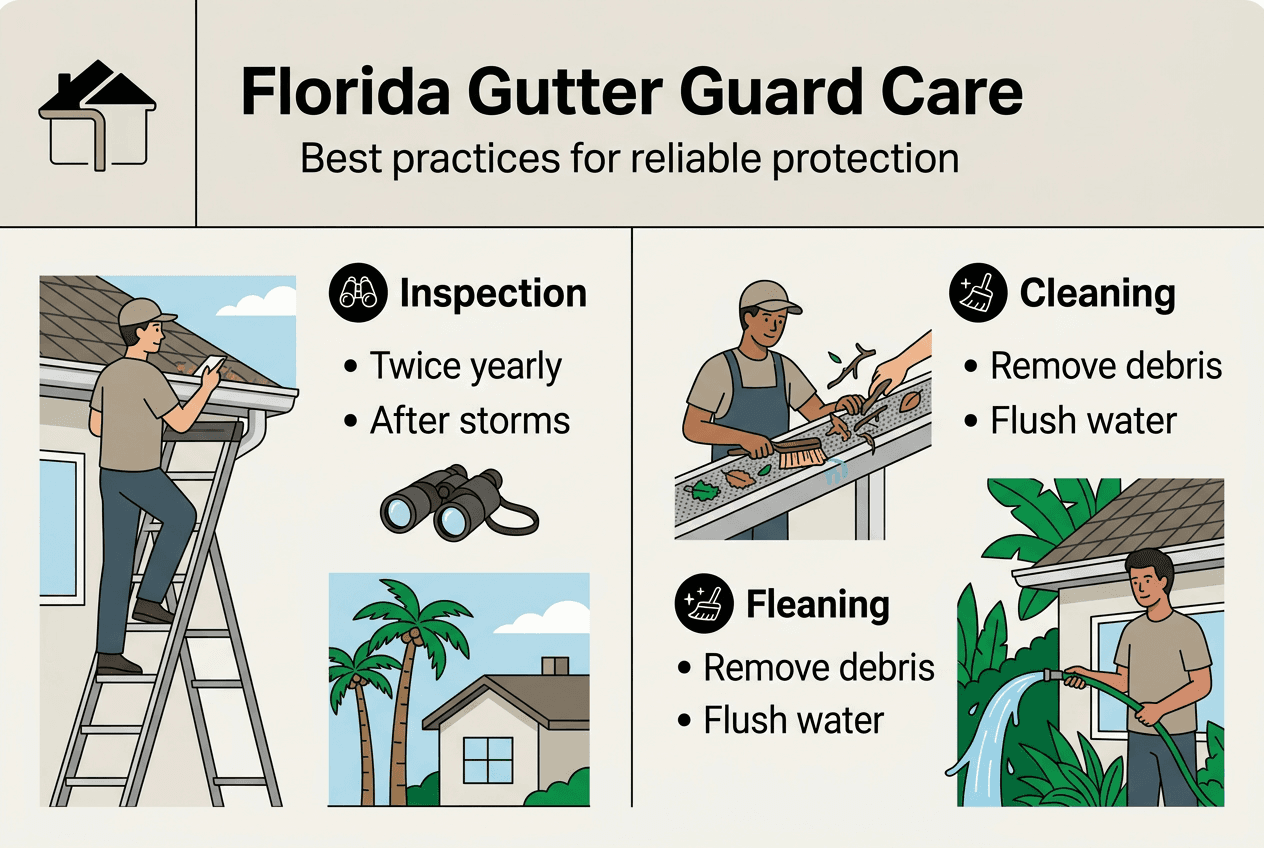
Inspect fasteners and attachment points for looseness or corrosion. Tighten screws and replace any rusted hardware immediately. Guards that shift or sag allow debris to enter gutters and reduce overall system effectiveness. Following detailed rain gutter maintenance steps ensures you don’t miss critical areas. Apply these DIY gutter cleaning tips for best results.
Common gutter guard maintenance challenges and solutions
Even well-maintained gutter guards face specific challenges in Central Florida’s demanding environment. Recognizing these issues early prevents minor problems from becoming expensive repairs.
Installation quality significantly impacts maintenance needs. Improper installation can lead to water overflow and damage, a major contributor to foundation issues. Guards installed too far under shingles create gaps that let debris in. Those sitting too high allow water to shoot over during heavy rain. Sections that don’t align properly create valleys where material accumulates rapidly.
Common installation-related problems include:
- Guards that separate from gutters during storms
- Inadequate slope causing water to pool instead of flowing
- Missing or insufficient fasteners allowing movement
- Incompatible guard types mixed on the same home
- Gaps at corners and end caps
Biofilm and algae present hidden maintenance costs. Florida’s humidity creates perfect conditions for these organisms to thrive on gutter guard surfaces. The growth isn’t always visible but reduces water flow capacity significantly. You might notice a greenish tint or slimy texture when running your hand across guards. Address this by applying a solution of one part bleach to ten parts water, letting it sit for 10 minutes, then rinsing thoroughly.
Leaf and debris buildup concentrates in specific problem areas. Inside corners where two gutter runs meet trap the most material. Sections under overhanging branches require more frequent attention. Areas near bird nests or squirrel paths accumulate unusual debris. Valley guards beneath roof valleys handle double the water volume and debris load of straight runs.
Pro Tip: Trim tree branches to at least six feet from your roof to dramatically reduce debris accumulation and maintenance frequency.
Extreme weather events demand immediate post-storm inspections. Tropical storms and hurricanes can shift guards, bend sections, or deposit large amounts of debris all at once. Check your system within 24 hours after major weather events. Look for standing water, which indicates clogs or damage requiring immediate attention. Don’t wait for your regular maintenance schedule after significant storms.
Professional installation reduces these common errors substantially. Experts understand proper pitch requirements, optimal fastener spacing, and how to integrate guards with your specific roof type. They also identify potential problem areas before installation and adjust accordingly. Learning how to handle Florida rain gutters helps you maintain professionally installed systems more effectively.
Verifying gutter guard maintenance success and scheduling follow-ups
Confirming your maintenance work succeeded requires testing and observation. Proper verification catches missed problems and helps you refine your maintenance routine for optimal results.
Test water flow immediately after cleaning by running your garden hose at full pressure on the roof above each gutter section. Water should flow smoothly through guards into gutters and exit through downspouts within seconds. Watch for hesitation, pooling, or overflow at any point. These signs indicate remaining clogs or structural issues needing additional attention.
Monitor your system during the next rainfall. Go outside during a moderate to heavy rain and walk your home’s perimeter. Look for water shooting over guards, dripping from seams, or pooling in gutters. Listen for unusual sounds like gurgling or rushing water, which suggest partial blockages. Note any areas requiring follow-up work.
Warning signs requiring immediate attention:
- Water cascading over gutter edges during normal rain
- Sagging gutter sections indicating weight from trapped water or debris
- Staining on siding or fascia boards below gutters
- Erosion or pooling water near your foundation
- Visible separation between guards and gutter edges
- Ice dams forming during rare Florida cold snaps
Maintenance frequency comparison:
| Guard Type | Inspection Frequency | Deep Cleaning | Expected Lifespan | Cost Factor |
|---|---|---|---|---|
| Micro-mesh | Every 6 months | Annually | 20-25 years | High initial, low maintenance |
| Screen | Every 3-4 months | Twice yearly | 10-15 years | Medium initial, medium maintenance |
| Foam | Every 2-3 months | Quarterly | 2-5 years | Low initial, high maintenance |
Central Florida homeowners should inspect gutter guards at minimum twice annually, in spring and fall. Add inspections after any tropical storm or hurricane. Homes under heavy tree cover need quarterly checks. Properties with minimal nearby vegetation can sometimes extend to annual inspections, though this isn’t recommended given Florida’s unpredictable weather patterns.
Professionally installed systems generally offer better durability and longevity. Professional inspections complement your own maintenance efforts. Schedule a professional evaluation every two to three years to catch issues you might miss. Experts use specialized tools to check pitch, identify hidden damage, and verify proper water flow rates.
Create a maintenance calendar to prevent neglect. Set phone reminders for inspection dates. Keep a simple log noting what you found and fixed during each session. This record helps you identify problem areas requiring more frequent attention and provides documentation for warranty claims if needed. Following a comprehensive gutter maintenance checklist ensures you don’t overlook critical steps. Review essential gutter maintenance tips to optimize your schedule.
Pro Tip: Take photos of your gutters from the same spots each inspection to track changes over time and spot developing problems early.
Protect your Central Florida home with expert gutter guard services
Maintaining gutter guards yourself saves money, but professional installation and periodic expert maintenance provide unmatched protection and peace of mind. Properly installed systems require less frequent intervention and perform better during Florida’s intense weather events.

Larry’s Gutters specializes in gutter guard installation tailored to Central Florida’s unique climate challenges. Our team understands how tropical storms, heavy rainfall, and constant debris affect gutter performance. We install systems designed to handle Florida’s demanding conditions while minimizing your maintenance burden. Professional installation ensures proper pitch, secure fastening, and optimal water flow from day one.
Regular maintenance plans prevent the costly water damage that occurs when gutter systems fail. Foundation repairs, fascia replacement, and landscape restoration from water overflow cost thousands more than preventive maintenance. Our experts identify small problems before they become expensive disasters. When you’re ready to upgrade to seamless gutters or need guidance on the seamless gutter installation process, we provide solutions that protect your investment for decades.
Frequently asked questions
Can I maintain my gutter guards myself or should I hire a professional?
You can handle basic maintenance like debris removal and visual inspections with proper safety equipment and knowledge. However, professional help ensures thorough evaluation of structural integrity, proper pitch, and hidden issues you might miss. Consider professional service at least every two to three years even if you perform routine cleaning yourself.
How often should gutter guards be cleaned in Central Florida?
Clean gutter guards at least twice yearly, typically in spring and fall, plus after any tropical storm or hurricane. Homes under heavy tree cover need quarterly cleaning. Florida’s year-round growing season and frequent storms create more debris than northern climates, making regular maintenance essential for optimal performance.
What are the signs that my gutter guards need repair or replacement?
Watch for water overflow during moderate rain, sagging gutter sections, visible cracks or holes in guards, and excessive debris buildup despite recent cleaning. Rust spots, separated seams, and loose fasteners also indicate problems. If you notice erosion or water pooling near your foundation, inspect your gutter system immediately.
Does improper installation affect gutter guard maintenance needs?
Improper installation dramatically increases maintenance frequency and reduces system effectiveness. Poorly installed guards shift during storms, create gaps that trap debris, and may cause water to overflow rather than drain properly. This leads to more frequent cleaning needs and higher risk of water damage requiring expensive repairs.
Are certain gutter guard types easier to maintain than others?
Micro-mesh guards require less frequent maintenance and last longest but need periodic cleaning to prevent biofilm buildup. Screen guards need more regular attention as smaller debris passes through. Foam guards demand the most maintenance with frequent replacement every two to five years and regular checks for mold growth in Florida’s humid climate.