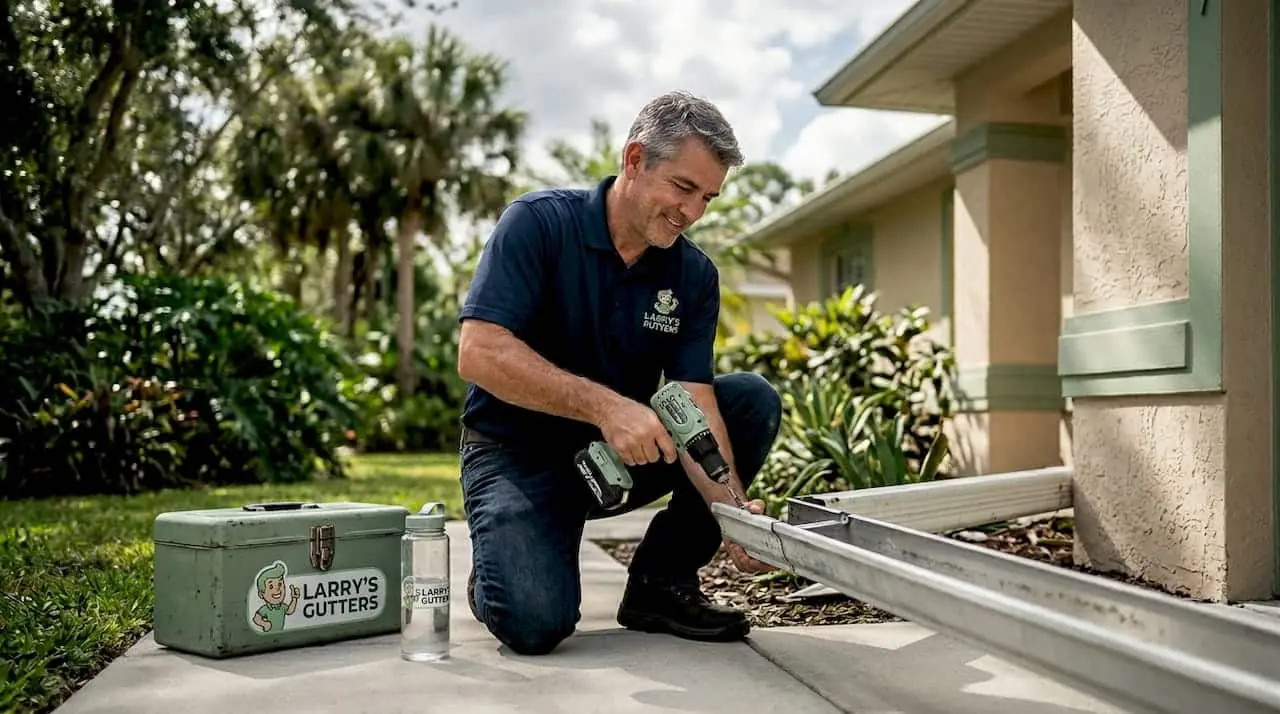
TL;DR:
- Homeowners often overlook the importance of selecting durable gutter screws suitable for Florida’s climate, risking system failure. Proper fasteners, especially corrosion-resistant stainless steel screws, are essential to prevent leaks, fascia rot, and costly water damage. Regular inspections and professional installation help ensure gutters withstand weather stresses, extending their lifespan effectively.
Most homeowners spend hours researching gutter size, style, and material, then give almost zero thought to the screws holding the whole system together. That’s a costly blind spot, especially in Central Florida where summer storms can drop several inches of rain in under an hour. The wrong screws corrode, loosen, or pull out of your fascia board, turning a solid gutter system into a sagging, leaking liability. This article covers everything you need to know about gutter screws, from types and materials to inspection habits that keep your home protected year after year.
Table of Contents
- Why gutter screws matter more than you think
- Types of gutter screws and their best uses
- How gutter screws protect your home from water damage
- How to inspect and maintain gutter screws
- Why most homeowners misunderstand gutter screw choices
- Get professional help for flawless gutter performance
- Frequently asked questions
Key Takeaways
| Point | Details |
|---|---|
| Screw quality impacts safety | Choosing the right gutter screw prevents sagging and major water damage. |
| Material matters in Florida | Stainless steel or other corrosion-resistant screws last longer in Florida homes. |
| Regular checks save money | Twice-yearly screw inspections can avoid costly repairs from small leaks or failures. |
| DIY is possible, but details matter | Homeowners can maintain screws, but must match screw type to gutter and home material. |
| Professional support delivers peace of mind | Experts ensure correct installation and maintenance for maximum gutter lifespan. |
Why gutter screws matter more than you think
Your gutter system is only as strong as its weakest fastener. Think of it like a chain: every link in your gutter system components has to perform under pressure, and the screws are the connectors that keep every section locked in place. When those screws fail, everything downstream fails too.
Here’s what most homeowners miss: gutters are not static objects. They expand and contract with Florida’s dramatic temperature swings, flex under the weight of standing water, and vibrate during heavy wind events. That constant mechanical stress is what makes screw selection so much more important than it appears on the surface.
Common signs that screw selection is already hurting your gutters:
- Gutters pulling away from the roofline after a heavy storm
- Visible rust streaks running down your siding
- Water pooling near your foundation instead of draining away
- Gutters that sag in the middle between bracket points
- Sections that move when you push them by hand
As essential screw material advice makes clear, fastener material, corrosion resistance, and the screw’s ability to hold in fascia and rafters all matter because gutters are constantly exposed to moisture and thermal cycling. Florida’s climate amplifies every one of those stressors. The sun heats your aluminum gutters to temperatures well above air temperature, then an afternoon storm drops everything back down. That repeated expansion and contraction works cheap screws loose faster than most people realize.
“The details that seem invisible are often the ones doing the most work. Gutter screws are a perfect example: nobody sees them, but every drop of rain tests them.”
Getting this right from the start is one of the essential gutter tips that separates a gutter system that lasts 20 years from one that needs repair every few seasons.
Types of gutter screws and their best uses
Not all gutter screws are built the same, and the differences matter a lot once you factor in Florida’s heat, humidity, and salt air. Let’s break down the main types you’ll encounter and how each one performs in Central Florida conditions.
Main types of gutter fasteners:
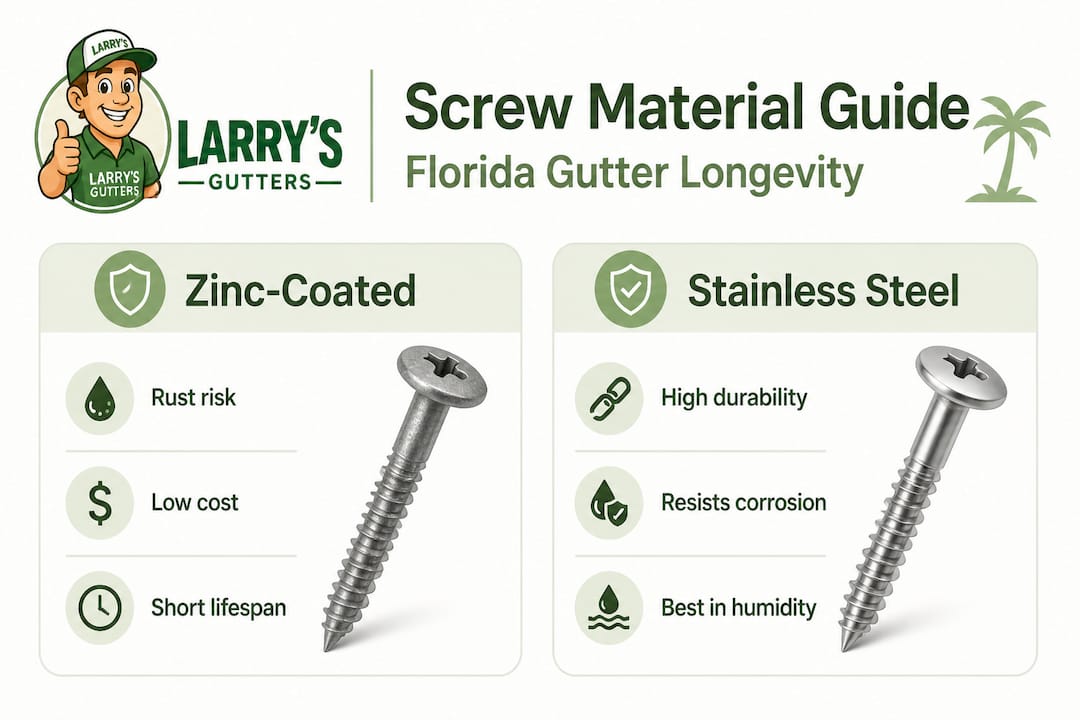
- Zinc-coated (galvanized) screws: Coated with a layer of zinc to resist rust. Common and affordable, but the coating can wear away in humid coastal environments over time.
- Stainless steel screws: The gold standard for corrosion resistance. They hold up against salt air, humidity, and repeated wet-dry cycles without degrading.
- Aluminum screws: Naturally rust-resistant and lightweight, but they can strip more easily than steel and may not grip as firmly in softer wood fascia.
- Self-tapping screws: Designed to cut their own hole as they drive in, making installation easier without pre-drilling. Widely used in seamless gutter installs.
- Spike-and-ferrule systems (older style): A long nail driven through a metal tube and into the fascia. This older method loosens over time and is now largely replaced by screw-based hangers in professional installs.
| Screw type | Rust resistance | Holding power | Cost level | Best use in Florida |
|---|---|---|---|---|
| Zinc-coated (galvanized) | Moderate | Good | Low | Inland areas, limited budget |
| Stainless steel | Excellent | Excellent | Medium-High | Coastal and humid zones, long-term installs |
| Aluminum | Good | Moderate | Medium | Aluminum gutter systems, light applications |
| Self-tapping | Varies by material | Very good | Low-Medium | New installs, seamless gutters |
| Spike-and-ferrule | Poor | Decreases over time | Low | Not recommended for Florida |
Matching the screw type to your fascia material is just as important as choosing the right screw itself. Hardwood fascia boards can handle a wider range of screw types, while softer woods like pine need a screw with aggressive threading to maintain grip after years of moisture exposure. This is also one reason cost-effective gutter materials should be chosen with the full fastening system in mind, not just the gutter channel alone.
Pro Tip: Stainless steel screws cost a little more upfront, but in Central Florida’s humidity, they consistently outlast galvanized screws by years. Over a 20-year gutter lifespan, you’ll spend less on stainless than you will replacing galvanized hardware every few seasons.
How gutter screws protect your home from water damage
The connection between a small screw and a flooded crawl space might not seem obvious, but it’s very real. When screws fail, gutters shift. When gutters shift, water stops flowing where it should. What follows is a chain of damage that tends to be far more expensive than the cost of quality fasteners ever would have been.
Step-by-step: How screw failure leads to home damage
- A screw loosens or corrodes, allowing one gutter section to tilt forward slightly.
- Water no longer flows cleanly toward the downspout and begins to pool in the tilted section.
- The pooling water adds weight, which stresses the remaining screws further.
- During a heavy rainstorm, the gutter overflows along the fascia board instead of draining.
- Repeated soaking begins to rot the fascia board, then works into the roof decking.
- Water travels down the exterior wall and pools near the foundation, risking cracks and moisture intrusion.
That progression can happen faster than you’d expect in Central Florida, where we regularly see gutters in Florida storms challenged by intense, sustained rainfall. The 2024 Atlantic hurricane season brought multiple events with rainfall rates exceeding three inches per hour across Orange and Seminole counties. A properly fastened gutter handles that. A loosely fastened gutter becomes a waterfall along your roofline.
| Screw problem | Damage risk | Common result | Estimated repair cost |
|---|---|---|---|
| Rust and corrosion | High | Staining, structural failure | $150 to $600 |
| Loose or missing screws | Very high | Gutter detachment, fascia rot | $500 to $2,000+ |
| Wrong screw for material | Medium-High | Slow pull-out over time | $300 to $1,500 |
| Spike-and-ferrule failure | High | Sagging, leaks, foundation risk | $800 to $3,000+ |
Solid screw selection also directly supports gutter maintenance tips by reducing how often you need to intervene. A well-fastened system stays aligned, drains properly, and doesn’t require constant tightening after every storm. That’s the kind of low-maintenance result every Florida homeowner should aim for.
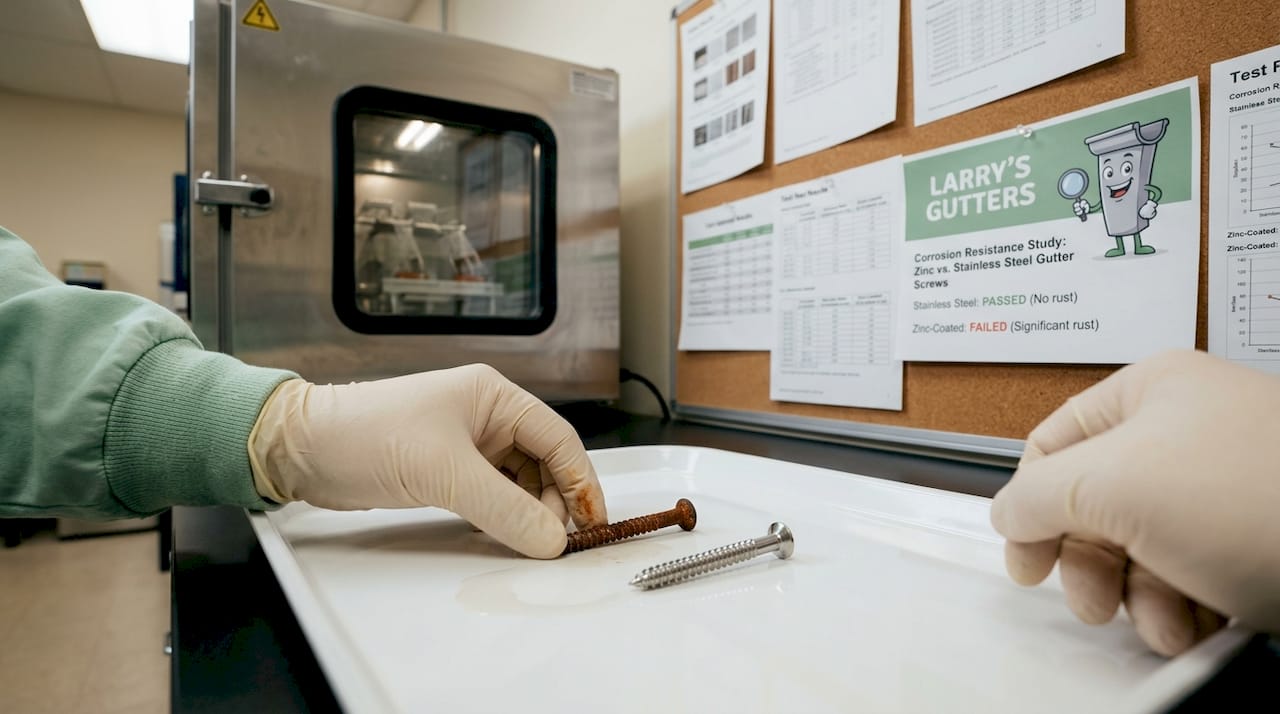
As the screw material research confirms, screw material and holding ability are critical because gutters face constant moisture exposure and thermal cycling. Florida compounds both of those factors every single day.
How to inspect and maintain gutter screws
The good news is that checking your gutter screws doesn’t require special equipment or professional training. A basic visual inspection twice a year, combined with a few simple tools, is enough to catch most problems before they turn expensive.
5-step gutter screw inspection checklist:
- Look for rust or discoloration. Orange or brown streaks near screw heads are the first sign of corrosion. Even surface rust can indicate the coating is breaking down.
- Check for movement. Gently push each gutter section from below. If it moves more than a quarter inch, screws may be loose or pulling out of the fascia.
- Scan for missing screws. Empty holes in gutter hangers or brackets put extra load on surrounding fasteners and weaken the whole run.
- Identify mismatched hardware. If previous repairs used different screw types, those may not hold as well or may cause galvanic corrosion (a reaction between two different metals that speeds up deterioration).
- Look for water marks on the fascia. Staining or soft wood along the fascia board just above the gutter line often means water has been overflowing, which usually traces back to a misaligned or loose section.
When you find a loose screw, don’t just tighten it and move on. If it spins without gaining grip, the wood behind it may be stripped or soft. In that case, replacing it with a slightly longer or wider-thread screw often solves the problem. If the fascia itself is soft or spongy, that’s a bigger repair that goes beyond just the screw.
Common pitfalls to avoid during inspection and repair:
- Removing all screws from one section at once, which can cause the gutter to fall
- Replacing corroded screws with a different material, which may cause galvanic reaction
- Using drywall screws instead of purpose-made gutter screws (they corrode very quickly)
- Skipping the inspection entirely because gutters “look fine” from the ground
Maintaining seamless gutters involves more than just clearing debris. The fastening system is part of that maintenance routine, and ignoring it means even a premium gutter system will underperform. For anyone working on ladders during inspection, also review gutter safety tips before you start.
Pro Tip: Schedule your gutter screw inspections in late April before rainy season kicks off, and again in November once it winds down. That rhythm puts you ahead of the heaviest stress periods and gives you time to make repairs before the next round of storms arrives.
Why most homeowners misunderstand gutter screw choices
Here’s a perspective that might be uncomfortable for the DIY crowd: the hardware aisle at your local home improvement store is not set up to help you make the right choice for your specific home. The screws are organized by size and price, not by climate performance, fascia compatibility, or gutter material match. That means most homeowners grab whatever looks close and call it done.
We’ve seen it many times: a well-built seamless gutter system installed with generic, zinc-coated screws that begin failing within three to four years in a coastal Florida environment. The gutter itself was fine. The installation technique was fine. The screws were the weak link, and nobody flagged it because they “looked like gutter screws.”
The research on screw performance is clear that fastener material and corrosion resistance are not interchangeable, yet that message rarely makes it to the average homeowner before they’re already replacing hardware. Professional install teams factor in local rainfall intensity, proximity to saltwater, fascia board condition, and the gutter material itself before selecting fasteners. That’s not overthinking it. That’s what separates a system that holds for 20 years from one that starts failing in year four.
DIY installs are absolutely doable, but “one size fits all” thinking on hardware is where most of them fall short. If you’re investing in a quality gutter system, it’s worth taking the same care with the screws as you do with everything else. And if you want your gutter upgrade to genuinely boost your property’s resilience and value, understanding these details is part of boosting home value with strong gutters.
Get professional help for flawless gutter performance
Understanding gutter screw basics puts you way ahead of most homeowners, but putting that knowledge into practice on a two-story home with aging fascia boards and mixed hardware is a different challenge entirely. That’s where having experienced professionals in your corner makes a real difference.

At Larry’s Gutters, we don’t just install gutters. We evaluate your entire fastening system, match hardware to your home’s specific materials, and account for Central Florida’s weather demands before a single screw goes in. Whether you’re starting fresh with a seamless gutter installation process or adding protection with a gutter guard installation workflow, our team brings the same attention to hardware detail that keeps your system performing year after year. Reach out today for a free quote and let us put the right system together for your home.
Frequently asked questions
How often should I check my gutter screws in Central Florida?
Inspect gutter screws twice a year, ideally before and after the rainy season, to catch loosening or corrosion early and avoid costly water damage to your fascia or foundation.
What’s the best material for gutter screws in Florida?
Stainless steel screws are the strongest choice for Florida homes because they resist rust, handle high humidity, and hold up in salt air far longer than zinc-coated alternatives. As fastener material guidance shows, corrosion resistance is non-negotiable given Florida’s moisture exposure.
What happens if my gutter screws rust or loosen?
Rusty or loose screws allow gutters to shift out of alignment, which leads to overflow, fascia rot, and water pooling near your foundation, all of which are expensive problems that start with a small, overlooked fastener.
Can I replace gutter screws myself or should I hire a professional?
Replacing a few screws is a manageable DIY task with the right screw type and basic tools, but if your fascia is soft, your hardware is mismatched, or you have a custom seamless system, a professional ensures the repair is done correctly the first time.
