
TL;DR:
- A gutter downspout filter traps leaves and debris to prevent clogs and protect underground pipes. Regular cleaning and proper mesh size are essential for effective debris capture and water flow. Proper installation and maintenance help extend the filter’s lifespan and safeguard your home’s drainage system.
A gutter downspout filter is a device installed at the downspout opening to trap leaves, twigs, and debris while letting rainwater flow freely through your drainage system. Explaining gutter downspout filters matters because most water damage blamed on gutters actually starts at the downspout, not the gutter channel itself. The industry term for these devices is “downspout strainer” or “downspout filter cap,” and both names describe the same protective function. Standard residential filters fit openings from 2–4 inches in diameter, making them compatible with the vast majority of homes. Getting this one component right can save you from expensive underground pipe repairs and foundation damage.
How do gutter downspout filters work to protect your drainage system?
A downspout filter works exactly like a kitchen sink strainer. It sits at the entry point of the downspout and catches leaves, twigs, and grit before they travel deeper into the system. Without a filter, debris moves freely into the downspout, compacts at elbows, and eventually creates a concrete-like blockage in underground pipes that costs hundreds of dollars to clear.
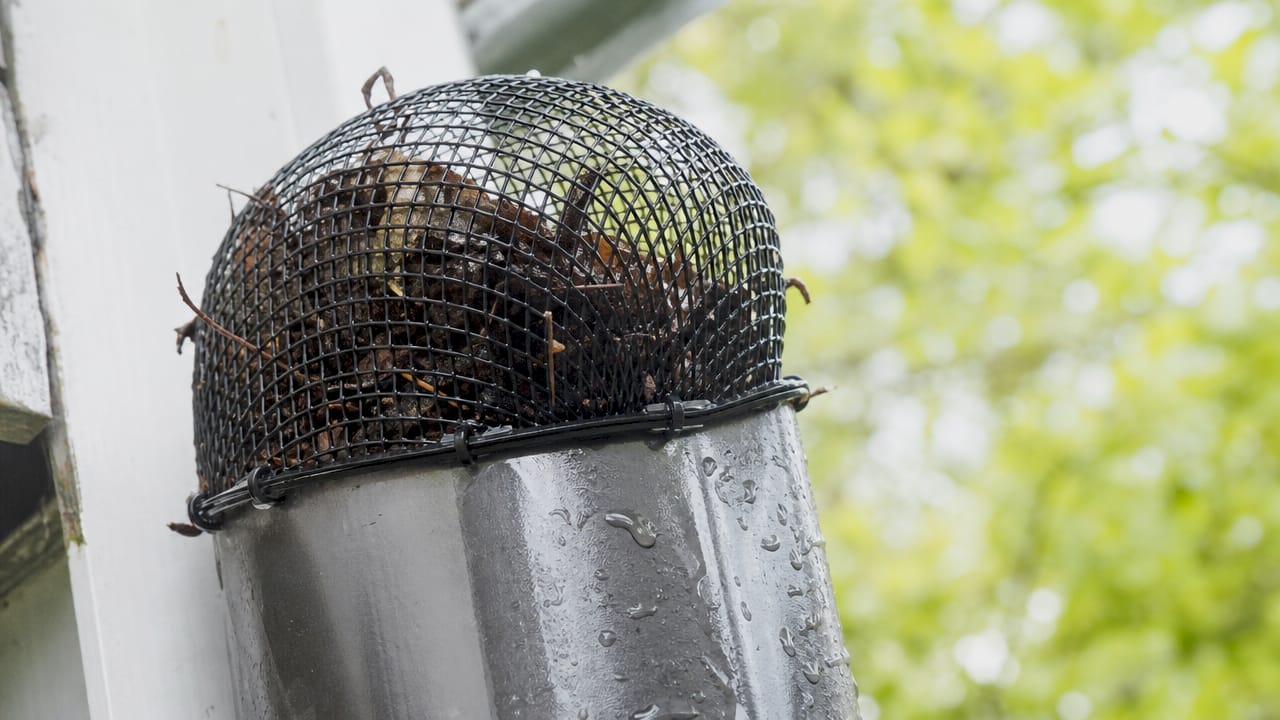
The filter does not stop water. It concentrates debris in one accessible spot at the top of the downspout, where you can remove it by hand or with a simple tool. That shift from a hidden underground clog to a visible surface buildup is the core downspout filter benefit. You trade a hard-to-fix problem for an easy-to-fix one.
Mesh sizing is the key design variable. A filter with openings that are too large lets small debris pass through and clog elbows. A filter with openings that are too fine creates a surface tension “skin” that causes water to overshoot the gutter entirely. The right mesh balances debris capture with free water flow, which is why purpose-built downspout filters outperform improvised solutions like window screen material.
Here is what a properly functioning filter does at each stage:
- Captures large debris (leaves, seed pods, twigs) at the downspout opening before they enter the pipe
- Allows water to pass through the mesh openings without restriction during normal rainfall
- Concentrates buildup in one visible, reachable location instead of spreading it through the pipe system
- Protects underground pipes and elbows from the compacted blockages that cause the most expensive repairs
Pro Tip: During a rainstorm, watch your downspout from the ground. If water is backing up at the filter or spilling over the gutter edge near the downspout, the filter needs cleaning. You can spot this without a ladder.
What are the common types and design features of downspout filters?
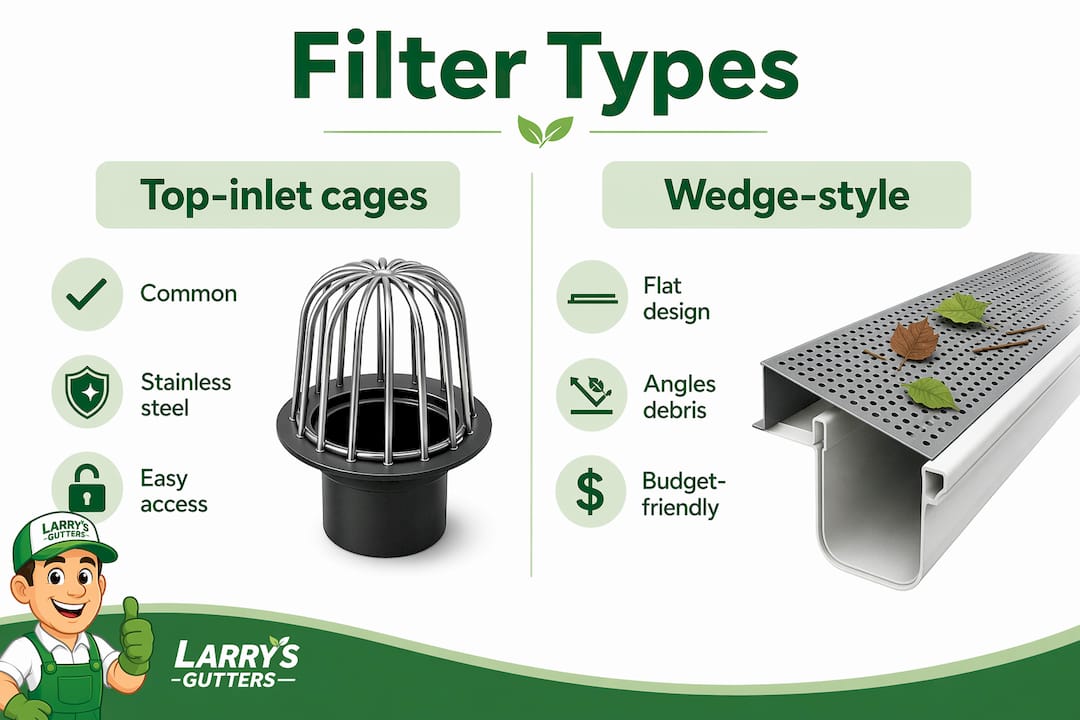
Three main filter styles cover most residential applications. Each suits a different setup, budget, and maintenance preference.
Top-inlet wire cages are the most common type. They drop into the top of the downspout opening and use a dome or cylindrical shape to maximize surface area. More surface area means water can still pass through even when part of the mesh is covered with debris. These are the easiest to remove and clean.
Wedge-style filters sit flat across the downspout opening and angle debris to one side. They work well in gutters with tight clearance above the downspout entry. The wedge shape sheds light debris during rain, which reduces how often you need to clean them manually.
Low-level debris traps install further down the downspout, often near a clean-out door. These are less common in residential settings but useful when the downspout connects directly to an underground drain. They catch anything that slips past the upper filter.
| Filter type | Best use case | Material | Maintenance access |
|---|---|---|---|
| Top-inlet wire cage | Standard open downspouts | Stainless steel, aluminum | Easy, lift-out removal |
| Wedge-style filter | Tight gutter clearance | Aluminum mesh | Moderate, slide-out |
| Low-level debris trap | Underground drain connections | Galvanized steel | Requires clean-out door |
Material matters as much as shape. Stainless steel and aluminum mesh resist rust and last years longer than coated wire alternatives. Avoid plastic mesh in climates with strong UV exposure, like Central Florida, because plastic degrades and warps within a few seasons.
Color is a practical design feature that most homeowners overlook. High-contrast and visible filters in black or a color that stands out against your gutter allow you to check the filter status from the ground during rain. You can see at a glance whether debris has built up, without climbing a ladder. That visibility feature directly increases how often homeowners actually clean their filters.
Pro Tip: Choose a filter that is at least 3.5 inches wide and 6 inches tall for standard 3-inch downspouts. Undersized filters restrict flow and clog faster than the downspout itself would.
How to maintain and clean gutter downspout filters effectively
Filters reduce clog complexity, but they do not eliminate the need for regular cleaning. Fine silt and shingle granules pass through any mesh and accumulate in the downspout below. The filter handles the large debris. You still need to flush the system periodically to clear the fine material.
The standard cleaning schedule for most homes is twice per year. Late spring and late fall are the best times, after pollen season and after leaves have dropped. Homes surrounded by trees, especially pine trees that shed needles year-round, need cleaning three to four times per year to prevent overflow and structural damage.
Follow these steps for a complete filter cleaning:
- Remove the filter by lifting it straight out of the downspout opening. Most top-inlet cages require no tools.
- Clear the filter by hand over a trash bag. Remove leaves, seed pods, and any compacted debris from the mesh.
- Rinse the filter with a garden hose to clear fine particles from the mesh openings. Hold it up to the light to confirm the openings are clear.
- Flush the downspout with the garden hose before reinstalling the filter. Run water down the pipe to push out any silt or granules that accumulated below the filter.
- Reinstall the filter and run the hose again to confirm water flows freely through the system.
- Check the downspout extension to confirm water exits at least 4–6 feet from the foundation before you finish.
Pro Tip: Keep a dedicated gutter maintenance checklist on your phone and set calendar reminders for late april and late october. Consistent timing matters more than perfect technique.
Visible filter designs make this schedule easier to follow. Filters with visible catch points let you spot buildup during a walk around the house, so you know when to clean between scheduled sessions. That early warning prevents the overflow that causes fascia rot and foundation saturation.
What practical steps go into installing a gutter downspout filter?
Gutter filter installation is a straightforward DIY task for most homeowners. The job takes under 30 minutes per downspout when you have the right filter size and a clear downspout to start with.
- Clear the downspout first. Flush it with a garden hose before installing any filter. Installing a filter over a partially clogged downspout traps the existing blockage below the filter, making it harder to clear later.
- Measure the downspout opening. Most residential downspouts measure 2–4 inches across. Confirm your measurement before buying a filter. A filter that is too small will sit above the opening and fall out. A filter that is too large will not seat properly and will let debris bypass the mesh.
- Choose the right placement. Top-of-downspout installation is the standard choice for most homes. It catches debris before it enters the pipe at all. Low-level placement near a clean-out door works for downspouts that connect to underground drainage systems.
- Check the downspout slope. Gutters should slope about 0.25 inches per 10 feet toward the downspout. If water pools in the gutter channel, the filter will clog faster because standing water carries more debris into the opening.
- Confirm the extension distance. The downspout extension must direct water at least 4–6 feet from the foundation. A filter protects the pipe, but a short extension still allows water to pool against the house.
- Select corrosion-resistant materials. In Florida’s humidity and heat, stainless steel or aluminum mesh outlasts coated wire or plastic by several years. Check the downspout installation steps for material guidance specific to your climate.
- Practice ladder safety. Use a stable, four-legged ladder on level ground. Never lean a ladder against the gutter itself. Most downspout filter installations can be done from ground level or from the first rung of a ladder.
For a broader look at your full gutter system components, check that hangers, end caps, and elbows are all secure before adding a filter. A filter on a loose or misaligned downspout will not perform as designed.
Key Takeaways
A downspout filter is the single most cost-effective component you can add to protect your gutter drainage system from clogs, overflow, and foundation damage.
| Point | Details |
|---|---|
| Filters act as strainers | They catch large debris at the downspout entry, keeping underground pipes and elbows clear. |
| Mesh size determines performance | Too fine causes water overshoot; too coarse lets debris pass. Choose purpose-built filters. |
| Visible designs improve maintenance | High-contrast filters let you check buildup from the ground without climbing a ladder. |
| Clean twice per year minimum | Late spring and late fall are standard; wooded properties need three to four cleanings per year. |
| Filters do not replace maintenance | Fine silt and shingle granules still pass through. Flush the full downspout system at each cleaning. |
What I have learned from years of watching homeowners manage their gutters
The most common mistake I see is homeowners treating a downspout filter as a set-and-forget solution. They install a filter, feel good about it, and then skip cleaning for two or three seasons. The filter does its job too well in the short term. Debris builds up on the mesh, water backs up into the gutter, and the fascia board starts to rot. The filter caused the damage because nobody cleaned it.
The second mistake is choosing mesh that is too fine. Homeowners assume finer mesh means better protection. The opposite is true at the downspout. Overly fine mesh creates surface tension that causes water to sheet off the filter and overshoot the gutter entirely. You end up with water pouring off the roof edge in sheets during heavy rain, which is worse than no filter at all.
The filters that work best in practice are the ones homeowners actually clean. That means choosing a visible design in a contrasting color, placing it at the top of the downspout where you can reach it easily, and building cleaning into a seasonal routine. Pair the filter with proper gutter pitch and a downspout extension that moves water well away from the foundation. A filter is one line of defense in a system that requires all its parts to work together. Treat it that way, and it will protect your home for years. Ignore it, and it becomes the problem it was meant to prevent.
If you are in a heavily wooded area or near Florida’s live oaks and pine trees, plan for at least three cleanings per year. The annual gutter inspection steps from Larrysgutters give you a reliable framework to build that habit around.
— Larrysgutters
Larrysgutters can help with your gutter filter and drainage needs
Larrysgutters specializes in residential gutter solutions across Central Florida, where heavy seasonal rainfall makes proper drainage a year-round concern. From seamless gutter installation to gutter guard systems designed for Florida’s climate, the team brings hands-on experience to every job.

If you are unsure which filter type fits your downspout, or if your current system needs a full evaluation, Larry’s Gutters offers professional assessments and installation services. The team also handles gutter guard installation for homeowners who want a more complete debris management system beyond the downspout filter alone. Contact Larrysgutters directly for a free quote and get the right solution for your home.
FAQ
What is a gutter downspout filter?
A gutter downspout filter is a mesh strainer installed at the downspout opening to trap leaves and debris while allowing rainwater to flow through. It prevents clogs in downspout elbows and underground drainage pipes.
Do gutter downspout filters actually work?
Yes, downspout filters effectively catch large debris like leaves and twigs that cause the most damaging clogs. They do not stop fine silt or shingle granules, so regular flushing of the downspout is still needed.
How often should I clean my downspout filter?
Clean downspout filters at least twice per year, in late spring and late fall. Homes near trees need three to four cleanings per year to prevent overflow and water damage.
What size downspout filter do I need?
Most residential downspouts measure 2–4 inches in diameter. A filter that is approximately 3.5 inches wide and 6 inches tall fits the majority of standard residential downspout openings.
Can I install a downspout filter myself?
Yes, most top-inlet downspout filters require no tools and install in minutes. Clear the downspout with a garden hose first, confirm the opening size, and seat the filter firmly at the top of the downspout entry.
