
TL;DR:
- Clogged gutters cause extensive home damage by overflowing and leading to roof, foundation, and mold issues. Regular cleaning and proper drainage are essential to prevent costly repairs. Professional inspections are necessary when gutters show signs of sagging, staining, or mold growth.
Clogged gutters are the number one cause of preventable water damage to residential homes. When gutters fill with leaves, twigs, and debris, water has nowhere to go except over the edge or back toward your roof and walls. That overflow sets off a chain reaction of damage that touches your foundation, siding, roof, and even your indoor air quality. The Insurance Institute for Business and Home Safety identifies proper drainage as a core component of home resilience. Larrysgutters sees the consequences of neglected gutters every week across Central Florida, and the repair bills homeowners face are almost always larger than the cost of a simple cleaning.
What specific types of home damage do clogged gutters cause?
Clogged gutters cause water to overflow, and that overflow attacks your home from multiple directions at once. Most homeowners picture a little water spilling over the edge. The reality is far more destructive.
“Overflow can result in fascia rot, foundation cracks, basement flooding, and roof leaks. Each of these problems compounds over time, turning a $150 cleaning into a $5,000 repair.”
Here is a breakdown of the damage categories you need to know:
- Roof damage. Standing water behind a clog soaks under shingles and into the roof deck. Shingles deteriorate faster, and the wood beneath them begins to rot. In colder climates, this moisture freezes and creates ice dams.
- Ice dam formation. Ice dams force water beneath shingles, damaging the roof deck and causing interior ceiling stains. Repairs for ice dam damage can run $3,000 to $10,000.
- Fascia and soffit rot. The fascia board sits directly behind your gutter. When gutters overflow or hold standing water, the fascia absorbs moisture and begins to rot. Replacing fascia costs $500 to $1,200 depending on the length and material.
- Siding stains and wood rot. Water cascading down the side of your home leaves dark stains on siding and accelerates wood rot on trim and window frames.
- Mold and mildew growth. Moisture trapped against your exterior walls creates the conditions mold needs to grow. Once mold gets inside wall cavities, remediation becomes expensive and disruptive.
- Pest infestations. Organic debris accumulation creates an inviting habitat for insects, rodents, birds, and mosquitoes. Mosquitoes breed in as little as a half inch of standing water, which clogged gutters provide in abundance.
Each of these problems starts small and grows quietly. By the time you notice visible damage, the underlying issue has usually been developing for months.
How does water overflow from clogged gutters affect your home’s foundation?
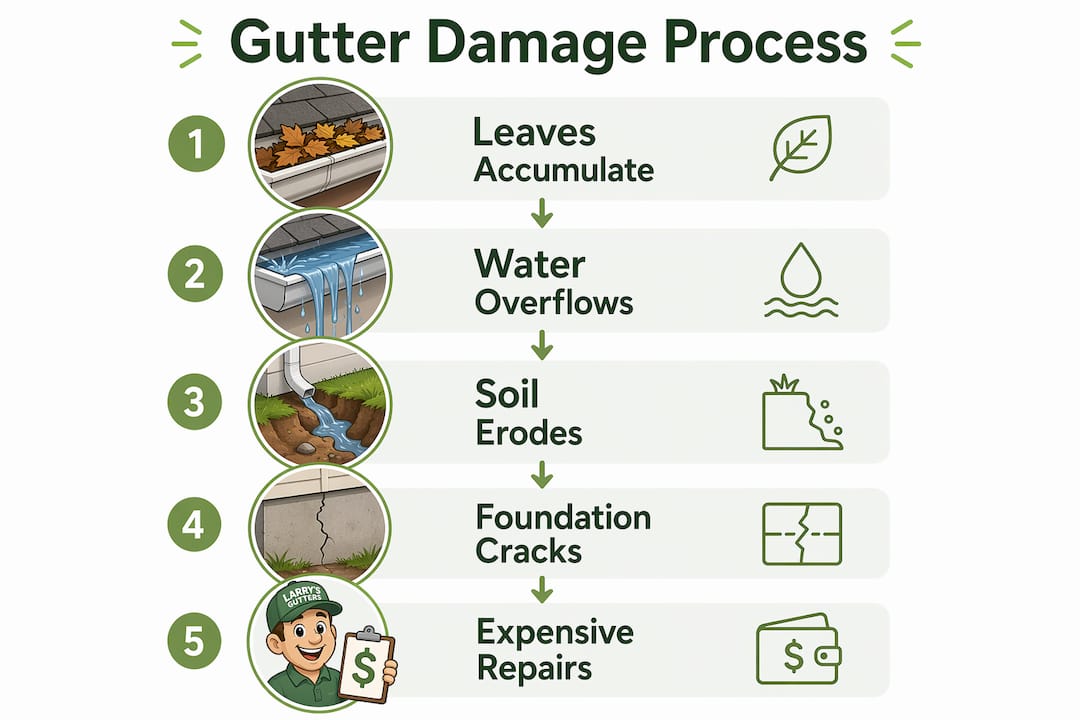
Foundation damage is the most expensive consequence of gutter neglect. When gutters overflow, water pools directly against your home’s base. That pooling creates hydrostatic pressure that pushes against foundation walls and can cause cracks over time.
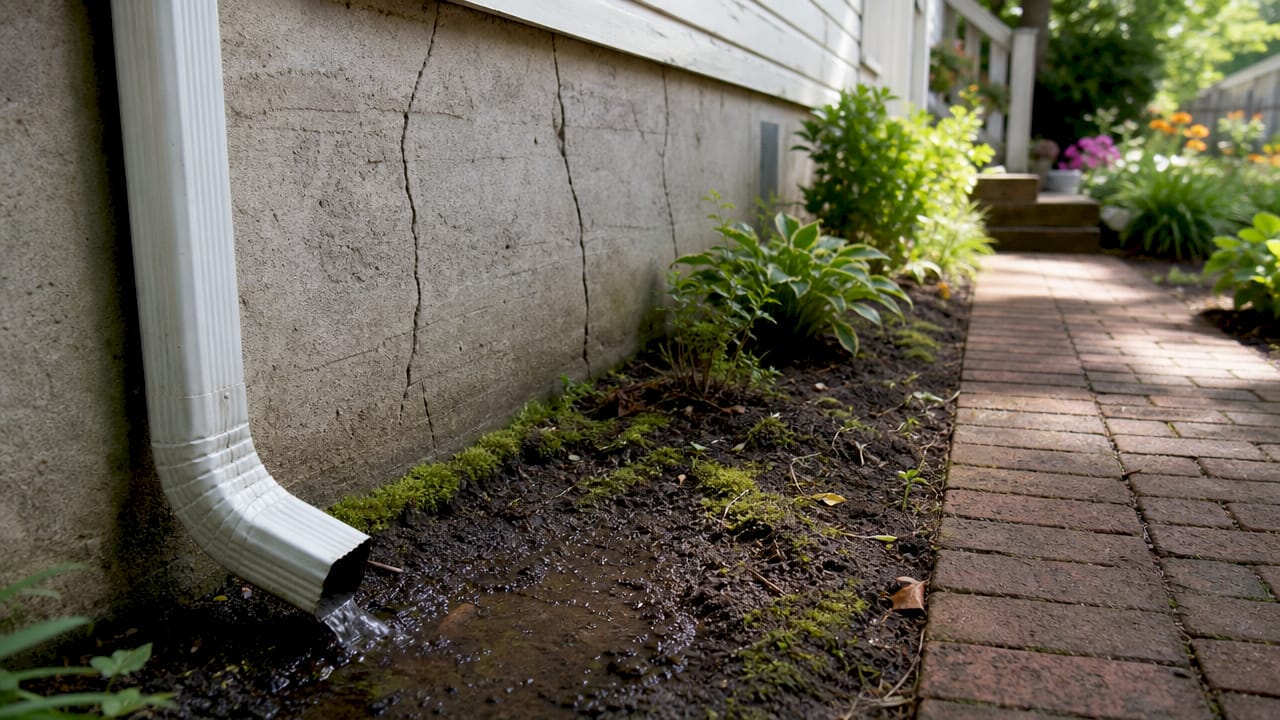
Soil plays a critical role here. Overflowing water causes soil erosion and uneven moisture around your foundation. As soil shifts and settles unevenly, it creates minor structural movement that shows up as cracks in walls, sticking doors, and uneven floors. These are not cosmetic problems. They signal that your foundation is under stress.
The table below summarizes the most common foundation issues tied to gutter overflow:
| Foundation issue | Cause | Warning sign |
|---|---|---|
| Wall cracks | Hydrostatic pressure from pooling water | Horizontal or stair-step cracks in masonry |
| Basement flooding | Saturated soil pushing water inward | Water stains on basement walls or floor |
| Soil erosion | Constant overflow washing away topsoil | Visible gaps between soil and foundation |
| Structural shifting | Uneven soil moisture causing settlement | Sticking doors, uneven floors, wall gaps |
Proper downspout discharge is the most direct fix for foundation risk. Downspouts should direct water at least 4 to 6 feet away from your home’s base. Anything shorter allows water to re-saturate the soil near the foundation. For a deeper look at how gutters protect your foundation, Larrysgutters covers the connection in detail on their foundation protection guide.
Pro Tip: After heavy rain, walk your property and look for pooling water within 3 feet of your foundation. If you find it, your downspouts need extension or your gutters need cleaning.
When and how often should homeowners clean their gutters?
Standard maintenance recommends cleaning gutters at least twice a year. Homes surrounded by red maples, pin oaks, or pine trees may need 3 to 4 cleanings annually because these species drop debris in multiple seasons.
Timing matters as much as frequency. Follow this sequence for the most effective annual schedule:
- Late spring (after pollen and seed drop). Trees like oaks and maples release heavy pollen and seed pods that pack into gutters quickly. A spring cleaning prevents early-season buildup.
- Early fall (after most leaves have fallen). Wait until the bulk of leaf drop is complete before cleaning. Cleaning too early means you will need to clean again after the remaining leaves fall.
- Before the first hard freeze. Cleaning gutters before freezing temperatures arrive is critical for preventing ice dams. A clogged gutter in freezing weather becomes a block of ice that damages both the gutter and the roof.
- After major storms. High winds deposit large amounts of debris in a single event. A post-storm check takes 20 minutes and can prevent weeks of damage.
Effective cleaning requires more than scooping debris. Flush the gutters with a garden hose after clearing solids to confirm water flows freely to the downspout. Check downspout outlets for blockages, since debris often compacts at the bottom. Trim overhanging branches to reduce how much debris reaches the gutter in the first place. Larrysgutters outlines a complete seasonal maintenance schedule for Central Florida homeowners who want a step-by-step reference.
Gutter guards reduce cleaning frequency but do not eliminate it. Some guard styles trap debris on top or underneath, causing slow drainage or structural sagging if left unchecked. Guards are a useful tool, not a permanent solution.
Pro Tip: Keep a simple log of every gutter cleaning with the date, what you found, and any repairs made. That record is useful for insurance claims and helps you spot patterns before they become problems.
What are the signs of clogged gutters and when should you call a professional?
Signs of clogged gutters include overflowing water during rain, sagging gutters, stains on siding, standing water near the foundation, and plant growth inside the gutter channel. Each of these signals that the system is compromised and needs attention.
The problem with waiting for visible signs is that significant damage often occurs before they appear. Fascia rot, for example, develops behind the gutter where you cannot see it. By the time the gutter starts to sag, the fascia board may already need full replacement. A leaky roof from a related ice dam issue can cost far more than a timely cleaning, as roofing experts at Hytz Roofing note when discussing the compounding costs of ignored roof and gutter damage.
Here are the specific signs that warrant a professional inspection rather than a DIY fix:
- Gutters pulling away from the roofline. This indicates the fascia behind them has rotted or the hangers have failed. Cleaning alone will not fix this.
- Water stains on interior ceilings or walls. This suggests water has already breached the roof or wall assembly. A professional needs to trace the source.
- Visible mold on exterior siding near gutters. Mold this visible means moisture has been present for an extended period.
- Gutters that sag in the middle. Sagging means the gutter is holding water weight it was not designed to carry. The system needs repair or replacement.
- Pest activity around the roofline. Birds nesting in gutters or wasps building nests near overflow points are signs of long-term standing water and debris.
DIY cleaning works well for routine maintenance on a single-story home with accessible gutters. Multi-story homes, steep rooflines, and any situation involving structural damage require a professional. The cost of a professional cleaning is a fraction of the cost of fascia replacement, which ranges from $500 to $1,200 per run.
Key Takeaways
Clogged gutters cause roof damage, foundation cracks, pest infestations, and mold growth, all of which cost far more to repair than a routine cleaning prevents.
| Point | Details |
|---|---|
| Clean at least twice a year | Homes with heavy tree coverage need 3–4 cleanings annually to prevent overflow. |
| Downspouts need proper discharge | Direct water 4–6 feet from the foundation to prevent hydrostatic pressure and soil erosion. |
| Visible signs appear late | Fascia rot and roof damage develop before sagging or stains become visible. |
| Gutter guards are not maintenance-free | Guards reduce cleaning frequency but still require regular inspection to prevent hidden buildup. |
| Professional help has a clear threshold | Sagging gutters, interior water stains, and mold on siding require a professional, not a DIY fix. |
What I’ve learned from watching homeowners ignore their gutters
Most homeowners treat gutters as an afterthought until something goes wrong. I have seen this pattern repeat itself: a homeowner skips two or three cleanings, notices a stain on the ceiling, and then discovers the fascia, the roof deck, and part of the soffit all need replacement. The original cleaning would have cost less than $200. The repair bill was over $4,000.
The most common mistake I see is overconfidence in gutter guards. Homeowners install them, assume the problem is solved, and never look at the gutters again. Guards are useful, but pine needles, shingle grit, and small seeds get through or accumulate on top of nearly every guard style on the market. A guard without periodic inspection is a false sense of security.
The second mistake is cleaning too early in fall. Homeowners clean in october when half the leaves are still on the trees, then skip the second cleaning. That second cleaning, done after the final leaf drop and before the first freeze, is the most important one of the year. Skipping it is how ice dams form and how foundations get saturated over winter.
My honest advice: treat gutter cleaning like an oil change. You do not wait until the engine seizes. You follow a schedule, you check for problems, and you call a professional when something is beyond a basic fix. The gutter care dos and don’ts that Larrysgutters publishes are a practical starting point for homeowners who want a clear checklist rather than guesswork.
Proactive maintenance preserves home value. Reactive repairs drain it.
— Results
How Larrysgutters can protect your home from gutter damage
Larry’s Gutters specializes in residential gutter solutions across Central Florida, where heavy rainfall and dense tree coverage make gutter maintenance a year-round concern. Seamless gutters, which Larrysgutters installs custom-fit to each home, eliminate the seam joints where most clogs and leaks originate. That design reduces overflow risk and extends the life of the entire system.

If you are weighing whether an upgrade makes financial sense, Larrysgutters breaks down the value of seamless gutters in plain terms. For homeowners who want to reduce cleaning frequency without abandoning maintenance entirely, the gutter guard installation guide covers the options available in Florida. Whether you need a cleaning, a repair, or a full replacement, Larrysgutters offers free quotes and serves homeowners across multiple Florida counties.
FAQ
What is the main impact of clogged gutters on a home?
Clogged gutters cause water to overflow and damage roofs, fascia boards, siding, and foundations. Left unaddressed, the consequences include basement flooding, mold growth, and structural cracks.
How often should gutters be cleaned to prevent clogs?
Clean gutters at least twice a year, and 3 to 4 times annually if your property has heavy tree coverage from species like red maples, pin oaks, or pines.
Can clogged gutters cause foundation damage?
Yes. Water pooling at the base of your home creates hydrostatic pressure that cracks foundation walls and destabilizes surrounding soil, which can lead to basement flooding and structural shifting.
Do gutter guards prevent clogs completely?
Gutter guards reduce how often debris accumulates but do not eliminate the need for maintenance. Some guard styles trap debris underneath or on top, causing slow drainage and potential structural issues if not inspected regularly.
When should a homeowner call a professional for gutter issues?
Call a professional when gutters are sagging, pulling away from the roofline, or when you notice interior water stains or visible mold on exterior siding. These signs indicate damage that goes beyond what a standard cleaning can fix.
