
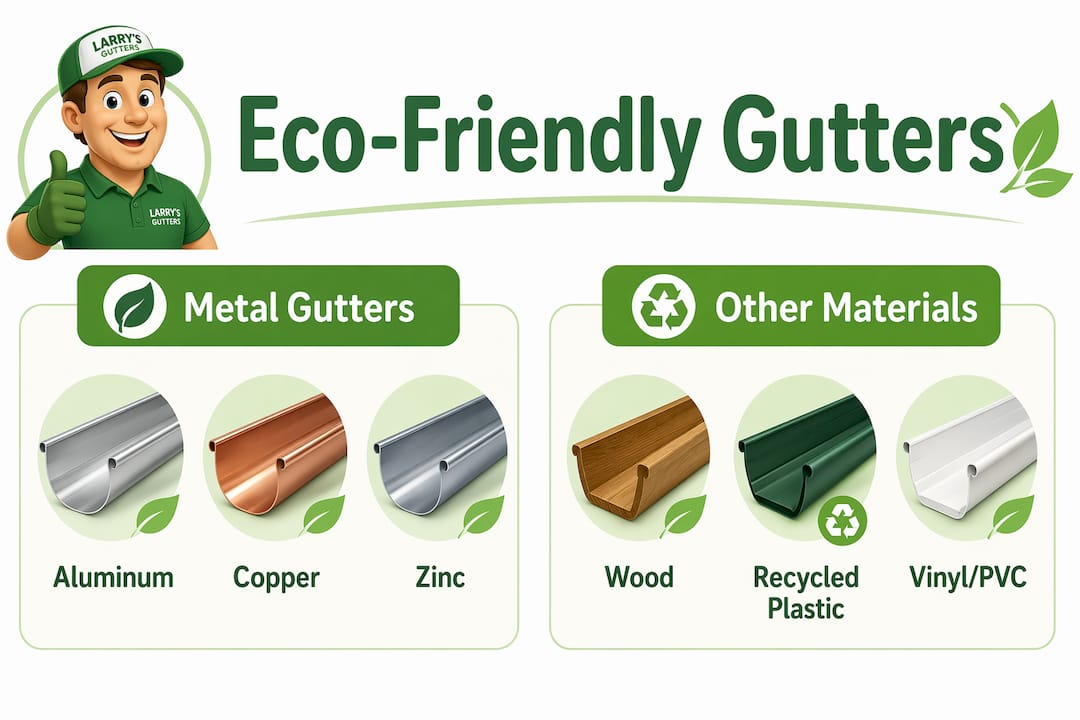
Aluminum with recycled content, copper, zinc, responsibly sourced wood, and recycled plastic gutters are the strongest eco-friendly choices available to homeowners today. Of these, recycled-content aluminum stands out for most households: Rollex Aluminum Gutter Systems are certified for points toward the ICC-700 National Green Building Standard, specifically for their post-consumer recycled content. Copper and zinc have a much longer lifespan than typical gutter materials, which means far less material waste over a home’s lifetime. Vinyl, by contrast, is the one material to avoid: it leaches harmful chemicals into stormwater runoff and has a shorter lifespan than any metal alternative, sending more material to landfills faster.
- Recycled-content aluminum: widely available, endlessly recyclable, ICC-700 NGBS certified options exist
- Copper: 50–100 year lifespan, naturally corrosion-resistant, nearly 100% recyclable
- Zinc (e.g., RHEINZINK): Cradle to Cradle certified, self-healing patina, low-maintenance
- Responsibly sourced wood: lowest overall environmental impact, requires dedicated upkeep
- Recycled plastic (PET-based): diverts post-consumer waste, lightweight, corrosion-resistant
- Vinyl/PVC: budget option but not a genuinely green gutter material; avoid when sustainability is the goal
What are the most sustainable gutter materials?
Each material in this guide to eco-friendly gutter options carries a distinct sustainability profile. The right choice depends on your climate, budget, and how long you plan to stay in the home.
| Material | Recycled Content | Lifespan | Maintenance | Recyclability | Rainwater Harvesting Safe? |
|---|---|---|---|---|---|
| Aluminum | High (post-consumer available) | Moderate lifespan | Low | Yes, infinitely | Yes |
| Copper | Majority from recycled sources | Long lifespan | Very low | Yes, 100% | Caution (heavy metal runoff) |
| Zinc | High | Long lifespan | Very low | Yes, infinitely | Yes |
| Wood | N/A (renewable resource) | Moderate lifespan (maintained) | High | Biodegradable | Yes |
| Recycled Plastic (PET) | Post-consumer plastic | Moderate lifespan | Low | Partial | Yes |
| Vinyl/PVC | Low | Short lifespan | Low | Difficult | No |
Aluminum
Aluminum is the most popular green gutter material in the U.S., and for good reason. The recycling process for aluminum requires significantly less energy than producing it from raw bauxite, cutting greenhouse gas emissions considerably. Products like Rollex Aluminum Gutter Systems carry ICC-700 NGBS certification for post-consumer recycled content, which means an independent lab has verified the claim. The catch: virgin aluminum production releases perfluorocarbon emissions that are thousands of times more potent than carbon dioxide, so always ask your supplier about recycled content percentage before buying.
Copper
Copper gutters last generations. A lifespan of 50–100 years means you may never replace them, which is itself a powerful sustainability argument. The majority of copper in use today already comes from recycled sources. That said, copper mining carries real environmental costs: air and waterway pollution, deforestation, and radioactive material release. Copper gutters also pose a specific risk for homeowners who collect rainwater. University of Alabama research found that copper runoff can exceed 6 mg/L under certain conditions, a concentration that can contaminate harvested water.
Zinc
RHEINZINK gutter systems have earned both Cradle to Cradle certification and ISO 14025 Type III Environmental Product Declaration status, making them among the most rigorously verified sustainable gutter solutions on the market. Zinc forms a natural protective patina over time that actually repairs minor surface damage, reducing the need for maintenance or replacement parts. Manufacturing zinc gutters consumes less energy than most other metals.
Wood
Wood has the lowest environmental impact of any gutter material when sourced responsibly. Species like Scots pine, Sweet chestnut, and Pitch pine are the most durable choices. The trade-off is maintenance: wood gutters require regular oiling, resealing, and inspection to prevent rot. GreenSpec notes that wood performs best when left unpainted, since paint slows drying after rain and accelerates deterioration.
Recycled plastic (PET-based)
Gutters made from post-consumer PET plastic divert plastic bottles from landfills and require less energy to produce than virgin plastic alternatives. They are lightweight, corrosion-resistant, and support circular economy goals. Quality varies widely, so verify that any recycled plastic product meets ASTM durability standards before purchasing.
Vinyl/PVC
Vinyl gutters are cheap upfront, but they leach harmful chemicals into stormwater runoff, degrade faster than metal options, and are difficult to recycle due to chemical additives. For homeowners prioritizing sustainability, vinyl is the one material this guide recommends against.
Why eco-friendly gutters benefit both your home and the planet
The environmental case for green gutter materials goes beyond recyclability. Metal gutters, particularly aluminum and zinc, do not leach synthetic chemicals into stormwater the way vinyl does. That matters most if you direct downspout water toward a garden or a rainwater collection system.
- Reduced landfill waste: copper and zinc gutters lasting 50–100 years replace aluminum systems three or four times over, generating a fraction of the disposal waste
- Lower energy footprint: recycled aluminum and recycled PET plastic both require substantially less energy to produce than their virgin-material equivalents
- Rainwater harvesting compatibility: aluminum, zinc, and wood gutters are all safe for systems that collect water for irrigation or household use
- Curb appeal and home value: copper gutters can add measurable value to a property, particularly for heritage or luxury homes
- Reduced chemical runoff: metal gutters produce no PVC-related chemical leaching, protecting local waterways and soil quality
Routine upkeep amplifies every one of these benefits. Regular gutter maintenance prevents blockages that force water behind fascia boards, causing rot and mold that eventually sends the entire system to the landfill prematurely.
Pro Tip: If you plan to harvest rainwater, pair your gutter system with a first-flush diverter. This device discards the initial flow of water after rainfall, which carries the highest concentration of surface contaminants from any gutter material, including metals.
Longer-lived materials also translate directly to cost savings. Replacing vinyl gutters every 10–20 years versus copper or zinc systems that outlast the mortgage means fewer installation cycles, less labor, and less material waste over the life of the home.
How to install eco-friendly gutters the right way
Installation quality determines whether a sustainable gutter system actually delivers on its environmental promise. A poorly installed copper system that leaks at every joint is no greener than a vinyl one.
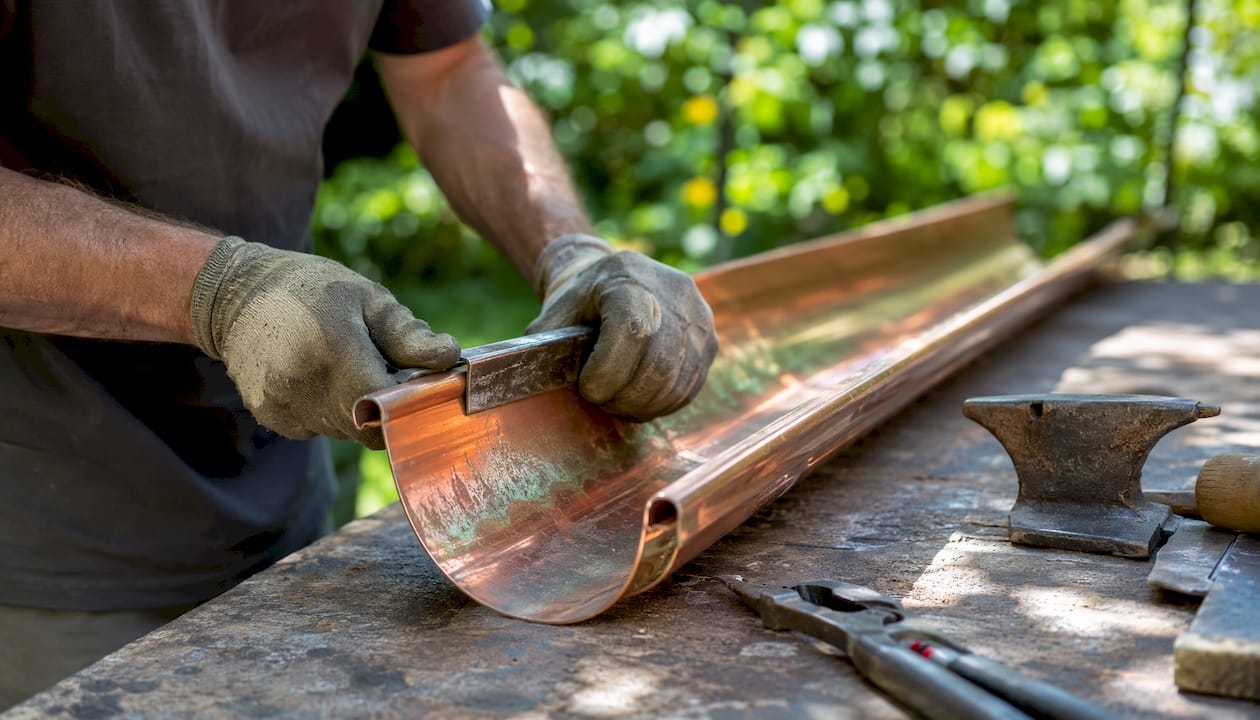
Choose the right installer. Metal gutters, especially copper and zinc, require specialized skills. Copper cannot be soldered by a general handyman; it needs a contractor experienced with the material’s thermal behavior and joinery. For aluminum, seamless gutter installation eliminates the seam-related leaks that shorten sectional systems’ lives and increase repair frequency.
Match the material to your climate. Steel and aluminum expand and contract less than vinyl during temperature swings, which preserves gasket and seal integrity over time. In hot climates like Central Florida, thermal movement is a real factor: materials with lower thermal expansion coefficients produce fewer leaks and need fewer repairs across the system’s life.
Follow these installation best practices:
- Slope gutters at least 1/4 inch per 10 feet toward downspouts to prevent standing water and organic buildup
- Use stainless steel or copper fasteners with copper gutters to avoid galvanic corrosion between dissimilar metals
- Space hangers no more than 24 inches apart for aluminum; closer for heavier copper or zinc systems
- Install leaf guards or gutter guards at the same time as new gutters to reduce cleaning frequency and extend system life
- Direct downspouts at least 6 feet from the foundation, ideally toward a rain garden or collection barrel
Pro Tip: Steel and aluminum have significantly lower thermal expansion than vinyl, meaning their seals stay tighter through seasonal temperature changes. If you live in a region with wide temperature swings, this single factor can cut your leak-related repair calls in half over a decade.
Proper downspout installation is just as important as the gutter run itself. A well-routed downspout system keeps water moving away from your foundation and toward wherever you want it, whether that is a dry well, a rain barrel, or a planted area.
What certifications actually verify a gutter’s sustainability?
Marketing language like “eco-friendly” and “green” costs nothing to print on a box. Certifications cost something to earn, which is why they matter.
Cradle to Cradle evaluates a product across five categories: material health, material reutilization, renewable energy use, water stewardship, and social fairness. RHEINZINK zinc gutter systems carry this certification, meaning an independent body has assessed the full production-to-disposal cycle, not just the recyclability claim.
ICC-700 National Green Building Standard is the residential green building benchmark in the United States. Rollex Aluminum Gutter Systems are independently verified for points under Section 604.1, which awards credits for building materials with post-consumer recycled content. This is the certification to look for when specifying aluminum gutters for a green-rated home project.
Environmental Product Declarations (EPDs) go further than either of the above by providing precise, third-party-verified lifecycle data: how much energy went into production, what emissions were generated, and what happens at end of life. GreenSpec recommends seeking EPDs as the most reliable way to distinguish genuine sustainability from marketing claims.
| Material | Cradle to Cradle | ICC-700 NGBS | EPD Available | Key Trade-off |
|---|---|---|---|---|
| Aluminum (recycled) | No | Yes (Rollex) | Some products | Bauxite mining; PFC emissions from virgin production |
| Copper | No | No | Some products | Mining pollution; heavy metal runoff risk |
| Zinc (RHEINZINK) | Yes | No | Yes (ISO 14025) | Higher upfront cost |
| Wood | No | No | No | Requires intensive maintenance |
| Recycled PET plastic | No | No | Limited | Variable quality; partial recyclability |
| Vinyl/PVC | No | No | No | Chemical leaching; difficult to recycle |
Aluminum production releases harmful perfluorocarbon emissions during primary smelting, and copper mining carries biodiversity and pollution risks. Prioritizing post-consumer recycled content in either metal is the most direct way to reduce those impacts. For wood, responsible forestry certification (FSC or equivalent) serves the same verification function.
Copper gutters also carry a specific water quality concern. University of Alabama laboratory testing found that copper concentrations from copper gutters can reach levels that pose risks to rainwater harvesting systems, particularly in acidic or saline water conditions. If you plan to collect roof runoff for any use, copper is the one metal to approach with caution.
What happens to gutters at the end of their life?
End-of-life recyclability is where the real sustainability gap between materials becomes clear.
Aluminum is infinitely recyclable without losing its properties, and the recycling infrastructure for it in the United States is mature. When aluminum gutters reach the end of their service life, a scrap metal dealer will take them. Copper and zinc share this advantage: both are indefinitely recyclable, and both command enough scrap value that they rarely end up in landfills.
Wood gutters biodegrade. Untreated or minimally treated wood returns to the soil without leaving persistent pollutants, making it the cleanest end-of-life story of any gutter material. Treated wood is more complicated, depending on the preservatives used, so choosing environmentally safe sealants matters from the start.
Recycled PET plastic gutters occupy a middle ground. The material is technically recyclable, but the infrastructure for recycling plastic building products is less developed than for metals. Check with your local recycling program before assuming curbside pickup applies.
Vinyl/PVC is the most problematic at disposal. The chemical additives in PVC complicate recycling, and most vinyl gutters end up in landfills. Some manufacturers offer take-back programs, but these are not universal. If you already have vinyl gutters and are replacing them, ask your installer whether any regional recycling options exist before sending the old material to the dump.
For homeowners who want the full picture on gutter lifespan and when replacement becomes necessary, understanding end-of-life options before you buy is the most genuinely sustainable approach to the whole decision.
Key Takeaways
Recycled-content aluminum and certified zinc systems offer the strongest combination of verified sustainability, durability, and practical availability for most U.S. homeowners.
| Point | Details |
|---|---|
| Best certified options | Rollex aluminum (ICC-700 NGBS) and RHEINZINK zinc (Cradle to Cradle) carry independent sustainability verification. |
| Copper lifespan advantage | Copper and zinc gutters last 50–100 years, generating far less disposal waste than shorter-lived materials. |
| Avoid vinyl for green builds | Vinyl leaches chemicals into stormwater and is difficult to recycle; it is not a genuinely sustainable choice. |
| Copper and rainwater harvesting | Copper runoff can exceed 6 mg/L in lab conditions, posing risks to harvested water quality. |
| Maintenance extends eco-value | Routine cleaning and inspection prevent premature system failure, maximizing the environmental return on any material choice. |
Ready to put these choices into practice for your Central Florida home? Larry’s Gutters specializes in seamless gutter installation and can help you select the right material for your climate, budget, and sustainability goals. Explore cost-effective gutter options or request a free quote today.

