TL;DR:
- Downspout drainage is essential for directing rainwater safely away from a home’s foundation.
- Proper systems include underground pipes, extensions, and French drains tailored for Florida’s heavy storms.
- Regular maintenance and post-storm inspections are crucial to prevent costly water damage and erosion.
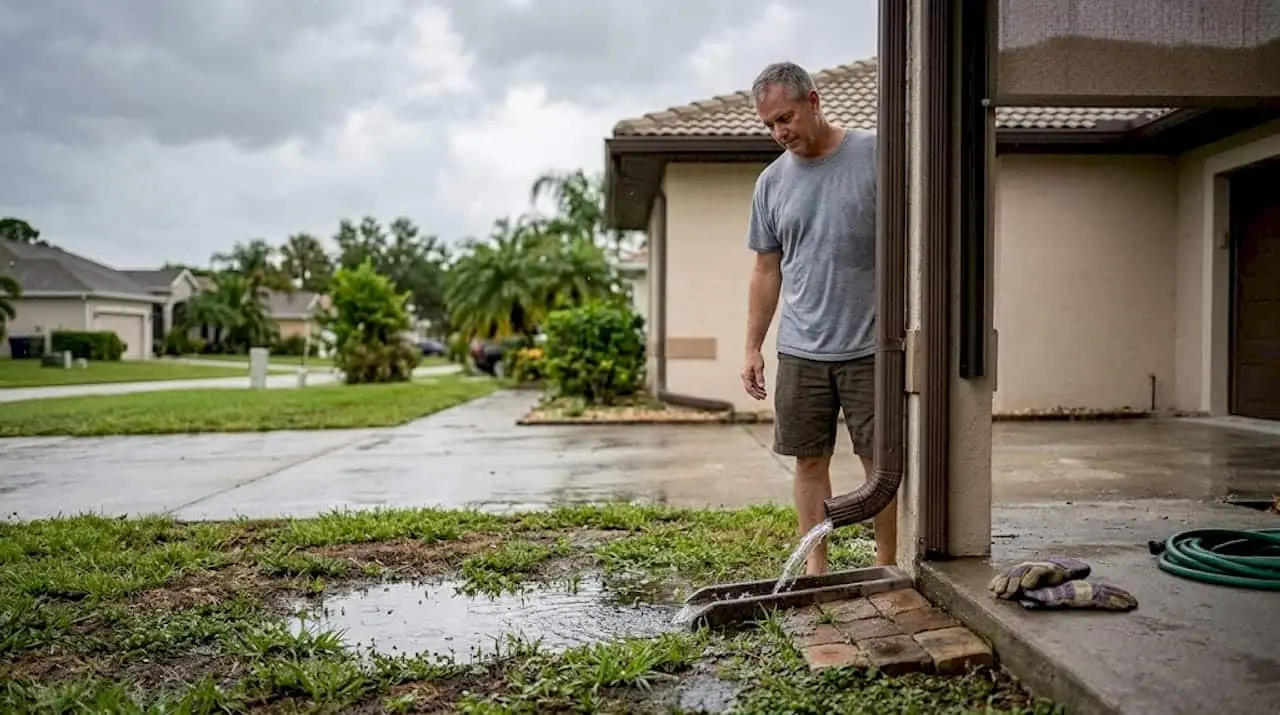
Most homeowners assume gutters are doing all the heavy lifting when it rains. They’re not. Gutters collect water, but downspout drainage is what actually moves that water away from your home safely. In Central Florida, where one inch of rain on a 1,000 sq ft roof produces over 600 gallons of runoff, a poorly planned drainage system can overwhelm your property in minutes. Foundation cracks, flooded yards, and washed-out landscaping are not random bad luck. They’re what happens when downspout drainage is ignored. This guide covers everything you need to know: what downspout drainage is, which systems work best in Florida, how to maintain them, and what most homeowners get wrong.
Table of Contents
- What is downspout drainage?
- Key methods of downspout drainage
- Why proper drainage matters in Central Florida
- Maintenance, best practices, and local tips
- Unconventional wisdom: What most homeowners overlook about downspout drainage
- Connect with Central Florida’s downspout drainage experts
- Frequently asked questions
Key Takeaways
| Point | Details |
|---|---|
| Downspout drainage is crucial | Proper downspout drainage can prevent foundation and landscape damage during Florida rains. |
| Multiple drainage types available | Surface extensions, underground pipes, and French drains each suit different property needs. |
| Maintenance prevents costly repairs | Regular post-storm and seasonal checks keep your system working and avoid basement flooding. |
| Local climate requires planning | Central Florida homeowners need systems designed for sudden, heavy rainfall to keep their homes safe. |
What is downspout drainage?
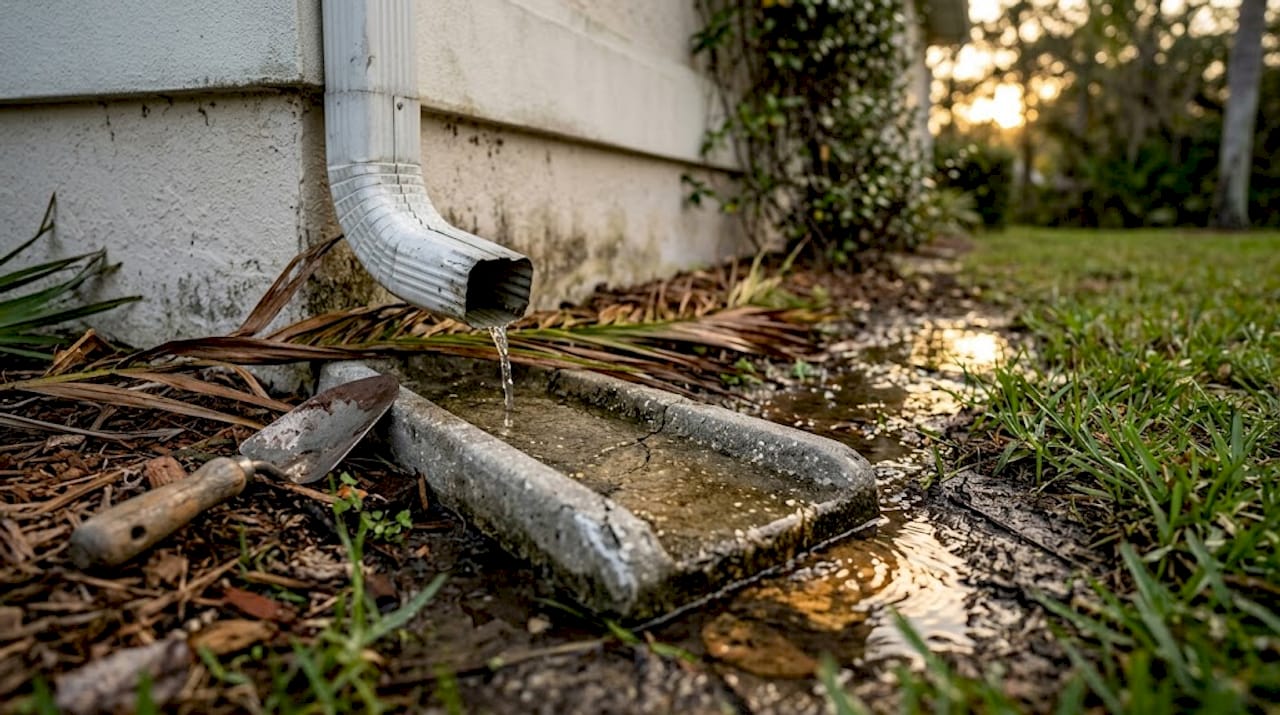
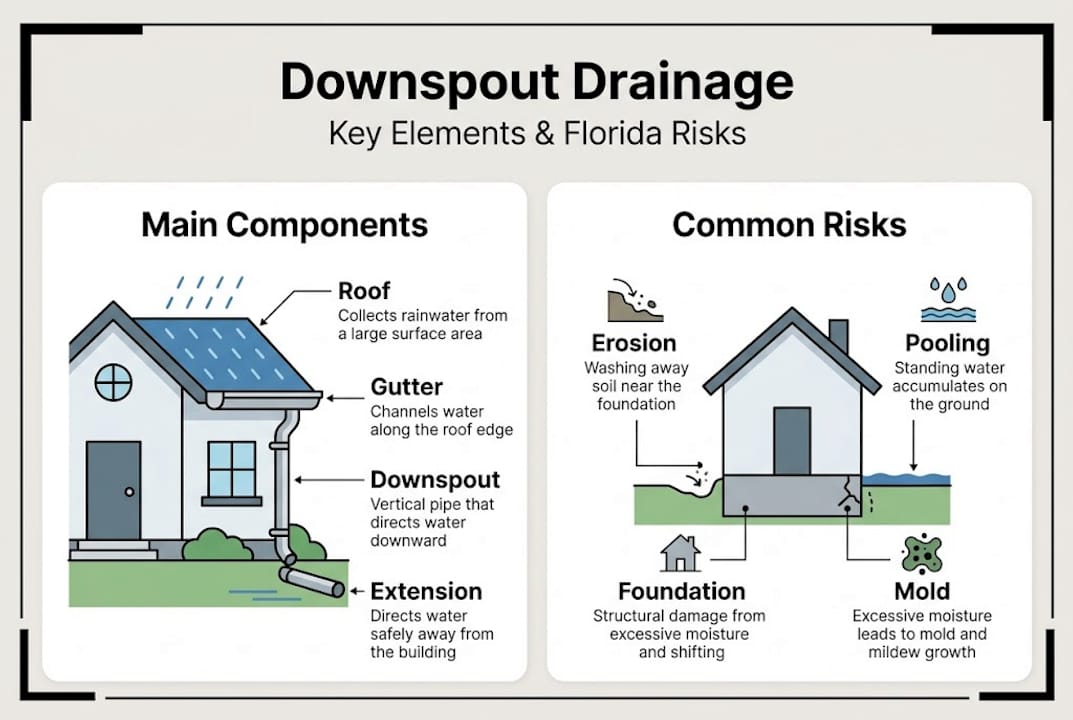
Think of your gutter system as a funnel. Rain hits your roof, slides into the gutters along the edges, and gets funneled toward the downspout. The downspout is the vertical pipe that carries water from the gutters down to ground level. But the story doesn’t end there. Downspout drainage refers to everything that happens after water exits the bottom of that pipe.
Downspout drainage guides water from rooftop gutters safely away from your foundation via structured pathways. Without those pathways, water pools right at your home’s base, and that’s where the real damage begins.
A lot of homeowners assume the water just soaks into the ground and disappears. In sandy Florida soil, that sometimes happens fast. But during heavy storms, the ground gets saturated quickly, and water has nowhere to go except sideways toward your foundation or back toward your home.
Here’s what happens when downspout drainage is missing or inadequate:
- Foundation cracks and shifting from water pressure building up against the slab
- Basement or crawlspace flooding as water finds the path of least resistance
- Landscaping washout where soil and mulch erode away from garden beds
- Soil erosion that undermines walkways, driveways, and outdoor structures
- Mold and mildew growth along the base of exterior walls from chronic moisture
The path water takes from your roof to safe ground is longer than most people realize. It starts at the roof surface, moves into the gutter channel, travels down the downspout, and then must be actively directed away from your home through extensions, pipes, or drainage features. Each step matters.
For a closer look at how these systems are put together, the downspout installation steps walk you through the full process from top to bottom.
Pro Tip: The last 4 to 10 feet of water travel is the most critical stretch for protecting your home. That final leg determines whether water drains safely away or pools dangerously close to your foundation.
Key methods of downspout drainage
Not all drainage solutions are created equal, and what works in a dry climate may be completely wrong for Central Florida. Here’s a breakdown of the most common options.
| Method | Pros | Cons | Best for |
|---|---|---|---|
| Surface extensions | Inexpensive, easy to install | Can be tripped over, limited reach | Most homes as a starting point |
| Underground PVC pipes | Handles high volume, hidden from view | Higher install cost | Flood-prone yards |
| French drains | Excellent for saturated soil | Requires excavation | High water table areas |
| Splash blocks | Simple, low cost | Minimal protection only | Light rainfall areas |
| Rain barrels | Eco-friendly, saves water | Limited capacity | Water conservation goals |
Surface extensions, underground pipes, French drains, splash blocks, and rain barrels are all proven methods, but their effectiveness depends heavily on your yard’s slope, soil type, and how much rain your area receives.
For Central Florida homeowners dealing with frequent heavy storms, here are the most recommended solutions in order of effectiveness:
- Underground PVC piping to pop-up emitters handles massive water volumes without visible clutter in your yard
- Surface extensions of 6 to 10 feet give water enough distance to dissipate before reaching the foundation
- French drains work exceptionally well in yards with standing water or high water tables
- Combination systems pairing extensions with underground piping offer the strongest protection during hurricane season
- Rain barrels serve as a supplemental option but should never be your only drainage method in a storm-heavy region
The smartest approach for most Central Florida homes is a combination system. A surface extension moves water away immediately, while underground piping handles overflow during intense storms. You don’t have to pick just one. Exploring gutter upgrades for Florida homes can help you identify which combination makes the most sense for your specific property layout.
Why proper drainage matters in Central Florida
Central Florida is not a typical climate. The region averages over 50 inches of rain per year, much of it falling in intense bursts during the June through September storm season. Add hurricane surges and a notoriously high water table, and you have conditions that can overwhelm a basic drainage setup in under an hour.
“Systems that are inspected and cleared after every major storm prevent the majority of overflow events and foundation damage cases in high-rainfall regions.” Industry drainage professionals consistently point to post-storm maintenance as the single biggest factor in long-term system performance.
When drainage fails in this climate, the consequences hit fast and hard. Here’s what’s at stake if your system isn’t up to the task:
- Foundation shifting and cracking from repeated water pressure cycles
- Flooded crawlspaces that invite mold, pests, and structural rot
- Ruined landscaping from repeated washout during storm events
- Soil erosion that undermines driveways, patios, and garden structures
- Exterior wall damage from water wicking up from pooled ground moisture
The numbers make this concrete. A 600-gallon surge from a single inch of rain on a 1,000 sq ft roof means your drainage system needs to move serious volume quickly. If even part of that water pools near your foundation, you’re looking at long-term structural risk.
To protect your Central Florida home from these risks, the drainage system needs to be designed for sudden, high-volume runoff, not just average rainfall. Standard splash blocks and short extensions simply aren’t enough for a Florida summer storm.
If your gutters are already overflowing, the problem may be upstream. Understanding gutter overflow solutions can help you trace the issue back to its source. And if you’re concerned about your slab, learning how gutters prevent foundation damage in Central Florida gives you a clearer picture of what’s at risk. Proper downspout placement and erosion control go hand in hand when designing a system that holds up year after year.
Pro Tip: After every major storm, walk the perimeter of your home and check where water is pooling. The spots you find are exactly where your drainage system needs attention.
Maintenance, best practices, and local tips
A great drainage system installed today can fail in two years if it isn’t maintained. Central Florida’s storm season accelerates wear, clogs debris faster, and shifts soil in ways that redirect water unexpectedly. Staying on top of maintenance is the difference between a system that lasts decades and one that causes a costly repair bill.
| Task | Frequency | Impact |
|---|---|---|
| Clear debris from downspout openings | Monthly during storm season | Prevents blockages and overflow |
| Flush downspouts with a hose | Every 3 months | Clears internal buildup |
| Inspect extensions and underground pipes | After every major storm | Catches displacement or damage early |
| Check for pooling near foundation | After heavy rain | Identifies drainage failure points |
| Inspect pop-up emitters | Twice per year | Ensures proper water release |
Post-storm maintenance is vital for drainage effectiveness during Florida hurricane season. A clogged emitter or a shifted extension can redirect hundreds of gallons toward your home without any visible warning signs until the damage is already done.
Here’s a practical post-storm and seasonal inspection checklist:
- Walk the full perimeter of your home and look for pooling or saturated soil
- Check each downspout opening for leaves, dirt, or debris blocking the flow
- Flush every downspout with a garden hose and watch where the water exits
- Inspect underground pipe connections for separation or displacement
- Confirm pop-up emitters are opening and closing properly
- Look for erosion channels in your yard that signal water is running where it shouldn’t
Slow-draining downspouts are one of the earliest warning signs of a developing clog. If water backs up in the gutter instead of flowing freely down the spout, the blockage is usually in the elbow at the bottom or inside the underground pipe. Catching this early saves you from a much bigger problem.
For detailed guidance on keeping your system clear, cleaning downspouts is a practical starting point. If you’re ready to take your system further, upgrading gutter drainage for Central Florida homes covers the specific improvements that make the biggest difference in high-rainfall zones.
Unconventional wisdom: What most homeowners overlook about downspout drainage
Here’s something most drainage guides won’t tell you: bigger gutters rarely solve the problem. We hear it constantly. A homeowner upgrades from 5-inch to 6-inch gutters and wonders why their yard still floods. The gutter was never the bottleneck. The outlet was.
If water exits your downspout and has nowhere to go, it doesn’t matter how wide your gutter is. Landscape grading and drainage outlets do more work than gutter size in almost every case we’ve seen. A yard that slopes toward the house will defeat any gutter system, no matter how well it’s installed.
The other trap is the “set it and forget it” mindset. Storms change your drainage needs over time. A single hurricane can shift soil, block underground pipes, and redirect surface flow in ways that weren’t there before. What worked last season may not work this season.
We also see homeowners stop extensions at the standard 4 feet when their yard actually needs 12 or more. Flood-prone lots in Central Florida often benefit from connecting downspouts directly to French drains that carry water to a distant discharge point well away from the home.
For field-tested guidance on how these systems actually get installed, the installation lessons from the field are worth reviewing before you make any decisions.
Pro Tip: Walk your property during an actual heavy rainstorm. You’ll see exactly where water is going in real time, and you’ll spot trouble spots that no dry-weather inspection would ever reveal.
Connect with Central Florida’s downspout drainage experts
Getting your drainage right the first time saves you from expensive repairs down the road. At Larry’s Gutters, we work with Central Florida homeowners every day to design systems that handle Florida’s intense storm seasons without compromise.

Whether you need a full downspout installation guide to understand your options or want to learn more about gutter system components before making a decision, our resources are built for your specific climate and home type. If you’re weighing your options, find out whether seamless gutters are worth the investment for your property. Reach out for a free quote and get a custom solution that actually works for Central Florida conditions.
Frequently asked questions
How far should a downspout drain from my home’s foundation?
Extensions of 4 to 10 feet are the industry standard for diverting water safely away from your foundation and preventing pooling or erosion.
What’s the safest downspout drainage method for heavy Florida storms?
Underground pipes to pop-up emitters or dry wells are the most reliable option for managing the high water volumes that come with Florida’s intense rainfall.
How much water does my roof produce during a storm?
A 1,000 sq ft roof sheds roughly 600 gallons per inch of rain, which is why efficient drainage is not optional in a storm-heavy region like Central Florida.
How often should I check my downspout drainage?
Inspect your drainage paths after every major storm and at least once per season, since post-storm maintenance is the most effective way to keep your system working through hurricane season.
Which upgrades give the most benefit for Central Florida drainage?
Surface extensions and underground pipes combined with regular debris clearing deliver the greatest protection in high-rainfall areas like Central Florida.
