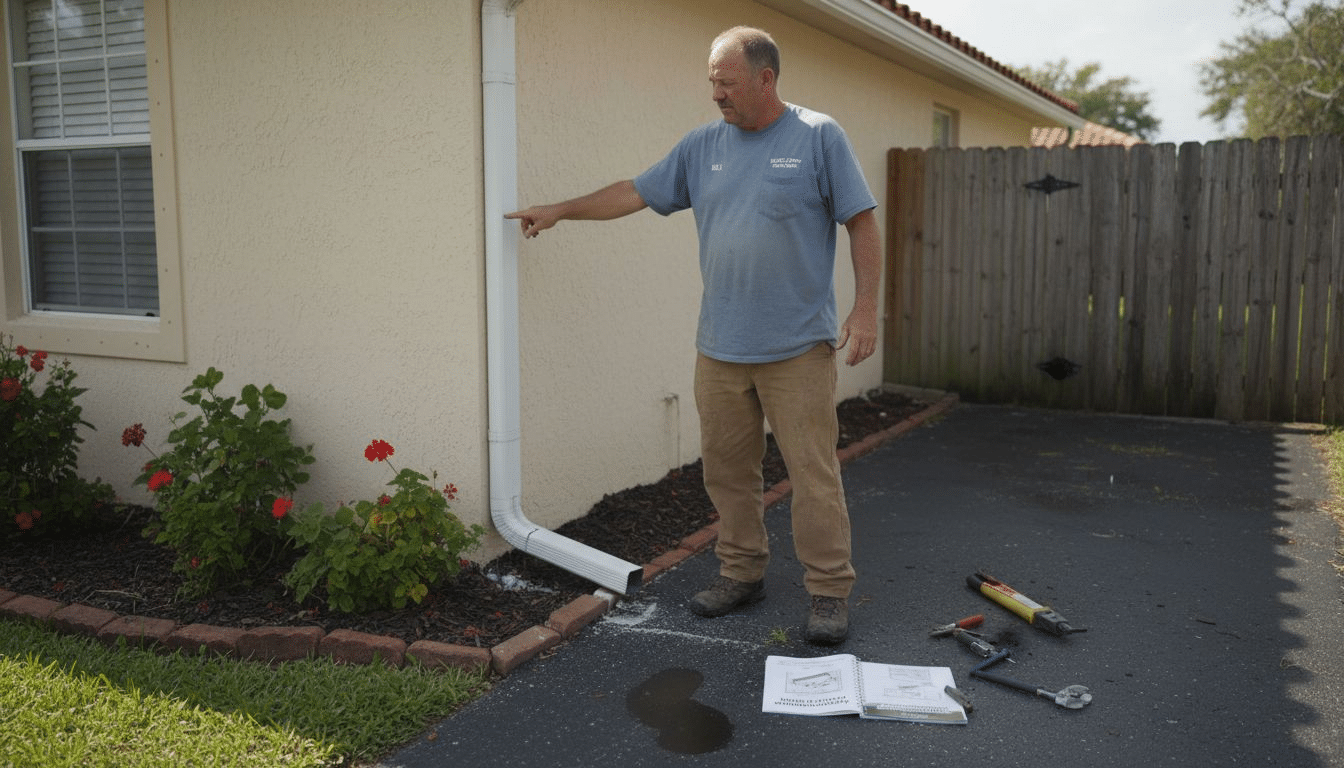
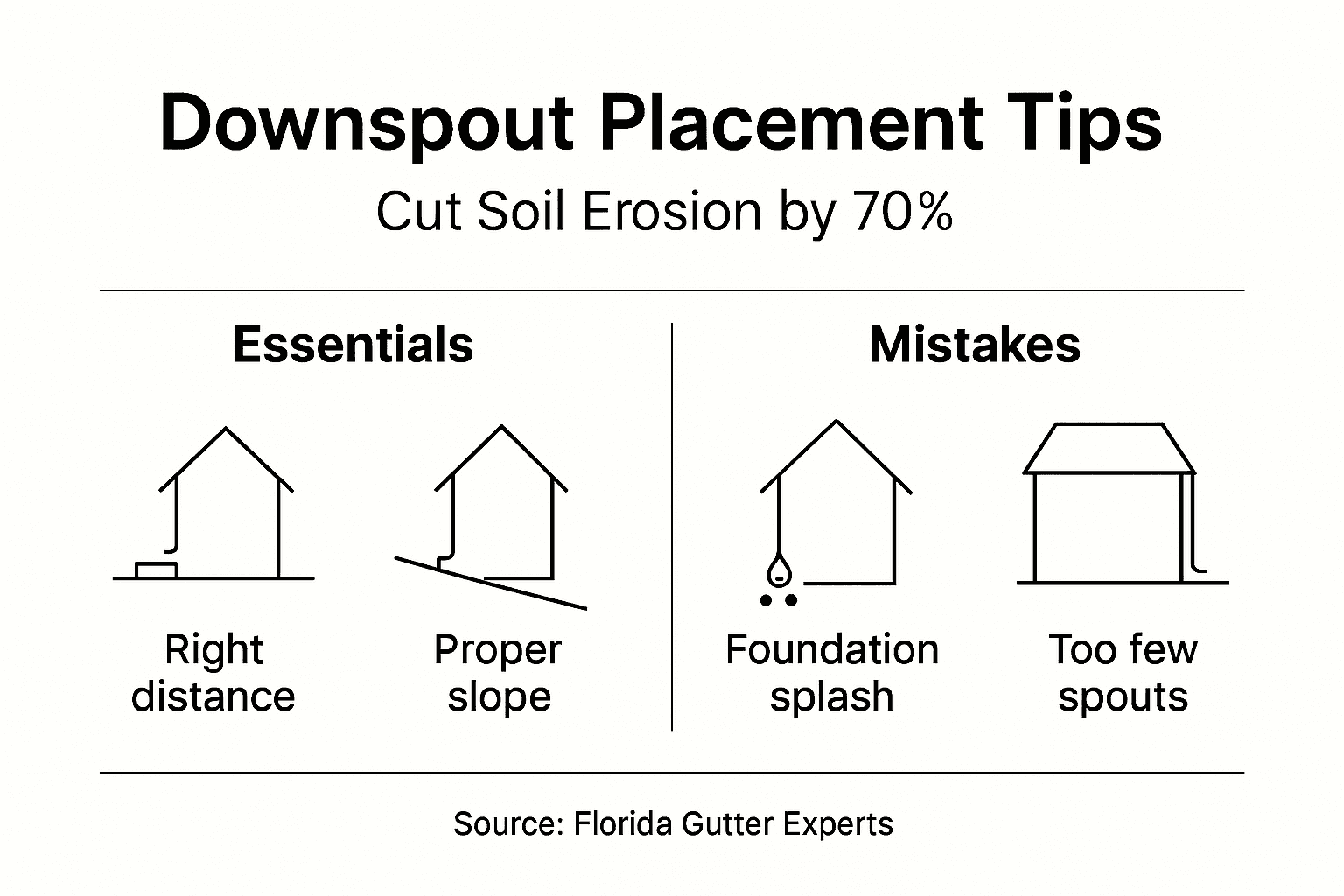
Improperly placed gutter downspouts can increase soil erosion near home foundations by up to 70%. For Central Florida homeowners facing intense rainstorms and sandy soils, getting downspout placement right means the difference between a protected home and costly foundation repairs. This guide explains exactly how to position downspouts to handle heavy rainfall, prevent water damage, and safeguard your investment in Lake, Marion, and Sumter counties.
Table of Contents
- Introduction To Gutter Downspout Placement
- Technical Guidelines For Optimal Downspout Placement
- Understanding Central Florida Specific Challenges
- Common Misconceptions And Installation Errors
- Comparison Of Downspout Placement Strategies
- Maintenance Practices To Sustain Downspout Efficiency
- Applying Best Practices: A Central Florida Homeowner’s Action Plan
- Protect Your Central Florida Home With Expert Gutter Solutions
Key Takeaways
| Point | Details |
|---|---|
| Optimal Spacing | Place downspouts 20 to 30 feet apart to manage water flow effectively during heavy rain. |
| Foundation Safety | Discharge water at least 3 to 4 feet away from foundations to prevent erosion and structural damage. |
| Regional Requirements | Central Florida’s intense rainfall and sandy soil demand tailored downspout strategies. |
| Maintenance Impact | Routine inspection and cleaning extend gutter system lifespan by up to 40%. |
| Cost vs. Damage | Proper placement upfront prevents expensive foundation repairs and water damage later. |
Introduction to Gutter Downspout Placement
Gutter downspout placement refers to the strategic positioning and spacing of vertical pipes that channel rainwater from your gutters down and away from your home. The purpose is simple yet critical: direct water safely away from your foundation to prevent soil erosion, basement flooding, and structural damage. In Central Florida, where intense storms can dump two inches of rain per hour, effective water management becomes essential.
Poor placement creates serious problems:
- Soil erosion undermines foundation stability
- Water pooling near walls causes cracks and moisture intrusion
- Basement or crawl space flooding damages property and creates mold risks
- Landscape damage from concentrated water flow
- Shortened gutter system lifespan from overflow and clogs
Your downspout placement directly affects how well your entire gutter system functions. When positioned correctly, downspouts work with properly sloped gutters to move thousands of gallons away from vulnerable areas during Florida’s frequent heavy rains. Understanding gutters helps you see why placement matters so much for protecting your Central Florida home.
The relationship between gutters and downspouts mirrors a highway system: gutters collect and channel water like roads, while downspouts serve as exit ramps. When exits are too far apart or poorly located, traffic backs up and overflows. Regular gutter maintenance ensures this system keeps flowing smoothly. Neglecting proper gutter repair when issues arise only multiplies the damage over time.
Technical Guidelines for Optimal Downspout Placement
Specific measurements and standards ensure your downspouts handle Central Florida’s intense rainfall effectively. Follow these proven guidelines:
- Space downspouts 20 to 30 feet apart depending on roof size and rainfall intensity. Larger roofs or areas receiving concentrated water flow need closer spacing.
- Maintain proper gutter slope at 1/4 inch drop per 10 feet of run to ensure water flows toward downspouts rather than pooling.
- Position discharge points 3 to 4 feet minimum from your foundation using extensions or underground drains.
- Install splash blocks or extensions at each downspout base to disperse water and prevent soil erosion.
- Account for roof valleys and high flow areas by adding extra downspouts where water naturally concentrates.
Proper slope matters as much as spacing. Water won’t flow if gutters sag or slope backward. According to gutter system basics, recommended downspout spacing of 20 to 30 feet ensures effective drainage for typical residential applications.
Pro Tip: Walk your property during a heavy rain to observe where water flows and pools. This real world test reveals whether your current downspout placement handles actual storm conditions or needs adjustment.
The size of your gutters and downspouts must match your roof’s square footage and local rainfall intensity. Proper gutter sizing ensures your system can handle peak flow without overflow. A six inch gutter with larger downspouts moves significantly more water than standard five inch systems, making spacing slightly more forgiving.
Understanding Central Florida Specific Challenges
Central Florida’s climate and soil conditions create unique demands for downspout placement. The region experiences rainfall intense enough to overwhelm poorly designed systems quickly.
Key regional factors include:
- Intense rainfall rates averaging 2 inches per hour during heavy storms, creating rapid runoff volumes
- Sandy soils that drain quickly but erode easily, threatening foundation stability
- High water tables in many areas, making proper surface drainage critical
- Common architectural styles featuring hip roofs and complex valley configurations that concentrate water flow
- Frequent afternoon thunderstorms during summer months that test system capacity repeatedly
Sandy soil presents a double edged challenge. While it drains better than clay, preventing standing water, it also erodes rapidly when exposed to concentrated water flow from poorly placed downspouts. This erosion can undermine foundations and create voids that lead to settling and cracks.
Local building codes in Lake, Marion, and Sumter counties may specify minimum requirements for downspout discharge distances and drainage solutions. Understanding Central Florida gutter systems helps you meet these standards while protecting your investment.
Your roof design influences water concentration points. Hip roofs common in Florida funnel water toward specific areas, requiring strategic downspout placement at these high flow zones. Following Florida gutter industry standards ensures your system meets regional best practices developed for local conditions.
Common Misconceptions and Installation Errors
Several myths about downspout placement lead homeowners to make costly mistakes. Understanding these misconceptions helps you avoid problems.
Myth: Fewer downspouts mean less maintenance. Reality: Inadequate downspouts cause overflow during heavy rain, creating more damage than any maintenance burden. Research shows fewer downspouts often increase overflow and water damage risk during storms.
Error: Placing downspouts too close to foundations. Discharging directly against your house wall concentrates water where it causes maximum damage. Always extend water at least 3 to 4 feet away.
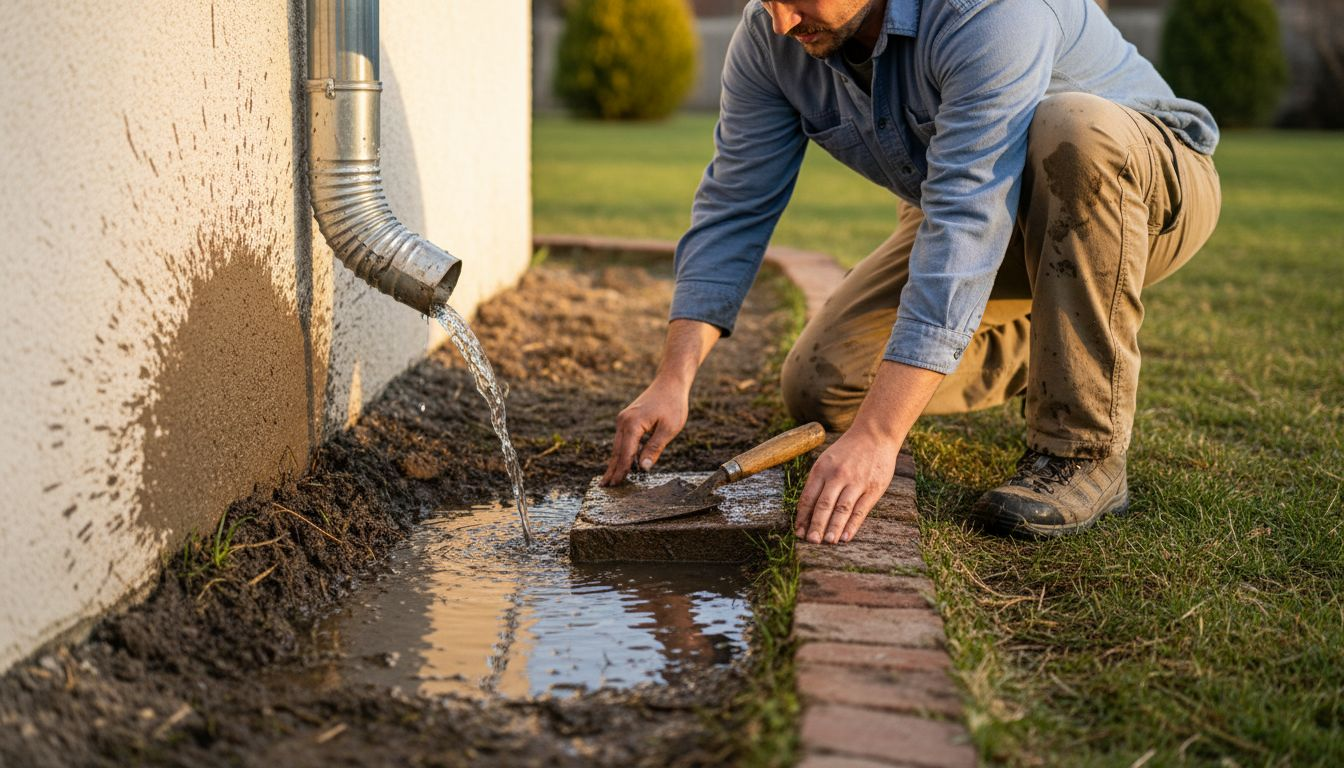
Misunderstanding slope requirements. Many assume gutters should be level or that slope doesn’t matter much. Insufficient slope prevents drainage, causing standing water that breeds mosquitoes and accelerates rust.
Ignoring local soil and climate factors. Generic placement guidelines from other regions don’t account for Central Florida’s intense rainfall and sandy soils. Your system needs regional customization.
Skipping regular maintenance. Even perfectly placed downspouts fail when clogged with debris. Regular gutter maintenance keeps systems functioning as designed.
Pro Tip: After installation, mark downspout locations on a property diagram with measurements from corners and other landmarks. This reference helps when planning landscaping or making future modifications.
The importance of timely gutter repair cannot be overstated. Small issues like loose downspouts or minor leaks quickly escalate into major water damage when ignored through several storm seasons.
Comparison of Downspout Placement Strategies
Different approaches to downspout placement offer various benefits depending on your home’s characteristics and budget. This comparison helps you choose the right strategy.
| Strategy | Best For | Pros | Cons |
|---|---|---|---|
| Standard 20-30 ft spacing | Simple roof designs, moderate rainfall | Cost effective, adequate for typical conditions | May overflow during intense storms |
| Additional downspouts | Complex roofs, high rainfall areas | Superior drainage, reduced overflow risk | Higher installation cost |
| Underground drains | Properties with drainage issues, aesthetic concerns | Invisible, effective water removal | Most expensive, requires excavation |
| Extensions and splash blocks | Budget conscious, DIY friendly | Low cost, easy to install and maintain | Visible, requires periodic repositioning |
Key considerations when selecting your approach:
- Roof complexity: More valleys and angles require more downspouts
- Lot grading: Poor drainage may necessitate underground solutions
- Budget constraints: Balance upfront costs against long term damage prevention
- Aesthetic preferences: Some homeowners prioritize invisible drainage
- Local rainfall intensity: Central Florida storms demand robust capacity
According to internal standards, additional downspouts improve runoff handling during intense storms despite higher installation costs. The investment typically pays for itself by preventing a single major water damage incident.
For DIY oriented homeowners, following detailed downspout installation steps ensures proper execution. However, complex situations benefit from professional expertise. Learning how to install gutters properly from the start prevents expensive corrections later.
Maintenance Practices to Sustain Downspout Efficiency
Even perfectly placed downspouts require regular maintenance to function effectively. These practices keep your system protecting your home year after year.
- Inspect gutters and downspouts every six months at minimum, with additional checks after major storms. Look for clogs, damage, loose connections, and improper slope.
- Clean out debris including leaves, twigs, and granules from asphalt shingles that accumulate in gutters and downspout openings.
- Flush downspouts with a hose to verify water flows freely from top to bottom without backup or leaks.
- Check and adjust extensions to ensure they direct water far enough from foundations and haven’t shifted from their intended positions.
- Verify proper slope by observing water flow during rain or testing with a hose, correcting any sagging sections.
- Schedule professional service annually or when you notice problems beyond your ability to address safely.
Research demonstrates that routine maintenance extends gutter system lifespan by up to 40%, making it one of the best investments in home protection.
Pro Tip: Create a maintenance calendar reminder for spring and fall, ideally before and after Florida’s intense summer storm season. Catching small issues early prevents emergency repairs during the worst weather.
Understanding how often to clean gutters in Florida’s unique environment prevents costly oversights. The role of gutter maintenance extends beyond the gutters themselves to your home’s overall structural integrity and safety.
Applying Best Practices: A Central Florida Homeowner’s Action Plan
Take these concrete steps to optimize your gutter downspout placement and protect your home from water damage.
- Assess your current system by walking your property during rain to identify overflow points, inadequate drainage, and areas where water pools near your foundation.
- Measure downspout spacing to verify it falls within the 20 to 30 foot recommended range, noting any sections that exceed this distance.
- Check discharge distances from your foundation, ensuring all downspouts direct water at least 3 to 4 feet away using extensions or splash blocks.
- Verify proper slope by pouring water in gutters at various points and confirming it flows toward downspouts without pooling.
- Identify needed improvements such as additional downspouts in high flow areas, longer extensions, or underground drainage for problem zones.
- Create a maintenance schedule with specific dates for inspection and cleaning based on your property’s trees and exposure to debris.
- Consider professional evaluation to confirm your assessment and get expert recommendations for optimal system performance.
Professional guidance from specialists ensures optimal placement and necessary system upgrades, as detailed in installation resources. Following a comprehensive downspout installation guide helps whether you’re improving an existing system or installing new gutters.
For homeowners considering upgrades, exploring whether seamless gutters are worth the investment reveals long term benefits that often justify the higher upfront cost through superior performance and reduced maintenance.
Protect Your Central Florida Home with Expert Gutter Solutions
Proper downspout placement requires understanding local conditions, technical specifications, and long term maintenance. Professional installation ensures your system handles Central Florida’s intense rainfall from day one.

Seamless gutters offer superior protection against leaks while custom downspout placement addresses your property’s specific drainage challenges. Larry’s Gutters brings decades of Central Florida experience to every installation, ensuring optimal performance during the heaviest storms. Our team follows proven installation procedures and provides ongoing support to keep your system functioning flawlessly. Homeowners in Gainesville and surrounding areas benefit from our local seamless gutter expertise tailored to regional rainfall patterns and soil conditions.
What Is Gutter Downspout Placement? Frequently Asked Questions
What is the ideal spacing for downspouts on a typical Central Florida home?
Downspouts should be spaced 20 to 30 feet apart on most residential properties. Homes with larger roofs, complex designs, or areas receiving concentrated water flow may need closer spacing to handle Central Florida’s intense rainfall effectively.
How far should downspouts discharge from my house foundation?
Discharge water at least 3 to 4 feet away from your foundation using extensions or splash blocks. This distance prevents soil erosion and moisture intrusion that can compromise structural integrity and create costly foundation problems.
Why do I need professional help for gutter and downspout installation?
Professionals understand regional rainfall patterns, soil conditions, and building codes specific to Central Florida. They ensure proper slope, optimal spacing, and secure installation that DIY approaches often miss, preventing expensive water damage and system failures.
What maintenance is necessary to keep downspouts working properly?
Inspect and clean gutters and downspouts every six months minimum. Remove debris, flush with water to verify flow, check extensions remain properly positioned, and address any damage or slope issues. Following a regular maintenance schedule prevents emergencies.
Can downspout placement reduce soil erosion around my home?
Yes, proper placement dramatically reduces erosion by directing water away from vulnerable areas near foundations. Using extensions and splash blocks disperses water over a wider area, preventing the concentrated flow that causes severe erosion in Central Florida’s sandy soils.
